


How Much Does 1 kg of Carbon Fiber Cost? A Practical Pricing Guide for Buyers
Carbon fiber is one of those materials that instantly signals “high performance.” It’s lightweight, strong, and widely used in aerospace, automotive, wind energy, sporting goods, and advanced industrial parts. But when engineers or purchasing teams try to budget a project, they often hit the same question:
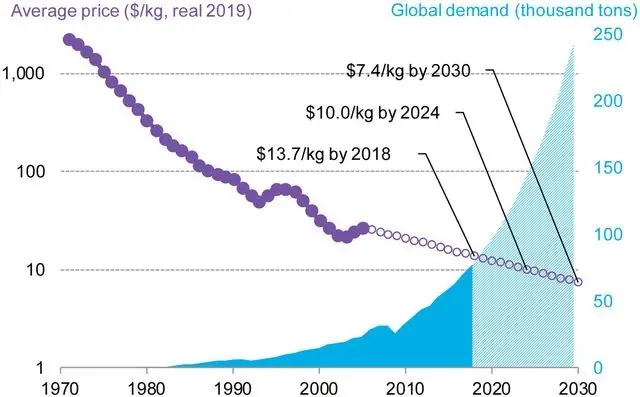
How much does 1 kg of carbon fiber actually cost?
The honest answer is: it depends—sometimes by a lot. Carbon fiber pricing is shaped by grade, modulus, tow size, product form (raw tow vs fabric), manufacturing route, quality requirements, and market demand from major industries.
This guide breaks down the real-world cost ranges and the factors behind them—so you can estimate cost more confidently and avoid overpaying for performance you don’t need.
1) Why Carbon Fiber Prices Vary So Widely
Carbon fiber isn’t a single commodity like basic steel sheet. It’s a family of fibers with different stiffness, strength, and processing requirements. The final cost reflects several layers of complexity:
Grade and performance targets
The biggest driver is fiber grade—especially modulus (stiffness), tensile performance, and quality consistency. High-modulus and aerospace-grade fibers require tighter control and advanced processing, which pushes prices up.
Raw material and precursor choice
Many carbon fibers are made from PAN (polyacrylonitrile) precursors, which can be more expensive but tend to deliver strong performance. Some pitch-based routes may be more cost-effective for certain lower-performance needs.
Manufacturing intensity and energy cost
Producing carbon fiber isn’t “melt and extrude.” It typically involves stabilization, carbonization, surface treatment, and tightly controlled process windows—often energy-intensive steps. Those steps matter because energy cost and throughput strongly affect the final $/kg.
Economies of scale
Mass production lowers unit cost. Small custom batches, special tolerances, or niche product forms typically increase the price.
Demand cycles (aerospace, automotive, renewables)
Carbon fiber demand is heavily influenced by a few industries. When EV programs ramp up, or aerospace demand surges, pricing pressure tends to rise. When major sectors slow, pricing can soften.
2) Typical Price Range for 1 kg of Carbon Fiber
Because carbon fiber is sold in different forms and grades, a single “average price” can mislead. Still, the original article provides useful benchmarks:
- Industrial-grade (standard modulus) carbon fiber is often described around $10–$20 per kilogram on average in some industrial contexts.
- In the FAQ section, a broader summary is provided: roughly $20–$100 per kilogram on the lower end, while aerospace high-modulus fibers can be $200/kg or more.
Why the difference? Because “industrial-grade” may refer to high-volume, standard products, while the FAQ range covers more grades and market situations.
Practical takeaway:
If your application is industrial and cost-sensitive, standard modulus fibers may land closer to the lower ranges. If you’re chasing maximum stiffness, aerospace certification, or extreme performance consistency, budget far higher.
3) Grade-Based Pricing: Standard vs Intermediate vs High Modulus
A simple way to understand carbon fiber pricing is to group it by modulus tier:
Standard-modulus carbon fiber
Common in sporting goods and many automotive uses. The article cites a typical range of $10–$20 per pound for standard-modulus pricing depending on market conditions.
Intermediate-modulus carbon fiber
Used when you need more durability and performance than standard grades, often in higher-end cycling or certain aerospace-related applications. The article mentions $40–$80 per pound for intermediate-grade fibers.
High-modulus carbon fiber
The premium tier—extreme stiffness, higher processing complexity, and often limited production volumes. The article states high-modulus can exceed $150 per pound.
What to do with this information:
Don’t default to high-modulus unless your design truly needs it. Many parts don’t benefit from the extra stiffness enough to justify the cost jump.
4) Raw Tow vs Carbon Fiber Fabric: Not the Same Price Game
A common budgeting mistake is comparing “carbon fiber” prices without specifying the product form.
Raw carbon fiber (tow/filament)
The article notes raw carbon fiber in filament form averaging $5–$10 per pound.
This is often used by manufacturers who will do their own layup, conversion, or composite processing.
Carbon fiber fabric (woven)
Woven fabric is usually more expensive because it includes additional processing (weaving) and may use specific patterns that affect performance and appearance. The article gives a typical fabric range of $20–$50 per yard.
Fabric pricing also changes with weave style:
- Plain and twill weaves are often more common and can be more economical.
- Specialized weaves (e.g., satin or spread tow) can cost more due to complexity and niche benefits.
5) 3K vs 12K Carbon Fiber: Why Tow Size Matters
If you’ve seen “3K” and “12K” on product listings, you’re looking at tow count—how many filaments are bundled.
The article highlights a common market pattern:
- 3K is often more expensive than 12K because it’s associated with finer weave aesthetics and more detailed workmanship.
- 12K is more cost-efficient for structural needs where appearance isn’t the priority.
So if your part is hidden inside a housing or painted, you may not need the “pretty” tow. If the carbon weave is a visible design feature, 3K may make sense.
6) Aerospace-Grade Carbon Fiber: Why It Can Be So Expensive
Aerospace-grade carbon fiber commands a premium not just for performance—but for quality control, traceability, and tighter property windows.
The article notes aerospace-grade can range around $50–$200 per pound, compared with $10–$25 per pound for standard carbon fiber.
This price gap is often justified by:
- stricter QC requirements,
- tighter mechanical tolerances,
- specialized processing equipment,
- and performance needs such as higher temperature resistance and weight optimization.
7) Where to Find Better Pricing (and What “Best Deal” Really Means)
The article points to several major suppliers and market options—often with different positioning:
- Toray Industries (noted for established series such as T300/T700 for cost-effective mid-to-high tier applications)
- Hexcel (industrial and aerospace markets, including HexTow®)
- Zoltek (large-tow carbon fiber positioned for high-volume cost efficiency in automotive and wind energy)
- SGL Carbon (a broad portfolio including intermediate and high-strength fibers)
Important: “best deal” depends on whether you are buying:
- raw tow vs fabric,
- industrial vs aerospace grade,
- high volume vs small batch,
- and whether certification/traceability is required.
8) A Fast Cost-Estimating Checklist (Before You Request Quotes)
If you want a realistic cost estimate for “1 kg of carbon fiber,” define these first:
- Grade requirement: standard / intermediate / high modulus
- Product form: tow, fabric, chopped fiber, prepreg
- Tow size & weave: 3K vs 12K, plain/twill/satin, spread tow
- Quality level: industrial vs aerospace QC expectations
- Order volume & logistics: small batch vs bulk, shipping/import costs
The original article also mentions that online calculators exist, but advises validating outputs with real supplier quotes. Hopeful
Bottom Line
Carbon fiber isn’t priced like a single material. Standard industrial fibers may fit lower budget bands, while high-modulus and aerospace-grade products can be dramatically more expensive. The fastest way to avoid pricing surprises is to lock down grade, form, tow/weave, and quality requirements before you compare quotes
