


3D Printing Automotive Prototypes: Materials and Testing
Developing a high-performance 3D printed prototype for automotive components allows manufacturers to validate designs, test aerodynamics, and ensure mechanical integrity before committing to expensive tooling. This digital-to-physical workflow bridges the gap between conceptual CAD models and functional road-ready parts, drastically reducing the traditional 18-month development cycle to just weeks.
Why is a 3D Printed Prototype for Automotive Components Essential?
A 3D printed prototype for automotive components is essential because it identifies design flaws early, reducing the risk of costly recalls and production delays. By using functional materials that mimic end-use plastics and metals, engineers can conduct real-world stress tests, fitment checks, and wind tunnel evaluations without the high cost of injection mold tooling.
In the fast-paced automotive world, speed is the only currency that matters. I remember a project where a Tier 1 supplier faced a three-week delay on a transmission housing. By pivoting to a large-format SLA (Stereolithography) printer, we produced a full-scale, transparent housing in 48 hours. This allowed the team to visualize fluid flow—something a CNC-machined aluminum block never could have shown. That is the power of rapid prototyping manufacturers in the modern era.
The shift toward electric vehicles (EVs) has only intensified this need. With fewer moving parts but more complex thermal management systems, the ability to iterate on battery cooling manifolds or lightweight structural brackets via 3D printing is no longer a luxury—it’s a survival requirement.
What are the Best Materials for Automotive 3D Printing?
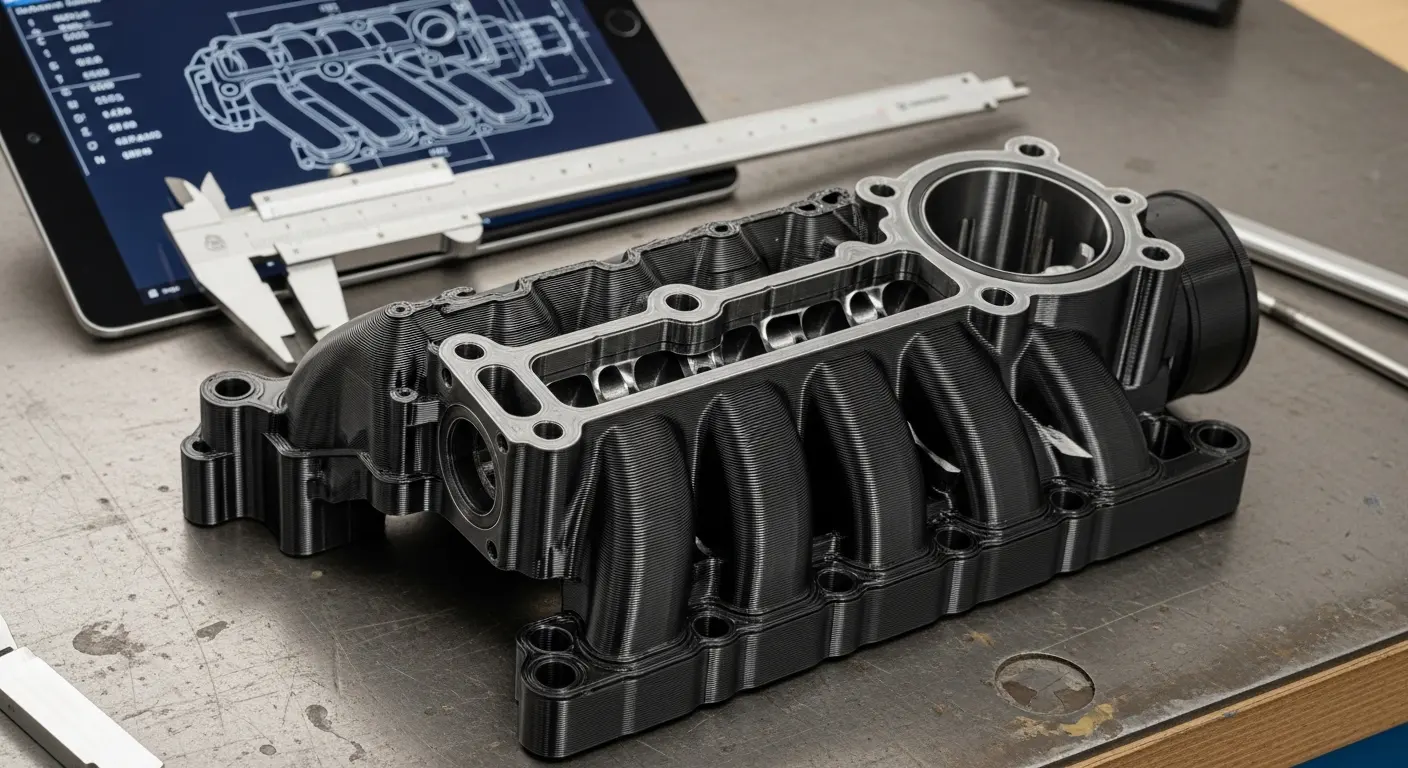
The best materials for automotive 3D printing include high-performance thermoplastics like PA12 (Nylon), ULTEM (PEI) for heat resistance, and reinforced composites like Carbon Fiber-filled polymers. For metal components, Aluminum (AlSi10Mg) and Stainless Steel (316L) are preferred for engine and structural testing due to their high strength-to-weight ratios and thermal stability.
Selecting the right material requires balancing mechanical properties with the specific environment the part will inhabit. You wouldn't use standard PLA for an under-the-hood component that needs to survive 120°C.
| Material Category | Common Examples | Key Automotive Application |
| Engineering Plastics | PA12 (Nylon), ABS, ASA | Intake manifolds, interior trim, housings |
| High-Temp Polymers | ULTEM 1010, PEEK, PPSF | Engine components, heat shields, ducting |
| Reinforced Composites | Carbon Fiber Nylon, Kevlar | Brackets, structural jigs, racing components |
| Elastomers | TPU, TPE, Silicone | Gaskets, seals, hoses, vibration dampeners |
| Metals | Aluminum, Titanium, Steel | Exhaust manifolds, suspension links, pistons |
How does Nylon (PA11/PA12) perform in vehicle testing?
Nylon 12 is the workhorse of the automotive prototyping world because it offers excellent chemical resistance and durability. It is particularly effective for functional testing of fuel lines, clips, and fluid reservoirs. Unlike more brittle plastics, Nylon has the "toughness" to survive snap-fit assemblies and vibration testing without cracking under the pressure of a test track.
Why is Carbon Fiber reinforcement used in prototypes?
Carbon Fiber-filled filaments or resins provide the rigidity needed for structural prototypes. When we look at low-volume injection molding, we often use 3D printed carbon fiber parts to simulate the stiffness of glass-filled injection molded parts. This allows for accurate deflection testing and ensures that a bracket won't fail when the vehicle hits a pothole at 60 mph.
How do Engineers Test 3D Printed Automotive Parts?
Engineers test 3D printed automotive parts through a combination of dimensional inspection, environmental stress screening (ESS), and functional load testing. These tests ensure the prototype matches the CAD intent and can withstand the rigors of heat, vibration, and chemical exposure typical of a vehicle's lifecycle, providing a reliable data point for final production decisions.
Testing is where "pretty models" become "engineered solutions." I’ve seen prototypes that looked perfect on a desk but melted during a 4-hour heat soak test. To avoid this, a rigorous testing protocol is mandatory.
What is the role of Wind Tunnel Testing for prototypes?
Aerodynamics is critical for fuel efficiency and range (especially in EVs). Large-scale 3D printing allows for the creation of full-scale exterior panels or scaled-down clay model inserts. Because 3D printing can achieve incredibly complex geometries, designers can test "active aero" components—like moving grilles or spoilers—that would be impossible to machine quickly.
Can 3D printed parts handle Vibration and Impact Testing?
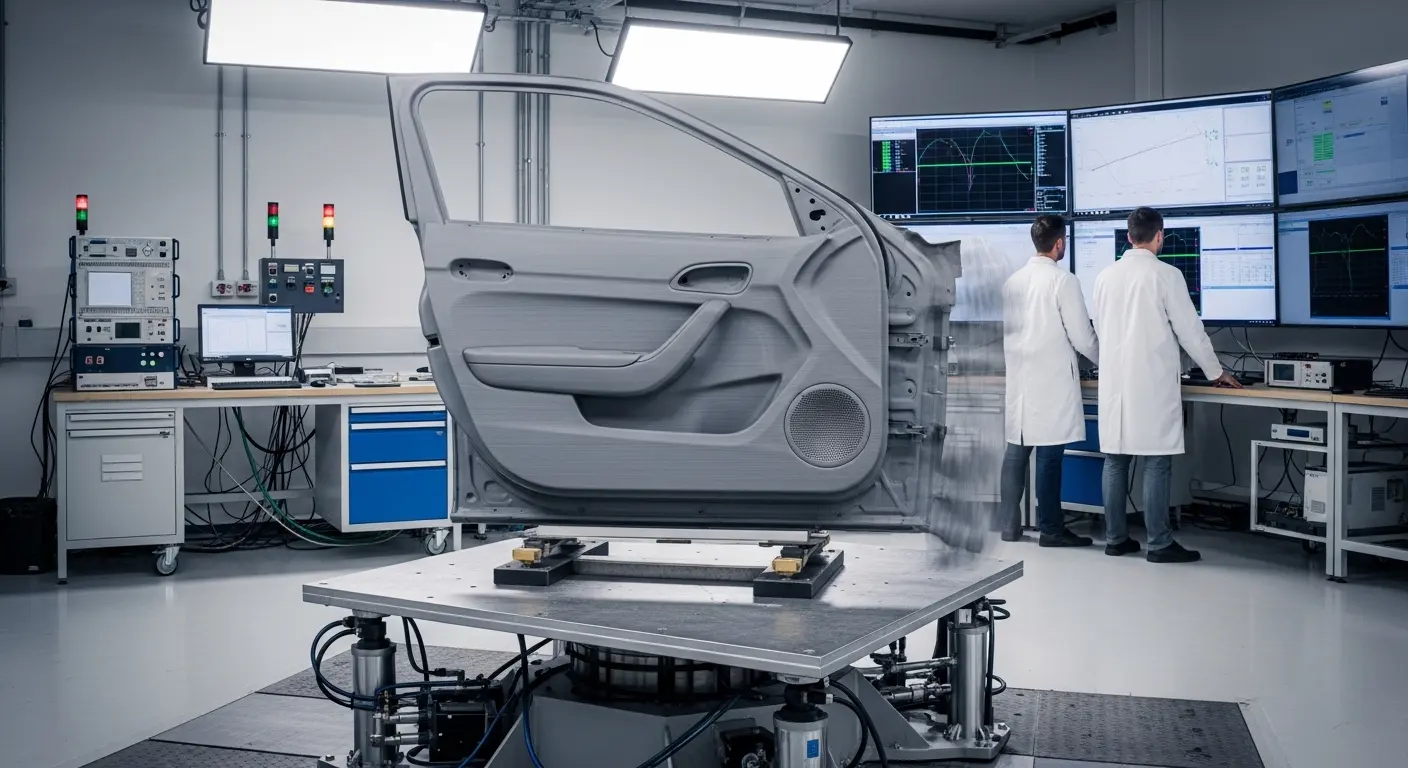
Yes, if the correct orientation and material are chosen. Automotive components are subject to constant NVH (Noise, Vibration, and Harshness) challenges. Prototypes are often mounted to "shaker tables" to simulate 100,000 miles of road vibration.
Tip: When printing for vibration testing, always use a technology like Multi Jet Fusion (MJF) or SLS (Selective Laser Sintering). These methods provide isotropic strength, meaning the part is equally strong in the X, Y, and Z directions, preventing the "delamination" failure common in cheaper FDM prints.
Which 3D Printing Technology is Right for Your Component?
The right 3D printing technology depends on whether you prioritize surface finish (SLA), mechanical strength (SLS/MJF), or high-temperature resistance (FDM). For most automotive applications, SLS is the gold standard for functional parts, while SLA is preferred for clear lenses, light pipes, and high-detail interior aesthetics.
Choosing the wrong tech is a common mistake. If you need to test the ergonomics of a dashboard button, the smooth finish of SLA is vital. If you’re testing the "click" feel of that same button, you might need a more durable MJF part to handle repeated cycles.
- SLA (Stereolithography): Best for clear parts (headlights) and high-detail dashboards.
- SLS (Selective Laser Sintering): The "go-to" for functional under-hood parts and complex interior assemblies.
- FDM (Fused Deposition Modeling): Excellent for large, low-cost jigs, fixtures, and early-stage spatial mockups.
- DMLS (Direct Metal Laser Sintering): Used for high-performance engine components and exhaust prototypes.
When considering molding vs. 3d printing, the decision usually comes down to volume and complexity. If the geometry is so complex that it cannot be molded, 3D printing remains the solution through to end-use production.
How Does 3D Printing Impact the Automotive Supply Chain?
3D printing impacts the automotive supply chain by enabling "distributed manufacturing" and reducing the reliance on massive inventories of spare parts. Instead of shipping a physical prototype across the ocean, a manufacturer can send a digital file to a local 3d printing service bureau, cutting lead times from weeks to days and lowering the carbon footprint.
This "Just-in-Time" prototyping allows for a level of agility that was previously impossible. Imagine a scenario where a assembly line tool breaks. In the past, the factory might shut down for 48 hours while a replacement is shipped. Today, that tool is printed overnight in-house or at a nearby partner.
The Rise of Digital Warehousing
Many OEMs are now moving toward "Digital Warehouses." Instead of storing 50,000 plastic bumper clips for a car model discontinued ten years ago, they store the CAD file. If a dealership needs the part, it is printed on-demand. This is the ultimate evolution of the Top 20 Rapid Prototyping Manufacturers' capabilities—shifting from service providers to critical infrastructure partners.
What are the Limitations of 3D Printed Prototypes?
The primary limitations of 3D printed prototypes include surface roughness, limited material parity with mass-production resins, and slower production speeds for high volumes. While 3D printing is unmatched for speed in small batches, it cannot yet compete with the cycle times of injection molding for orders exceeding 1,000 units.
It’s important to manage expectations. A 3D printed part will never exactly match an injection-molded part in terms of molecular structure. The cooling rates and pressure differences between a mold and a 3D printer mean that the mechanical properties will always have a slight delta.
Managing Anisotropy and Layer Lines
In FDM printing, the part is naturally weaker along the Z-axis (the layers). If an engineer doesn't account for this during the design phase, the prototype might fail prematurely during a load test, giving a "false negative" result. Knowledgeable designers orient parts to ensure the load is distributed across the layers, not against them.
Future Trends: What’s Next for Automotive Prototyping?
The future of automotive prototyping lies in multi-material printing and AI-driven generative design. We are seeing the emergence of printers that can deposit both rigid structural plastics and soft elastomers in a single build, allowing for the creation of a complete car seat or dashboard—soft-touch surfaces included—in one go.
Generative design software uses AI to "evolve" a part based on load requirements. These shapes often look organic or "alien" and can only be produced via 3D printing. This leads to massive weight savings, which is the "holy grail" for increasing EV battery range.
Sustainable Materials and Circularity
We are also seeing a massive push toward recycled filaments. Turning old car bumpers back into 3D printing filament for new prototypes creates a circular economy that resonates with the sustainability goals of brands like Volvo, BMW, and Tesla.
Advanced Testing Procedures for High-Performance Prototypes
When we move beyond basic fit-and-finish, automotive prototypes must endure a battery of grueling tests that simulate years of abuse in a matter of days. For a 3D printed prototype for automotive components to be considered "validated," it must pass several key technical hurdles.
Thermal Cycle Testing
Automotive parts live in an environment of extremes. A car might sit in a -40°C parking lot in Winnipeg and then drive into a 50°C desert heat. We use thermal chambers to rapidly cycle prototypes between these temperatures. This reveals "creep"—the tendency of plastic to permanently deform under stress and heat. If you are using a 3D printed intake manifold, thermal stability isn't just a metric; it's a safety requirement.
Chemical Resistance and Fluid Exposure
A prototype isn't just exposed to air. It encounters oil, gasoline, coolant, brake fluid, and even road salt. We perform "soak tests" where 3D printed samples are submerged in these fluids for extended periods. Materials like PA12 and PPSF (Polyphenylsulfone) excel here, while cheaper resins might swell, soften, or dissolve entirely.
UV Degradation and Weathering
For exterior components like mirror housings or grille inserts, UV resistance is paramount. Many 3D printing resins are "photo-polymers," meaning they are cured by light. Ironically, this makes them sensitive to sunlight, which can cause them to become brittle over time. We use accelerated weathering testers (Xenon arc lamps) to simulate years of sun exposure, ensuring the part won't shatter after six months on the road.
The Synergy Between 3D Printing and Traditional Manufacturing
One of the biggest misconceptions in the industry is that 3D printing is meant to replace injection molding. In reality, the most successful automotive companies use them as complementary tools. This synergy is best seen in the creation of "Hybrid Tooling."
3D Printed Mold Inserts
Instead of machining a full steel tool for a short run of 50 parts, engineers can 3D print the mold inserts using high-temperature resins or metal. These inserts are then placed into a standard mold base. This allows the use of actual production-grade materials (like glass-filled Nylon or Polycarbonate) at a fraction of the cost of traditional tooling. This is a critical bridge to low-volume injection molding.
Jigs, Fixtures, and Tooling
Roughly 70% of 3D printing in automotive plants isn't for the car itself—it’s for the tools that build the car. Lightweight, ergonomic 3D printed jigs help assembly line workers align badges, hold doors in place, or check tolerances. Because these tools are printed in-house, they can be customized to the specific hand size of a worker, reducing repetitive strain injuries.
Case Study: Prototyping an EV Battery Cooling Plate
To illustrate the complexity, let’s look at a recent project involving an EV battery cooling plate. The plate required intricate internal channels to move coolant efficiently around the cells.
- Phase 1: Flow Visualization (SLA): We printed a transparent version of the plate using Clear Resin. This allowed the engineers to pump colored dye through the channels and visually identify areas of "dead flow" where the battery might overheat.
- Phase 2: Pressure Testing (SLS): Once the design was optimized, we printed a functional version in Carbon-Filled Nylon. This part was subjected to 3 bar of pressure to ensure the thin-walled channels wouldn't burst.
- Phase 3: Final Validation (Metal 3D Printing): The final prototype was printed in Aluminum (AlSi10Mg) for thermal conductivity testing. This metal prototype performed within 5% of the final cast part, giving the OEM total confidence to invest in millions of dollars of mass-production equipment.
Cost-Benefit Analysis: 3D Printing vs. Traditional Prototyping
| Metric | Traditional CNC / Tooling | 3D Printing (SLS/MJF) |
| Lead Time | 4 - 8 Weeks | 2 - 5 Days |
| Initial Cost | High ($5,000+) | Low ($200 - $800) |
| Design Flexibility | Limited by tool access | Nearly Unlimited |
| Material Choice | Production Grade | Simulated / Engineering Grade |
| Waste | High (Subtractive) | Low (Additive) |
As the table shows, the primary "win" for 3D printing is the democratization of the design process. When the cost of failure is $200 instead of $5,000, engineers are free to take risks, innovate, and try "radical" designs that ultimately lead to better vehicles.
Strategic Implementation for Automotive Startups
For emerging EV startups, speed is the only way to compete with established giants. These companies often skip the "clay model" phase entirely, moving directly from VR (Virtual Reality) design to full-scale 3D printed assemblies.
By utilizing 3d printing services, a startup can present a fully functional "Alpha" vehicle to investors in months rather than years. This rapid physical proof-of-concept is often the difference between securing a Series A round of funding and fading into obscurity.
Tip: If you are a startup, don't buy a million-dollar printer yet. Partner with arapid prototyping manufacturerto access a fleet of different technologies. This gives you the flexibility to use Metal DMLS today and PolyJet tomorrow without the capital expenditure.
Optimizing Designs for Additive Manufacturing (DfAM)
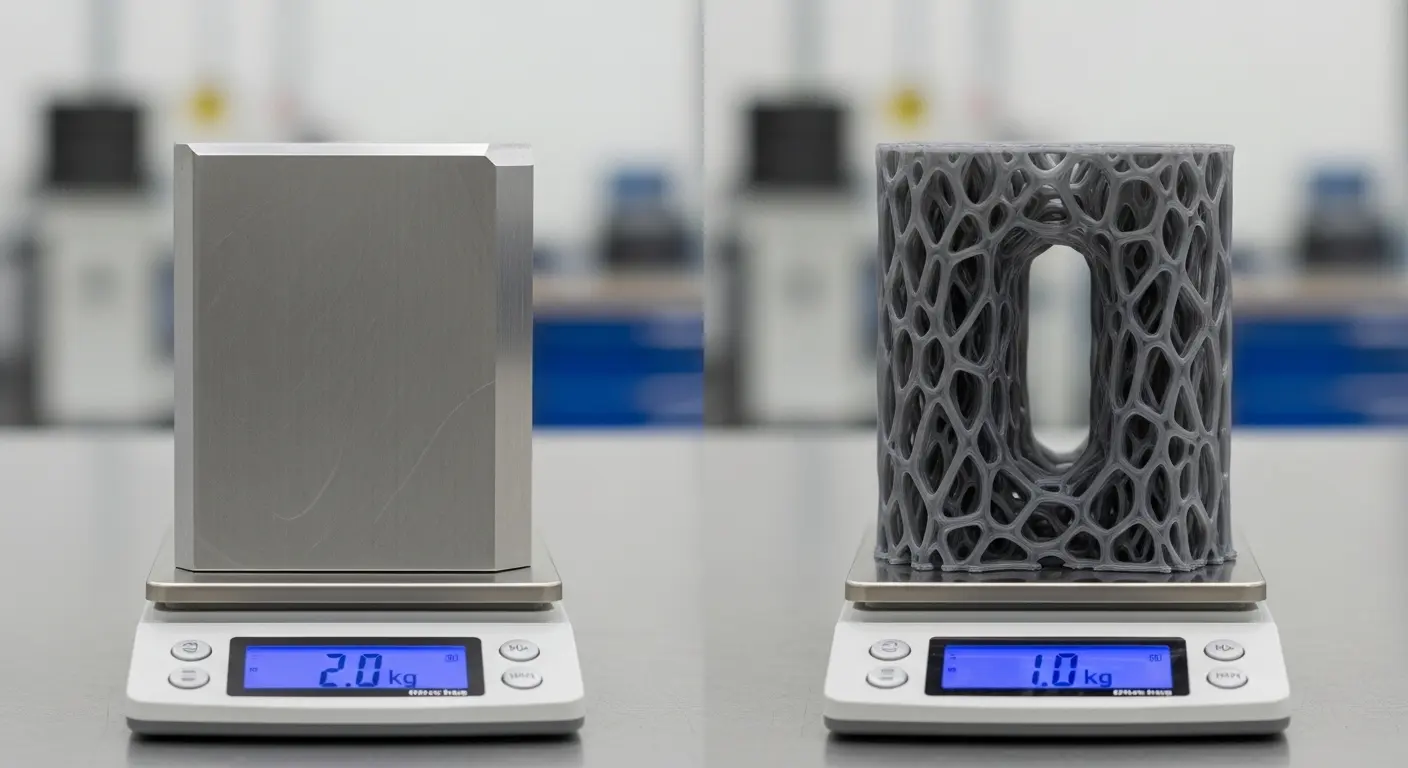
To get the most out of a 3D printed prototype for automotive components, engineers must unlearn some traditional design rules. In the world of "Additive Manufacturing," complexity is free.
- Consolidation: Why have a 10-piece assembly held together by screws and gaskets? 3D printing allows you to consolidate those ten parts into one single, complex geometry, reducing weight and eliminating leak points.
- Lattice Structures: Instead of solid plastic, we can use internal lattice structures. These "honeycomb" interiors provide incredible strength while reducing the part's weight by up to 60%.
- Integrated Features: You can print "living hinges" or integrated cable routing clips directly into a part, features that would be impossible to de-mold in a traditional injection molding setup.
Final Thought
The integration of 3D printed prototype for automotive components has fundamentally altered the DNA of vehicle manufacturing. By slashing lead times, enabling rigorous material testing, and allowing for unprecedented geometric freedom, 3D printing has moved from a "hobbyist's toy" to a "tier-one necessity." Whether you are testing the aerodynamics of a new hypercar or the durability of a simple door handle, additive manufacturing provides the data and the confidence needed to drive the industry forward. As we move into an era of sustainable, AI-designed, and hyper-efficient vehicles, the role of the 3D printed prototype will only grow more central to the automotive story.
