


Bronze Machining: Practical Guide for CNC Parts, Finishes, and Alloy Selection
Bronze has a reputation of being a sculpture and historical artifact, but it is also used as a workhorse when it comes to modern manufacturing, particularly in items that require low friction, wear resistance, and corrosion resistance. Bronze is frequently used in CNC machining as bushings, bearings, gears, valve components, hardware used in the marine industry due to its durability in harsh conditions.
At SunOn, we modify bronze parts to be machined so as to offer our customers a stable performance, consistent tolerances and reliable lead times. It is a guide to the behavior of bronze during machining, the most common bronze alloys, the processes best performed by bronze, and how to prevent the most common design and production problems.
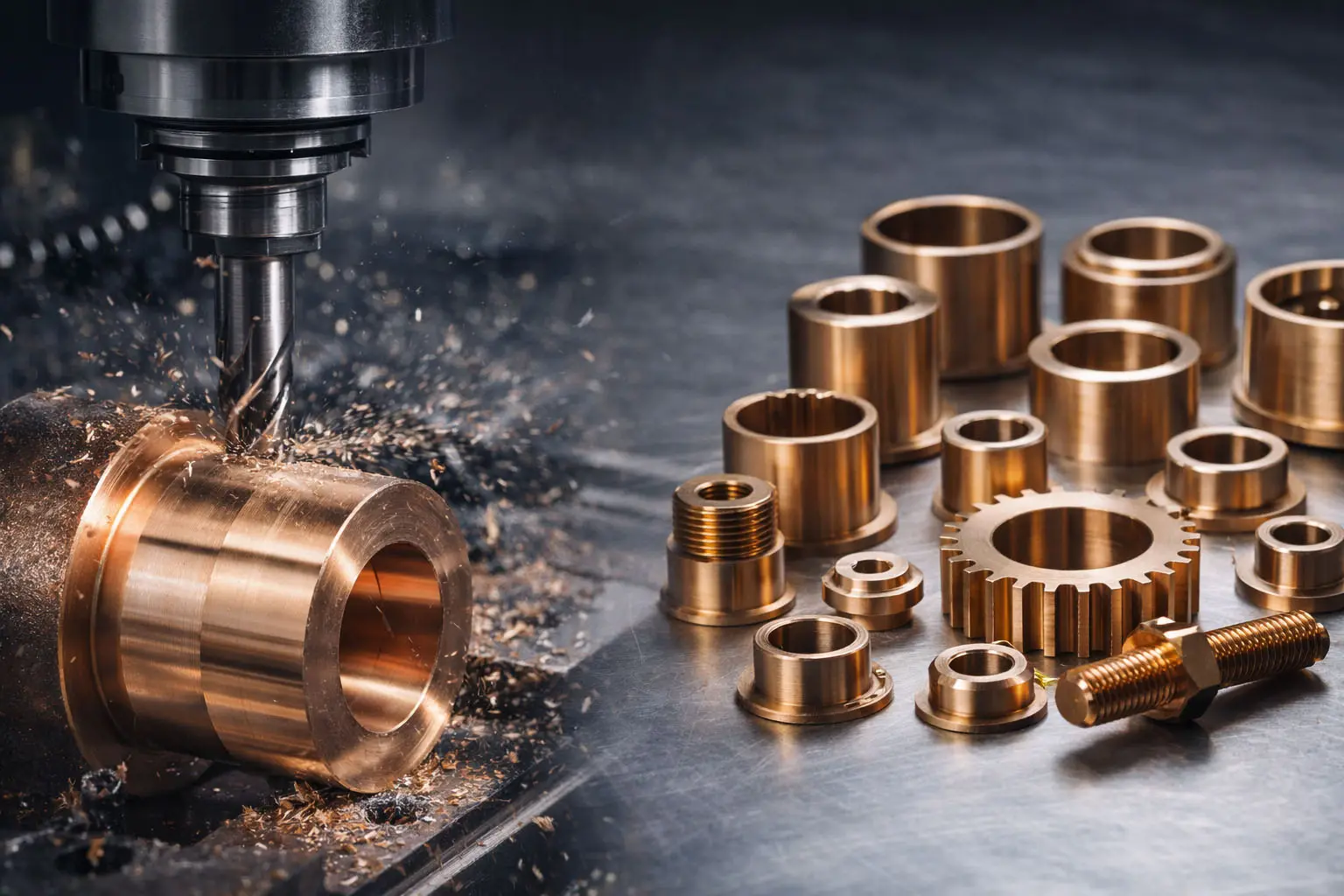
What Bronze Machining Means in Real Production
Bronze machining refers to shaping bronze (a copper-based alloy, commonly copper + tin, with other elements added for performance) into finished parts using processes such as CNC milling, turning, drilling, grinding, and specialty cutting methods.
Bronze is not “one material.” Different bronze families vary widely in hardness, chip formation, wear behavior, and corrosion resistance. That’s why successful machining starts with alloy selection, then matches tool choice, cutting parameters, and finishing method to the application.
Is Bronze Hard to Machine?
In many cases, bronze machines smoothly—if the alloy is appropriate and the process is set correctly. Some bronze grades cut cleanly and produce stable chips, while tougher bronzes (certain aluminum bronzes, for example) may require more robust tooling and careful parameter control. The key is understanding the alloy’s behavior and planning the toolpath and feeds/speeds accordingly.
How Bronze Is Machined
Most bronze CNC workflows follow a predictable path from raw stock to finished part:
1) Material selection and preparation
Choose the right bronze for strength, friction behavior, and corrosion exposure. Then cut bar, plate, or block stock into workable blanks before CNC operations.
2) Core machining operations
Common machining routes include:
-
CNC milling for flats, pockets, slots, and 3D geometry
-
CNC turning for shafts, bushings, rings, and rotational parts
-
Drilling for fastener holes, oil passages, and fluid ports
-
Grinding when tight dimensional control and fine surface finish are required
-
Sawing for rough sizing and blank preparation
-
Broaching for keyways, splines, and internal profiles
-
EDM for intricate features that are difficult with conventional cutting
-
Waterjet cutting for sheet shapes without heat distortion
3) Post-processing and inspection
Typical post-steps include deburring, polishing, optional heat treatment (application-dependent), and dimensional inspection (e.g., calipers, micrometers, CMM).
Common Bronze Alloys Used for CNC Machining
Choosing the right bronze is usually the biggest performance lever. Below are widely used bronze families and what they’re typically good at:
Aluminum Bronze
High strength and strong corrosion resistance—often used in marine hardware, wear parts, and heavy-duty bushings/bearings.
Phosphor Bronze
Known for wear resistance and stable properties; frequently used for precision mechanical parts and certain electrical/electronic components. Many shops find phosphor bronze machines predictably when parameters are correct.
Silicon Bronze
Offers excellent corrosion resistance and an attractive finish, often used in marine components, valve/pump parts, and architectural hardware.
Manganese Bronze
A tougher, high-strength alloy family used for heavy-duty components (gears, wear parts, demanding mechanical loads).
Nickel Aluminum Bronze
Enhanced strength and fatigue/corrosion resistance, commonly used for severe-duty marine parts and other high-load environments.
Leaded Bronze (Bearing Bronze)
Often selected for low-friction, wear-focused applications such as bushings and bearings; the added lead improves machinability and can help chip control.
Tin Bronze / Bismuth Bronze / Copper-Nickel Bronze
Used when specific combinations of strength, corrosion resistance, casting behavior, or fine-detail manufacturing are needed—particularly in marine and precision applications.
Machinability tip: leaded bronze is frequently considered among the easiest to machine, while alloy choice should still be driven by your real service conditions (load, lubrication, seawater exposure, temperature, and wear pattern).
Design Tips That Improve Bronze Machining Results
If you want better consistency and fewer revisions, these design habits help:
Specify the alloy and temper clearly
“Bronze” is not enough. Call out the exact grade. Different grades can change tool wear, finish quality, and dimensional stability.
Control sharp internal corners
Tight inside corners may require small tools, increasing cycle time and vibration risk. Add practical radii where possible.
Keep wall thickness realistic
Thin walls can chatter, especially on tougher bronzes. If you need thin geometry, plan for supportive fixturing and finishing passes.
Plan holes for the right process
Deep holes may need peck drilling or additional steps. Threaded holes may need tapping cycles or thread milling depending on strength and surface requirements.
Consider the functional surface
For bushings, bearing seats, and sealing surfaces, define the needed roughness and roundness so the process includes the right finishing operations.
Surface Finishes for Bronze Machined Parts
Bronze can be finished for function, cosmetics, or both. Common options include:
-
As-machined: visible tool marks; good for functional, non-cosmetic parts
-
Polishing: bright, smooth surface for visible components
-
Sanding: removes minor marks and evens the texture
-
Brushing: consistent satin lines for a premium industrial look
-
Bead blasting: uniform matte finish that hides light tool marks
-
Chemical coating: improves corrosion resistance or appearance
-
Electroplating: adds a thin metal layer (e.g., nickel) for hardness or corrosion/appearance requirements
Why Bronze Is Chosen for Industrial Components
Bronze remains popular because it offers a combination of properties that are hard to replace:
-
Strong corrosion resistance, especially in marine environments
-
Wear resistance for moving contact surfaces (gears, bushings, bearings)
-
Good machinability in many grades
-
Non-sparking behavior vs many ferrous materials (useful in certain safety-sensitive environments)
How SunOn Supports Bronze CNC Projects
A reliable bronze machining outcome depends on tight control over the full workflow: material verification, stable machining strategy, correct tooling, and consistent inspection.
For bronze CNC projects, SunOn typically focuses on:
-
Matching alloy selection to wear/corrosion/load conditions
-
Choosing the best route: turning-first for cylindrical parts, milling-first for complex prismatic geometry
-
Planning for deburring and edge control (important for assembly and safety)
-
Building the finish plan around where the part actually works (bearing surfaces vs cosmetic faces)
If you share your drawing + application conditions (load, environment, lubrication, target life), we can recommend a practical bronze grade and machining approach that balances cost, lead time, and performance.
