


Chrome Plating Explained: Process, Types, Benefits, and Best Uses
Chrome plating is one of the most recognized surface finishes in manufacturing. A thin chromium layer can make parts look premium, resist corrosion, reduce friction, and improve wear life—depending on the plating type and how it’s applied.
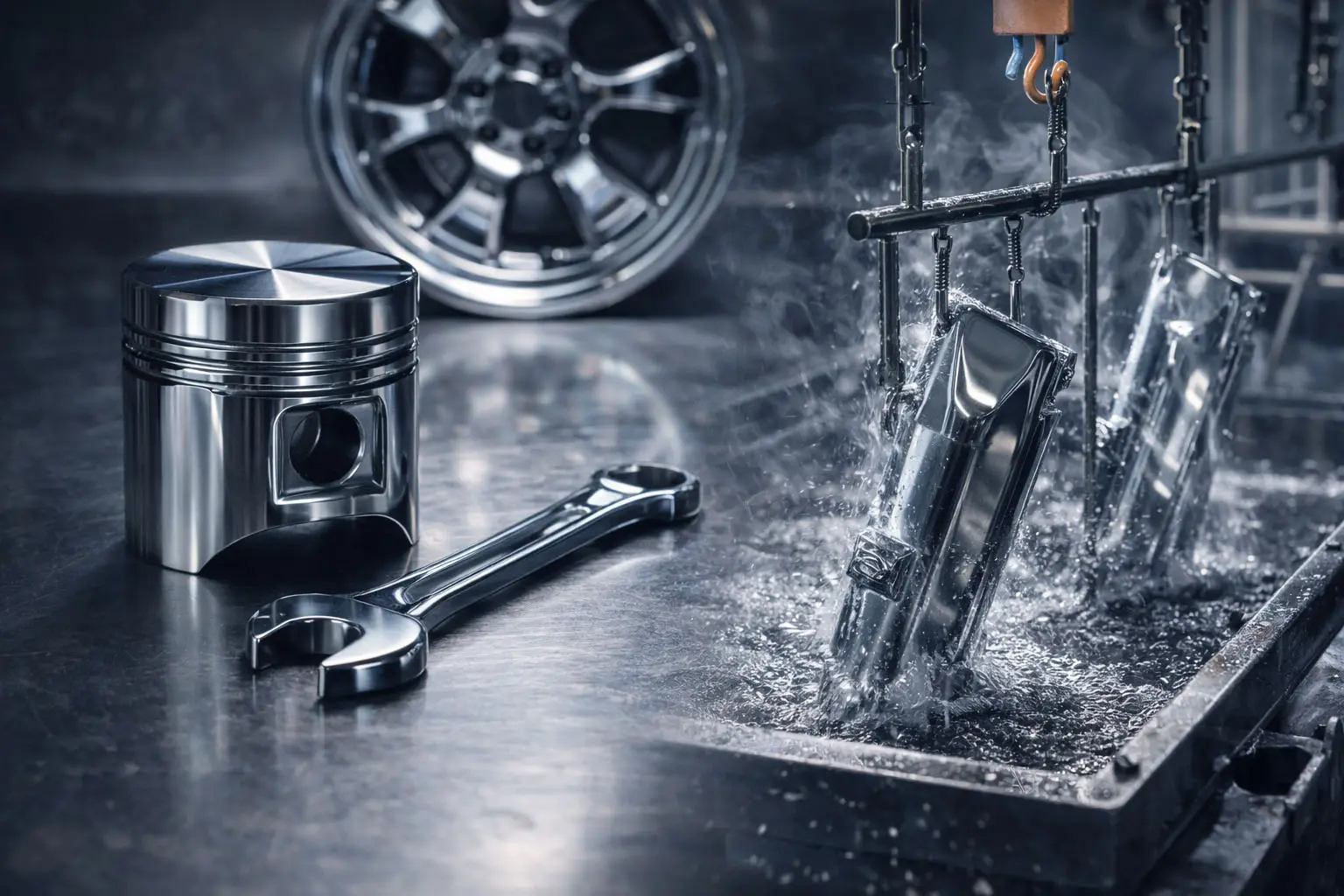
At SunOn, we often help customers choose the right surface finishing route after CNC machining, die casting, or sheet metal fabrication. Chrome plating is a strong option for parts that need a bright appearance, better durability, or improved performance on sliding surfaces. This guide breaks down what chrome plating is, how it works, the key types, and how to specify it correctly.
What Is Chrome Plating?
Chrome plating is an electroplating process that deposits a layer of chromium onto a substrate (usually metal) to improve appearance and/or functional performance such as wear resistance and corrosion protection.
Chrome plating is widely used in automotive parts, industrial components, consumer products, and tools because it balances durability with a clean, polished look.
How Chrome Plating Works
Chrome plating is typically done by placing the part into an electrolyte bath and using electric current to deposit chromium onto the surface. The performance of the final coating depends heavily on preparation and process control.
A practical workflow usually includes:
-
Surface preparation
Cleaning and degreasing remove oils and contaminants. Any scratches, pits, or machining marks can “telegraph” through the final finish, so polishing or smoothing may be required first. -
Activation and undercoats (common for decorative chrome)
Decorative chrome often uses a multi-layer system, commonly with nickel undercoats to help appearance and corrosion resistance, with a thin chrome layer on top for color and hardness. -
Chromium deposition
The chromium layer is deposited via electroplating. Thickness and chemistry vary by plating type (decorative vs hard chrome, hexavalent vs trivalent). -
Post-finish steps
Rinsing, drying, and sometimes grinding/polishing to meet dimensional and surface requirements—especially for hard chrome. Hard chrome may be plated thicker and then ground back to specification in precision applications.
Two Main Types: Decorative Chrome vs Hard Chrome
1) Decorative chrome plating
Decorative chrome is primarily chosen for appearance, often with additional corrosion resistance when paired with proper underlayers. It’s typically thinner than hard chrome and is used for trim, consumer products, and visible components.
Typical applications
-
Automotive trim and exterior details
-
Consumer hardware and handles
-
Display-quality components
2) Hard chrome plating (functional/engineering chrome)
Hard chrome is selected for performance—wear resistance, reduced friction, and durability on working surfaces such as shafts, rods, rollers, and bearing areas.
Hard chrome is commonly thicker than decorative chrome, and industrial builds often specify thickness ranges that may require finish grinding/lapping to hit the final dimension and surface quality.
Typical applications
-
Hydraulic rods, shafts, and spindles
-
Wear surfaces and tooling components
-
Parts exposed to friction and abrasion
Hexavalent vs Trivalent Chrome Plating
Chrome plating chemistry usually falls into hexavalent chromium processes (traditional) and trivalent chromium processes (newer alternatives).
-
Trivalent chrome is widely promoted as a more environmentally friendly option with significantly lower toxicity than hexavalent systems, and it can deliver similar decorative outcomes in many cases.
-
Hexavalent systems have a long industrial history, but regulatory and environmental pressures have increased interest in trivalent processes.
For your project, the best choice depends on target appearance, performance requirements, supplier capability, and compliance needs.
Key Benefits of Chrome Plating
Chrome plating is popular because it can deliver multiple benefits at once:
-
Improved corrosion resistance (especially with proper undercoats in decorative systems)
-
Wear resistance and surface hardness for working surfaces (hard chrome)
-
Lower coefficient of friction for sliding or contact surfaces (hard chrome)
-
Premium appearance with a bright, reflective finish (decorative chrome)
Typical Materials and Parts That Get Chrome Plated
Chrome plating is often applied to:
-
Steel and stainless steel components
-
Some copper alloys
-
Certain parts that will be assembled into mechanical systems needing wear protection
Plating can also be applied to plastics using special processes (often ABS with pre-treatment and conductive layers), but that requires specialized plating lines and design considerations.
Spec’ing Chrome Plating: What to Include on a Drawing
If you want consistent results and fewer production delays, include these details:
-
Type of chrome plating
-
Decorative chrome or hard chrome
-
Hexavalent or trivalent (if required by compliance)
-
-
Thickness requirement
-
Specify thickness range and whether it’s “as plated” or “after grind.”
-
Hard chrome thickness can vary widely by use case; some industrial guidance references ranges from very thin to significantly thicker builds, often followed by grinding to final size.
-
-
Critical surfaces and masking
-
Identify areas that must be plated vs areas that must remain uncoated (threads, precision bores, electrical contact points, press-fits).
-
-
Surface finish target
-
Define Ra (or equivalent) if surface feel/sealing/contact matters.
-
-
Functional intent
-
Corrosion resistance, wear life, cosmetic grade, friction reduction, etc.
This helps the finisher choose the most suitable process controls and QA checks.
-
Common Issues and How to Avoid Them
Peeling or poor adhesion
Usually linked to insufficient surface prep, contamination, or incompatible base material. Good cleaning and controlled pre-treatment matter.
Dimensional changes
Any plating adds thickness. For tight tolerance parts, you often need a plan: plate oversize, then grind back to final dimension (common in hard chrome work).
Uneven coverage on complex geometry
Plating distribution can vary with edges, recesses, and internal features. Design for plating where possible (and clarify which areas are “cosmetic critical”).
Corrosion issues on decorative parts
Decorative chrome is usually part of a layered system; undercoats (like nickel) play a big role in real corrosion performance.
How SunOn Supports Chrome Plating Projects
For customers who need chrome plating after machining or fabrication, SunOn typically supports the full flow:
-
Review part geometry and identify risk areas (deep recesses, sharp corners, tight tolerance zones)
-
Recommend whether a part is better suited for decorative chrome, hard chrome, or an alternative finish (nickel, anodizing, PVD, etc.)
-
Coordinate masking requirements, inspection points, and finish expectations so plating and assembly match
If you share your drawing and the real service conditions (wear, corrosion exposure, cosmetic requirement, tolerance stack), we can recommend a practical plating path that balances appearance, durability, and cost.
