


What Is a Machine Shop? A Practical Guide to Capabilities, Workflow, and What to Expect
When buyers say “machine shop,” they don’t mean a retail store. A machine shop (also called an engineering workshop) is a facility where machining—a form of subtractive manufacturing—is performed to turn raw material (metal, plastic, composites, and more) into accurate parts.
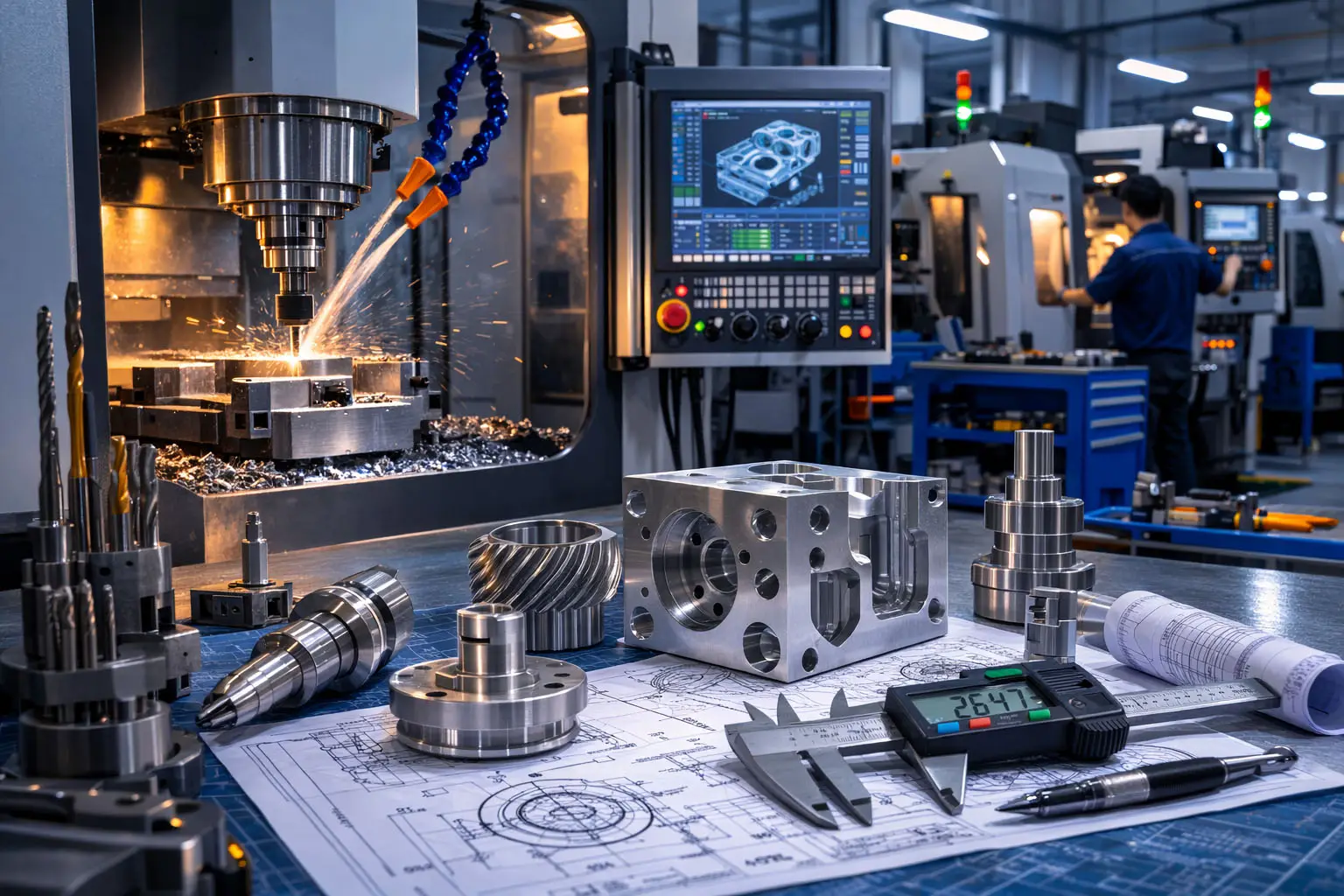
At SunOn, machine-shop work is the backbone behind many deliverables: CNC prototypes, production components, secondary operations after casting, and precision features on tooling and assemblies. This guide explains what a machine shop does, what equipment you’ll typically find inside, how jobs flow from drawing to finished parts, and how to choose the right shop for your project.
What a Machine Shop Actually Does
A machine shop’s job is to shape and modify materials using machine tools and cutting tools to create parts that match an engineering design. That can include:
-
Creating the part’s final geometry (holes, pockets, profiles, threads, tapers)
-
Holding tolerances and surface finish requirements
-
Producing single prototypes or thousands of parts—depending on the shop type
Most modern shops combine multiple processes (turning + milling + drilling + finishing) so parts can move efficiently from one step to the next.
What You’ll Find Inside a Machine Shop
A capable shop usually includes a mix of machining equipment, support tools, and inspection resources.
Core machine tools
-
CNC milling machines / machining centers for prismatic parts (plates, brackets, housings)
-
CNC lathes (turning centers) for round parts (shafts, bushings, threaded fittings)
-
Drill presses / tapping for holes and threads (often integrated into CNC workflows)
-
Surface grinding or specialty finishing when tighter surface control is needed
Tooling and workholding
-
Vises, fixtures, soft jaws, collets, chucks
-
Cutting tools (end mills, drills, taps, boring bars)
-
Tool presetters and tool management systems in more advanced shops
Metrology and inspection
A shop that claims “precision” should have inspection capability to match:
-
Calipers, micrometers, height gauges
-
Pin gauges / thread gauges
-
CMM (Coordinate Measuring Machine) or optical measurement for tighter work (varies by shop)
Supporting infrastructure
-
Coolant systems, chip management, filtration
-
Tool crib and inventory control
-
Safe material handling (cranes/hoists for heavier work)
-
Clean, organized work areas (important for safety and repeatability)
Common Machine Shop Services
A machine shop may offer one or many of these services depending on focus:
-
CNC milling & CNC turning (most common)
-
Prototype machining (fast iteration)
-
Production machining (repeatability, fixtures, cycle time optimization)
-
Secondary machining after casting, forging, or extrusion
-
Deburring and finishing prep (edge break, surface uniformity)
-
Assembly support (in some shops)
3ERP’s machine-shop overview frames machining as shaping raw materials into precise parts using tools like lathes, mills, and drill presses—this aligns with how many modern job shops are structured.
Machine Shop Types: Job Shop vs Production Shop
Not all machine shops are built for the same job.
Job shop
-
Handles mixed part types, smaller batches, and varied customer requirements
-
Strong for prototypes and custom projects
-
Flexibility is the advantage; per-part cost may be higher for large volumes
Production shop
-
Optimized for repeat runs and larger quantities
-
More dedicated tooling/fixtures and stable processes
-
Best when the part is mature and volumes justify optimization
Many suppliers (including SunOn) operate with “hybrid” capability: prototype-friendly upfront, with pathways to stable production once designs freeze.
How a Part Moves Through a Machine Shop
A typical workflow looks like this:
-
Quote & manufacturability review
Material, tolerances, surface finish, quantity, lead time, and critical features are evaluated. (Good shops will flag risk points early.) -
Process planning
Decide the route: turning first or milling first, number of setups, datum strategy, and inspection plan. -
Programming (CAM) and setup
CAM toolpaths are created, tools loaded, workholding prepared, and offsets set. -
First-article machining
The first part is produced and checked. If needed, small adjustments are made. -
In-process inspection
Critical dimensions are monitored during the run—especially on longer batches. -
Deburr, clean, finish
Edges are refined, surfaces prepped, and optional finishes coordinated. -
Final inspection & packing
Parts are verified against drawing requirements, then packed to prevent damage.
What Makes a “Good” Machine Shop
If you’re evaluating suppliers, these factors matter more than marketing language:
Equipment matches your part geometry
A shop with 3-, 4-, or 5-axis CNC capability can reduce setups for complex parts, which improves consistency and often reduces cost at scale.
Quality system and inspection capability
Certifications (such as ISO 9001) can be a positive sign, but ask what they actually inspect and how results are recorded—especially for tight tolerance features.
Material availability and traceability
Delays often happen when the shop can’t source your required grade quickly. Good shops confirm material availability early.
Lead time realism
A reliable shop gives a lead time that matches capacity. Overpromising on timing is a common cause of downstream issues.
Communication and engineering support
The best shops don’t just “run the file.” They ask smart questions and propose practical changes when something may cause scrap or delays.
Practical Tips for Getting Better Results from Any Machine Shop
If you want fewer revisions and faster turnaround, provide:
-
A clean drawing with critical tolerances clearly marked
-
A note explaining function-critical interfaces (where it fits, seals, aligns, or moves)
-
Acceptable surface finish targets for key faces only (avoid over-specifying)
-
Quantity + forecast if you may scale (so the shop can plan fixtures accordingly)
-
If you have it: CAD + STEP + PDF drawing (best combination)
Also: avoid placing very tight tolerances everywhere. Even the 3ERP machining selection guidance highlights that tighter requirements can increase setup and cost—so focus precision where it matters most.
How SunOn Supports Machine Shop Projects
SunOn’s machine-shop style workflow is designed to help customers move from concept to stable production:
-
DFM review to reduce risk and cost early
-
CNC turning and milling planning to reduce setups
-
Inspection plans built around truly critical dimensions
-
Optional finishing and assembly support when needed
If you want, send me the part type + material + tolerance level + quantity and I can turn this into a SunOn-ready publishing pack:
