


Precision Machining: What It Is, How It Works, and When to Use It
Modern products depend on parts that must fit, seal, align, and repeat—often with very little room for error. That’s where precision machining comes in. Precision machining is a CNC machining process that uses computer-controlled machine tools to produce parts that need tight tolerances, complex features, or both.
At SunOn, precision machining is a core capability we use to support prototypes and production components across electronics, industrial equipment, automotive, medical, and more. In this article, we’ll explain what precision machining really means on the shop floor, the main process steps, the most common methods, and how to decide whether you truly need “precision” (or if standard machining is enough).
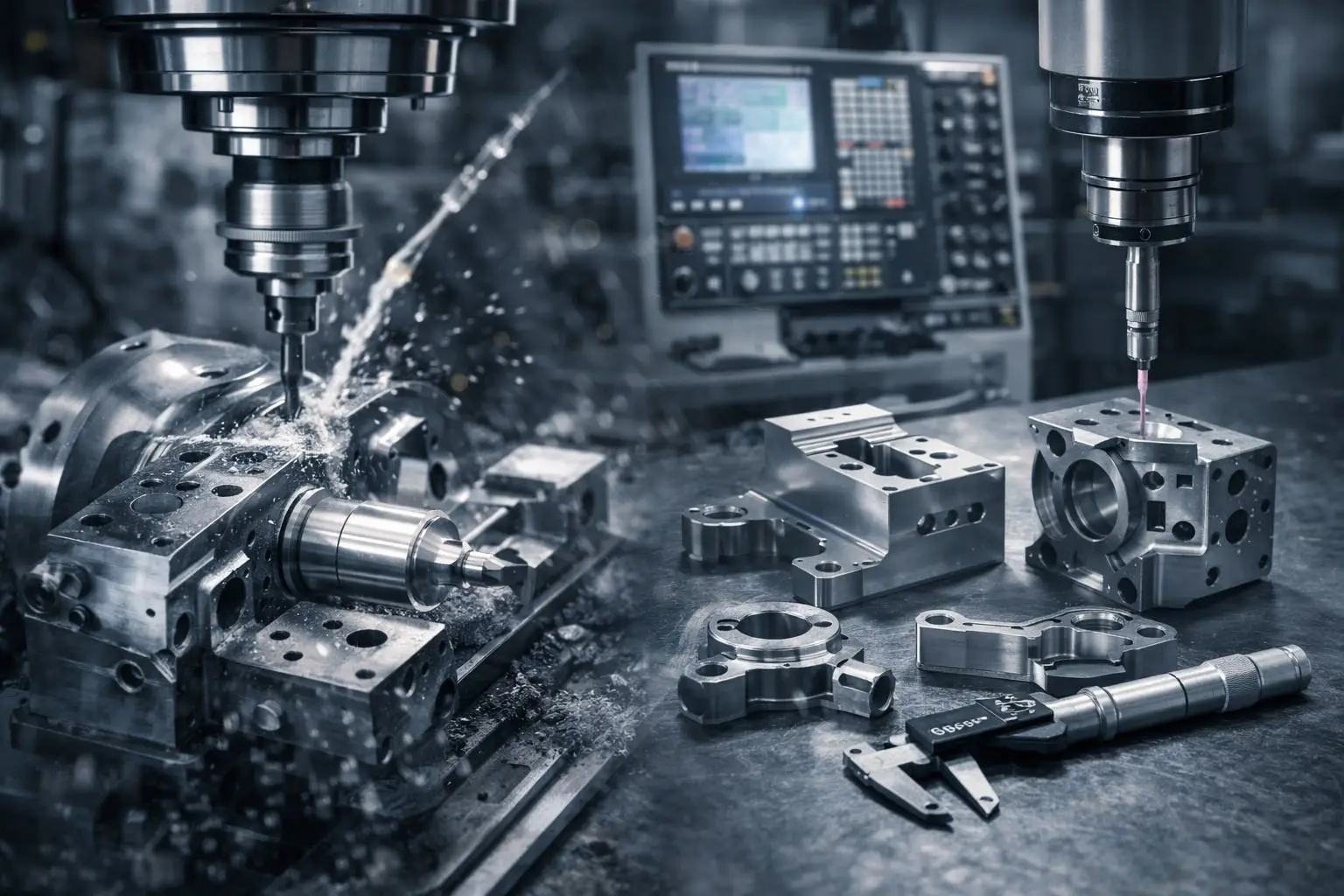
What Is Precision Machining?
Precision machining is a subtractive manufacturing method: the process starts with a block (or bar) of material and removes material using cutting tools until the part matches the design.
Compared with general machining, precision machining focuses on:
-
Tighter dimensional tolerances
-
Higher accuracy and repeatability
-
Better control of surface finish and critical fits
Precision machining can be performed by skilled machinists and also through automated systems (including high-speed CNC equipment).
Why Precision Machining Matters in Real Assemblies
Precision machining is often selected because parts must work together, not just look correct.
1) Assembly fit and functional alignment
Close tolerances help parts join correctly and reduce gaps, misalignment, and assembly rework.
2) Repeatability in production
Precision machining is valued because parts can be produced consistently, with negligible deviation from the first approved part.
3) Reduced secondary processing
With accurate machining and good surface control, some parts need fewer extra steps (like additional grinding or rework).
The Typical Precision Machining Workflow
Most precision machining projects follow a similar sequence from design to finished part:
Step 1: Build a CAD model
The process starts with a 2D/3D CAD design, often refined from early sketches into a fully dimensioned model.
Step 2: Convert CAD to CAM
CNC machines don’t directly “read” CAD the way humans do. CAM software converts design geometry into machine-readable instructions (toolpaths, coordinates, cutting strategies).
Step 3: Machine setup and calibration
This includes selecting tools, clamping/fixturing the workpiece, checking coolant and machine parameters, and confirming alignment.
Step 4: Execute machining
The CNC program runs while operators monitor progress and adjust parameters when required.
Step 5: Post-processing (as needed)
Some parts go directly to inspection and shipping; others may require polishing, grinding, or surface finishing depending on functional and cosmetic requirements.
Common Precision Machining Methods
Precision machining isn’t one single method—it's a capability level across several processes.
CNC Milling
CNC milling uses rotating cutters to remove material and create flat surfaces, pockets, slots, and complex 3D shapes. Milling is a common choice for prismatic parts and multi-face features.
CNC Turning
Turning rotates the workpiece while tools shape diameters, shoulders, grooves, and threads—ideal for shafts, bushings, and rotational components. (Turning is referenced as a key precision route in the 3ERP article’s conclusion.)
Grinding
Grinding is often used when very fine surface finishes or extremely tight dimensional control are needed on select features.
EDM (Electrical Discharge Machining)
EDM is frequently used for hard materials or intricate internal geometries that are difficult to achieve with conventional cutting—especially in tooling and precision cavities.
Materials Commonly Used in Precision Machining
Precision machining supports a wide range of metals and plastics. Common metals include aluminum, steel, stainless steel, titanium, copper alloys (brass/bronze), and tool steels; common plastics include PA, PC, ABS, PMMA, and POM.
SunOn practical note: material choice affects not only strength and corrosion resistance, but also tool wear, achievable surface finish, and cost. If you’re unsure, we typically recommend selecting materials based on the real service environment (load, temperature, corrosion exposure), then adjusting machining strategy to match.
Key Benefits of Precision Machining
The source highlights several reasons precision machining is widely adopted:
-
High accuracy: tight tolerances lead to high dimensional accuracy.
-
High repeatability: CNC precision machining produces parts that match the original closely, with minimal deviations.
-
Efficiency: automation and reduced rework can improve productivity and reduce defects.
-
Safety: CNC can reduce manual cutting exposure by shifting operators toward setup and monitoring work.
When You Don’t Need Precision Machining
This is where many projects can save money.
If your part has non-critical dimensions (covers, brackets, housings with generous clearances), demanding ultra-tight tolerances everywhere can be unnecessary. The 3ERP article notes that tightening tolerance can trigger a new machine setup and raise labor/cost—e.g., a 0.01 mm tolerance may be significantly more expensive than a 0.05 mm tolerance on the same feature.
Rule of thumb:
-
Apply tight tolerances only to interfaces that affect function (bearing seats, sealing faces, alignment bores, press-fit diameters).
-
Keep the rest as standard tolerances to control cost.
Typical Applications of Precision Machining
Precision machining is used for prototypes and production parts in many industries, including automotive, medical, aerospace, and defense, where fine features and reliable assembly matter.
How to Specify Precision Machining Clearly
If you want consistent quotes and fewer delays, include:
-
Critical dimensions + tolerances (don’t over-tolerance everything)
-
GD&T where alignment, concentricity, or position is function-critical
-
Surface finish targets on sealing/bearing/contact areas
-
Material + any heat treatment requirements
-
Inspection expectations (what must be measured, and how)
The article also points out that tolerance can be communicated via a drawing title block, specific dimension callouts, or even included in the CAD model—just be consistent so the shop interprets it correctly.
SunOn’s Approach to Precision Machining
When customers come to SunOn for precision machining, our main goal is predictable results that match the part’s real function:
-
DFM review to identify which tolerances truly matter (and where you can save cost)
-
Process selection (3-axis/4-axis/5-axis, turning-first vs milling-first) aligned to geometry and datum strategy
-
Tooling + fixture planning to control runout, deflection, and repeatability
-
Quality checks focused on critical features, not just overall dimensions
If you’d like, send your drawing + target quantity + functional notes (where it fits, seals, or moves). We can suggest a tolerance plan and machining route that balances accuracy, lead time, and cost.
