


ABS Injection Molding: Comprehensive Guide for Manufacturing
ABS injection molding is a common manufacturing technology in manufacturing hard plastic parts of complex shapes in a durable process. It is accurate, repeatable and efficient, and therefore can be applied to industries as diverse as automotive to consumer electronics. Knowledge of the basics of the ABS injection molding assists the engineers and designers in optimizing the performance of the parts, minimizing the cost of production and attaining the high quality finish.
This instructive paper is a detailed introduction to ABS injection molding, its properties of the material, its processing methods, its benefits, its disadvantages, and its common practice. It also has the practical information on how to make the best out of it and how to reduce defects.
What Is ABS Plastic?
ABS Acrylonitrile Butadiene Styrene (ABS) is a tough thermoplastic polymer, which has been characterized by impact resistance and versatility. This is due to its combination of acrylonitrile, butadiene, and styrene monomers to produce a material that has high mechanical properties and can be injection molded. ABS plastic also has a high dimensional stability hence is used in precision components in electronics, automotive components, and household appliances.
ABS is also light, chemically proofed and can be easily stained which offers functional and aesthetic advantages to manufactured products. The thermal characteristics of this material enable it to be injection molded at conventional injection molding temperatures without sacrificing its strength.
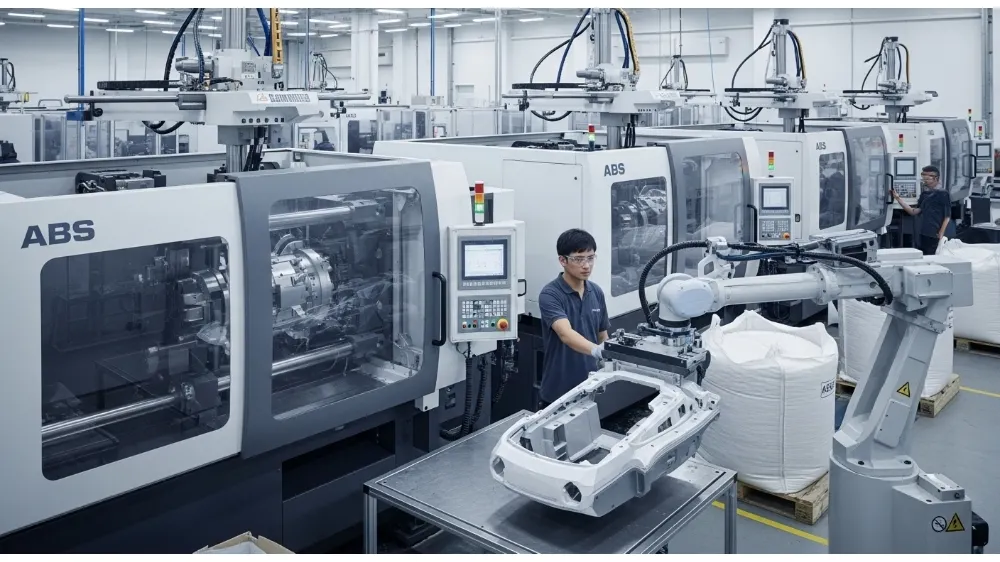
ABS Injection Molding Process Overview
ABS Injection molding is a process that uses heat to melt the plastic pellets and then forces the melted polymer into a mold cavity at a high pressure. The final part shape is determined by the mold and solidification of the part is done by cooling which creates an exact and repeatable part.
The process is usually made up of the following stages:
Drying of a Material: This ensures that the end product is not defective by the moisture.
Melting and Injection: The ABS pellets are melted and forced into the mold.
Cooling and Solidification: The material becomes firm in the mold and does not change its dimensions.
Ejection: This process involves the removal of the completed movie out of the mold to inspect and finish.
High volume production of consistent and high quality parts with complex geometries can be achieved by this sequence.
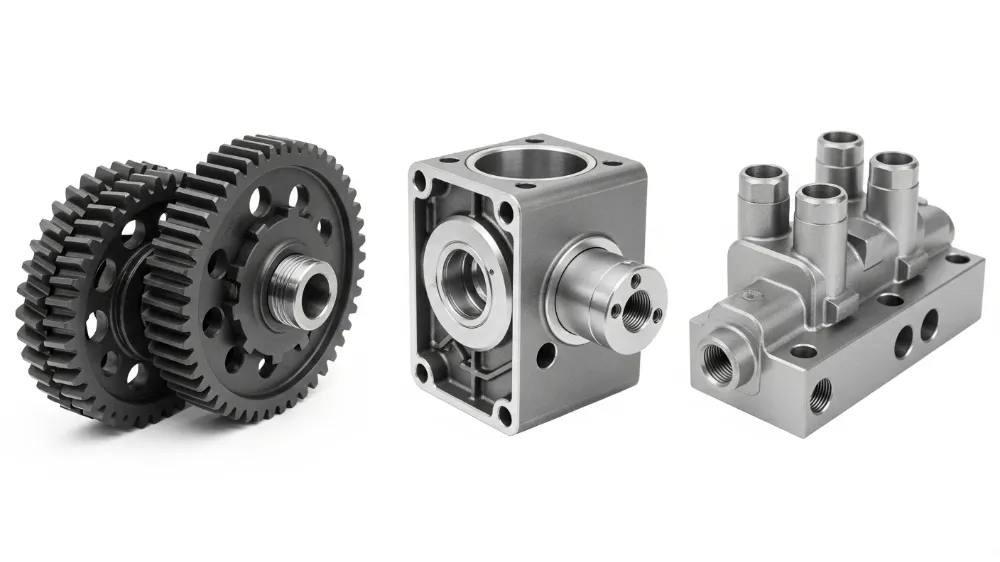
The Benefits of ABS Injection Molding
ABS injection molding is featured with a number of advantages to manufacturers:
Huge Production Productivity: Parts can be manufactured in large numbers and within a short period of time.
Supreme Surface Finish: ABS components have smooth surfaces that can be post-processed or painted.
Dimensional Accuracy: It can be tight with minimal tolerances that are used to guarantee uniform fit in assemblies.
Flexible Design: Supports the development of complicated geometries, undercuts and built-in features.
Durability: ABS materials have good impact resistance, toughness and chemical stability.
These benefits ensure that ABS injection molding has been a favorite in both functional and aesthetic use in industries.
Limitations and Challenges
The ABS injection molding does have some limitations in addition to its benefits:
Expensive Start up Costs: Mold design and construction are costly.
Sensitivity to Heat: Too high heat levels result in low material properties.
Shrinkage: The shrinkage needs to be compensated properly when designing molds in order to prevent the occurrence of dimensional errors.
Part Size Limitations: Parts that are very large could be demanding specialized machines or molded in parts.
These challenges are understood to enable engineers to optimize processes and reduce production problems.
ABS Parts Design Considerations
ABS injection molding will be successful only with a meticulous design consideration:
Wall Thickness: A constant thickness will decrease warping and provide steady cooling.
Ribs and Supports: Strengthen and security structural integrity with no weight-related waste.
Draft Angles: Ejection of parts is enabled and damages avoided during demolding.
Gate Location: Correct location of the gate will guarantee consistent flow and minimize defects.
Undercuts: Undercuts can be minimized or simplify the design of the mold by side action.
The design principles enhance flexibility, quality of parts and efficiency in the manufacturing process.
Available Properties of ABS Materials in Injection Molding
Impact Resistance: ABS is able to take in shock and withstand fracture where there is mechanical pressure.
Thermal Resistance: Can operate in standard temperatures that are common in electronics and automobiles.
Chemical Resistance: Many acids, alkalis and oils, are resistant and which increases its durability.
Dimensional Stability: Undergoes no shape change with stress or temperature, allowing the assembly to be problem-free.
The knowledge of material properties will help engineers to choose the right processing parameters and end-use applications.
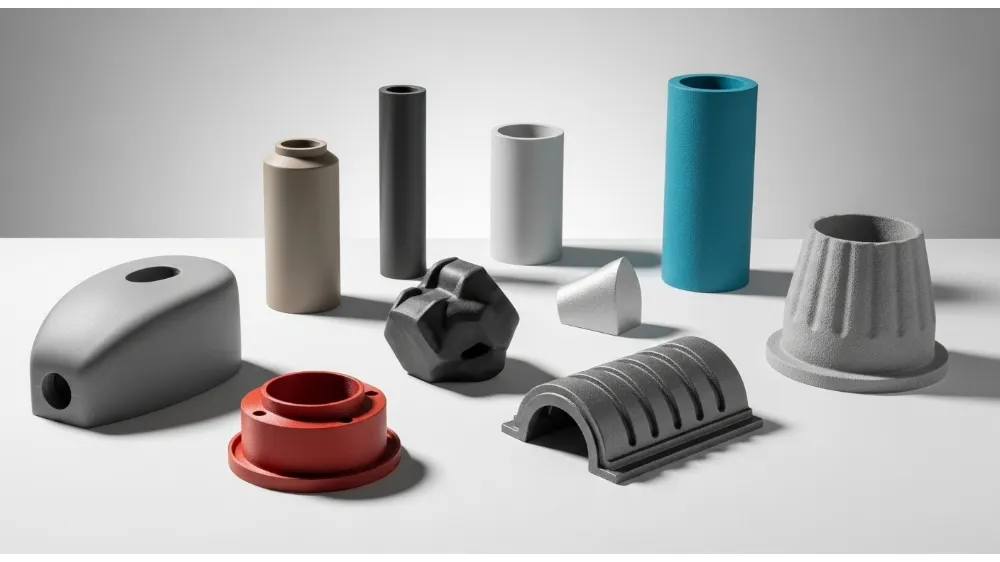
Uses of ABS Injection Molding
ABS injection molding is applicable in various industries because it is strong, flexible and appealing to the eye:
Automotive: Dashboard parts, trims and housings.
Consumer Electronics: Laptop shells, remote controls, and keyboard frames.
Household Items: Refrigerator parts, vacuum cases and tool handles.
Toys and Educational Products: Plastic toys that are long last and safe and need shaped details.
Medical Devices: Non-implantable devices need to be precise and chemically resistant.
These applications indicate the breadth of ABS in making functional products that are also attractive.
Optimal ABS Injection Molding Process
Manufacturers emphasize on to maximize efficiency and quality of parts:
Process Parameter Control: Refining temperature, injection pressure and cooling times.
Mold Design Optimization: Shortening the cycle time, less material usage, and easy ejection.
Quality Inspection: Surface finish, dimensions and mechanical properties.
Tool Maintenance: Maintenance helps to maintain a constant performance and decreases the downtimes.
Best practices can increase the productivity, waste reduction and the overall quality of parts.
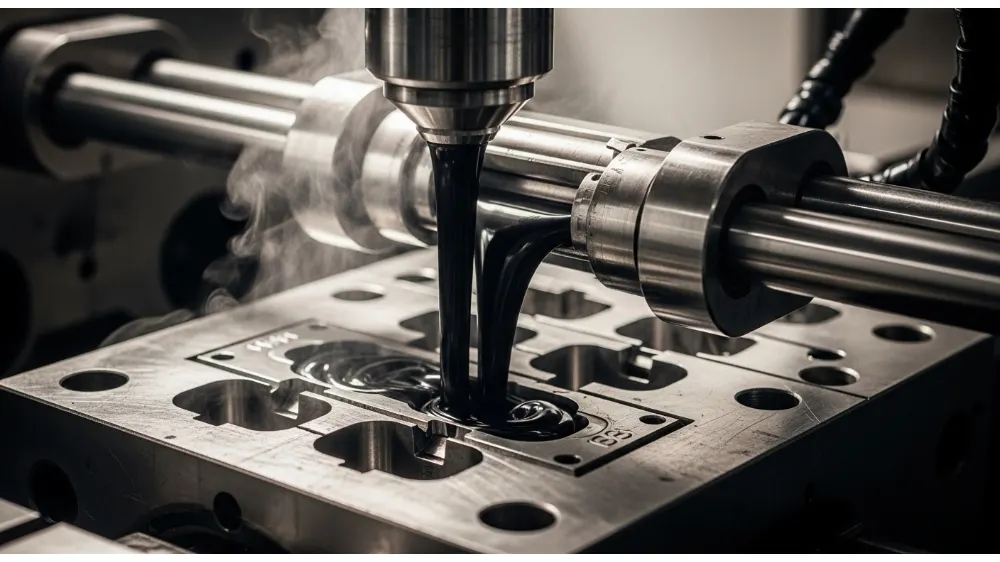
General Faults and Troubleshooting
The defects can be observed in the ABS injection molding even with experienced operators:
Warping: It is caused by a mismatch in cooling; correct wall thickness or cooling tracks.
Sink Marks: The sink marks are caused by heavy areas; maximize material flow and cooling.
Flash: Overstocking of parts along line of parting; make sure that there is sufficient clamping force and fit of mold.
Short Shots: Unfilled; Raise injection pressure or temperature.
A high-quality ABS components should be identified and rectified of these faults.
Frequently Asked Questions (FAQ)
Q1: What is the use of ABS injection molding?
It is applied to mach durable, accurate and intricate plastic components in the automotive, electronic, appliances and toys industries.
Q2: Can ABS components be painted or plated?
Yes ABS parts can have paints or coatings applied to them or plated with metals to make them look better.
Q3: Does ABS have high-temperature applications?
ABS is moderately thermally resistant, and can be used in most consumer electronics, although not in extreme heat situations.
Q4: What is the effect of mold design and gate positioning on ABS parts?
Correct design of molds will guarantee that there are no defects, even filling, and complex shapes.
Q5: Which are typical defects in ABS molding and how are they remedied?
Warping, sink marks, flash, and short shots can be rectified by changing temperature, pressure, or mold design.
Q6: Is it possible to automate ABS molding?
Yes, CNC and robotic automation can handle high-volume ABS injection molding to maintain uniform quality.
Conclusion
ABS injection molding is one of the most efficient and versatile processes in producing durable parts of plastic that are of complex shapes and good finishes. Manufacturers can optimize the quality of parts and production efficiency by knowing the material properties, process parameters, design and defect prevention. The inclusion of modern automation and quality supervision also helps in the provision of reliable, cost-effective and high-volume production of ABS plastic products.
