


Advanced CNC Drilling: Precision and Efficiency in Modern Manufacturing
The modern manufacturing has been transformed by Computer Numerical Control (CNC) drilling. It allows industrial parts to be very precise, repeatable and automatable. Compared to the conventional manual drilling method, CNC drilling enables the operator to generate intricate geometries with uniformity, and minimizes the effect of human error. The technology is highly utilized in the automotive, aerospace, electronic and machinery industries because it is reliable and efficient.
CNC drilling is a combination of computer-controlled movement of the tools with prior computer-controlled instructions to drill holes at the intended positions, depths and angles. The knowledge of the principles, advantages, and use of CNC drilling is necessary to all engineers and the manufacturing companies that want to maximize the quality and efficiency of production.
What Is CNC Drilling?
CNC drilling is a technique of creating holes in metal, plastic and composite materials with the help of computer programmed drill press. The CNC system coordinates the rotation of the spindle and its rate of application and the positioning of tools to specifications. CNC drilling reduces the rate of errors and increases consistency in numerous components unlike in manual drilling.
The technology enables multi-axis drilling to be done, and angles, and different depths can be done without any complex manual arrangements. Modern machining centers rely on CNC drilling to allow combination with milling, tapping, and threading.
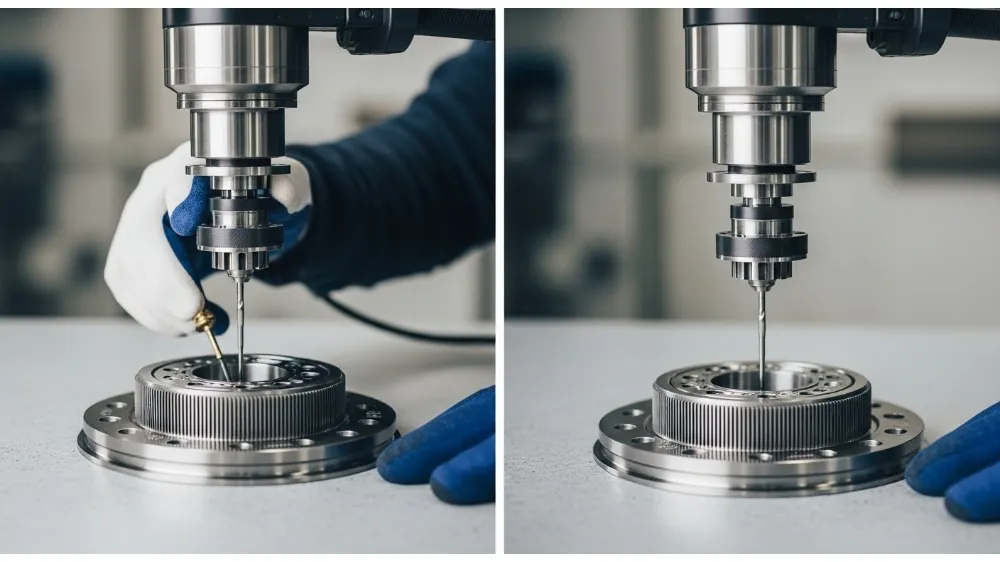
Basic Elements of a CNC Drilling Machine
A CNC drilling machine is made of a number of major parts. The drill bit is held and rotated by the spindle and the material is clamped in place by the worktable. There are stepper or servo motors that regulate the fine motion of the spindle and table on several axes. The program, toolpaths, feed rates and spindle speeds are controlled by a computer interface.
The CNC drilling machines of high quality have the automatic tool changers, coolants, and sophisticated sensors to measure the torque and vibration. These characteristics increase productivity and concurrent quality even during high volume production.
The CNC Drilling and the Manual Drilling
CNC drilling has a number of benefits over manual drilling. Automation helps to decrease operator fatigue and error as well as to allow intricate hole designs that would otherwise be hard to duplicate manually. Large production runs are kept in a high state of precision and depth offering greater efficiency and quality repetition by CNC machines.
The process of manual drilling is very labor-consuming in terms of set-up, measurements, and supervision. Although it is appropriate in easy jobs or prototyping, manual drilling is not the same as CNC systems in terms of speed, precision and versatility in a production process.
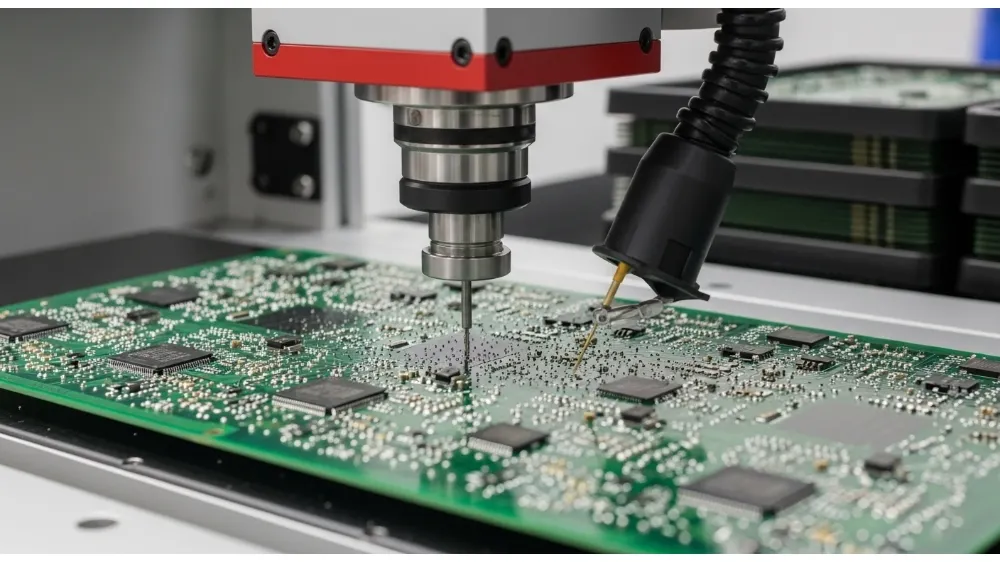
Important Variables in CNC Drilling
There are some parameters that affect CNC drilling. The cutting speed used dictates the velocity at which the drill turns which influences the amount of heat produced and finish. Feed regulates the movement of the tool into the material and affects the chip and tool wear. The geometry of drill bits, their type of material and the use of coolants are also vital factors.
The optimal setting of these parameters guarantees the quality of holes, long durability of the tool, and workpiece damage. Engineers usually use guidelines provided by their manufacturers, material charts, and software simulation to determine the right settings to use in each application.
Materials to be Used in CNC Drilling
CNC drilling has the capability of operating on a large variety of materials; they include metals, plastics, composites and even wood. Brass, titanium, aluminum, and steel are widely used in industries. Drill bit selection, spindle speed, and feed rate are influenced by the selection of the material. The harder materials have low cutting speed and special coating to avoid the wear of the tools.
Softer metals like plastics can be drilled faster but need to be drilled with caution allowing removal of chips and using coolants to prevent melting/deformation. CNC versatility in drilling CNC drilling is applicable in prototyping, low-volume and mass production.
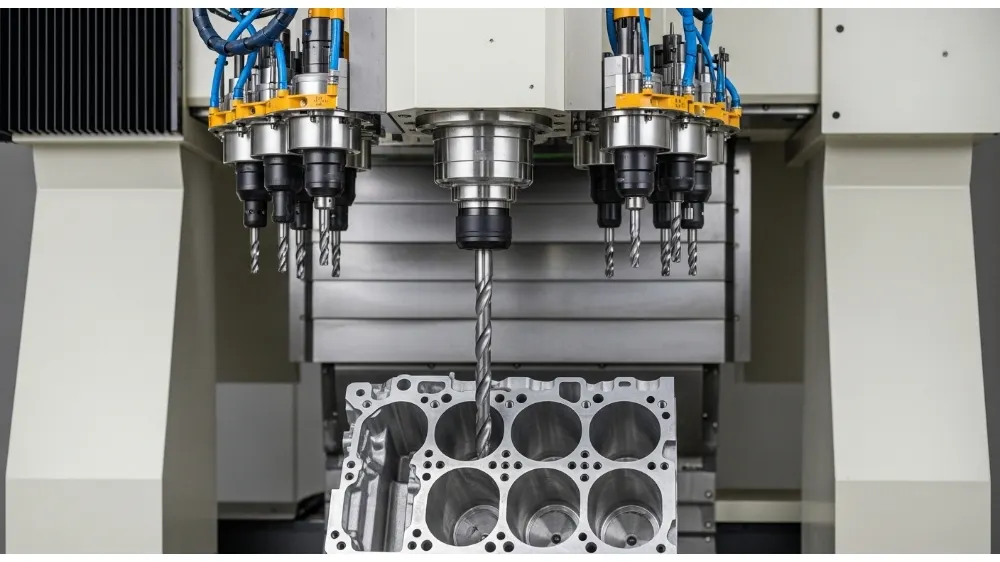
Drill Bits in CNC Drilling
CNC drilling involves the use of different drill bits to achieve different needs. The most common are twist drills, which are applicable in general-purpose holes. The spot drills generate precise initial positions to eliminate rambling. Holes where the bolts and other fasteners are to be placed are pre-drilled using center drills and countersinks. Other types such as carbide tipped and coated bits last longer and allow machining of the hard alloys.
The choice of tools is based on the material, size of holes, depth as well as the surface finish requirements. Efficiency and cost of replacement of tools are improved with the use of proper drill bit.
Industrial Uses of CNC Drilling
The CNC drilling is employed in a wide number of industries. CNC drilling is used in the production of engine blocks, chassis and interior panels in automotive manufacture to provide accurate hole patterns. It provides close tolerances of structural elements and elements in aerospace. CNC drilling is used in manufacturing of electronics and medical devices in the form of circuit boards, enclosures, and surgical equipment.
Combining CNC drilling with other automated operations allows manufacturers to have high throughput, consistent quality and low costs of labor and aid with prototyping and mass production.
Advantages of High-tech CNC Drilling
Implementation of CNC drilling has several benefits:
- Increased accuracy and reproducibility.
- Fewer human errors and labor expenses.
- Ability to create complicated hole formats.
- Quick cycles on large volumes production.
- Optimized parameters in terms of tool life.
- Better surface finish and accuracy in dimensions.
These advantages make CNC drilling a mandatory tool in contemporary manufacturing processes.
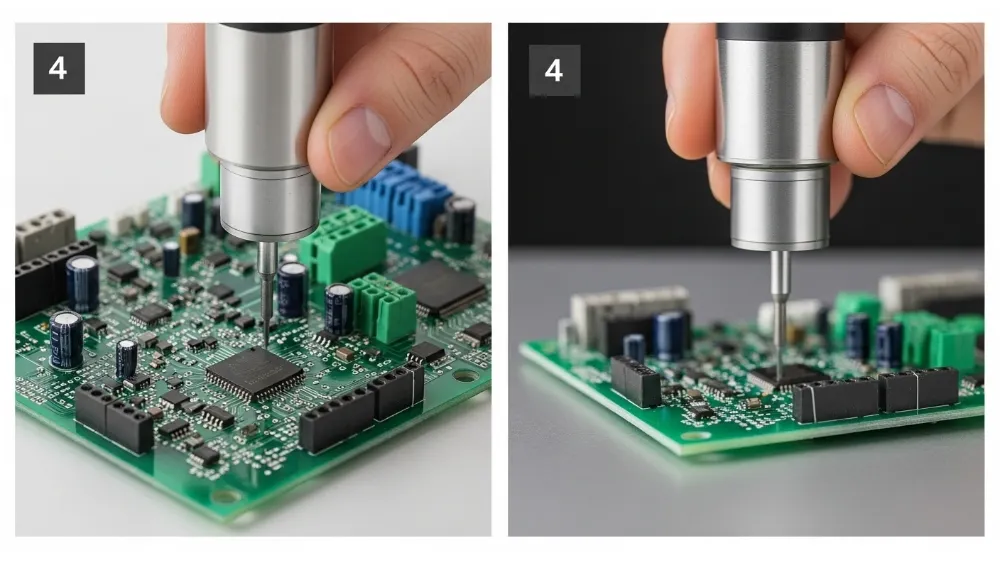
Common Errors and Best Practices
The frequent causes of errors in CNC drilling are wrong program parameters, poor choice of a tool, or lack of clamping of the material. The excessive spindle speed or feed rate may damage the work piece and decrease the tool life. The lack of coolant or lubrication could result in overheating and bad surface finish. Proper training, careful programming, and preventive maintenance are essential to avoid these issues.
CNC Drilling Automation / Integration
Contemporary CNC drilling machines can be equipped with robotic handling, vision systems and CNC milling centers. Automated tool changers and sensors enhance efficiency and the cutting loads and vibration are monitored by the software. Integration also allows concurrent operations, including drilling, tapping and reaming, in a single configuration and saves setup time and maximizes production throughput.
Guidelines to CNC Drilling Optimization
- Always select manufacturer suggested parameters of material and drill type.
- Conduct frequent maintenance of tools by inspecting and replacing those that are worn out.
- Use lubricants or coolant to avoid overheating.
- Fix workpieces to prevent vibration or misalignment.
- Check toolpaths using simulation programs prior to manufacture.
Implementing these practices guarantees uniform quality, minimizes waste and maximizes efficiency.
Frequently Asked Questions (FAQ)
Q1: What is CNC drilling?
A: CNC drilling is an automated procedure that drills accurate holes in diverse substances using automated tool movements.
Q2: What are the differences between CNC drilling and manual drilling?
A: CNC drilling is more accurate, repeatable, and automated, whereas manual drilling relies heavily on operator skill.
Q3: What materials can CNC drilling machines process?
A: Metals, plastics, composites, and wood can all be drilled using CNC systems with proper tooling.
Q4: What types of drill bits are used in CNC drilling?
A: Twist drills, spot drills, center drills, countersinks, and carbide-tipped or coated bits.
Q5: How do feed rate and spindle speed affect CNC drilling?
A: Feed rate controls material engagement while spindle speed affects heat, tool life, and surface finish.
Q6: Which industries commonly use CNC drilling?
A: Automotive, aerospace, electronics, medical device production, and industrial machinery sectors.
Q7: Can CNC drilling be combined with other processes?
A: Yes, it is often integrated with milling, tapping, reaming, and automated handling for efficiency.
Conclusion
High precision, repeatability, and efficiency in manufacturing has been brought about by advanced CNC drilling. Knowledge of the differences in the types of tools, materials, and operation parameters can enable engineers to optimize production and minimize costs to ensure high quality. The use of appropriate programming, tooling and monitoring of the processes will mean that CNC drilling remains pertinent in the present-day manufacturing needs.
