


Advanced Injection Mold Types: Comprehensive Guide for Manufacturing
Injection molding is a cornerstone of modern manufacturing, allowing precise and repeatable production of complex plastic components. Selecting the appropriate mold type is critical for efficiency, product quality, and overall production cost.
From consumer electronics to automotive parts and medical devices, understanding the advanced injection molds available helps engineers, designers, and manufacturers choose the right solution for specific applications.
This guide explores key mold types, their features, advantages, common applications, and provides a practical FAQ to clarify important considerations for production planning.
What Are Injection Molds?
Injection molds are custom-engineered tools used in plastic manufacturing. They shape molten plastic into designed forms by injecting it under high pressure into the mold cavity. Once cooled and solidified, the part is ejected, ready for finishing or assembly.
The mold type determines production efficiency, surface quality, cycle time, and cost-effectiveness. Proper selection also minimizes defects such as warping, sink marks, and flash.
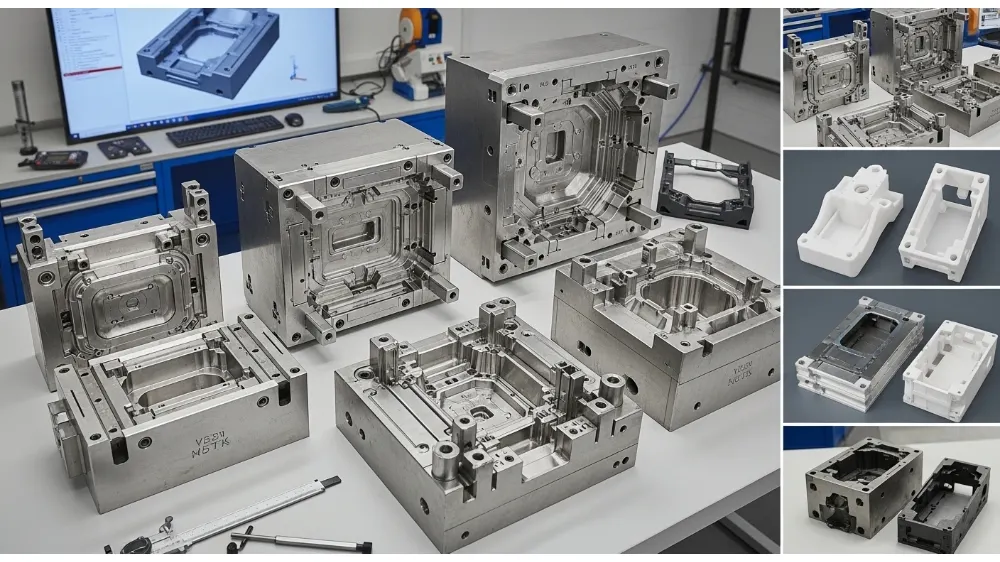
Single-Cavity Molds
Single-cavity molds produce one part per injection cycle. They are ideal for prototypes, low-volume production, or parts with complex geometry requiring high precision.
Advantages:
- High dimensional accuracy
- Reduced complexity in mold design
- Easier troubleshooting
Applications:
Prototyping, specialized medical components, and low-volume custom parts.
Multi-Cavity Molds
Multi-cavity molds allow multiple identical parts to be produced simultaneously within a single cycle, greatly increasing throughput.
Advantages:
- High-volume production efficiency
- Consistent quality across parts
- Lower cost per part at scale
Applications:
Consumer products, electronics housings, bottle caps, and automotive components.
Family Molds
Family molds produce multiple parts of different geometries in one cycle. They are efficient for producing complete assemblies or sets that must remain synchronized.
Advantages:
- Integrated production of complementary parts
- Reduced cycle times compared to separate molds
- Efficient material utilization
Applications:
Electronic assembly kits, multi-component housings, and medical device sets.
Hot Runner Molds
Hot runner molds maintain molten plastic flow in heated channels, preventing solidification before injection into cavities. This reduces waste and improves cycle times.
Advantages:
- Reduced scrap and material waste
- Faster cycle times
- Improved surface finish
Applications:
High-volume automotive parts, precision consumer electronics, and large injection-molded components.
Cold Runner Molds
Cold runner molds use unheated channels, allowing plastic to solidify in runners after injection. While this generates scrap, they are simpler and less costly to manufacture.
Advantages:
- Lower initial mold cost
- Simpler maintenance
- Ideal for smaller production runs
Applications:
Low-volume plastic components, decorative items, and experimental prototypes.
Stack Molds
Stack molds consist of multiple levels or plates to produce more parts in a compact mold footprint. This design maximizes cavity density without increasing mold size.
Advantages:
- Increased production efficiency
- Compact mold design
- Suitable for high-volume operations
Applications:
Bottles, caps, containers, and small automotive or consumer parts.
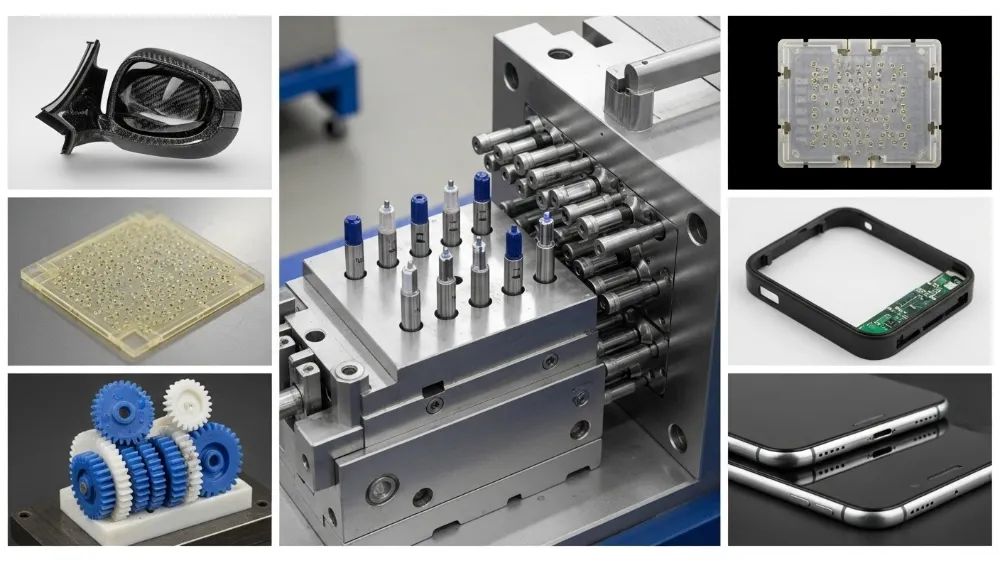
Family vs Multi-Cavity Considerations
While both family and multi-cavity molds aim to increase output, they differ in strategy:
- Multi-cavity: Produces multiple identical parts; ensures uniformity.
- Family mold: Produces multiple distinct parts; ideal for assemblies.
Choosing the correct approach depends on production requirements, part geometry, and assembly logistics.
Material Considerations for Injection Molds
Mold material selection affects durability, precision, and cost:
- Hardened steel: Best for long production runs; high wear resistance.
- Aluminum: Lightweight, ideal for low-volume production; faster machining but shorter lifespan.
- Pre-hardened steel: Balanced durability and machinability for medium runs.
Proper material selection ensures the mold withstands injection pressures, thermal cycling, and repeated use without deformation.
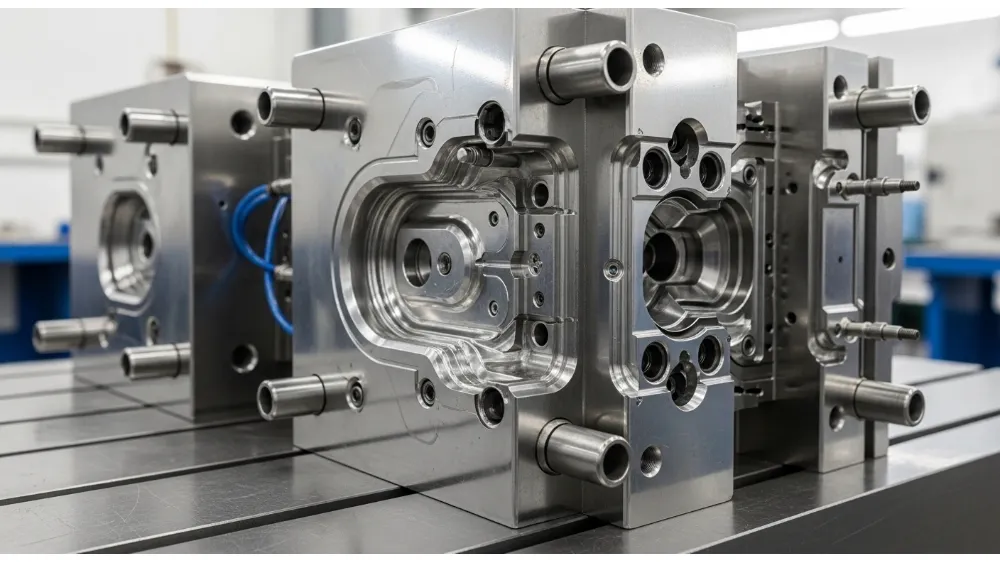
Cooling and Ejection Systems
Efficient cooling channels and ejection mechanisms are critical for high-quality production:
- Cooling: Optimizes cycle times and prevents warping.
- Ejection: Uses pins, sleeves, or air to remove parts without damage.
Advanced designs often integrate uniform cooling circuits and automated ejection to maximize throughput and part integrity.
Choosing the Right Mold Type
Key factors when selecting injection molds include:
- Production volume: Single-cavity for prototypes, multi-cavity for mass production.
- Part complexity: Complex geometries may require hot runners or specialized cavities.
- Material: Different plastics require different thermal management strategies.
- Cost constraints: Initial mold cost vs per-part production efficiency.
- Cycle time requirements: Shorter cycles may justify higher upfront mold investment.
Understanding these factors ensures optimal productivity and high-quality finished components.
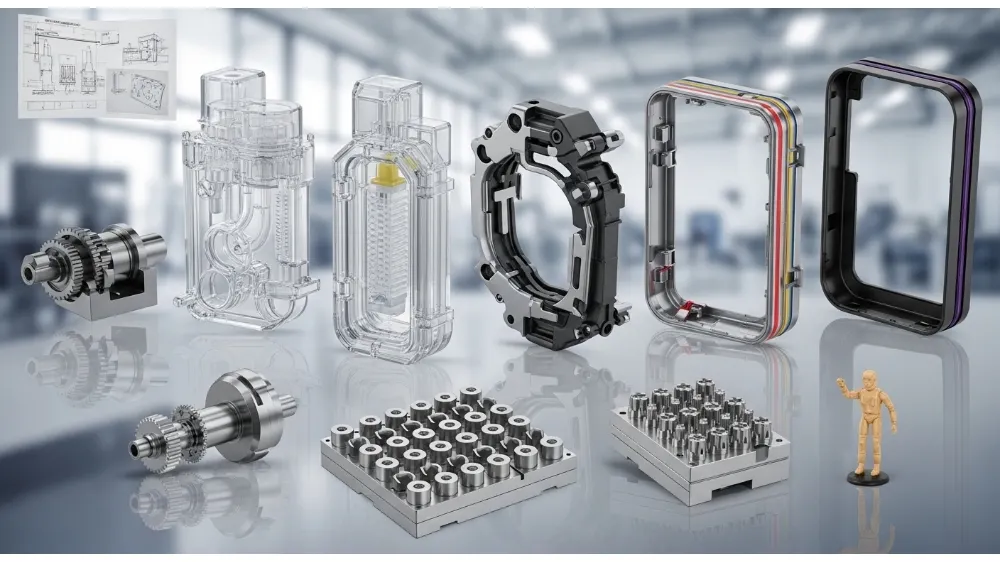
Common Mistakes in Mold Selection
Avoiding common pitfalls can save time and cost:
- Choosing a mold based solely on upfront cost
- Ignoring material shrinkage and thermal effects
- Underestimating part complexity
- Neglecting cooling efficiency and ejection mechanisms
Proper planning and consultation with experienced mold designers improve manufacturing outcomes.
Benefits of Advanced Injection Molds
Using modern injection mold types offers multiple advantages:
- Increased production efficiency
- Reduced material waste
- Enhanced precision and surface finish
- Capability for complex multi-part assemblies
- Lower long-term manufacturing cost per unit
Frequently Asked Questions (FAQ)
Q1: What is the difference between single-cavity and multi-cavity molds?
Single-cavity molds produce one part per cycle, ideal for prototypes. Multi-cavity molds produce several identical parts simultaneously for high-volume production.
Q2: What is a hot runner mold?
A hot runner mold uses heated channels to keep plastic molten until injection, reducing waste and improving cycle times.
Q3: When should I use a family mold?
Family molds are suitable when multiple distinct parts are required in one cycle, often for assemblies or kits.
Q4: How does mold material affect production?
Steel molds last longer and withstand high pressure, aluminum molds are quicker and cheaper for low-volume runs.
Q5: Why is cooling important in injection molding?
Proper cooling prevents warping, reduces cycle time, and ensures dimensional stability of parts.
Q6: Can I switch from cold runner to hot runner molds?
Yes, transitioning to a hot runner system reduces material waste and improves production efficiency for larger runs.
Q7: How do I select the right injection mold type?
Consider production volume, part complexity, plastic material, cost, and cycle time requirements when making a selection.
Conclusion
Selecting the right advanced injection molds is essential for maximizing manufacturing efficiency and part quality. By understanding single-cavity, multi-cavity, family, hot runner, cold runner, and stack molds, engineers can tailor production processes to specific needs. Proper mold choice reduces waste, enhances precision, and ensures consistent high-quality components for a wide range of industries, from automotive and electronics to medical devices and consumer goods.
