


Plastic Prototype Manufacturing: Comprehensive Guide for Modern Production
Plastic prototyping is a key element in the development of products in the present day. Engineers and designers are able to test functionality, form and fit by creating proper models thus lessening errors and enhancing quality of the final products by the time of mass production. The knowledge of the different high-end plastic prototype production modes would help the teams to use the best approach that is suitable to the design.
What Is Plastic Prototype Manufacturing?
Plastic prototype manufacturing is a production of physical products of plastic material. The models are used to reproduce the final design so that they can undergo functional evaluation, aesthetic evaluation, and ergonomic evaluation prior to full scale production. Prototyping enables the realization of the possible design flaws timely, which saves time and budget in production processes.
Advantages of Plastic Prototyping
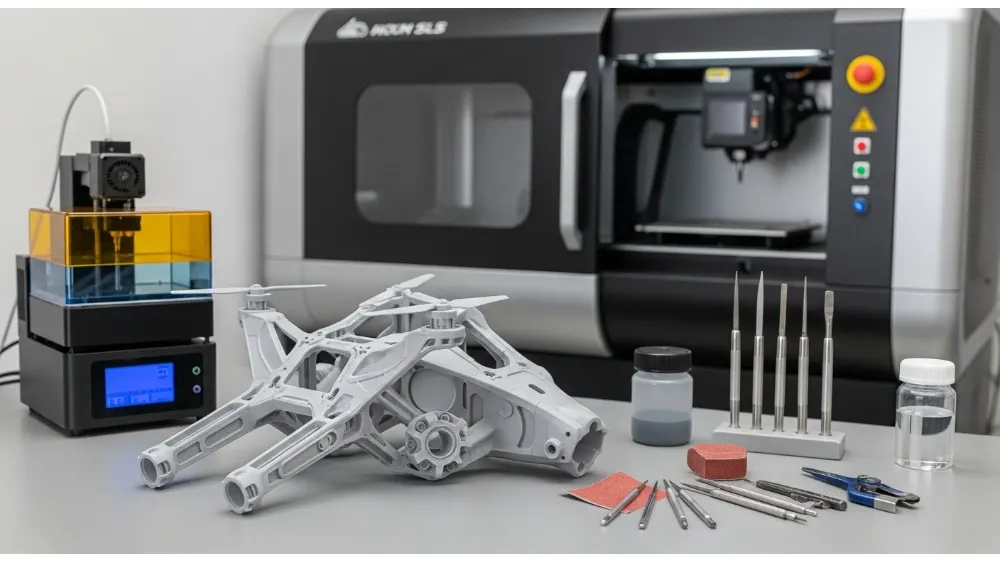
The benefits of plastic prototyping are being able to identify design defects early, speedy product development, and the measurement of material behavior. Plastic models are light, can be easily customized and can be applied with a variety of finishing. By having the ability to present concrete representations of concepts prior to final production, they make it easier to communicate with the stakeholders.
Rapid Prototyping Methods
Rapid prototyping is a method which enables manufacturers to create plastic prototypes on a fast and efficient basis. Widespread approaches are additive manufacturing, CNC machining and injection molding. Both methods have distinct advantages based on level of complexity in design, precision required and the type of material to be used and a designer can select the best method to use in a project.
Plastic Service 3D Printing in Plastic Prototyping
Additive manufacturing is also referred to as 3D printing which builds up prototypes in layers based on digital models. Such an approach favors complicated geometries, quick iteration, and economical testing. ABS, PLA, and PETG are some of the materials that are 3D printed, which give a balance of durability, flexibility, and finish quality to make functional and aesthetic considerations.
CNC Machining of Plastic Prototypes
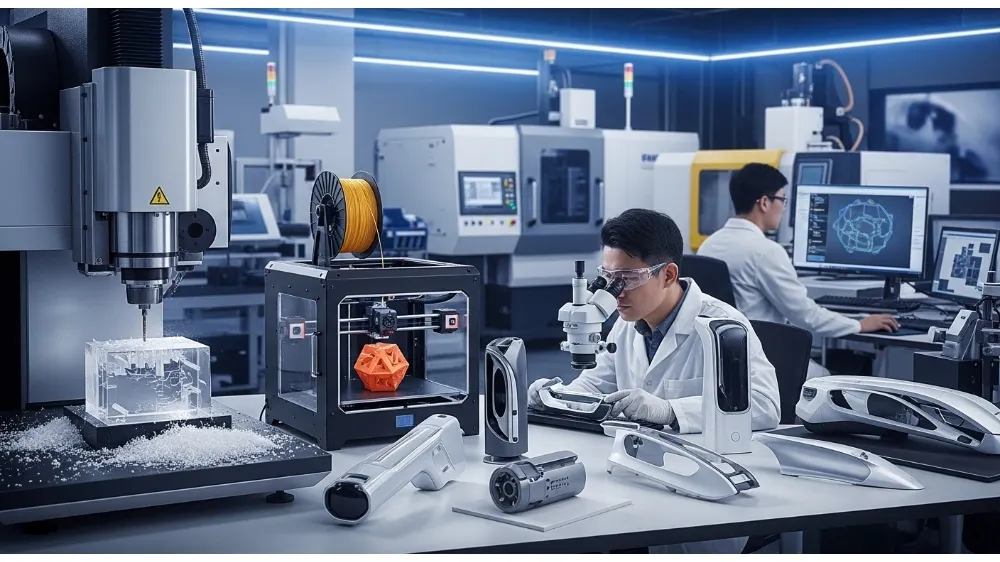
CNC machining is used to produce accurate prototypes by cutting plastic blocks out of solid material. Such a subtractive process has very good dimensional precision and surface finish. CNC machined prototypes can be used in functional testing, assembly trials and also quality control results, especially where the process requires tight tolerances.
Injection Prototypes are Available in Molding
Prototypes should be manufactured using injection molding where the prototypes are the most close replications of the parts they will be molded into. Detailed components are created using molten plastic injected using molds. Injection-molded prototypes cost more in terms of tooling, but represent material properties well, and have excellent surface quality as well as mechanical properties, so can be used in final-stage testing.
Choice of Material Prototypes
Selection of the appropriate plastic material is important in proper prototypes. ABS can be used as a common alternative, and PLA as a rapid-prototyping material, and polycarbonate as an impact-resistant material. The choice of the materials is based on the mechanical needs, appearance, flexibility, and compatibility to the post-processing options, including painting, sanding, or coating.
Plastic Prototyping: Functional Testing
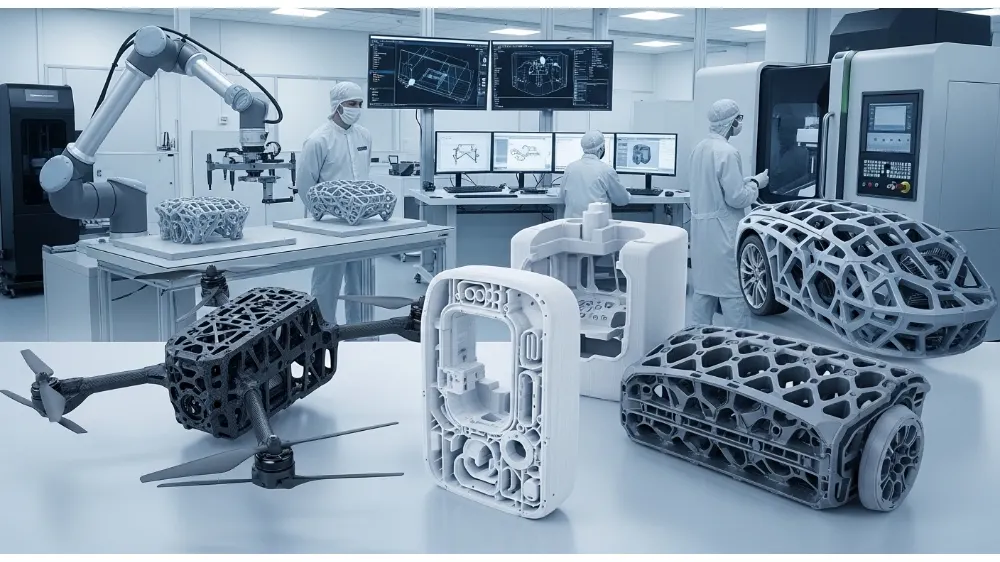
Plastic prototyping models provide the possibility of functional testing across a real world scenario. Mechanical strength, thermal performance, and compatibility of assembly can be evaluated by the engineers. Prototyping helps to minimize the cost of costly mistakes during the mass production and will guide to the final product that will be of standard quality and customer satisfaction.
Superficial Finishing and Beauty Inspection
Surface finishing increases the realism in prototyping by copying the final textures and appearance. The methods are sanding, painting, electroplating and chemical smoothing. Good finishes will allow the stake holders to discuss the aesthetics, ergonomics and user experience to make a well-informed decision on the development process.
Cost and Time Advantages
Plastic prototyping saves in costs of production as well as development time. The process of rapid iteration enables designers to get ideas refined fast. Early detection before design flaws are realized ensures that the company gets to make cost effective modifications during the mass production, hence efficient use of resources, and quicker time-to-market.
Mistakes in Plastic Prototyping
The common mistakes are the choice of inappropriate materials, oversights of functional tests or underestimation of tolerances. Poor planning may lead to prototypes which do not portray the end product in the same way. The correct choice of material, detail, and approach to the choice of methods are essential to effective prototyping.
Due Diligence of the Prototyping Method
The most appropriate prototyping technique is based on component sophistication, essential material qualities and time schedule of the project. The 3D printing is speedy when it comes to iterative design, CNC machining is best when it comes to high-precision parts and injection molding is best when it comes to functional testing of production-like parts. The cost, time, and quality balance have been used to achieve the best results.
Merging with Full-Scale Production
The prototypes are used as a mediator between the design and production. Experience on plastic prototypes is used in the tooling design, assembly procedures, and quality control. Combining prototyping and production planning minimizes errors, facilitates smooth working processes and speeds up the development of a product.
State of the Art Prototyping Technologies
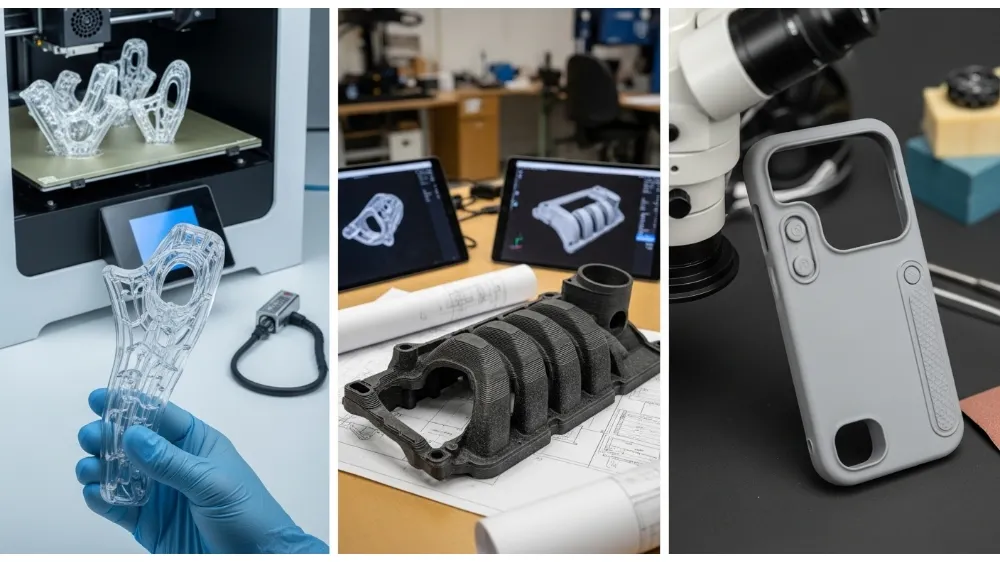
Prototyping is also enhanced by the emerging technologies such as multi-material 3D printing and high-precision CNC systems. Such technologies enable that mechanical and aesthetic qualities can be tested simultaneously which gives a more accurate analysis prior to mass production.
Frequently Asked (FAQ) Questions
Q1: What is the primary reason of plastic prototype production?
A: It enables the designers and engineers to test the product form, functionality, and assembly prior to mass production reducing errors.
Q2: What prototyping technique is the fastest one?
A: 3D printing is the quickest when it comes to rapid iteration, particularly in complicated geometries and testing early stage.
Q3: Could prototypes by injection moulding substitute production parts?
A: They are very similar to production materials and properties and therefore ideal in terms of functional testing, but tend to be more expensive than alternative methods.
Q4: What are the typical materials of plastic prototypes?
A: Popular ones include ABS, PLA, polycarbonate, and PETG depending on their durability, flexibility, and their finishing needs.
Q5: What is the comparison of CNC machining and 3D printing?
A: CNC machining is more precise and offers a better surface finish, whereas 3D printing offers faster and cheaper iterations.
Q6: What are the ways in which prototypes save on the production cost?
A: Early testing helps to discover defects, avoid mistakes in the mass production process, and streamline design and save time and material costs.
Q7: Is it possible to use plastic prototypes and conduct functional testing?
A: Yes, they permit testing of mechanical characteristics, assembly tolerance and usability before investing into final production.
Conclusion
The modern product development cannot do without advanced plastic prototype manufacturing. It is through material properties, choice of fabrication methods and the functional testing that engineers would be able to guarantee a higher quality of product, a reduced development cycle and also reduced costs. The integration of prototyping in the manufacturing processes allows making sure decisions in design and facilitating the transfers to the mass production.
