


Best Alu & Zinc Alloy Die-Casting Mold Supplier in China | SunOn
Aluminum-Zinc Die Casting Moulds: An Industrial Guide
Aluminum zinc die casting moulds are essential components in today's industry, equipped with the capability to construct precise, durable, and high-quality moulds at scale. Combining aluminum and zinc alloys allows die casting moulds to have optimum strength, lightweight, and cost-effective properties.
Aluminum zinc die casting moulds are crucial in the production of many industries, such as automotive, electronics, and medical. In today's world, lightweight and durable products are in high demand, so choosing the right mould supplier has become very important.
What is an Aluminum Zinc Die Casting Mould?
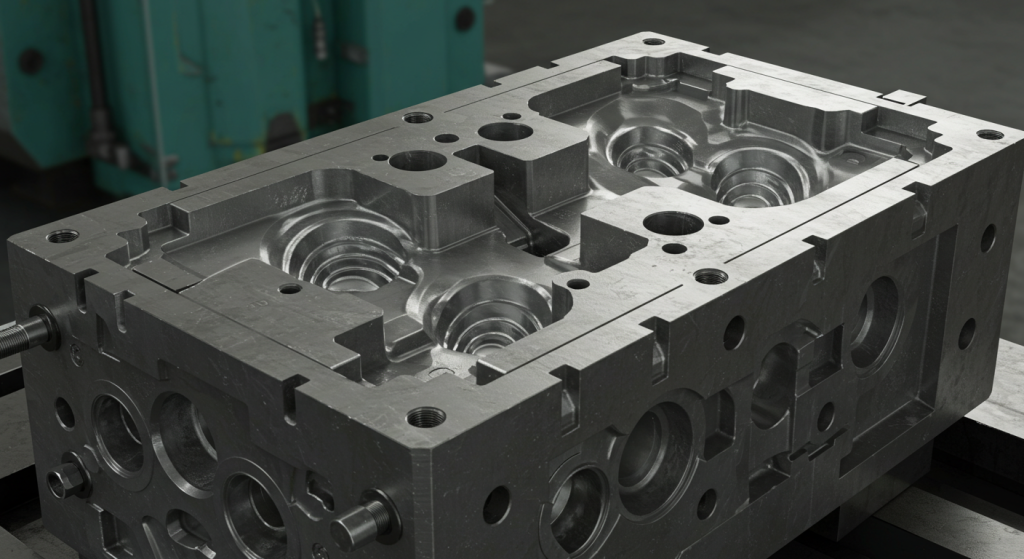
An Aluminum Zinc Die Casting Mould is a tooling system made for payments, which enables the high-pressure casting of molten aluminum zinc alloy into cavities. These cavities, when cooled, form complex and intricate structures with extraordinary accuracy to the dimensions required.
Notable Features:
* Moulds with extremely precise die casting and close tolerances.
* Moulds set at high pressure.
* Multiple die cavities for bulk volumes.
* Tool steel design for longevity.
These die castings are popular because they minimize waste and production costs while ensuring accuracy and consistency.
Alu & Zinc Alloy Die-casting Mold solutions remain critical to maintaining durability and accurate dimensions of various components. SunOn Industrial Group focuses on optimal designing, manufacturing, and mends of aluminum and zinc die-casting molds. These molds are provided to various industrial sectors, including automotive, electronics, industrial machinery, and home appliances, all of which require unparalleled performance and durability.
Our engineering team alters every mold for optimum net shapes and minimizes time and cost to net the desired output without compromising the quality.
Alu and Zinc Die-casting molds bring numerous benefits to the manufacturing sector. The alloys are lightweight and of unparalleled strength, perfect for die-casting components.
Key Benefits Include:
• Alu and Zinc Molds are Cost-Effective - They are long-lasting and lower the production costs greatly.
• Alu and Zinc molds are Thermally Efficient - They hold themselves at an optimal temperature and can speed up the production.
• Durable molds can withstand deformation from continuous production.
• Molds that possess Accurate Dimensions are high-precision designed that ensure all components are seamless.
• Personalized Creations - Molds are flexible to refined, and specialized for each shape and use.
Getting Started
In die casting, the first stage is creating the die, which involves designing molds and CNC machining hard steel blocks. With die casting, aluminum blocks or zinc alloys are injected and cooled while under high pressure. The final product is then ejected, and the components are consistent and precise.
Trimming, surface polishing, deburring, and inspection are the final stages. The product is then finished and meets the international standards.
Operational Flow
In a step-by-step manner, the workers check for performance and reliability.
1. Price Evaluation and Negotiation
The customer blueprints, the requirements are then explained, and the price is set.
2. Design Analysis
In this phase, the problems are solved before they even arise.
3. Mold Design
The engineers create high-quality surfaces and structures.
4. Mop Making
The components are then made by components are made by EDM, and the finishing is done by turning and milling.
Materials Used in Production
The materials we use for mold fabrication are aluminum alloys, zinc alloys, and advanced steels. These materials provide:
• Tough and strong
• Corrosion and high-temperature resistant
• Longer tool life for mass production
Mold reliability with advanced tooling and technical skills means we properly support many industries around the world
👉 Explore our group for more about the die-casting.
The Process for Manufacturing the Mold Used in Die Casting
1. Sketch and Estimation
• Design drawings are supplied by the customer.
• Engineers look over details and specifications to clarify.
• Quotation is made based on the material, size, and complexity.
2. Design and Creation
• Performance Mold Flow and DFM reviews ensure that the optimized analysis is manufacturable.
• Performance is optimized for DFM review.
• Parting surfaces, gating, and the cooling system are designed.
3. Making Precision Molds
• Thermal control channels are included for stability in the components.
• EDM, CNC, milling, and turning are used for integration.
• Micron-level precision accuracy is produced.
4. Testing and Assembly
• Components undergo polishing and assembly.
• Testing is rigorous to ensure proper functionality, and in just two weeks, the T1 sample is produced.
👉 Explore more group master precision mould services like T1 here at SunOn Mould.
Uses of Aluminum Zinc Die Casting Molds
Automotive Sector
• Engine housings
• Components of the transmission
• Brackets that can withstand high temperatures
Consumer Electronics
• Cases for mobile phones
• Casing for LED lights
• Parts for connectors
Healthcare Sector
• Enclosures for medical equipment
• Casing for fine surgical instruments
Aerospace Sector
• Lightweight and strong brackets
• Housings for avionics equipment
Consumer Electronics
• Parts of kitchen appliances
• Molds for packaging
• Handles and grips produced under high strength
This information is taken from Die Casting Applications Overview – NADCA
Drawbacks of Aluminum Zinc Die Casting Moulds
• High Precision: Very complex shapes and fine details
• Strength and Durability: Components under stress
• Lightweight: Components for the automotive and aerospace
• Cost-Effective: Best pricing for high volume
• Corrosion Resistance: Harsh Environments
• Consistency: Parts of the same quality produced over and over, exceeding a million
Why Would You Prefer a Chinese Aluminum Zinc Die Casting Mould Supplier?
Die cast moulds are one of the various industries that have earned China’s reputation as a dominant die cast mould producer. Benefits include the following.
• Prices are lower than Western suppliers
• Very large and modern factories
• Engineers with a lot of knowledge
• Automotive and medical industries can be catered to without borders.
SunOn Mould has been awarded the prestigious certifications of ISO 9001, ISO 14001, and IATF 16949, which highlight their quality and international standard compliance.
Technical Features
● Mould Flow Analysis: Filling an alloy while ensuring that air pockets are trapped is vented off.
● Preventive Thermal Control Systems: Systems that minimize defects and duvet the life of the mould.
● Multi-Cavity Tooling: Methods that elevate the efficiency of large-scale production.
● Surface Finishing Options: Options such as polishing, plating, and coating that improve the overall appearance of the mould.
● Prototype Die Casting Moulds: Moulds that facilitate the approval process before large-scale production.
Price Considerations
1. Materials of Construction - Moulds would be made of Aluminum vs. zinc Alloys.
2. Size and Intricacy of the Moulds - Bigger moulds cost more.
3. The Total Number of Units to Be Produced - High volume runs lower the cost of each part.
4. Tool Life Expectancy - Mould steel of premium quality extends the life of the tool.
5. Customization Requirements: Such as - Inserts, logos, or unique finishes.
6. Additional Reference: Die Casting Design Resources – Dynacast
Choosing the Most Suitable Mould Supplier
1. The certifications that a company possesses. e.g., ISO, IATF, and quality standards.
2. The number of years that a company has been in the die casting mould manufacturing industry.
3. The company’s previous works in your corresponding field.
4. The company’s initial testing is done before large-scale production.
5. Support after the sale has been made and assistance with transportation.
👉 To see our custom mould solutions, visit SunOn Mould.
Forecasts for the Future of Aluminum Zinc Die Casting
• Electric vehicles and aerospace alloys.
• Boosted efficiency with AI-driven Mould Design.
• Environmental efficiency with recyclable alloys.
• Integration of IoT and automation in Smart Factories.
• A combination of 3D printing and die casting in Hybrid Manufacturing.
Conclusion
The future of manufacturing is being revolutionized by Aluminum Zinc Die Casting Moulds. They stand out in precision, cost, and durability, making it beneficial to all industries. No matter if you’re in the automotive, medical, electronics, or other industry, it is vital to find the right supplier for long-term success.
We take care of the entire process, starting with design analysis, mould making, and even mass production. Aluminum Zinc Die Casting Moulds are one of the most reputable in all of Asia, with our technology, certified quality, and global reach.
