


Annealing Process: Techniques, Benefits, and Industrial Applications
Annealing is an important heat treatment procedure to enhance the mechanical and structural quality of metals and alloys. It is possible to mitigate internal stresses, enhance ductility, and polish the grain structure of materials by manipulating the heating and cooling cycles by the engineers. It is crucial to the manufacturers who aim at improving the performance of materials and prolonged life of components to understand the annealing process.
This is also broadly used in the automobile, aerospace, electronics and construction sectors. When properly performed, annealing may minimize the chance of cracking, enhance formability, and permit to the onward manufacturing process, including machining, bending or stamping.
What Is Annealing?
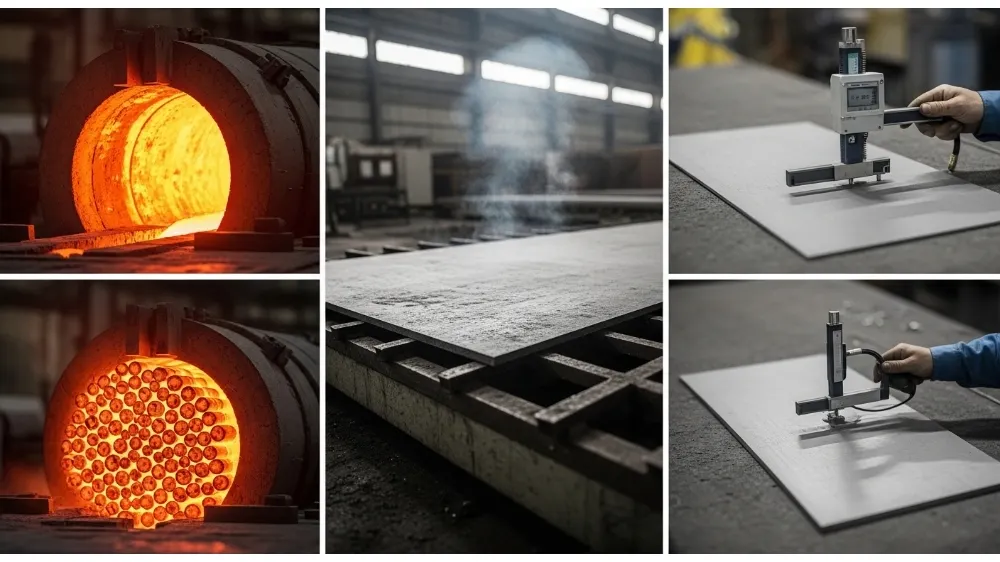
Annealing is a heat treatment method whereby alloys or metals are heated to a given temperature then allowed to stay at that temperature and then allowed to cool at a slow rate. The relaxation enables the internal structure to be relieved to get rid of the residual stresses of some prior mechanical work or rapid cooling.
The main goals of annealing are to enhance softness, ductile, revitalize toughness and refine microstructure. This simplifies metals to process later in the production cycle as well as preserving total strength and integrity.
Types of Annealing
There are several major types of annealing, depending on the temperature and cooling method:
- Full Annealing: This process consists of heating the metal then slowly cooling it so as to get a smooth and soft structure.
- Process Annealing: This is usually done in lower temperatures and without major changes in hardness in order to relieve internal stresses.
- Spheroidizing Annealing: Rounded carbide particles are formed in steels, and are easier to machine or form.
- Stress Relief Annealing: This is to be used to remove unspent stresses following welding, machining or forming processes.
All the types are selected based on the material requirement and the purpose of manufacturing.
Material Considerations
Most commonly used in annealing are steel, aluminum alloys, copper and other ductile metals. Annealing parameters depend on the material composition, thickness and prior processing procedure. High-carbon steels, such as, should be attentively heated to prevent over softening where as aluminum alloys can be given low temperature anneals to be hardened without loss of ductility.
The balance of hardness, toughness and machinability required is achieved by proper choice of the material, and heat treatment so that annealing maintains the optimal results.
Annealing Process Steps
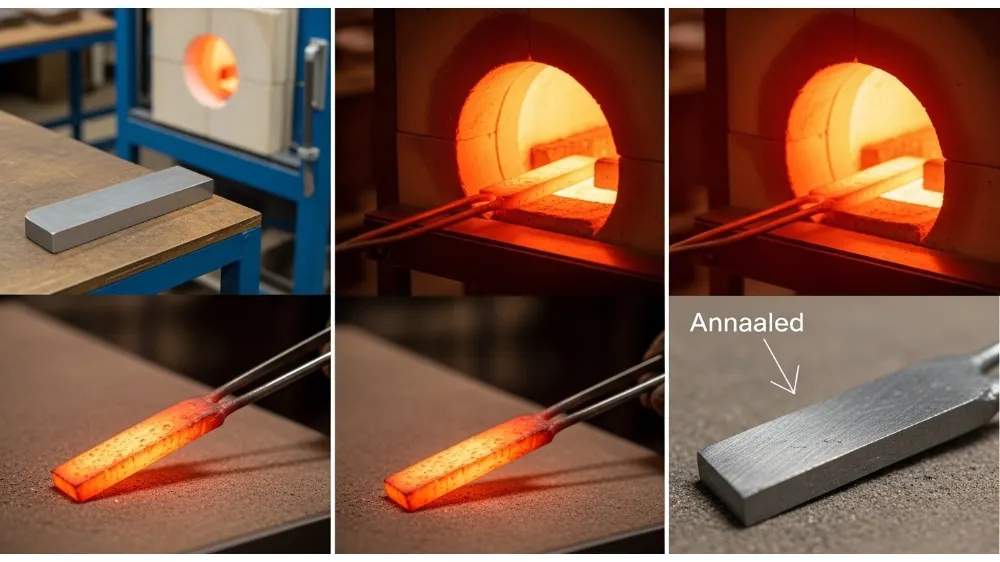
The general annealing process consists of three steps:
- Heating: The material is even heated to a desired temperature, and the temperature can change based on the alloy and type of annealing.
- Soaking: This temperature is maintained on the metal to enable total conversion of the microstructure to release the internal stresses.
- Controlled Cooling: The material is cooled in a controlled temperature either in air, furnace or inert atmosphere to reach the desired mechanical properties.
To prevent any defect like warping, scaling or grain growth, it is important that heating and cooling rates are carefully controlled.
Industrial Uses of Annealing
The process of annealing is applied in a great diversity of industrial fields:
- Automotive: Gears, shafts and panels are annealed to make them simpler to form and harder to crack.
- Aerospace: Structural components that are crucial are annealed to de-stress and to increase toughness.
- Electronics: Conductors made of copper and aluminum are annealed to enhance conductivity and bending behavior.
- Construction: Beams and sheets made of steel undergo an annealing process to promote fabrication and long-term structural integrity.
Manufacturers can also attain uniform results in the various volumes of production by adjusting annealing parameters.
Advantages of Annealing
Annealing process has a number of benefits:
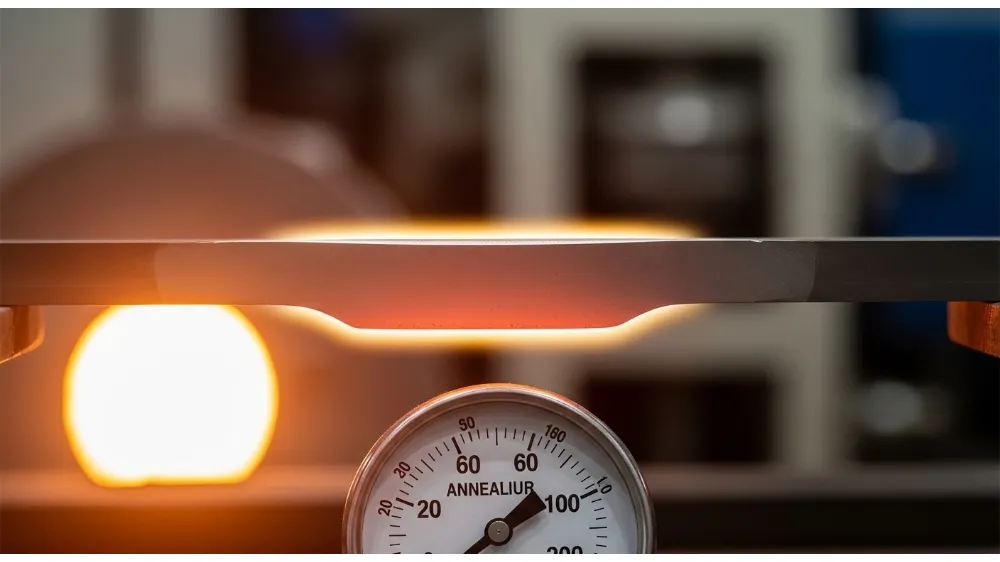
- Enhances ductile behavior, resulting in materials being easier to shape/bend.
- Lessens internal stresses, eliminates warping or cracking.
- Adjusts microstructure to even mechanical properties.
- Enhances machinability, decreases the wear of tools and labor time.
- Improves the thermal and electrical conductivity of metals, including copper and aluminum.
These advantages enhance productivity, minimize re-work and increase the life of production components.
Equipment Used in Annealing
Annealing may be conducted in all types of furnaces/heat treatment equipment:
- Batch Furnaces: Used for small to medium production runs, offering flexibility in temperature and soak time.
- Continuous Furnaces: Appropriate for high-volume operations with precise control over heating and cooling rates.
- Controlled Atmosphere Furnaces: Prevent oxidation and contamination, particularly for reactive metals like aluminum or copper.
The selection of the right equipment ensures uniform treatment, consistent results, and efficient production.
Control and Inspection of Quality
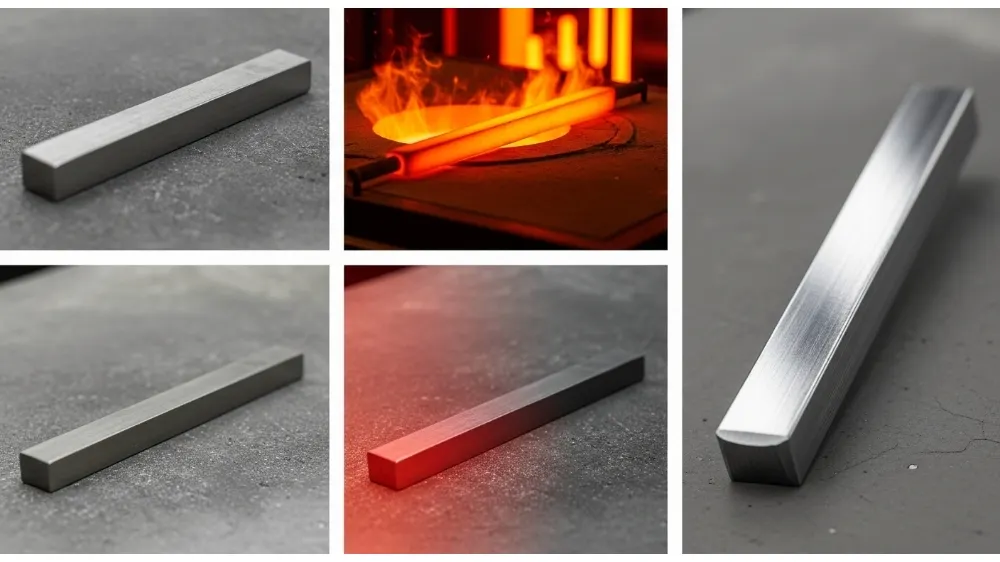
Quality checks are made after annealing to ensure that the desired properties have been met. Tests involve hardness tests, tensile tests, microstructure tests and dimensional inspection. Adequate quality control can ensure the material is of mechanical quality, and failure when in service can be avoided.
Common Challenges
Despite the great usefulness of annealing there are a number of challenges associated with annealing:
- Uneven heating can lead to residual stresses or deformation.
- Overheating or prolonged soaking may cause grain growth.
- Non-uniform cooling may cause surface defects or distortion.
- Large-scale operations can be energy-intensive.
These issues can be addressed with precise process control, proper maintenance, and careful material selection.
Environmental and Energy Concerns
Annealing consumes energy to heat metals and maintain precise temperature profiles. Modern technologies include energy-efficient furnaces, waste heat recovery, and controlled atmosphere recycling. Sustainable practices reduce environmental impact while ensuring high-quality heat treatment.
Frequently Asked Questions (FAQ)
Q1: What is the aim of annealing?
Relief of stress, enhancement of ductility, or improvement of mechanical properties of metals are done by annealing.
Q2: What are the metals that are annealed?
Ductile metals such as steel, aluminum alloys, and copper are often annealed.
Q3: What is the effect of annealing on machinability?
Annealing minimizes the wear of tools, and cutting or forming metals is made easier by softening and refining the microstructure.
Q4: What are the modes of annealing?
The most common methods are full annealing, process annealing, stress relief annealing and spheroidizing.
Q5: Is annealing energy intensive?
Yes, except that a contemporary furnace with heat recovery and controlled atmosphere consumes less energy.
Q6: What is the application of annealing in electronics?
The annealing of copper and aluminum parts improves the conductivity and bending characteristics.
Q7: What is the critical issue of cooling rate in annealing?
Cooling must be done in a controlled mode to attain the required material property and ensure that warping or distortion is avoided.
Conclusion
Annealing is an important heat treatment method in contemporary manufacturing, improving ductility, eliminating stress, and microstructure refinements. Correct choice of materials, accurate temperature regulation and proper cooling guarantee high-quality and dependable components in any industry. Annealing expertise helps manufacturers enhance production efficiency, component durability, and mechanical reliability in demanding environments.
