


Automotive Dual-Material Component Mold | High-Precision
What is a Dual-Material Component Mold in Auto?
An automotive dual-material component mold is a mold that is intended to mold parts made out of two or more materials in a single molding operation. Such materials may be of different rigidity, different texture, or a single colour, and thus a manufacturer can produce components that are not only practical but also beautiful.
Key Processes Used Include:
- Dual-Shot Injection Molding Automotive: Uses two processes of first filling with a material that produces a base to which a second material, like a soft-touch coating, is added.
- Two-Shot Automotive Molding: The materials are deposited in one molding cycle to save time and provide accuracy.
- Multi-Material Automotive Mold: Multi-material, enabling a combination of both rigid and flexible materials to enhance performance.
- Automobile Overmolding of Components: Improves handling, tactile feel, and wearability of interior components.
The process guarantees a robust attachment between materials, and also, no adhesive is required or post-assembly measures. Parts such as the steering wheel, gear shifter, dashboard, and door panels are given wear-resistant, ergonomic, and appealing looks.
Advanced Dual-Material Mold: Accuracy, Resilience, and Novelty
- The automotive industry in the modern world portrays vehicle components beyond functionalities, as it determines user experience, ergonomics, and brand aesthetics. The conventional production processes tend to restrict the capability of materials, flexibility in design, and durability.
- To solve these issues, the automotive industry progressively resorts to automotive dual-material component mold, which is a new, advanced solution that incorporates a variety of materials in a single, high-precision component, offering higher performance, appearance, and durability.
- We specialize in dual-shot injection molding of automotive parts, with advanced mold-making methods that meet both precision and durability aspects, in addition to innovative design of interiors, dashboards, and handles, etc.
Technology of Dual-Material Molding
High accuracy of dual material automotive molding depends on the development of high injection molding and mold design.
Dual Shot Molding Process
The process is dual-shot and entails:
- First Shot: Injection of the base material, typically a stiff plastic that acts as the structural framework, in most cases, that is: ABS or polycarbonate.
- Second Shot: A secondary material, usually a thermoplastic elastomer (TPE), can be injected to give soft-touch finishes, vibration-damping, or better ergonomics.
Co-Injection Molding
Certain processes demand co-injection molding, in which 2 materials are injected together, complex multi-material designs can be achieved without affecting cycle time.
- Precision Mold Design
- High-precision molds ensure
- Integrated car parts (in multi-materials) in a seamless manner.
- Anti-wear and anti-scratches.
- Correct colour and material location of aesthetic and functional elements.
Through a combination of the high-tech customization of mold-making of vehicle parts and the production processes, manufacturers obtain high-quality, uniform automotive components.
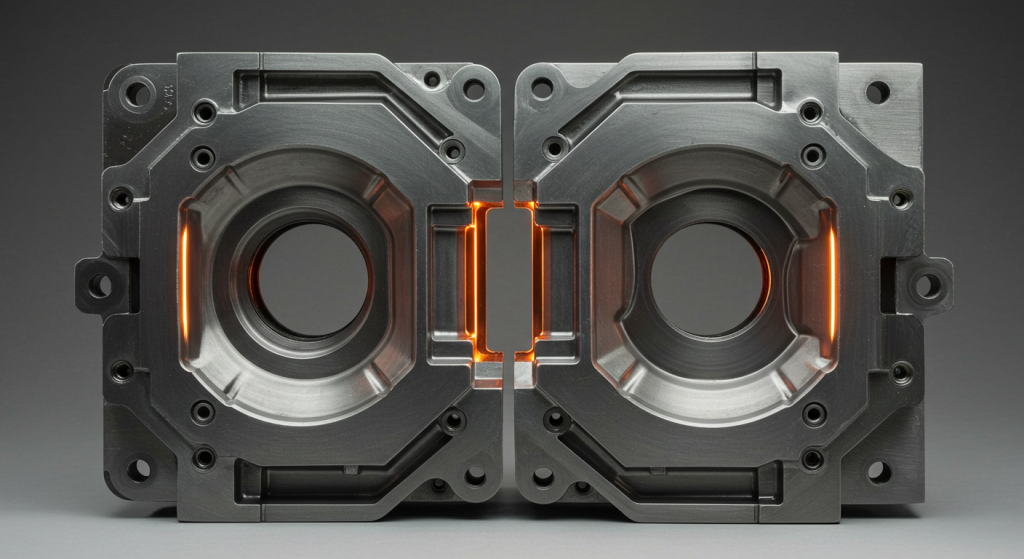
Soft-Touch Elastomer Surfaces: Improve Grip and Feel
- High-strength automobile polymers: Guarantee long-term one-time stress-body under pressure.
- Heat- and chemical-resistant molding materials: These can be used in high-temperature applications such as dashboards and gear shifters. Manufacturers can create high-quality components in terms of aesthetics, structural performance, and a comfortable ergonomic fit through a close choice and mix of these materials.
Design and Functionality Reflections
The important feature of dual-material car molding is the design. Ergonomic molding of automotive components will make sure that all the parts are ergonomic to work with, less fatigue and a more enjoyable driving experience. The major design aspects are:
- Car interior moulding is human-centric: Moldings are modelled in the most comfortable and accessible ways.
- Molded automotive parts: Vibration-damping parts: Less noise, better ride.
- Soft-touch molding dashboard and handle: Enhances the touch of the driver and passengers.
- Interior surfaces that are wear- and scratch-resistant: Does not lose its aesthetic value.
- Smooth multi-materials: Eliminates observable lines or discontinuities between materials and produces a high-end finish.
Automotive dual-material components combine functionality and design to satisfy the demands of contemporary automobile users.
Automobile Uses
- Dual-Material Molding of the Steering Wheel: This blends hard structural core and soft-touch grip areas.
- Gear Shifter Overmolding: Offers high usage parts a tactile feedback and durability.
- Door trim and console component molding: Enhances the aesthetic appeal and provides durability.
- Car Exterior Components: Some trim and functional components feature dual-material strength and impact-resistance solutions.
- Lightweight Structural Parts: Cut the total vehicle weight without sacrificing safety levels.
- Consumer Vehicle Accessory Molding: Multi-material integration is used in cup holders, phone holders, and storage compartments.
- Automobile Manufacturing of Industrial Parts: This guarantees mass production at standard quality.
Using these applications, molds of automotive dual-material components are practical and aesthetically pleasing, and improve the overall perception of the vehicle.
Automotive Dual-Material Molding
Innovations of the last several years are driving dual-material molding technology further:
- Multi-material structures can be made with co-injection molding of complex geometries without integrity degradation.
- During the molding process, soft-touch coating is incorporated, which increases the comfort and ergonomics.
- Light polymer mixtures make the vehicles light but are still strong.
- High molding technology adds accuracy and decreases manufacturing time.
- Green materials and recyclable plastics contribute to sustainability objectives in automotive manufacturing.
This is because these innovations are creating new standards in the automotive industry of durability, aesthetics, and cost-efficiency.
Choosing the Right Partner
In automotive component production that involves dual material, it is important to have the right partner. SunOn Mould offers:
- Knowledge in injection molding of multi-materials.
- Dashboard, handle, and structural molds designed with customization.
- High-level overmolding of functional and ornamental components.
- Consumer, industrial, and automotive support.
- Dedication to high-accuracy injection and durable nature.
When they work alongside the professionals, the quality of output is high, there are fewer errors in production, and the time-to-market is short.
Conclusion
The automotive dual-material component mold are transforming the car manufacturers' design and production of interior and exterior parts. These molds are used to provide durability, ergonomics, aesthetic appeal, and cost efficiency by incorporating rigid and flexible materials. Dual-material molding offers options suitable for the new demands of automotive, including dashboards and steering wheels, gear shifters, and door trims. Visit SunOn.
