


How to Bend Stainless Steel Tubing: Essential Guide for Manufacturers
Stainless steel tubing is widely used in industries ranging from automotive exhaust systems to medical devices, plumbing and structural frameworks thanks to its excellent corrosion resistance, strength, and aesthetic finish. One of the core shaping processes in fabrication is bending stainless steel tubing, which allows you to create custom geometries without welding additional sections. However, bending stainless steel tubing isn’t always straightforward — the alloy’s mechanical properties can make it difficult to maintain shape, prevent wall thinning, and avoid unwanted distortion.
In this guide, we’ll walk through the key methods for bending stainless steel tubing, design considerations, common challenges and practical tips to help you achieve consistent, high‑quality bends every time.
Why Stainless Steel Tubing Can Be Challenging to Bend
Stainless steel is valued for its strength and durability, but those same traits make bending more demanding than softer metals like aluminum or copper. Its high yield strength and low ductility often require greater force and controlled tooling to avoid kinks, wrinkles, or excessive springback.
Additionally, factors such as wall thickness, tube diameter, and whether the tubing is seamless or welded play a major role in how easily the material can be bent without failure. For example, thicker walls tend to resist collapse but require higher forces to shape, whereas welded tubes may introduce weak points along the seam that affect bend quality.
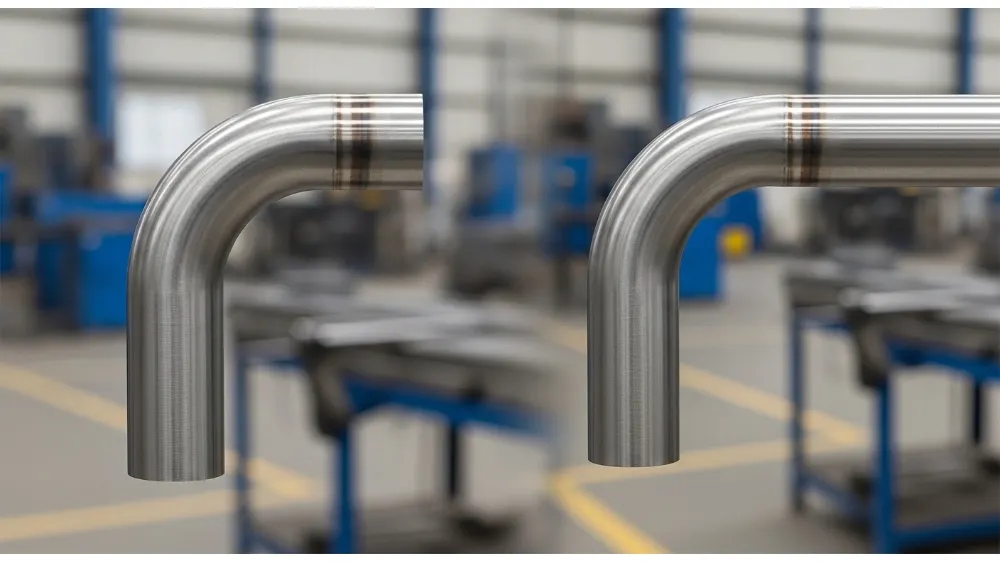
Primary Methods for Bending Stainless Steel Tubing
There are several industrial techniques used to bend stainless steel tubing, each suitable for different part requirements and bend geometries.
Mandrel Tube Bending
Mandrel bending is one of the most precise methods available. In this process, a solid or articulating mandrel is inserted inside the tube at the bend location while the tube is rotated around a bend die. A supporting wiper die wipes against the inside radius to reduce wrinkles and prevent the tube walls from collapsing.
This method is ideal when you need tight radii and smooth, uniform bends, especially for thin‑walled tubing used in automotive, aerospace and architectural applications. The internal mandrel supports the tube from within, providing maximum control over wall thickness and preventing common defects such as flattening and ovality changes.
Three‑Roll or Section Bending
Three‑roll bending uses a set of rolls arranged in a triangular configuration. The tube is fed through these rolls, and by adjusting the roll positions, you can form large radii or even continuous curves and spirals.
This method is especially useful for creating large‑radius bends where mandrel bending might be impractical or unnecessary. It’s commonly used in architectural structures, large piping systems and decorative metalwork where smooth curves are required.
Draw Bending
Draw bending is similar to mandrel bending but does not always use an internal support. Instead, the tube is clamped and pulled around a fixed die that determines the bend radius.
Although less supportive than mandrel bending, draw bending still produces consistent results when used on moderate radii and thicker wall tubing. This method is often chosen for structural parts such as roll cages, railings, or machinery frames where extreme precision is not as critical.
Compression Bending
Compression bending uses a static bend die while a compression die pushes the tubing against it, forcing it to follow the die profile.
This process is best suited for simple bends and high‑volume production because it’s fast and efficient. However, it’s not ideal for bends with tight radii or applications where maintaining tube roundness is essential — distortion and flattening can occur if the tube walls are not adequately supported.
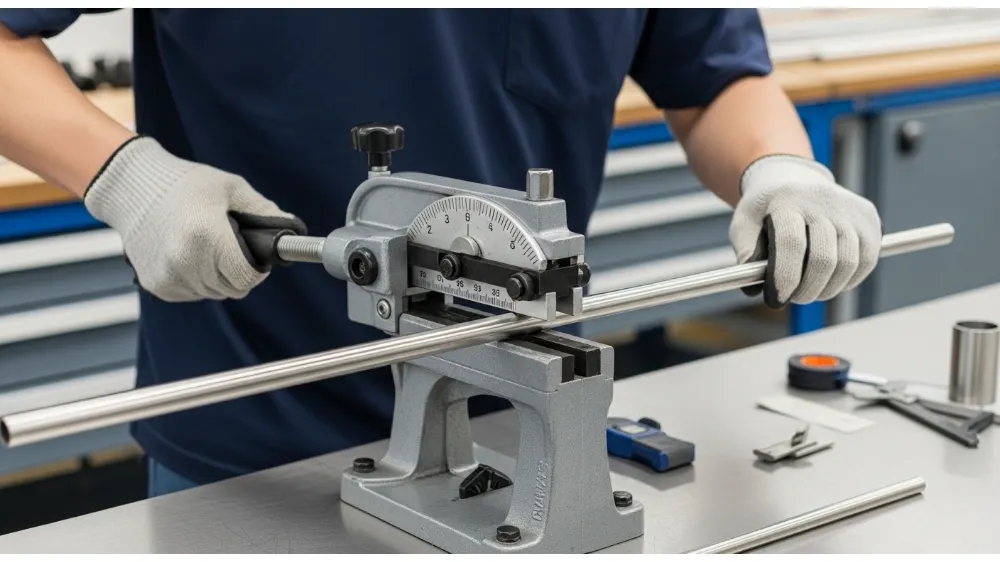
Essential Considerations Before Bending
Bend Radius and Centerline Requirements
The bend radius — the arc measured to the tube’s centerline — determines how much the tubing will stretch and compress during bending. A common rule of thumb is that the minimum safe bend radius for draw bending is at least 2 × tube diameter, while roll bending typically requires larger ratios such as 7 × diameter to maintain shape integrity.
Tight radii increase the risk of wall thinning and springback, so they often require support tools like mandrels or specialized dies to achieve acceptable quality.
Yield Strength and Springback
Stainless steel’s high yield strength means it tends to spring back slightly after bending, so you may need to bend past your target angle to compensate.
Understanding your tubing’s yield strength helps determine how much over‑bend is needed and guides tooling selection to achieve accurate final angles.
Wall Thickness and Tube Diameter
Thicker walls generally offer greater resistance to deformation and collapse; however, they also require higher bending forces and can make precision more challenging. Tubes with very thin walls are more prone to kinking or wrinkling unless internal supports are used.
Welded vs. Seamless Tubing
Both welded and seamless stainless steel tubing can be bent, but seamless tubes usually handle tight radii better because they lack a weld seam that can act as a stress concentration point.
Welded tubes may still be suitable for applications with gentler curves or less stringent dimensional requirements, but careful process control is essential to avoid deformation along the seam.
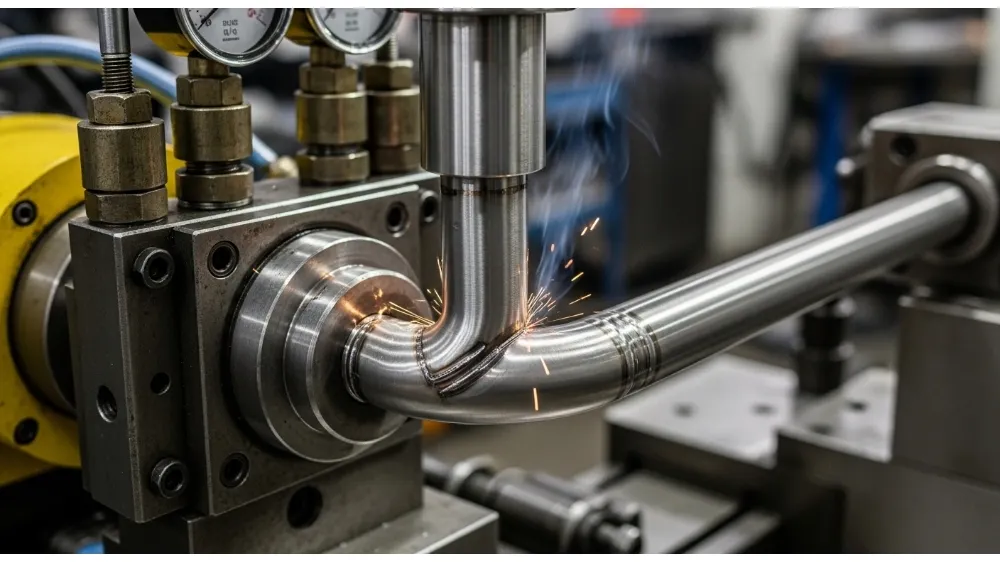
Tools and Equipment for Bending Stainless Steel Tubes
There are various tools available for bending stainless steel tubing, ranging from simple manual tube benders — ideal for small‑diameter or prototype work — to hydraulic and CNC bending machines for industrial production runs.
In production environments, CNC tube bending machines provide high repeatability, precise control over bend angles, and the ability to program complex bend sequences — essential for custom parts in automotive, aerospace and medical industries.
Best Practices for High‑Quality Bends
Achieving smooth, distortion‑free bends involves more than just choosing the right machine. Consider these practical tips:
- Use lubrication on bending dies to reduce friction and protect finishes.
- Support thin‑walled tubing internally with a mandrel or filler material such as sand for manual bending.
- Test on scrap material first to fine‑tune your bend settings.
- Measure and mark your bend points carefully to ensure repeatability and accuracy.
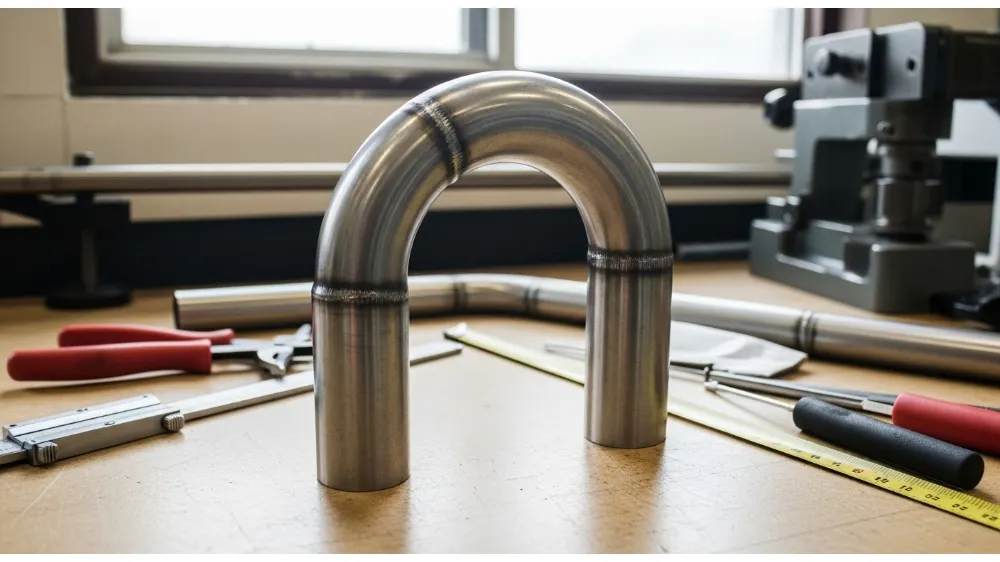
Typical Applications of Bent Stainless Steel Tubing
Stainless steel tubing finds applications in a wide range of industries due to its corrosion resistance, strength, and ease of forming:
Industrial equipment frames and piping systems, automotive exhaust and roll‑over structures, architectural railings and furniture, medical and laboratory apparatus, solar panel supports and plumbing systems all commonly use bent stainless steel tubing.
FAQ – Common Questions About Bending Stainless Steel Tubing
Q1: Is bending stainless steel tubing difficult?
A: Yes — the high strength of stainless steel makes it more challenging than softer metals, but proper tooling and technique make precision bends achievable.
Q2: What bending method is best for tight radii?
A: Mandrel bending is preferred for tight radii as it supports the tube interior and reduces deformation.
Q3: Can all stainless steel tubes be bent?
A: Both welded and seamless tubes can be bent, but seamless tubing usually handles tighter bends more effectively.
Q4: Why does springback occur?
A: Springback results from the material’s elasticity — stainless steel recoils slightly after bending due to its yield strength.
Q5: How do I avoid kinks or wrinkles?
A: Use internal support like mandrels, appropriate die tooling, and consistent bending techniques to maintain tube shape.
Conclusion
Bending stainless steel tubing is a key forming process in manufacturing, enabling designers and fabricators to produce tailored shapes for a diverse range of applications. While the process presents challenges due to material strength, careful consideration of tooling, bend radius, tube dimensions, and technique can lead to successful results. Whether you’re crafting architectural elements, automotive components, or industrial tubing assemblies, mastering bending stainless steel tubing gives you the flexibility and precision to execute complex designs with confidence.
