


CNC Lathe vs CNC Turning Center: Modern Machining Comparison Guide
In the contemporary machining, the selection of the appropriate equipment is critical to efficiency and part quality. The two machines, which are regularly used in turning operations, include CNC turning centers and latuses. Both of them are aimed at the precise shaping of the cylindrical parts; however, they are different in their possibilities, automation, and complexity. The choice of the right machine is based on the quantity of production, the complexity of parts, and the required tolerances. When engineers and manufacturers are aware of those differences, they can streamline workflow and save on the cost of production.
Introduction to CNC Lathe Machines
A CNC lathe is a computer controlled machine that is mainly employed to provide turning operations on the cylindrical workpieces. It primarily works by rotating the workpiece as a cutting tool carves it along the surface. CNC lathes have a tendency to be used in simple, repetitive components and tend to be very efficient in the creation of uniform diameters. They are not very complicated in their programming and can be used in small production runs to medium.
CNC lathes have a single spindle, and a rudimentary turret, which permits a restricted number of cutting tools to be attached. They are the best in manufacturing shafts and pins and bushings and any rotational equipment that do not require multi-axis operations. Despite its versatility, conventional CNC lathes cannot be automated as effectively as turning centers, thus are less applicable in very complex or high volume tasks.
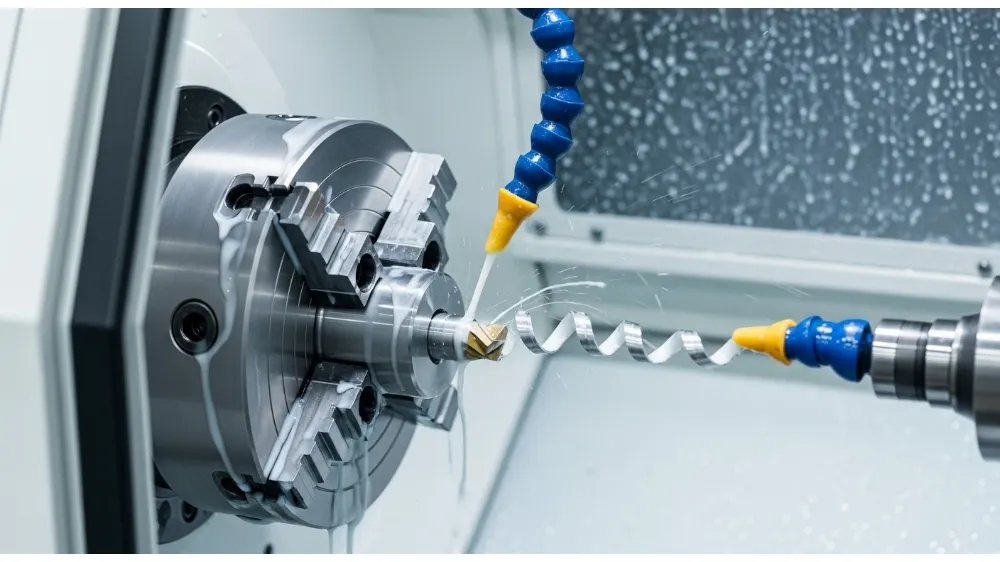
General Introduction Turning Centers Overview
CNC turning centers are the newer and more improved derivatives of the traditional lathes. They combine more axes, live tooling, and occasionally sub-spindles to deal with complicated tasks within one system. A turning center is able to mill, drill, tap, and contour the workpiece in place and eliminates secondary machining.
Turning centres have automation capabilities enabling it to be machined without supervision and increase in production efficacy. They are especially useful in areas where a tight tolerance, multi-feature components or high throughput is needed. CNC turning centers can integrate more than two operations in a single operation and minimize human handling and enhance repeatability and take up shorter set up times.
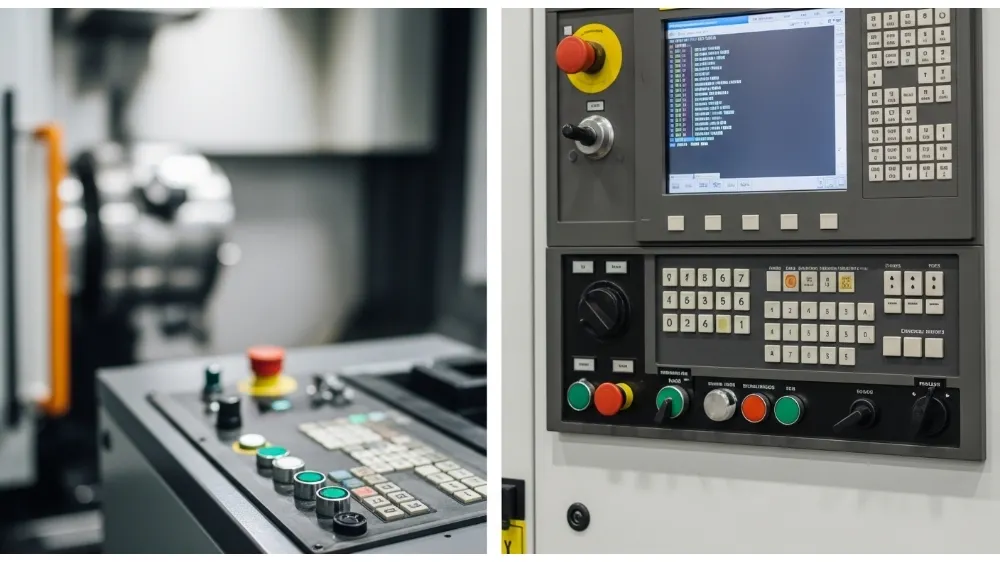
Major Diplomas of CNC Lathes and Turning Centers
Even though both machines are utilized in turning activities, there are a number of factors that differ in the two:
Complexity and Automation: CNC turning centers have developed control systems and additional axes, enabling milling and drilling at the same time. Standard CNC lathes have fewer tools and less complicated configurations.
Tooling Capabilities: Turning centers typically employ live tooling to perform secondary operations without having to unclasp the workpiece. Simple turning is normally an aspect of CNC lathes that is based on fixed turret-mounted tools.
Production Volume Suitability: Turning centers are best suited to large volume parts that are complex. Lathes are applicable to smaller and less volume based applications.
Installation and Software: CNC lathes can be programmed more easily and are also less expensive to train operators. Turning centers require higher programming experience because they have multi operations.
Cost: Turning centers are usually expensive at the beginning, but save on labor and set up costs due to automation in the long run. CNC lathes are less expensive initially but might need more installations on complicated components.
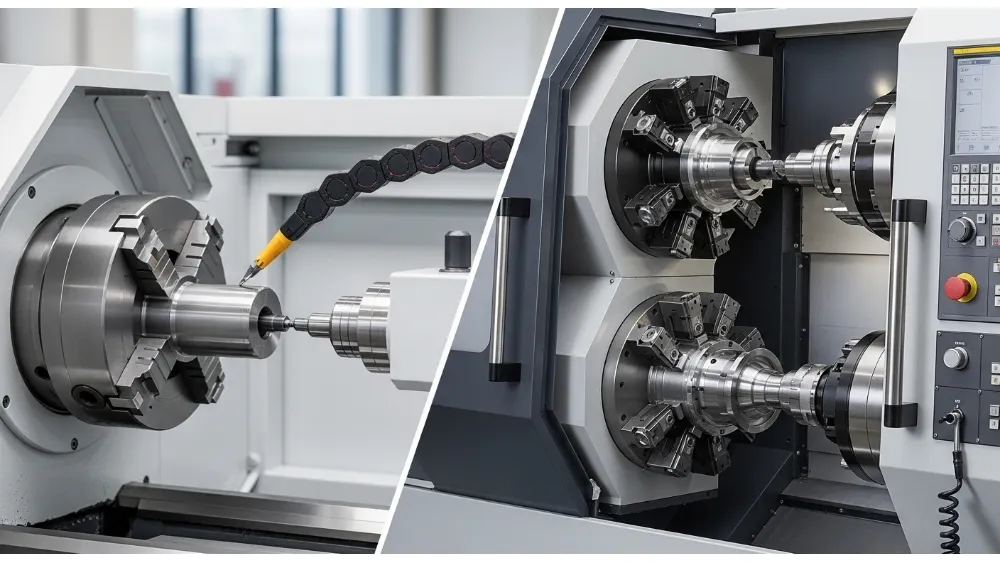
Applications of CNC Lathes
The CNC lathes are also effective at machining rotating components whose diameters are constant. Common uses are:
- Mechanical systems shafts and axles
- Precision pins and bushings
- Automobile and machinery simple cylindrical components
- Low volume production with high precision
They are also easy to use and highly reliable, which makes them appropriate in the shops that are involved in simple turning operations and do not require many multi-axis machining.
CNC Turning Center: Its Uses
CNC turning centers are more diversified, they can process:
- Aerospace and automotive parts that are complicated
- Milled or drilled hole multi-feature shafts
- Massive industrial components that do not require many people
- Machinery assemblies with high precision requirements
Such machines are particularly beneficial in cases when one installation has to perform several tasks effectively. They minimize the threat of mistakes arising during the transfer of workpieces between the machines and enhance the working process.
Advantages and Limitations
CNC Lathes Advantages:
- Reduced cost and ease of operation
- Small batch production is appropriate
- Consistent and serviceable
CNC Lathes Limitations:
- Only the simplest turning actions
- Unproductive when dealing with complicated multi-axis parts
- Needs secondary arrangements to do some further machining
CNC Turning Centers Advantages:
- Multi-axis machining capabilities
- Secondary operations Live tooling
- Large quantity high automation
- Lowers the time and manpower of setup
CNC Turning Centers Limitations:
- Higher initial investment
- More complicated programming and maintenance
- Training of the operators is necessary
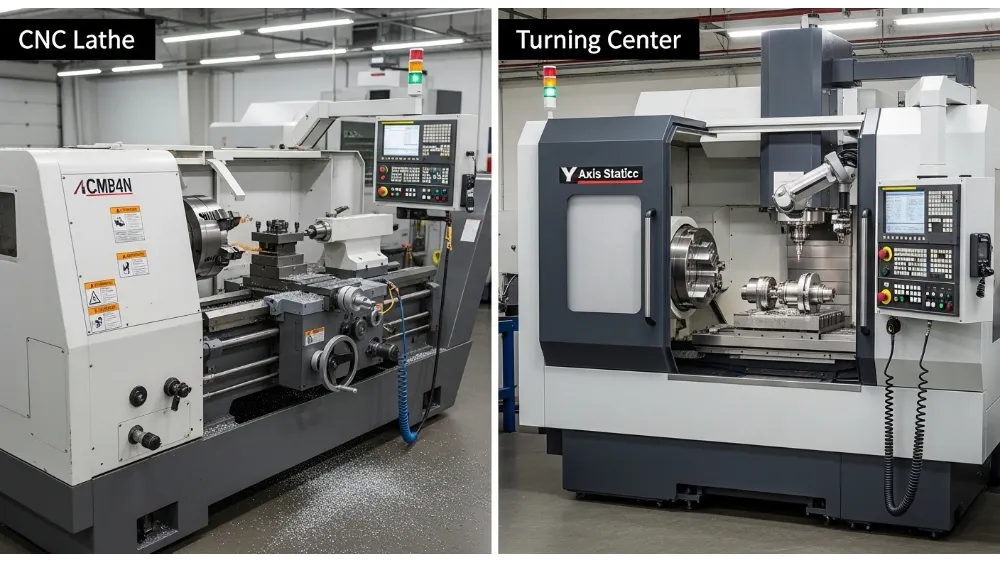
Material Considerations
CNC lathes and turning centers can also process different materials, such as aluminum, steel, stainless steel and titanium alloys. Hardness and machinability of materials influence the choice of tools, cutting speeds and feed rates. Turning centers are also the best investment in machines that handle hard alloys that are hard to machine since several tasks can be done in one installation and there is less chance of warping or mispositioning.
Selecting the Right Machine
To decide whether to buy a CNC lathe or a turning center, one has to consider:
- Part Complexity: Simple cylindric parts are more preferable to the lathes; complex multi-feature parts are more preferable to the turning centers
- Volume Production: Turning centers are advantageous to higher volumes and longer runs
- Budget: Lathes have lower start up costs whereas turning centers are more efficient in the long run
- Operator Expertise: Turning centers demand high level programming skills; lathes are easier to use
- Automation Requirement: Turning centers offer great benefits in case of unattended or high-speed performance
Common Mistakes to Avoid
- Choosing a CNC lathe to use on multi-axis parts
- Not taking into consideration the significance of live tooling in secondary operations
- Low estimation of programming requirements in turning centers
- Failure to factor in machine capabilities as per material hardness
- Lack of attention to maintenance and calibration requirements to long term accuracy
Frequently Asked Questions (FAQ)
Q1: What is the primary distinction between a turning center and a CNC lathe?
A: A CNC lathe will mainly carry out turning jobs, whereas a turning center is capable of carrying out turning, milling, drilling, and tapping all in a single setup.
Q2: Which machine will be more useful in high volume production?
A: CNC turning centers are more suited to high-volume, complicated parts, since automation and multi-axis features are available.
Q3: Does a CNC lathe have the capability of doing milling?
A: Milling cannot normally be used on standard CNC lathes; either live tooling or a turning center will mill the workpiece in-place.
Q4: Are lathes more cost-effective than CNC turning centers?
A: Yes, turning centers are generally costly initial outsourcing but they conserve time and labor in multi-operation machining.
Q5: What is the impact of experience of the operator on the choice of the machine?
A: CNC lathes can be used in less experienced operators because of easier programming, and turning centers need high skilled operators to achieve maximum efficiency.
Q6: What are the kinds of the materials that the two machines can process?
A: Both machines deal with metals of such type as aluminum, steel, stainless steel, and titanium, however, the turning centers work better with complex alloys and multi-feature parts.
Q7: Does a turning center decrease setup times?
A: Yes, turning centers greatly lower the handling and set up time by doing several operations with one setup.
Conclusion
CNC lathes and CNC turning centers play very important roles in precision machining. CNC lathes are suited to simpler and repetitive turning with reduced cost and simpler programming. CNC turning machines have the benefit of multi axis, live tooling and automation and can be used in complex, high volume production. Comparison of part complexity, material, production volume, and operator expertise will be done to guarantee the best machine to be used, maximizing efficiency and accuracy in the production process.
