


CNC Prototyping: Comprehensive Guide for Modern Manufacturing
In today’s fast-paced manufacturing environment, CNC prototyping has become a cornerstone for developing precise and functional product models before full-scale production. By leveraging computer-controlled machining, engineers can transform digital designs into tangible components with high accuracy.
CNC prototyping is crucial for reducing design errors, testing functionality, and streamlining the transition from concept to mass production. Understanding its advantages, processes, and applications allows manufacturers to optimize production efficiency and product quality.
What Is CNC Prototyping?
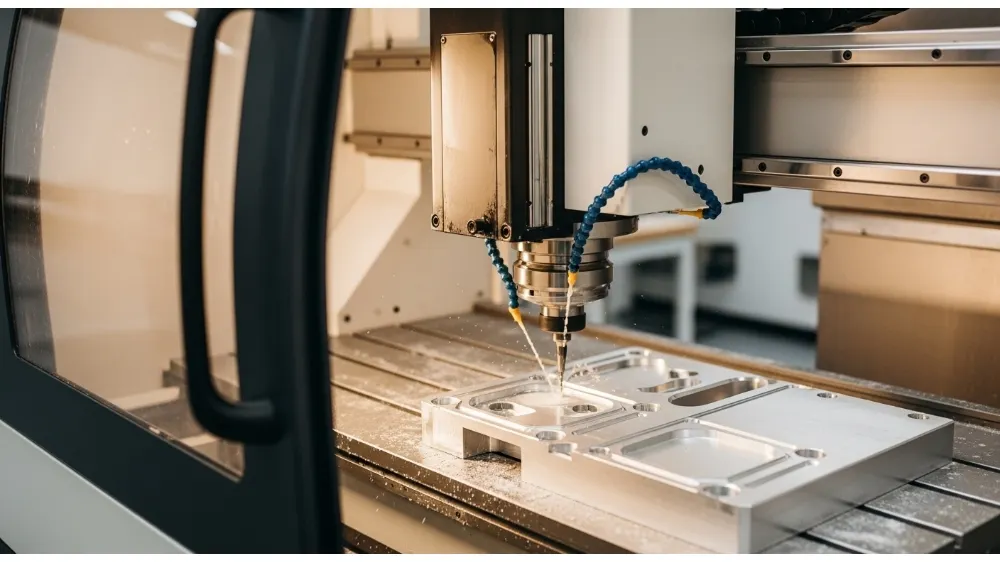
CNC prototyping involves using computer numerical control (CNC) machines to manufacture prototype parts directly from CAD models. Unlike manual machining, CNC automates the process, enabling consistent precision, complex geometries, and repeatable results.
Prototypes produced via CNC can be functional, allowing testing of mechanical performance, assembly fit, and material behavior under real conditions. This early validation helps prevent costly design changes later in production.
Key Advantages of CNC Prototyping
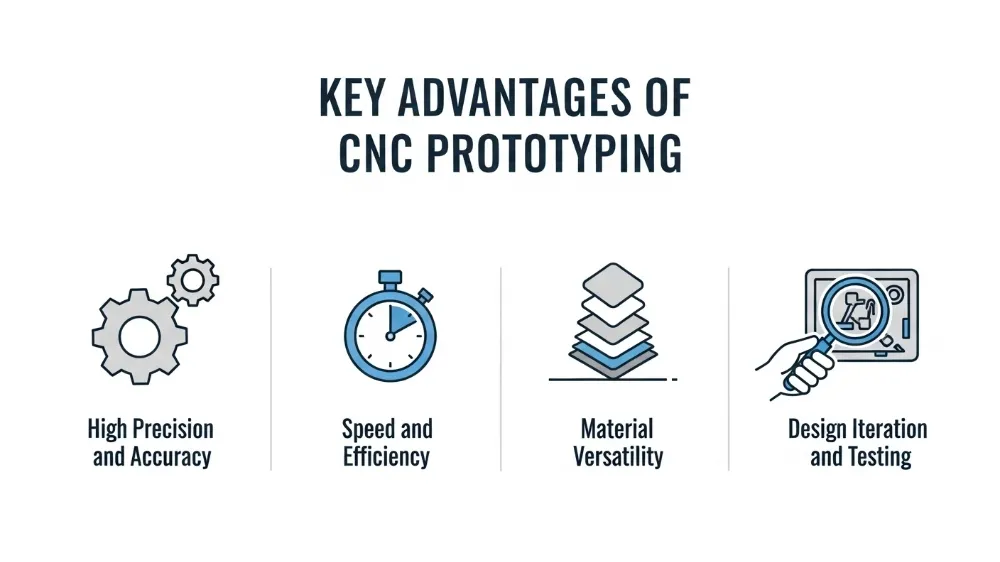
CNC prototyping offers numerous benefits for engineers and manufacturers:
Precision and Accuracy: CNC machines follow digital instructions with high repeatability, producing tight tolerances essential for functional prototypes.
Material Versatility: CNC prototyping supports a wide range of metals, plastics, and composite materials, enabling realistic representation of final products.
Rapid Turnaround: CNC reduces lead times by producing prototypes quickly, allowing fast iterations during the design phase.
Cost Efficiency: Early detection of design flaws minimizes wasted materials and machining time in large-scale production.
Design Flexibility: CNC machines can create intricate geometries and features that might be impossible with manual processes.
CNC Prototyping vs Traditional Prototyping
Traditional prototyping methods, such as hand machining or 3D printing, have limitations:
- Hand machining requires skilled labor and may lack precision.
- Some 3D printing materials cannot replicate the mechanical properties of metals or high-performance plastics.
CNC prototyping bridges the gap by providing both accuracy and material fidelity, making it ideal for functional testing.
Materials Commonly Used in CNC Prototyping
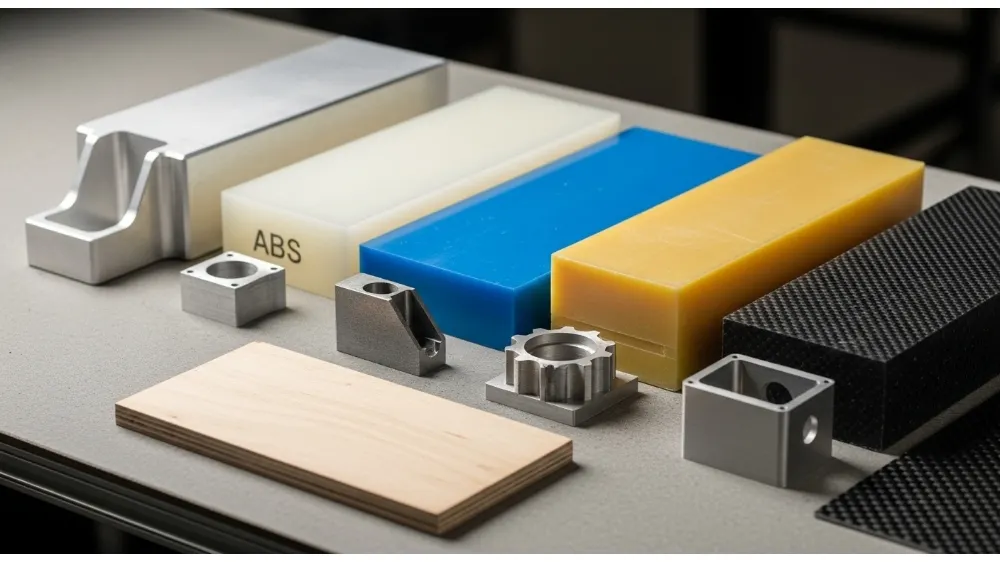
CNC prototyping accommodates a broad spectrum of materials:
Metals: Aluminum, stainless steel, brass, titanium, and copper for high-strength functional parts.
Plastics: ABS, polycarbonate, PEEK, and nylon for lightweight prototypes or testing assemblies.
Composites: Carbon fiber or fiberglass materials for prototypes that mimic final product properties in weight and strength.
Material choice depends on the prototype’s purpose, whether for mechanical testing, assembly evaluation, or aesthetic demonstration.
Common CNC Machining Processes for Prototyping
Several CNC processes are widely used for prototyping:
Milling: Removes material using rotating cutters to shape complex 3D components. Ideal for flat surfaces, slots, and pockets.
Turning: Rotates cylindrical workpieces against a cutting tool to create shafts, rods, and threaded components.
Drilling: Accurately produces holes of varying diameters and depths.
Electrical Discharge Machining (EDM): Uses electrical sparks to cut precise shapes in hard metals. Useful for intricate or delicate features.
Laser Cutting and Engraving: Produces fine details in sheet materials or thin parts, often for design verification or decorative elements.
Applications of CNC Prototyping
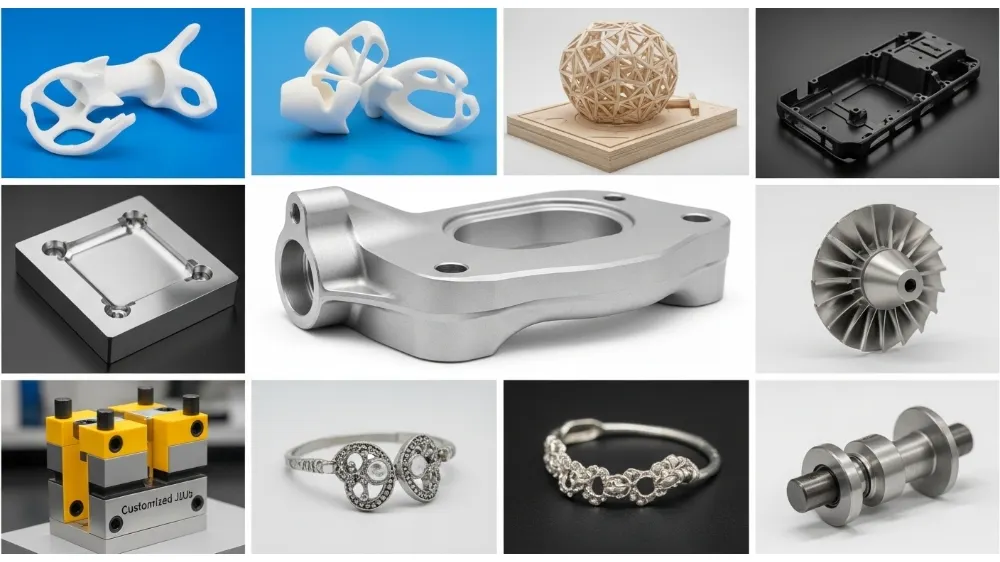
CNC prototyping is utilized across multiple industries:
Automotive: Engine components, brackets, and custom assemblies can be tested before mass production.
Aerospace: Precision prototypes for aircraft parts ensure performance under extreme conditions.
Consumer Electronics: Housing, connectors, and internal components can be evaluated for fit and finish.
Medical Devices: High-tolerance prototypes allow testing for implants, surgical tools, and equipment.
Industrial Machinery: Functional prototypes of gears, valves, and housings validate mechanical performance.
Design Considerations for CNC Prototyping
When planning CNC prototypes, engineers must consider:
Tolerance and Precision: Define critical dimensions to ensure the prototype behaves like the final product.
Surface Finish Requirements: Specify finishes to assess aesthetics, friction, or wear.
Tool Access: Design parts with machining feasibility in mind to avoid unreachable areas.
Material Properties: Choose materials that simulate the mechanical, thermal, and chemical behavior of final components.
Cost vs. Speed: Optimize prototype size and complexity to balance manufacturing costs and development speed.
Benefits of Iterative CNC Prototyping
Prototyping is most valuable when used iteratively:
- Early Detection of Flaws: Functional testing reveals design weaknesses before production.
- Fast Design Changes: CNC allows modifications to CAD models and rapid fabrication of new prototypes.
- Validation of Assembly and Fit: Multiple components can be assembled to test clearances and interaction.
- Enhanced Communication: Physical prototypes facilitate discussion among engineers, designers, and stakeholders.
Common Mistakes in CNC Prototyping
Mistakes can reduce the effectiveness of CNC prototyping:
- Selecting Incorrect Materials: Using plastics instead of metals may not simulate strength or wear accurately.
- Ignoring Machine Capabilities: Choosing complex geometries beyond the CNC machine’s capabilities increases cost and errors.
- Overlooking Tolerances: Loose or undefined tolerances lead to prototypes that cannot verify assembly or function.
- Neglecting Post-Processing: Finishing, deburring, or surface treatments are essential for functional prototypes.
Optimizing CNC Prototype Production
Tips to maximize CNC prototyping effectiveness:
- Use high-quality CAM software to generate precise toolpaths.
- Select appropriate cutting tools, speeds, and feeds to balance quality and efficiency.
- Consider using multi-axis CNC machines for complex geometries.
- Apply surface treatments to evaluate real-world performance.
- Document iterations to guide full-scale production.
Frequently Asked Questions (FAQ)
Q1: What is CNC prototyping?
A: CNC prototyping uses computer-controlled machines to create accurate, functional prototype parts from CAD models.
Q2: How is CNC prototyping different from 3D printing?
A: CNC machining works with real materials, providing precise mechanical properties, while 3D printing may use plastics or resins that differ from final parts.
Q3: What materials can be used for CNC prototypes?
A: Metals (aluminum, steel, titanium), plastics (ABS, PEEK, nylon), and composites (carbon fiber, fiberglass).
Q4: How long does CNC prototyping take?
A: Time depends on complexity, size, and material; most small to medium prototypes can be completed in days.
Q5: Why is CNC prototyping important?
A: It validates design, fit, and function before full-scale production, saving costs and improving product quality.
Q6: Can CNC prototypes be used for functional testing?
A: Yes, CNC prototypes are often functional and can simulate real operating conditions.
Q7: Is CNC prototyping expensive?
A: Costs vary with material, complexity, and quantity, but iterative prototyping reduces long-term production costs.
Conclusion
CNC prototyping is an indispensable step in modern product development, enabling precise, functional, and cost-effective prototypes across industries. By understanding the processes, materials, and design considerations, manufacturers and engineers can accelerate development cycles, reduce errors, and produce higher-quality products. Investing in optimized CNC prototyping ensures smoother transitions from concept to mass production and more reliable final components.
