


Compression Molding vs Injection Molding: Manufacturing Processes Explained
The production of plastic depends significantly on the molding technology to produce superior quality and accurate parts. Compression and injection molding are the most common processes and each has its own benefits with regard to the type of materials that can be used, complexity of designs and volume of production. The knowledge of the differences between these two molding methods enables manufacturers and engineers to choose the best technique to use in a particular project and enhance its efficiency and performance.
The activities are in the center of the automotive, electronics, consumer goods, and medical equipment industries. Selection of the appropriate method of molding affects the rate of production speed, cost as well as mechanical properties of the end products.
What Is Compression Molding?
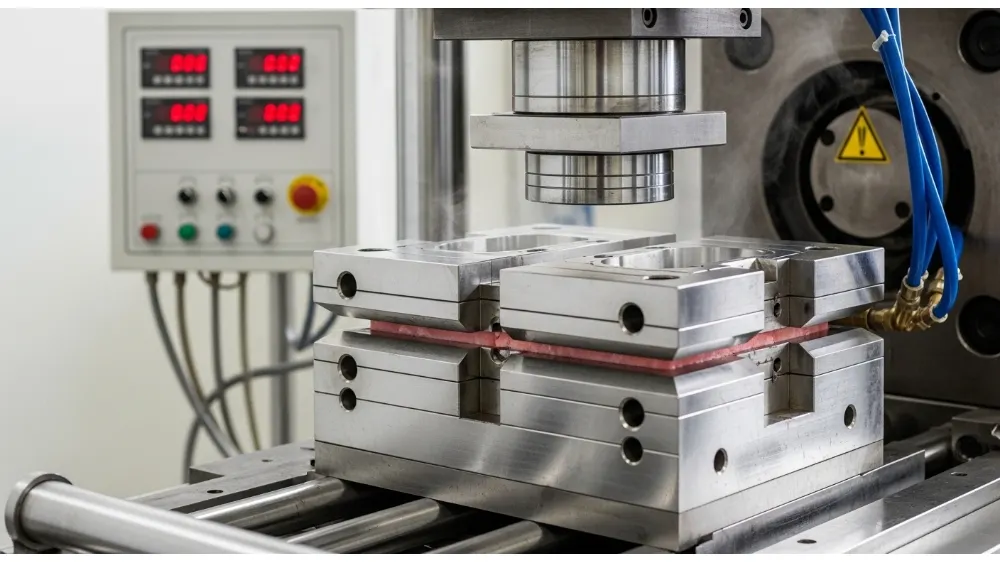
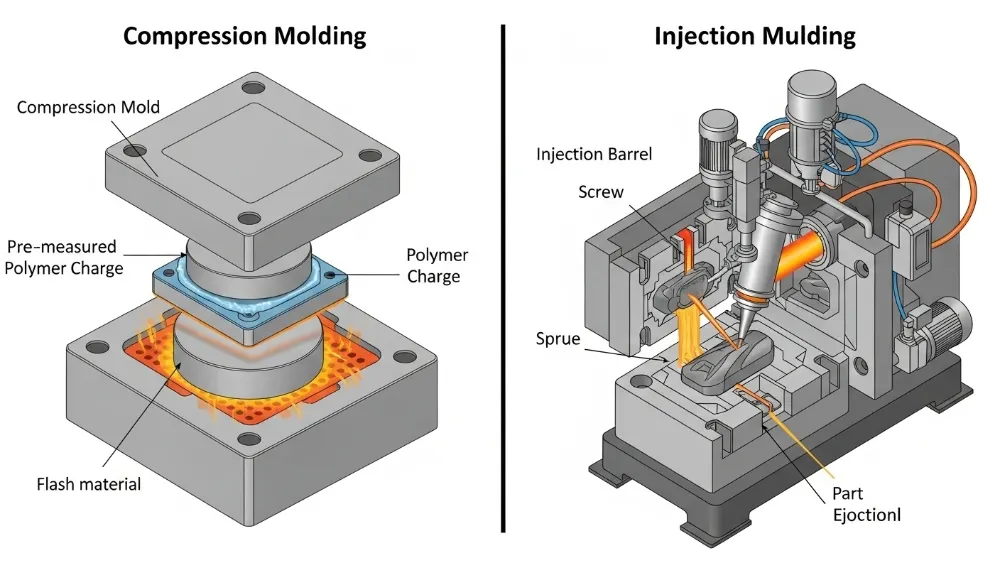
Compression molding is a manufacturing technique where a measured volume of a plastic material or composite material is put inside of a hot mold cavity. After loading, the mold is then closed and pressure is exerted over it, which causes the material to take the form of the shape of the cavity. The pressure and heat make the material cure and solidify to form the final component.
This is the best process to use when working with thermosetting plastics, rubber parts and composite materials. Compression molding is also useful when large parts of high durability are required that are homogeneous in terms of mechanical properties and have low residual stress levels.
The Compression Molding Characteristics
The compression molding has a number of benefits. This is inexpensive when dealing with medium to large components and does not involve the use of complex machinery unlike in injection molding. It also can be applied to high shear sensitive materials since the flow of the materials is mild in contrast to high pressure injection.
Compression molding is also ideal in the manufacture of parts that are uniform in terms of thickness like automotive panels, electrical insulators and industrial seals. The operation is predictable, and cycle time is predictable, and little waste of materials.
What Is Injection Molding?
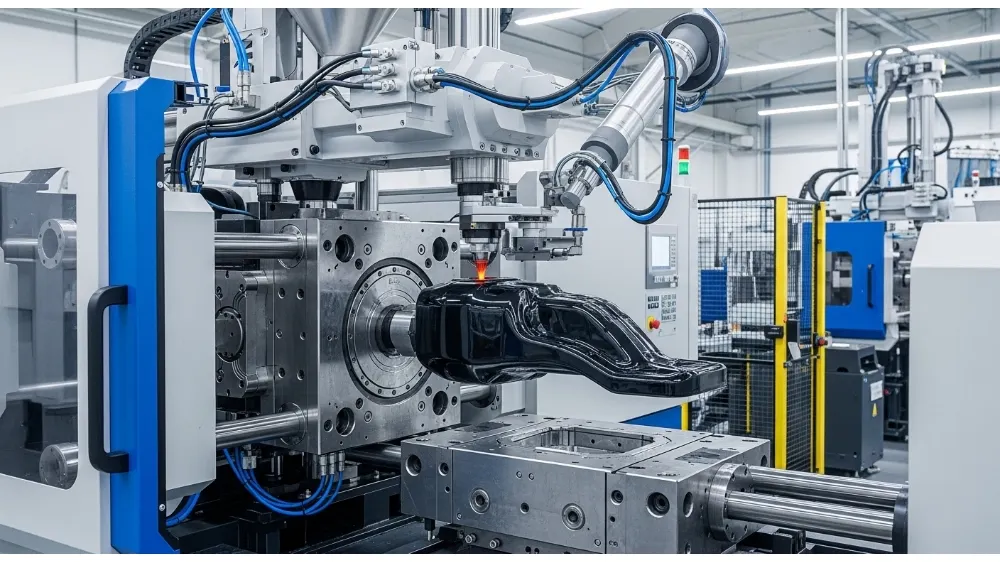
Injection molding is a technique whereby a high pressure injection of molten plastic is forced into a highly machined mold. After filling the mold, the material hardens and solidifies making the part. The injection molding is very flexible and can be shaped in complex shapes, finer details and repeatability.
This method is mainly applied on thermoplastics, but some thermosetting plastics may be injection molded. Injection molding is best suggested in consumer goods, electronic casings, and medical machinery due to high volumes of production, high tolerances, and sophisticated geometries.
Injection Molding Important Characteristics
Mass production is also exceptionally precise and fast when inject molding. The process promotes automation thereby saving labor expenses and maintaining quality consistency. Multi-part molds and sophisticated tooling can be used to meet complex geometries and undercuts.
High repeatability, quick cycle time, and ability to manufacture lightweight but strong components are considered the key advantages of injection molding. Accurate temperature control and cooling mechanisms increases material characteristics and minimizes shrinkage or warping.
Material Considerations
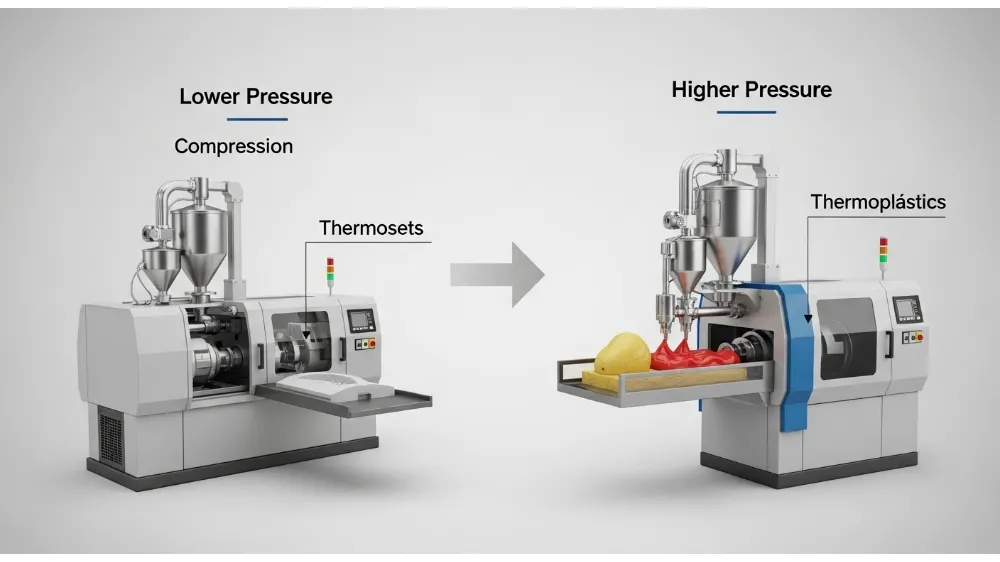
The decision to use compression or injection molding may rest on the nature of the plastic. Compression molding is ideal in thermosetting resins, reinforced composite, and elastomers that have to be cured under pressure. Injection molding can be done with a variety of thermoplastics, high volumes of production and fine details can be made.
The decision is also determined by the thermal stability, viscosity and the filler content. Parts needing high mechanical strength levels, chemical resistance or electrical insulation can be better suited to compression molding whereas complex parts with strict dimensional requirements are better suited to injection molding.
Design Implications
The design of pieces to be molded using each method must be made according to their limitations. Compression molding is more favored to simple geometries of equal wall thickness. Complex designs, thin walls and elaborate surface characteristics can be injected, thus, it is used in consumer electronics, toys and medical devices.
The draft angles, flow of materials and possible shrinkage are also considered in design. These will have to be considered at an early stage to ensure that the defects are reduced to the minimal and the post-processing needs are minimized.
Production Speed and Volume
The compression molding process typically takes longer cycle times than injection molding which can manufacture hundreds to thousands of parts an hour depending on the size. In the case of small batches or high-strength constituents, compression molding is still cost effective and efficient. The injection molding process is usually used to manufacture high quantity consumer goods, which have automated handling systems.
Cost Comparison
The first tooling in the two processes is not the same. Injection molding molds cost more as they are normally precision machined and designed in multi-cavity. Molds in compression molding are cheaper and easier to use. But injection molding is less expensive at large volumes because the cycle time is shorter, but compression molding is economical with medium quantities and thicker and heavier weight parts.
Surface Finish and Quality
Compression molding gives part good structural integrity and uniform thickness, although surface features can be less sharp than those produced by injection molding. Injection molding shows a better surface finish and has the ability to reproduce fine detail, textures or branding right into the form.
Environmental and Energy Concerns
When making thick components compression molding uses less energy per part since less heating and pressurization is needed to apply to the entire volume. Although injection molding is quicker, it might demand greater inputs of energy in terms of molten plastic injection and cooling machineries.
The environmental footprint of the two processes can be enhanced through sustainable practices such as recycling of the materials and the use of energy efficient moulds.
Errors to Make in Molding Selection
Making a wrong decision on molding may lead to defects, increased costs or mechanical deterioration. Common errors include:
Compression molding of parts of high detail.
Use of thick thermosetting components, which were chosen by injection molding.
Neglect of chances in shrinkage and material flow.
Underestimating the cost of tooling and set up.
This is a good choice of process that results in the best material properties, dimensional accuracy and efficiency of production.
Applications of Each Method
Uses of Compression Molding: In the automobile industry, compression molding finds use in bumpers, electrical insulators, gaskets, rubber parts, and structural composite panels.
Applications Injection Molding: Plastic housings, consumer electronics, medical devices, toys, containers, and complex consumer products.
Frequently Asked Questions (FAQs)
Q1: How is compression and injection molding different from each other?
Compression molding involves pressurizing and heating prepared material in a mold whereas injection molding is the process of high pressure injection of molten plastic in a mold cavity.
Q2: Which molding technique is superior for high volume production?
High-volume production is best achieved through injection molding, which allows automation and fast cycle times.
Q3: Can thermosetting plastics be injection molded?
Yes, certain thermosetting plastics can be injection molded with proper curing and cooling processes.
Q4: Which method provides finer surface details?
Injection molding provides a better surface finish and can replicate complex designs more accurately.
Q5: Are compression molded parts stronger?
High-strength, thick parts, especially thermosets and composites, are better suited for compression molding.
Q6: How to decide between the two methods?
Material type, part complexity, production volume, cycle time, cost, and surface finish guide the selection.
Q7: Do energy requirements differ?
Compression molding uses less energy for thick parts, while injection molding consumes more due to high-speed injection and cooling.
Conclusion
Knowledge of the differences between compression molding vs injection molding is essential in modern manufacturing. Both techniques have specific merits, whether producing durable high-strength components or high-volume consumer goods. Selecting the proper method according to material, part geometry, production volume, and quality requirements ensures cost-efficient and high-quality results. Mastery of these molding techniques allows engineers and manufacturers to maximize productivity, minimize waste, and consistently deliver superior products.
