


Advanced Techniques for Part Identification in Custom Manufacturing
Modern manufacturing requires a specific identification of parts to ensure quality control, traceability and accuracy of assembly. Uniqueness Custom parts usually have special identifications that can be used to identify them in inventory, regulation, and final usage. Use of effective custom part identification techniques will mean that parts are followed properly during their production and delivered to customers properly.
Aerospace parts, industrial machine, or any other component that requires marking on the parts, correct part marking reduces errors, enhances efficiency, and simplifies the process of downstream assembly. The manufactures have to think about the durability, readability and compatibility of the marking technique to the material used in each custom part.
Reason why Part Identification is important
Identification of custom parts is very important in order to achieve traceability in production lines. Labeling also enables operators to trace all parts of the fabrication to the assembly and even during after sales services. Tracable marks may be required in the case of regulated industries, as a quality requirement and certification.
Besides complying with regulations, good part marking also minimizes wastes and prevents assembly mistakes. By making a quicker identification of parts by the operators, the chance of parts getting mixed or using the wrong parts reduces to many folds. It results in the improved flow of work and the overall quality of production.
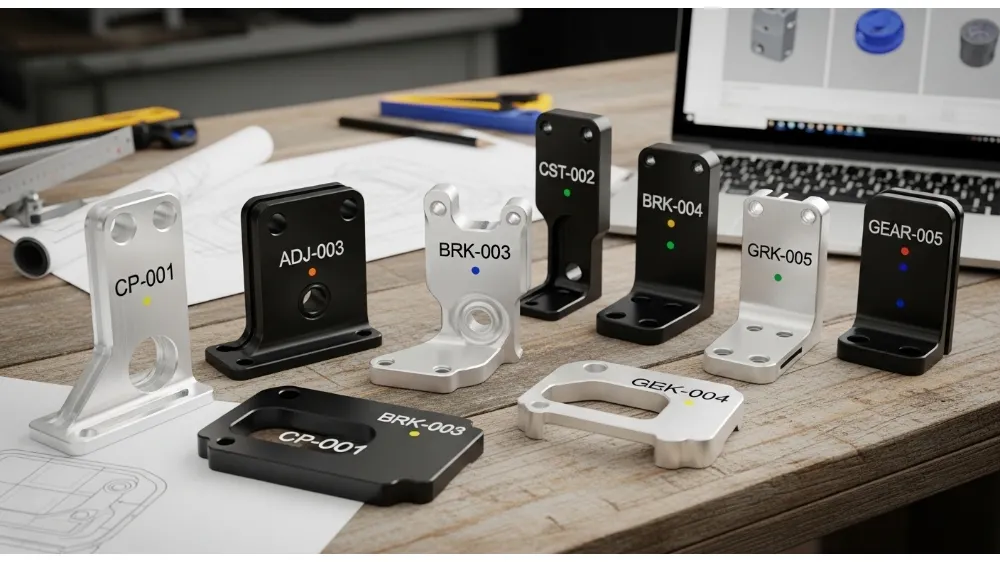
The most usable techniques of part marking are common parts
A range of methods that are generally used to mark custom parts exist, each having its own set of benefits and drawbacks based on material, durability, and manufacturing context.
Laser Engraving: Laser marking is very precise and permanent. It is compatible with metals, plastics as well as composites. This technique is best applied in the serial numbers, barcodes and logos on the most important parts.
Inkjet Printing: Inkjet marking is used to place ink on the surface of a part. Although it is not permanent like laser engraving, it can be customized quickly and it can be used on non metallic surfaces or temporary marking of the product during manufacturing.
Stamping: Mechanical stamping entails the use of pressure to stamp the surface with characters or symbols. This technique has extensive applications in the automotive, aerospace, and heavy machinery parts because it can endure the rugged conditions and is also easy to read.
Electrochemical Etching: It is a method of marking metals with precise and permanent text or code by using chemical reactions. Electrochemical etching is superior when it comes to parts which need to be resistant to corrosion and still have clarity of markings.
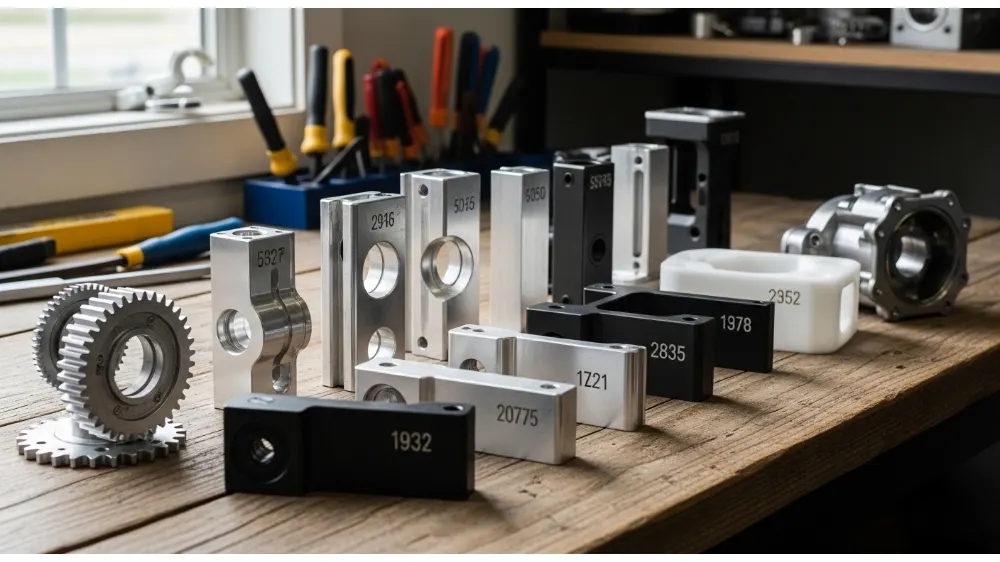
Material Considerations
The selection of the correct method of part marking needs to be done with a lot of care to the part material. Some of the metals that engrave or etch well by laser include; stainless steel, aluminum, and brass that leave long-lasting and highly legible marks. Inkjet or laser techniques that are best suited to polymer surfaces may be needed in plastic components. In the case of composite materials, one can use chemical etching or special types of lasers to make permanent marks without having a detrimental impact on structural integrity.
The marking technique must also be resistant to stress on the environment including heat, chemicals or abrasion. The compatibility of the methodology employed will guarantee that the custom parts have a traceable lifecycle, starting with fabrication, all the way to the end-usage.
Durability and Readability
An effective custom part identification system is one that is more focused on durability and readability. Permanent markings minimize the chances of fading or losing through machining, shipping or through assembly. Contrasting text, correct font size, and the location of the markings create efficiency in the operators and help to avoid misunderstanding.
In mass production, it can be further simplified with the readability by automated scanners, which is a barcode reader or QR code scanners. Integration of machine readable codes is also gaining momentum so as to achieve a perfect operation without any error or so as to be digitally traceable.
Co-location with Manufacturing Processes
To ensure a smooth flow of production, the marking of parts should flow well with the other work processes. Laser marking systems or inkjet systems may be directly integrated with a CNC machine, automated assembly line or inspection station. With improvement marking and fabrication, manufacturers are able to save time, minimise handling, and have a standardized position of identification marks on parts.
Quality assurance is also facilitated by strategy integration. Items can be checked right after being marked, so that when it comes to the next part of production, there is no chance of forgetting to put on the codes or serial numbers or batch numbers.
Compliance and Standards
Lots of industries involve the necessity of following the marking requirements of safety, traceability, and quality control. Aerospace, medical device and automotive industries tend to dictate precise marking processes, sites and contents. The adherence to the standards shields the manufacturers against liability, product safety, and customer trust.
Recording the marking and keeping an electronic record of marked components also helps the regulation requirements. In modern manufacturing systems, part marking is sometimes associated with ERP or MES systems, which enhance traceability and efficiency of reporting.
Benefits of Part Marking Effectively
The advantages of implementing a properly thought-out custom part identification strategy can be admitted and are numerous:
- Better traceability by use of serial numbers, barcodes and QR codes.
- Improved quality control through provision of quick check of correct components.
- Few assembly flaws and less downtime through part misidentification.
- Long-term performance that guarantee the legibility of the markings throughout the product life.
- Automated inventory control with codes that are easy to read.
Common Mistakes to Avoid
Some of the traps that manufacturers must avoid when adopting part marking are:
- Using marks where wear or damage is sure to occur.
- Critical parts should be written using low-contrast or temporary methods of marking.
- Not matching marking technique with part material.
- Failure to observe the industry standards.
- Neglecting the automation options that enhance consistency and minimize human error.
By resolving these problems, manufacturers will be able to make sure that part identification is an addition instead of the possible quality hazard.
Part Identification Best Practices
- Take into consideration the environmental conditions and processing of the part and then select an approach.
- High value or controlled components should be marked permanently.
- Think of adding marking to the current production lines to make it efficient.
- High contrast text and adequate sizing must be used to ensure readability.
- Keep an electronic inventory of parts marked to be traced and complied.
Frequently Asked Questions (FAQ)
Q1: What is custom part identification?
A: It is the act of tagging and identifying parts to promote traceability, compliance and accuracy in assembling parts.
Q2: What is the most appropriate marking method in the case of metal parts?
A: Laser engraving or electrochemical etching are methods that permanently and permanently leave marks on metal surfaces.
Q3: Is it possible to mark permanent marks onto plastic parts?
A: Yes, plastics can have long lasting marks made by special laser systems or chemical markers.
Q4: What is the importance of traceability in part marking?
A: Traceability ensures that components can be tracked during production, quality checks and end-use, minimizing errors.
Q5: What are the conditions of markings in extreme environments?
A: Permanent marking techniques such as laser marking, stamping or etching are resistant to abrasion, heat, and chemicals, maintaining legibility.
Q6: Is it possible to automate part marking?
A: Yes, marking systems integrated with CNC or production lines enable consistent application and machine-readable codes.
Q7: What industries must implement strict part marking?
A: Aerospace, automotive, medical equipment, and industrial machinery frequently require compliance and safety standards.
Conclusion
In contemporary production, good custom identification is necessary to enhance traceability, quality control and efficiency. The manufacturers can achieve the precision and permanency of labeling the parts by being acquainted with the possible marking techniques, the compatibility of materials, and combining the processes into the manufacturing processes. The use of automated systems and compliance with industry standards will increase consistency and minimise errors as well as increase overall production reliability.
