


Key Factors Affecting the Accuracy of Custom Precision Parts Manufacturing
Precision is not achieved by machining a part "closer to the drawing" through one single process. For Custom Precision Parts, accuracy is the result of controlling multiple variables throughout the entire manufacturing system, including machine capability, material behavior, cutting strategy, tooling condition, fixture stability, and inspection methods.
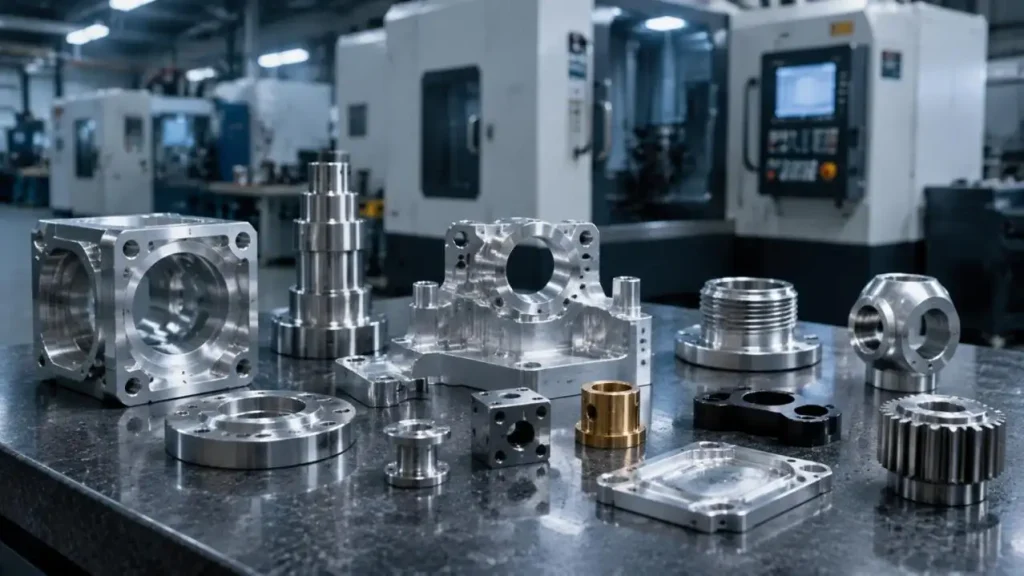
A part can comply with dimensional specifications and still fail during assembly due to mistakes in assembly, surface defects, or batch changes. During the procurement of Custom Precision Parts, engineers must consider the stability of the supplier process beyond machining capabilities.
SunOn provides Custom Precision Parts with the integration of CNC machining, mold manufacturing, and professional engineering along with quality assurance. This enables our customers to operate in the optimal region of precision vs. cost.
FACTOR 1: CNC Machine Capability - Key Factor of Custom Precision Parts' Accuracy
The first factor of Custom Precision Parts' accuracy is the capability and stability of the machining equipment.
CNC machine specifications are important, yet actual manufacturing outcomes depend on:
• Positioning accuracy
• Repeatability
• Spindle runout control
• Machine rigidity
• Calibration
• Thermal stability
True high accuracy of a machine may be lost if there is poor control of mechanical performance and temperatures or inadequate housekeeping.
SunOn's CNC machining capability performs precision production of metal and plastic components with a machining tolerance of ±0.1 mm to ±0.002 mm based on the design of the part, the material, and the process requirements. SunOn also offers solutions for complex machining with 5 axes to minimise loss of accuracy due to setting changes.
| Machine Capability Factor | Effect on Custom Precision Parts |
| High repeatability | Increases batch-to-batch consistency |
| Low spindle runout] | Increases hole accuracy and surface quality |
| Multi-axis machining | Lowers repositioning errors |
| Stable machine structure] | Lowers vibration-related defects |
FACTOR 2: Material Behavior Directly Influences Precision Stability
Selecting the optimal material is not only about the strength, but the degree to which the component can hold dimensional accuracy during machining.
Different materials exhibit different responses to cutting forces and to heat generation.
| Material | Precision Concern |
| Aluminum Alloy | Thermal expansion due to high speed machining |
| Stainless Steel | High cutting resistance, tool wear |
| Titanium Alloy | Heating during machining |
Engineering Plastics Deformation due to clamping pressure
An example is an aluminum housing with thin walls. After machining, the housing may have the required dimensions. However, after temperature recovery, the housing will slightly change its dimensions due to the release of internal stress.
When Custom Precision Parts are manufactured, SunOn considers:
• Characteristics of material
• Structure of the part
• Wall thickness
• Order of machining
• Required tolerance
SunOn provides engineers with great flexibility by machining a variety of materials such as aluminum, stainless steel, titanium, brass, and engineering plastics.
FACTOR 3: Machining Strategy Controls Dimensional Consistency
Precision machining is not only about removing material, it is about removing material in the correct sequence.
Poor machining strategies can create:
• Residual stress
• Part deformation
• Unbalanced cutting forces
• Increased tool wear
The professional custom precision parts manufacturing process customarily separates operations and sequences the removal of excess material and final finishing.
Rough Machining
Objectives:
• Removes a large amount of excess material.
• Defines the final dimensions.
• Lessens the load in the subsequent operation.
Finishing Machining
Objectives:
• Approaches the final tolerances.
• Increases surface quality.
• Controls or holds critical dimensions.
SunOn uses engineering-focused machining to define tool paths and machining processes with different geometries of end-user parts.
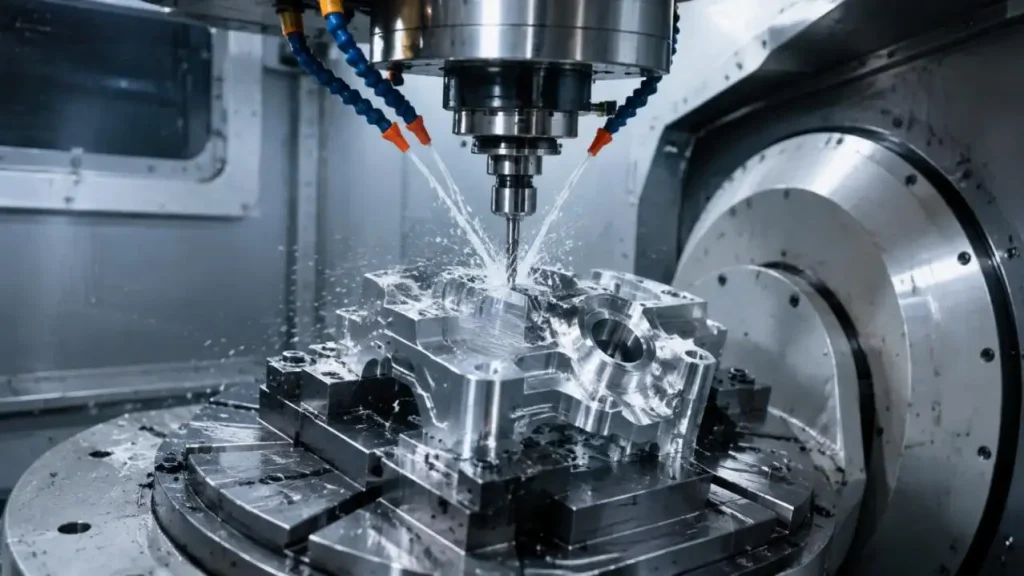
FACTOR 4: Tool Condition and Cutting Parameters Affect Final Accuracy
Even with state-of-the-art CNC machining, the performance of custom precision parts is highly influenced by the final tool condition.
Common Tool Performance Issues:
• Tool edge wear.
• Poor cutting speed selection.
• High tool feed rate.
• Improper cutting fluid application.
Tool wear will increase the diameter of a hole or reduce the surface quality of a finished part.
Key Process Controls:
• Tool life performance.
• Tool life optimization.
• First piece inspection.
• Control of process through an in-process quality assurance system.
Precision in constant stability of cutting directions when machining is most important of all.
FACTOR 5: Fixture Design Determines Positioning Accuracy
A fixture is designed to hold a workpiece in the necessary position to enable the completion of machining operations.
For complex Custom Precision Parts, fixture design influences:
• Positioning accuracy.
• Degree of deformation of the workpiece.
• Precision level of repeatability.
• Work-in-process time.
| Fixture Type | Advantage | Limitation |
| Standard Fixture | Lower setup cost | Limited positioning control |
| Custom Fixture | Higher repeatability | Higher preparation cost |
For custom precision components, standard fixtures are insufficient for consecutive production. Custom fixtures, however, improve consistency.
SunOn offers its clients expertise in the combined areas of machining, tooling, and molding to optimise workholding for advanced components.
FACTOR 6: Tolerance Design Must Match Functional Requirements
Assuming tighter tolerances will lead to better performance is a common engineering mistake.
Tolerance is directly related to the application.
For instance,
Housings that are strictly aesthetic may not even need decent dimensional control.
However, a component that interfaces mechanically may require control over positional tolerance.
Some important considerations are:
• Dimensional tolerance
• Geometric tolerance
• Flatness
• Position accuracy
• Surface roughness
| Requirement | Typical Consideration |
| Assembly fit | Dimensional tolerance |
| Alignment accuracy | Position tolerance |
| Sealing performance | Surface finish and flatness |
| Rotating components | Concentricity |
When the tolerance is correctly designed, it ensures sufficient performance and also helps avoid unnecessary spending on manufacturing.
FACTOR 7: Quality Control Inspection of Custom Precision Parts
Inspection controls all levels of manufacturing.
Effective inspection methods include:
• Coordinate Measuring Machine (CMM)
• Surface Finish Ra measurement
• Precision Gauges
Material Certification Verification
An extensive inspection process enables manufacturers to discern whether the variation is attributable to:
• Machine capability
• Material type and its inherent qualities
• The Process
• Measurement
SunOn provides quality inspection services in the manufacturing process to verify precision requirements prior to dispatch, ensuring quality control for prototype and production.
Final Remarks
SunOn offers its customers the entire value-added chain of design evaluation, precision machining, tooling, and production services in the manufacturing process to help customers develop Custom Precision Parts at the optimal cost.
For companies seeking a business partner for precision components, SunOn provides engineering support and engineering builds from prototype to manufacturing services.
FAQs
Q1. What kinds of Custom Precision Parts can SunOn offer?
SunOn makes Custom Precision Parts for a variety of sectors by providing CNC machined parts and mechanical parts, plastic parts, and by fabricating custom-made complex parts using customer drawings.
Q2. What types of machining does SunOn use for Custom Precision Parts?
SunOn offers complex geometry components and tight tolerances with various CNC processes such as milling, turning, and other advanced machining.
Q3. What level of precision can SunOn achieve for Custom Precision Parts?
Accuracy achievable depends on part layout and design, material chosen, the process, and how the final inspection is to be performed. It will be in the range of ±0.1 mm to ±0.002 mm.
Q4. Does SunOn give consideration to low-volume Custom Precision Parts?
Low volumes are catered for. These include make-to-sample, make-to-order, and small-batch requests. At this level, customers can assess the feasibility of their design prior to mass production.
Q5. What types of materials can SunOn use for precision components?
Working precision components involves a variety of materials such as aluminum alloys, stainless steel, titanium, brass, and engineering plastics. A thorough evaluation based on strength and material consistency is done based on the design and application.
