


Custom Silicone Compression Molding: Accurate Solutions
What is Custom Silicone Compression Molding?
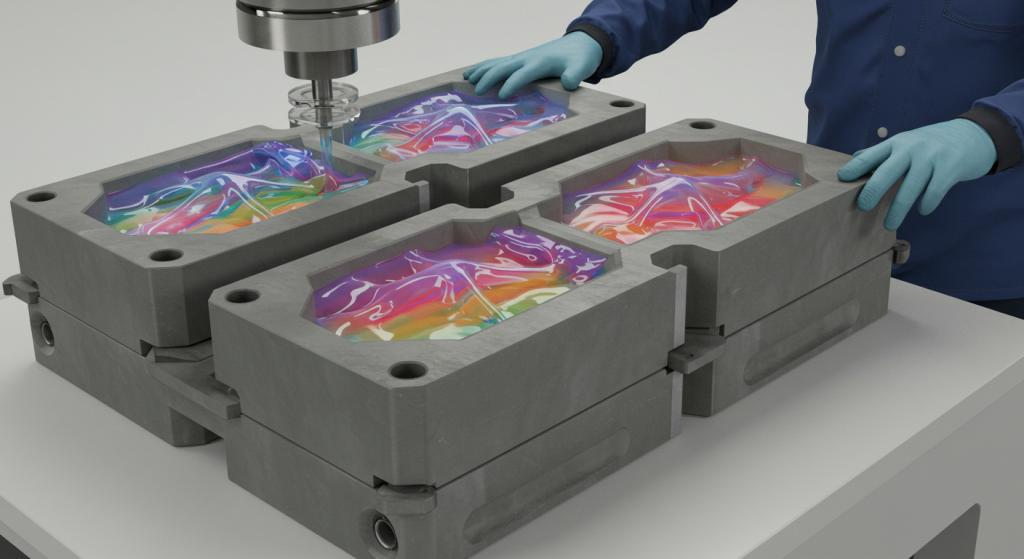
Silicone compression molding is a form of silicone technology where the silicone is pressed into a mold at certain set temperatures. Compression molding is used for O-rings, gaskets, and high bulk ratio and cross-linked silicone parts. Modular design and mold making are important to capture the unique characteristics of silicone, like thermal shrinkage, high conductivity, and silicone geometry.
Employing high-precision silicone compression molds enables manufacturers to make custom silicone parts with outstanding dimensional stability, uniformity, and repeatability. Balanced for high and low silicone molded parts and custom low-volume batches, the process retains flexibility to satisfy varying production needs.
Precision Solutions for High-Performance Applications
- Custom silicone compression molding has become an important method for creating intricate silicone components. Silicone is widely used in automotive, medical, consumer electronics, and industrial applications because of its usefulness, thermal stability, and toughness in specialty applications. Companies in need of silicone parts have begun to depend on advanced silicone compression mold manufacturing methods to produce high-quality silicone components.
- Sunon is capable of providing custom silicone molded parts and excels in maintaining optimal performance parameters, custom silicone compression molding to ensure that components have maximized tooling life and best industry dimensional guidance.
Important Benefits of Custom Silicone Compression Molding
1. Precision and Consistency
High silicone compression molds the low silicone parts to the desired tolerances and silicone pieces to the required uniformity. Designs of molds with advanced CAD, CAM, and CNC machining of silicone die blocks lower the number of defects and enable high production of intricate designs such as silicone seals and silicone O-rings.
2. Durability and Extended Mold Life
Find the rest of the text and replace it according to the point given in the first paragraph of the rest of the text.
4. Cost Efficiency and Waste Reduction
Cost-efficient silicone compression molding is derived from optimizing cycle times, minimizing material waste, and maximizing volume production. To maintain both flexibility and economic efficiency, custom molds can be designed for either small batch runs or large-scale production.
5. Versatility of Application
The accommodation of complex geometries and high-precision functional components is made possible with compression molding. Furthermore, silicone molds and silicone molded solutions for insert-molded industrial parts are precision Cast. The silicone molding optimized for ejection or molded silicone parts has a uniform wall thickness, proper ejection, little flash, and silicone molded parts.
Technical Aspects of Silicone Compression Molding
1. Qualities of Silicone Material
The materials of silicone compression molds require the most consideration. Characteristics tethered with silicone, such as the hardness, elongation, shrinkage, and thermal conductivity, directly impact the mold's design, cycle efficiency, and part stability.
2. Silicone Parts Molded Design
Incorporating the right tooling for parts and components with precision, including optimized cooling channels and ejection systems that minimize the risk of deformation or the pulled parts tearing silicone, maximizes the design for silicone parts. Silicone molds are designed with a lower shrinkage rate to control the accuracy of the dimensions.
3. Cycle Time and Efficiency
Silicone molding cycle time is critical for production volumes in any given time frame. More effective temperature control and pressure settings, as well as optimized use of mold release agents, increase throughput and improve defect control. Cycle time efficiency in silicone compression molding also lowers production costs.
4. Mold Wear and Maintenance
Use can wear down a mold. Use of high-grade silicone rubber tooling combined with mold wear resistance prolongs tooling life in silicone molds. Timely repair and upkeep of the molds provide repeatable, reliable results as time goes on.
Applications
Custom silicone compression molding fulfills the needs of various sectors:
• Medical Devices: Medical silicone molded parts with high precision, such as the seals, rings, and gaskets for surgical instruments and wearable medical devices.
• Automotive: Automotive silicone parts such as gaskets, engine seals, and elements with vibration-damping.
• Consumer Electronics: Silicone covers and parts for smartphones, wearables, and electronic connectors.
• Industrial Equipment: Industrial silicone parts for machinery, equipment seals, and high-temperature applications.
• Custom Seals & O Rings: Silicone parts for high temperature and harsh chemical environments.
Custom Silicone Manufacturing:
Step 1: Material Selection Silicone Compound Selection: Determine the silicone compound according to its hardness, tensile strength, thermal resistance, and the intended application.
Step 2: Silicone Mold Designing and Tool Manufacturing: Use CAD/CAM to design and subsequently CNC machine to fabricate silicone compression master molds.
Step 3: Silicone Compression Molding: Preheat the silicone and place it into the mold cavity. Then, compress and heat to fill the cavity and replicate design details.
Step 4: Cooling and Ejection: Curing is followed by cooling to maintain the silicone molded part's dimensions. Molds are opened and parts removed to avoid deformation.
Step 5: Quality Inspection and Finishing: Surface finish, dimension accuracy, and functionality with parts are checked, and any needed secondary process, such as trimming and post-curing, is applied.
Silicone in Comparison with Other Materials:
• Comparison with rubber compression molding. Silicone compression molding is better thermally stable, more chemically resistant, and persists for longer periods in vital applications.
• Comparison with polyurethane molding. Silicone is better suited for automotive, medical, and electronic industries due to temperature, elasticity, and aging conditions.
• Comparison with compression molding of thermoplastics. Faster cycles do not justify the absence of high-temperature performance and flexibility commonly present in silicone.
Conclusion:
Custom silicone compression molding offers high precision, complete durability, and flexibility to many industries. In the automotive or medical industries, Consumer Electronics, or other industries, these processes can provide low-silicone parts that are uniformly high quality and low price. The advanced design included with the production of silicone rubber O-rings, silicone rubber gaskets, and other intricate rubber molded parts highlights the attention to enduring high performance and complete trustworthiness. Visit SunOn website, which can provide tailored, precise, and compression-molded silicons with complete attention to detail and excellence in every project.
