


Die Casting Process: Techniques, Materials, and Applications
Die casting is an essential production process, which allows making accurate metal parts in large quantities. It is done by pouring molten metal into a mold with high pressure which allows manufacturers to produce more intricate forms with strict tolerances. The engineers, designers and production managers are required to understand the die casting process to enhance efficiency, minimize defects and get high quality parts.
Die casting finds extensive use in industries like automobile industry, aerospace, consumer electronics, and industrial machinery. The choice of appropriate process will guarantee the maximum material performance, stable dimensional accuracy, and reduced cost of production in high-volume production processes.
What Is Die Casting?
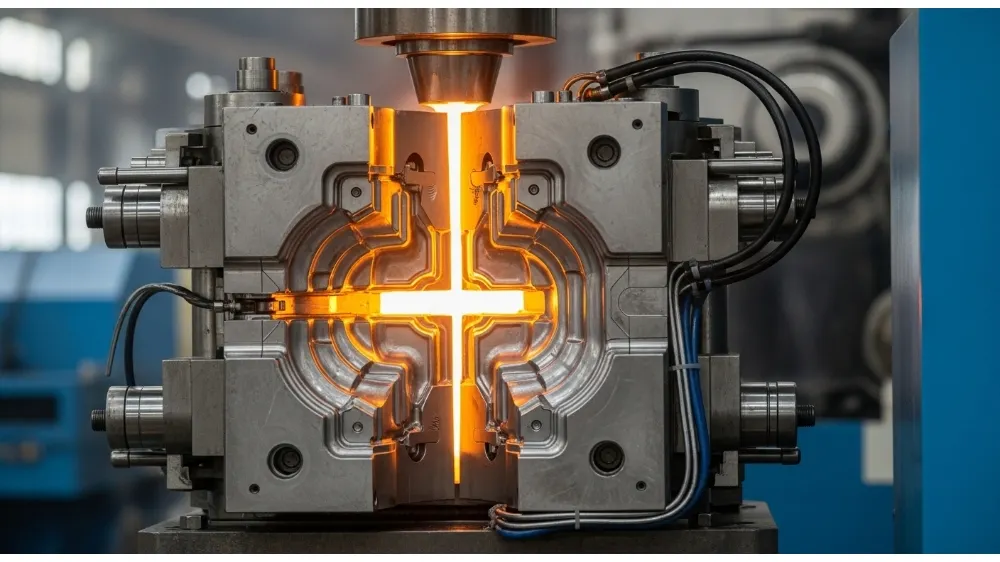
Die casting is a type of metal casting, where high-pressure molten metal is forced into a steel mold also referred to as a die. When the molten metal is poured into the cavity of the mold, it hardens into the required shape. High repeatability can be achieved, and parts of high dimensional accuracy and surface finish can be produced through the process.
The technique is suitable in the creation of complicated geometries, thin walls and detailed features that would have been hard to bring to reality using other types of casting. Aluminum, zinc, magnesium and copper alloys are common materials that are selected upon the specific mechanical and thermal property requirements.
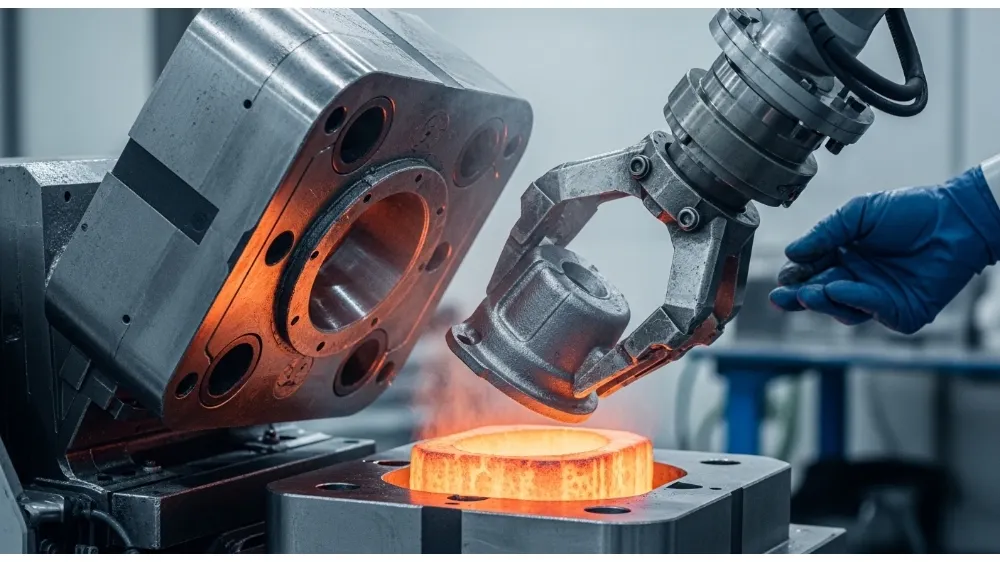
The Important Features of Die Casting
The die casting process has a number of special features:
- Close tolerances and high dimensional accuracy.
- Flat finish needs very little finishing.
- Capability to make multidimensional shapes by one interaction.
- Mass production rates of production.
- Uniform quality parts in high volumes of production.
These traits render die casting a choice of a favorable option in the operations where precision, strength and aesthetics are paramount.
Die Casting Materials
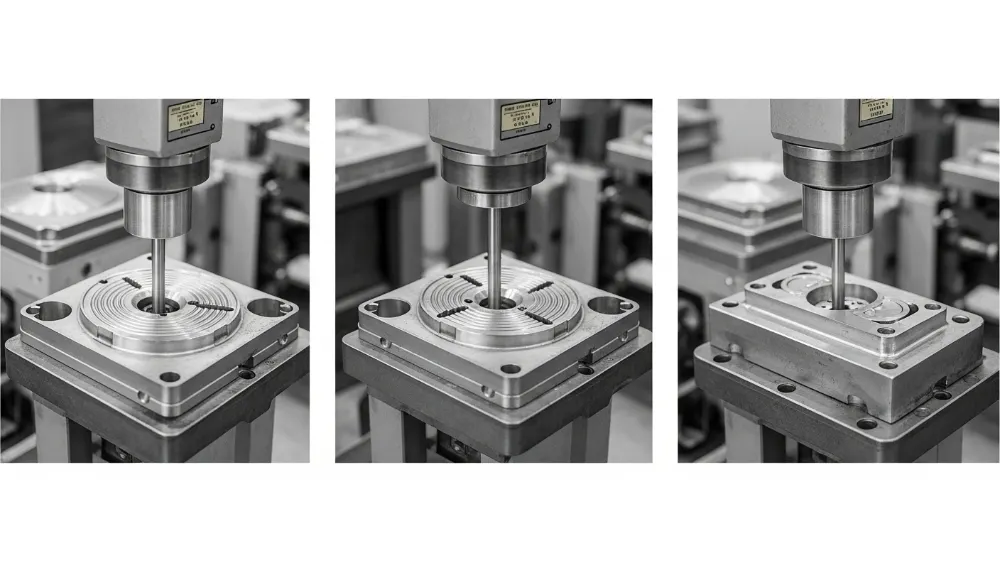
Die casting involves the use of non-ferrous metals that have low melting temperatures. Aluminum alloys are also favored because they are lightweight, corrosion resistant, and exhibit good mechanical properties. Zinc alloys are strong and their surface finish is good. The alloys of magnesium are lightweight and are employed in the automotive industry as well as the aerospace. The alloy copper is selected as an electric and thermal conductor.
The choice of material is very important in the performance, life duration, and appropriateness of the parts to the target application.
Die Casting Methods
Die casting has two major types including hot-chamber and cold-chamber.
Hot-Chamber Die Casting: In this process, a chamber in molten metal is used, and it is suitable when the metals are of low melting point such as zinc and magnesium. The chamber is used to inject the metal directly into the die, hence enabling quick cycle times.
Cold-Chamber Die Casting: Under this technique, the molten metal is ladled into a cold injection chamber which is subsequently poured into the die. It is applied on metals that have a larger melting point like aluminum and copper alloys. This process avoids the destruction of the equipment and gives a chance to control the injection process accurately.
Die Casting Equipment
Die casting is a process that needs special equipment, which includes high pressure machines of injection, steel molds, heating, and ejection. Current die casting machines are automated in terms of handling of molds, ejection of parts and monitoring of processes. The right equipment is an assurance of quality consistency, low labor, and high volume with the lowest downtime.
Advantages of Die Casting
Die casting has several advantages over other techniques of metal forming:
- Makes extremely accurate and repeatable parts.
- Able to make complex shapes and slender walls.
- Superior finishes on surfaces result in less post-processing.
- Large amounts of production efficiency in large batch production.
- Powerful and durable structural components.
These benefits render die casting suitable to companies that require quality and complicated metal products.
Common Applications
Die casting finds application in many industries:
- Automotive: Automotive engine parts, automotive transmission housings and automotive structural brackets.
- Aerospace: Electronic electronics housings and components of lightweight structure.
- Consumer Electronics: Smartphone, laptop and appliance housings.
- Industrial Machinery: Pumps, valves and compressor parts.
The efficiency of die casting as a manufacturing process in terms of producing high quality and consistent parts has made it a keystone in the present day manufacturing.
Design Considerations
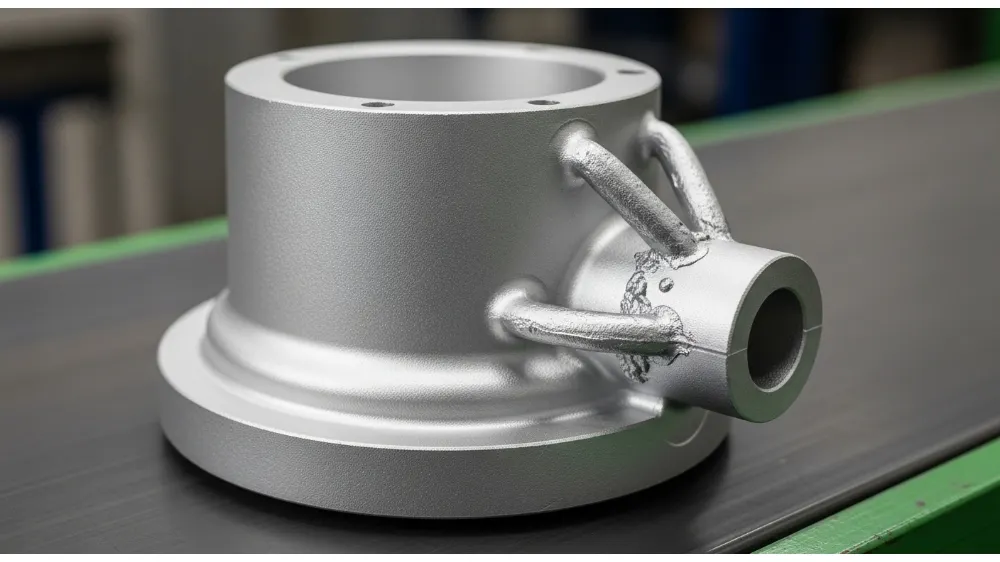
Die casting requires proper planning of design. Key considerations include:
- Mold geometry to be used in filling the mold.
- Angles to aid in ejection.
- Thickness of the wall consistency to eliminate defects.
- Increasing the number of cavities by reducing complexity in the moulds.
This is achieved by optimizing the factors to minimize chances of porosity, warping and other defects during the production process.
Quality and Surface Finish
Die casting creates tight-tolerance smooth surfaces. Minimum machining can be achieved depending on the material and control of the process. Trimming, deburring, machining holes, or surface treatments may be done to the post-process to attain desired mechanical or cosmetic features.
Common Challenges
Die casting has disadvantages in spite of its advantages:
- Can be porous and trap the gasses unless molds are properly vented.
- Stresses caused by thermal reasons, which cause warping or cracking.
- Expensive start-up tooling expenses on molds.
- Limitations on materials of some high temperature alloys.
Such difficulties can be reduced by designing the mold, process control and the choice of the material.
Environmental and Energy Considerations
Die casting wastes energy in the melting of metals and high-pressure machines. Recent systems have had energy efficient furnaces, automated handling of moulds and recycling of scrap metals as a way of cutting wastage. Greener practices guarantee reduced environmental effects and high production efficiency.
Frequently Asked Questions (FAQ)
Q1: What is die casting used for?
Die casting involves the manufacture of accurate, high-volume, metal parts with complicated geometries and a high-quality surface finish.
Q2: What are the common metals that are used in die casting?
The most commonly die cast are aluminum, zinc, magnesium, and copper alloys which have appropriate melting points and mechanical properties.
Q3: What is the distinction between hot-chamber and cold-chamber die casting?
Hot-chamber employs low-melting injection chamber, underneath the chamber; cold-chamber employs different injection chamber, above the chamber.
Q4: Does die casting create thin walled parts?
Yes Die casting is capable of making thin walled parts with tight tolerances that are best suited to electronics enclosures and car components.
Q5: Does it mean that always post-processing is needed after die-casting?
Little or no post-processing is required, and it is typically trimmed, machined or surface finished as required by the application.
Q6: What are the industries that die casting is effective?
Die casting is commonly used to make high-quality parts in the automotive, aerospace, consumer electronics industries, and industrial machinery.
Q7: What are the major drawbacks of die casting?
The principal considerations are high starting mold cost, porosity risk, material constraints and possible thermal stresses.
Conclusion
Die casting has become a business foundation of metal manufacturing in the modern world, providing precision, extreme repeatability, and efficiency to complex components. The knowledge of the techniques, materials and design considerations enables manufacturers to make high quality and durable components in several industries. Die casting expertise is vital to the engineer because it allows efficient production, reduction of waste, and delivery of consistency on a large scale.
