


Electroplating Process: Methods, Benefits, and Industrial Applications
Electroplating is a surface treatment process that is employed in improving metal parts. The procedure is the application of a very thin layer of metal coating with electrical currents. By knowing the electroplating process, manufacturers are able to enhance the corrosion resistance, aesthetic and functional properties of part.
The procedure is broadly utilized in the automobile, aircraft, electronic, jewellery components and industrial equipment industries. Optimized implementation will result in uniform finishes, better life, and performance of different metallic components.
What Is Electroplating?
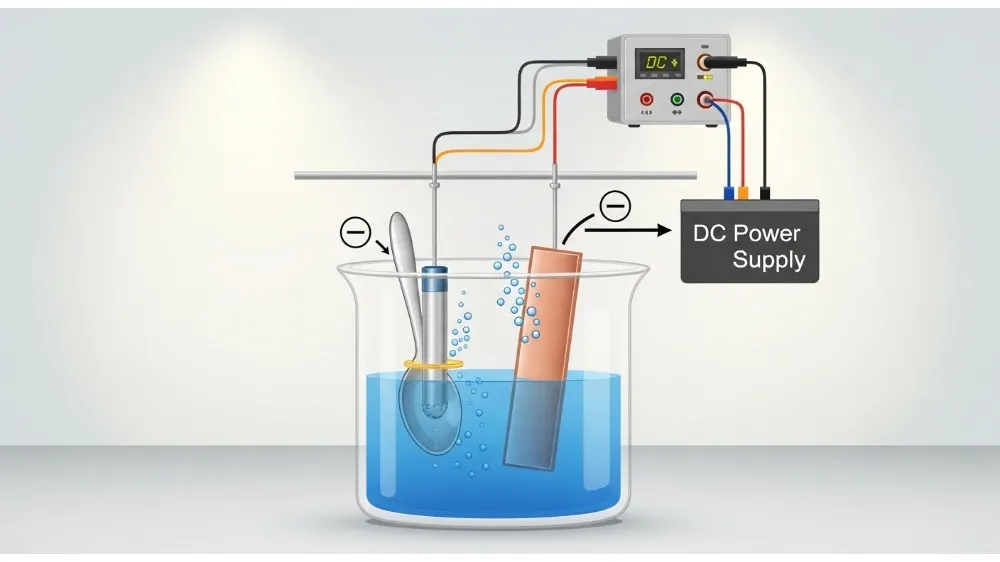
Electroplating is a scientific and electrical technique, which coats metal ions on the surface of a substrate. Elements are immersed in a solution of electrolyte with metal ions, and a regulated current of electricity leads to the deposition of metals. What comes out is a homogeneous and conforming metallic coating.
Corrosion resistance is increased, appearance is improved, and functional properties, e.g., conductivity or hardness, can be accomplished by the electroplating. The process is commonly used on such metals as steel, copper, aluminum, and brass.
Electroplating Materials
Electroplating can be done on various metals and alloys:
- Steel and Stainless Steel: Provides better corrosion protection and decorative finishes.
- Copper: This is used to give very good conductivity and sticking ability to the next layer.
- Aluminum: Light metals that have the advantage of increased surface life, and beauty.
- Brass and Nickel Alloys: Incorporation is often used in decorative purposes of a shine and durability.
The selection of the materials is crucial as it has to be properly adhesive, uniform, and long-lasting.
Electroplating Techniques
Several techniques are available in electroplating to obtain various finishes:
- Nickel Plating: Coat of corrosion and wear resistance.
- Chrome Plating: Provides decorative finishes of great reflectiveness and durability.
- Gold Plating: Increases electric conductivity and beauty.
- Silver Plating: This is used as a conductor and in jewelry.
- Zinc Plating: This is used to shield ferrous metals against corrosion.
The choice of technique depends on desired metal properties, surface finish, and application requirements.
Electroplating Equipment
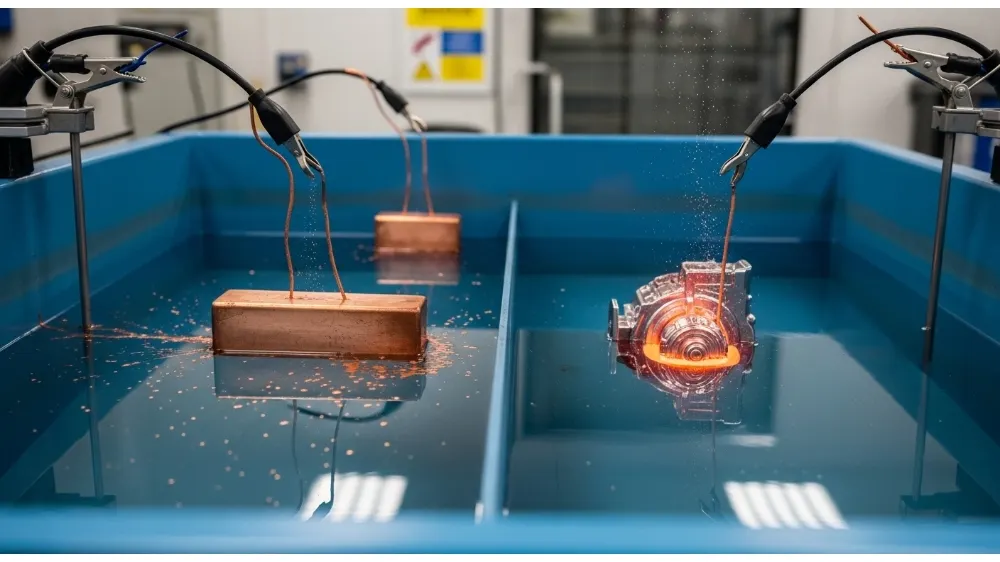
Specialized equipment is needed for quality electroplating:
- Electrolyte Tanks: Contain the solution and submerged parts.
- Rectifiers: Deliver controlled electrical currents to facilitate metal deposition.
- Racks and Fixtures: Secure components and ensure uniform coating distribution.
- Filtration Systems: Maintain solution purity and prevent contamination.
Well-designed equipment ensures even deposition, high efficiency, and consistent coating quality.
Steps in Electroplating Process
Electroplating involves several controlled steps:
- Surface Preparation: Polishing, degreasing, and etching ensure proper coating adhesion.
- Electrolyte Immersion: Components are submerged for uniform exposure to metal ions.
- Application of Electrical Current: Metal ions deposit onto the substrate at controlled voltage and time.
- Rinsing and Drying: Components are washed to remove residues and dried to achieve final quality.
Proper monitoring prevents uneven plating, pitting, or poor adhesion.
Benefits of Electroplating
Electroplating provides multiple advantages:
- Enhances corrosion resistance of metal parts in harsh environments
- Improves appearance with smooth and bright surfaces
- Increases wear resistance and surface hardness
- Reduces maintenance by extending component lifespan
- Provides electrical conductivity for electronics and connectors
These benefits make electroplating critical for decorative and functional applications.
Design Considerations
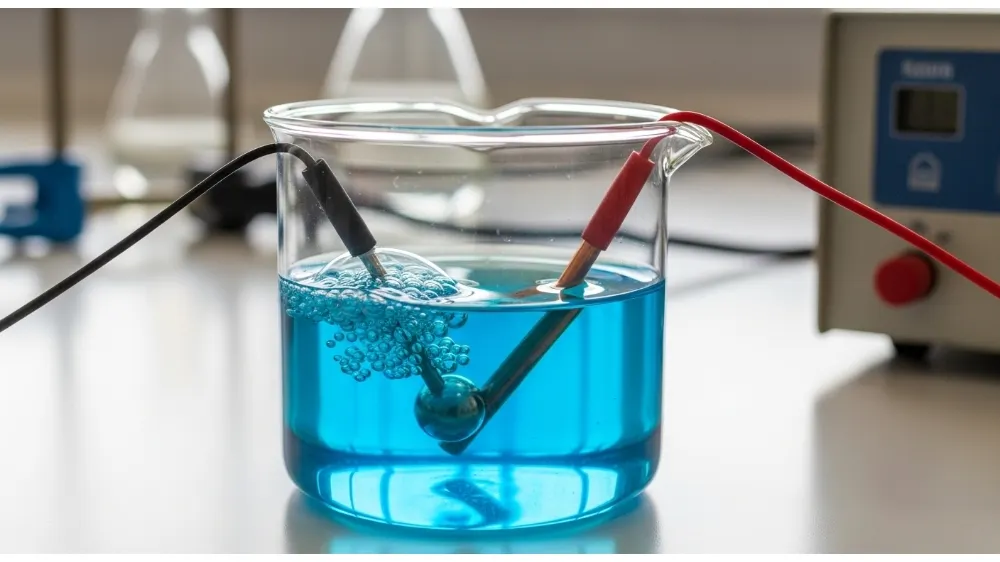
When preparing components for electroplating:
- Ensure uniform thickness and rounded edges for even coating
- Minimize deep recesses that can hinder uniformity
- Choose metals compatible with plating solutions
- Consider subsequent handling such as polishing or sealing
- Maintain consistent electrical contact during the process
Proper design minimizes defects, improves quality, and enhances functional performance.
Industrial Applications
Electroplating is used in many industries:
- Automotive: Decorative parts, engines, and trim
- Aerospace: Structural components and fasteners requiring corrosion resistance
- Electronics: Connectors, PCBs, and contact points
- Jewelry: High-quality decorative metal components
- Industrial Machinery: Wear-resistant tools, gears, and housings
Electroplating ensures quality, durability, and aesthetics across applications.
Environmental and Safety Issues
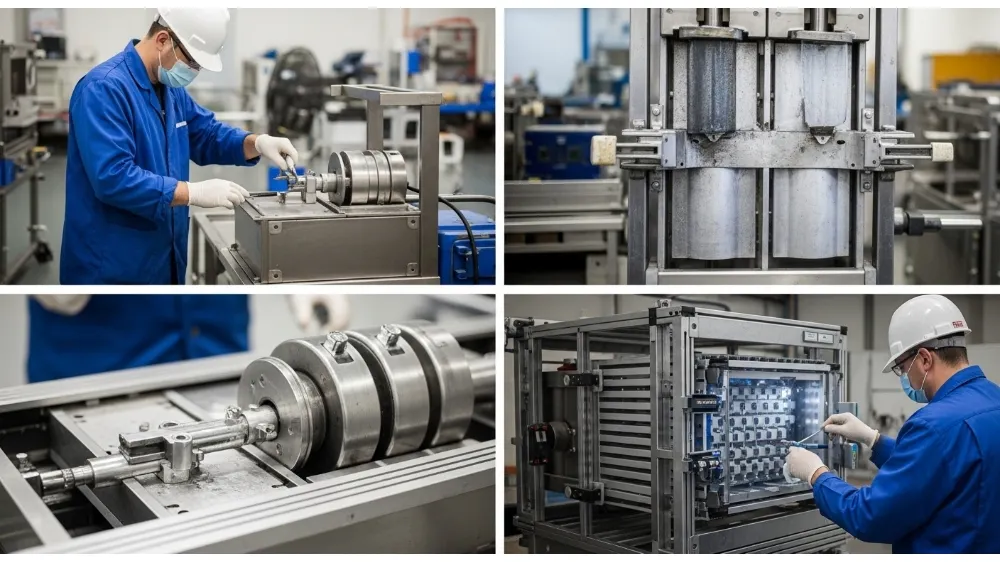
Electroplating involves chemical solutions that must be safely managed. Ventilation, waste treatment, and personal protective equipment are essential. Recycling solutions and minimizing chemical waste reduce environmental impact and improve sustainability.
Common Challenges
Challenges in electroplating include:
- Uneven coating due to poor current distribution
- Inadequate surface preparation causing poor adhesion
- Electrolyte contamination causing defects
- Hydrogen embrittlement in certain metals
These challenges are mitigated with controlled processes, monitoring, and proper solution maintenance.
Maintenance and Quality Control
Maintaining equipment and plating solutions ensures consistent results:
- Inspect tanks, racks, and rectifiers regularly
- Filter and replenish electrolytes to maintain purity
- Monitor voltage and current for proper deposition
- Conduct adhesion and thickness tests on plated parts
Quality control ensures functional and aesthetic requirements are consistently met.
Frequently Asked Questions (FAQ)
Q1: What is the aim of electroplating?
Electroplating enhances corrosion resistance, aesthetics, and functional properties of metal components.
Q2: What are the most common metals electroplated?
Steel, stainless steel, copper, aluminum, nickel, brass, gold, and silver are commonly electroplated.
Q3: How is electroplating applied?
By immersing components in a solution of metal ions with controlled electrical current.
Q4: Can electroplating improve wear resistance?
Yes, electroplated metals become hard, abrasion-resistant, and more durable.
Q5: Which industries rely on electroplating?
Automotive, aerospace, electronics, jewelry, and industrial machinery industries.
Q6: Is electroplating environmentally safe?
Yes, with proper chemical handling, ventilation, waste treatment, and recycling measures.
Q7: How is quality ensured in electroplating?
Through surface preparation, controlled current, solution maintenance, and inspection of coating thickness and adhesion.
Conclusion
Electroplating is a diverse and essential manufacturing process that enhances durability, aesthetics, and functionality of metals. Proper equipment, material choice, and rigorous quality control ensure uniform, high-quality coatings. Mastery of the electroplating process allows manufacturers to deliver reliable, attractive, and long-lasting components for various industrial applications.
