


Heat Sink Zinc Alloy Die Casting Mold | Long-Lasting Tooling
Benefits of Heat Sink Zinc Alloy Die Casting Molds
Zinc alloy, like any other heat sink zinc alloy die casting mold, has user precision, productivity, and cost benefits attached to it, similar to other elements associated with:
1. Zinc Alloy Die Casting Electronic Components with the Highest Precision
The ability to generate easy cast zinc alloy die heat sinks and LED housings for electronic devices and other cooling assemblies in volume with tight tolerances. Rough tooling die cast molds for zinc alloy heat sink geometrically complex structures with tight tolerances use precision machining to make excellent molds.
2. Less Cost for Cooling Molds and Their Maintenance
Tool maintenance cost for zinc die casting molds and conventional aluminum molds benefits due to reduced die maintenance cost, improved die tooling, and longer tool life. These benefits are more pronounced in regions which cast large volumes of thermal components regularly.
3. Molds Made of Zinc Alloys Have Less Weight
Zinc alloy heat sink casting, unlike other die casting methods, improves casting machines' productivity because of a weight reduction, which is advantageous for electronic cooling molds that are highly efficient and need to be produced in large quantities under a tight time frame.
4. Declining Production Expenditures
The electrode tooling surfaces on the zinc alloy die casting heat sink molds are more durable, and thus the electrodes have a lower cycle cost and lesser mold surface finish scrap costs. As a consequence, the molds are zinc alloyed to zinc alloy casted molds for more economical heat sink production, which is beneficial for LED systems and other electronics, as well as thermal management.
The Performance of the Heat Sinks and Castings of Molds of Zinc Alloy
For the heat sink zinc alloy die casting mold, the range of its use is defined by a set of physical parameters that are set for the molds.
Mechanical Properties
In terms of die heat sinks, products from wrought alloys will most certainly require crucible die cast tooling that houses internally coupled hard alloys with thermally opposing segregated magnetically permeable metals and thermally fatiguing in high cycles. As a result, the molds outperform in die-filled to match the high-volume urbanization needs.
Thermal Conductivity
Zinc alloys, in conjunction with the high thermal conductivity of our molds, will assure that the heat within the mold is contained and the alloys within cool down rapidly. This thermal control system, optimized to operate within the molds, enhances the metal's cast quality by reducing distortion from overused molds and expanding the mold's cycle of use.
Mold Wear Resistance
Mold surfaces and precision settings of zinc die castings get worn out during the die casting high-pressure and high-temperature processing. Finished surfaces cast with zinc alloys are worn out during the die-casting process at high pressure and high temperature.
Dimensional Stability and Shrinkage Control
The dimension of precision zinc alloy heat sinks cannot be ensured during the die casting process. This enables designers of precision heat sink molds made of zinc alloy to perform their functions effectively.
Tool Steel Selection and Mold Durability
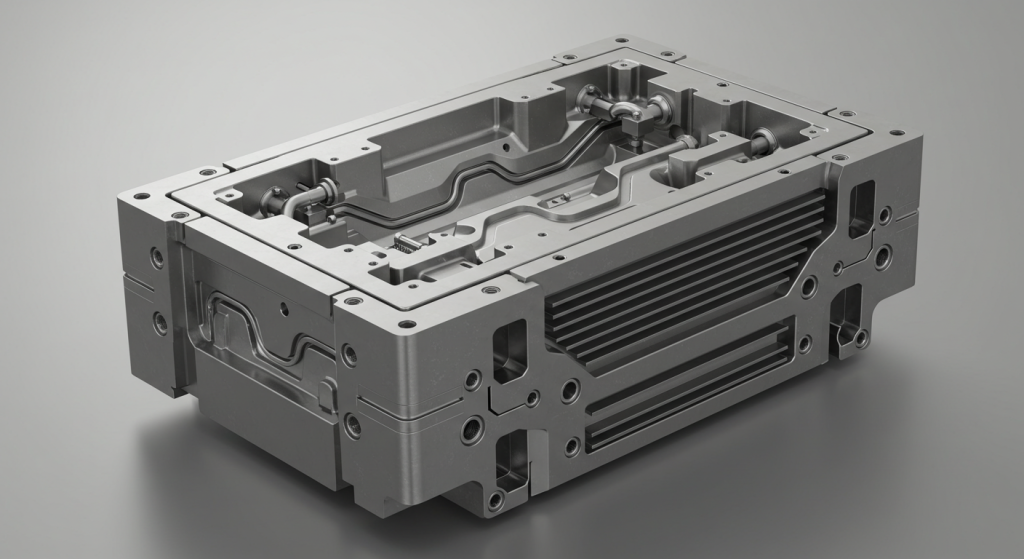
The alloy steel selection for zinc molds was altered. The mold granted better fatigue resistance during downtime and usage. Molds made of zinc alloy are essential for TD die casting molds, which are produced in bulk.
Manufacturing and Process Optimization
The die casting molds of zinc heat sinks need to be constructed using the optimal method with the tools and operations configured accordingly.
CNC Machining and CAD/CAM Design
Zinc alloy heat sink molds are amenable to fusion with advanced tools and CAD/CAM design.
The accuracy is better than 90% and integrates complex shapes, which is great for heat sinks. In addition, CAD systems integrate quite well with precision zinc die casting.
Understanding More About Die Casting Techniques
Accurate prediction under high-volume production can be performed using mold flow and wear prediction computer software. Ongoing improvements profoundly impact scrap rate, uniformity, cycle time balance improvements, mold productivity, and wear and tear productivity.
Other Die Casting Techniques
Associated zinc alloys used in the zinc die casting production of heat sink zinc die castings enhance the surface finishes, tools of uniform length, and the electronic cooling and thermal management components.
Repair and Maintenance of The Mold
Periodic maintenance and repair of the molds for die casting improves the reliability of the heat sink die casting zinc mold and reduces the cost of operating it.
• Enhances the productivity of the molds.
Additional Applications
Heat Sink for Electronics
Electronic units that employ heat sinks rely upon zinc die casting to supply molds and thermal interface materials that function thermally and meet the thermal and industrial standards for the chipset.
LED Heat Sink Zinc Molds
Zinc die casting molds of LED heat sinks permit ultra-slim chassis of LED lighting systems to achieve ultra-lightweight constituents of superior surface finish quality.
Temperature Control Devices
Coolers for CPUs and other devices that require cooling with thermal components, such as diecasting, need a precise hyper-eutectic zinc alloy for optimum retention of shape, ease of conduction, and ease of thermal and heat dissipation.
Cooling of Electronics
Zinc alloy molds for electronics cooling allow the mass production of graduated and structured electronics with uniform heat dissipation and precise structural components.
Comparison Between Zinc and Other Alloys
In the case of retaining wall construction, the effectiveness of the rest of the construction is hinged upon the effectiveness of the zinc and aluminum molds.
• Die Casting Mold Tooling Durability Zinc vs aluminum → In very high cycle heat sink production, zinc alloyed materials provided less wear and longer tooling life.
• Zinc tooling vs aluminum tool wear cost effectiveness → In the useful life span of the tool, zinc modular tooling is very inexpensive in terms of replacement and maintenance costs.
• Alloys of zinc resistant to wear vs steel molds → Between the steel mold pack and Zinc, the Bulk of Zinc is economically cheap and works as a wear-resistant solution.
• Other lightweight die casting molds vs Zinc → Compared to other alloys, zinc can be die casted much more precisely and faster, thus increasing production rates.
Production Capabilities and Contracts of SunOn
To solve the issue of diecast tooling and the heat sink, SunOn specializes in designing and fabricating diecast tooling and modular components. SunOn works with high-precision tooling and zinc alloys for thermal and electronic components, including heat sinks, LED, and all other relevant materials. The ability to sustain high-volume production consistently requires meeting customer demands with respect to accuracy, stability, strength, and thermal functionality.
Conclusion
In today’s world, alongside making intricate electronic devices comes the responsibility for superior detailing, structural integrity, and thermal control, which makes the heat sink zinc die cast mold the ideal solution. Zinc alloy die casts are extremely efficient, owing to the exceptional tool life, ease of moldability, and competitive pricing offered for the production of thermal parts, including electronic casings and LED heat sinks. SunOn meets customer demands with exceptional quality performance, leaving the customer’s side equipped with high-precision, performance zinc alloy dies. The standard of the client's thermal surfaces will align with the utmost accuracy of the produced components, along with the best sustainability.
