


What is High-Precision 3D Printing? Applications and Tolerances
High-precision 3D printing represents the pinnacle of additive manufacturing, enabling the creation of intricate parts with micron-level accuracy. Unlike standard desktop printing, this industrial-grade process delivers tight tolerances and exceptional surface finishes. It bridges the gap between digital design and complex physical reality for high-stakes industries like medical and aerospace.
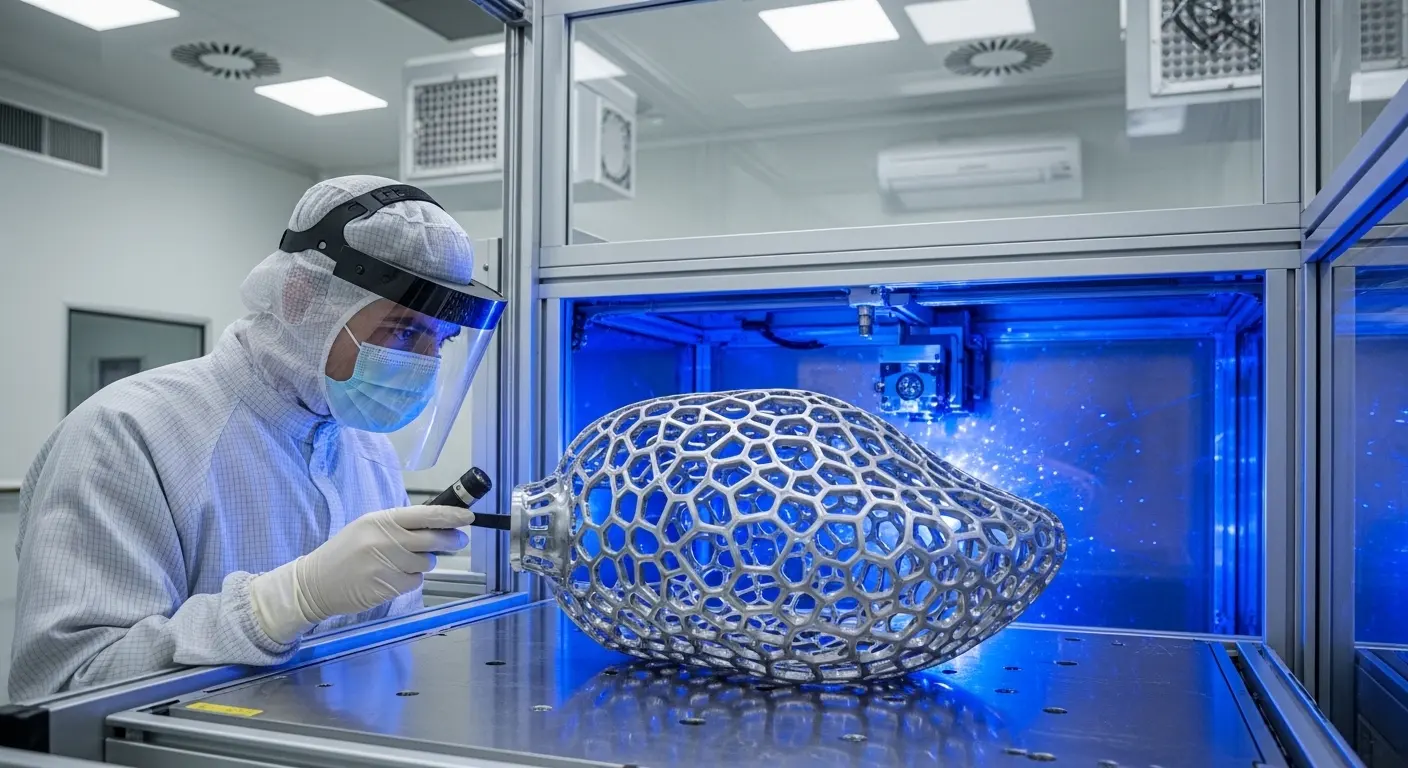
What is High-Precision 3D Printing?
High-precision 3D printing refers to additive manufacturing processes capable of achieving dimensional tolerances within ±0.05mm to ±0.1mm, or even smaller in micro-printing. It uses advanced optics, stable thermal environments, and high-resolution materials to produce parts that mirror exact CAD specifications. This level of precision is essential for functional mechanical assemblies.
When we discuss high-precision 3D printing, we are looking at a subset of manufacturing where "close enough" is never an option. In my experience working with engineering teams, the shift from "standard" to "high-precision" usually occurs when a part must interact with other mechanical components.
To achieve this, industrial machines use localized laser control and sophisticated software algorithms. These systems account for material shrinkage in real-time. While a hobbyist printer might struggle with a 0.5mm deviation, high-precision systems like those used by Top 10 Rapid Prototyping Manufacturers ensure that every layer aligns perfectly.
Key characteristics include:
- Layer Thickness: Often as thin as 10 to 25 microns.
- Surface Roughness: Extremely low Ra values, reducing the need for post-processing.
- Feature Resolution: Ability to print walls thinner than a human hair.
How Does Precision Differ from Accuracy in 3D Printing?
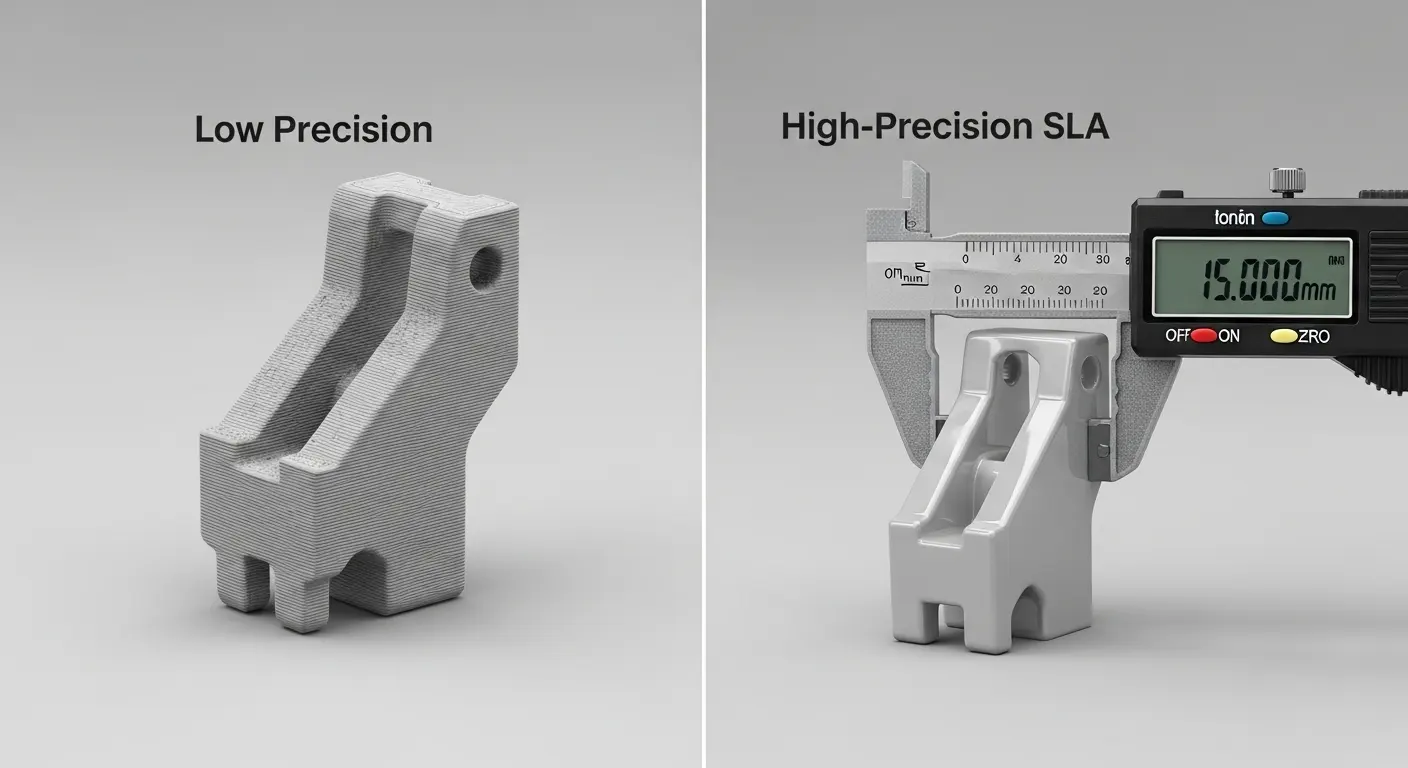
Precision in 3D printing refers to the repeatability of the process, ensuring that the machine produces the same result every time. Accuracy measures how closely the printed part matches the original digital CAD model. A high-precision system is both repeatable and accurate, minimizing the "deviation delta" during production runs.
It is a common mistake to use these terms interchangeably. Imagine a dartboard. Accuracy is hitting the bullseye. Precision is hitting the same spot on the board five times in a row, even if that spot isn't the bullseye. In manufacturing, we demand both.
[Data: Research suggests that industrial SLA printers achieve 98% more repeatability than consumer-grade FDM units.]
If your printer is accurate but not precise, your first part might be perfect, but the hundredth will be a failure. If it is precise but not accurate, all hundred parts will be identical—but they will all be the wrong size. High-precision 3D printing solves this by using closed-loop feedback systems that monitor the print bed and toolhead position thousands of times per second.
Which 3D Printing Technologies Offer the Highest Precision?
The highest precision is typically found in resin-based technologies like Stereolithography (SLA) and Digital Light Processing (DLP), alongside specialized metal processes. These methods use light or lasers to solidify material at a molecular level. Micro-SLA and Two-Photon Polymerization (TPP) represent the absolute peak, reaching sub-micron resolutions for specialized applications.
Is SLA the Gold Standard for Precision?
Stereolithography (SLA) uses a UV laser to cure liquid resin into hardened plastic. Because the laser beam can be focused to a very small diameter, it creates incredibly smooth surfaces and sharp edges. It is often the first choice for dental aligners and jewelry masters.
Why is DLP Preferred for Small, Complex Parts?
Digital Light Processing (DLP) uses a projector screen to cure an entire layer of resin at once. This results in exceptional "XY" resolution. For small parts with intricate internal channels, DLP offers a level of consistency that is hard to beat.
What Role Does PolyJet Play in Accuracy?
PolyJet works similarly to an inkjet printer but drops photopolymers that cure instantly with UV light. It is one of the few high-precision methods that allows for multi-material printing, enabling the creation of a single part with both rigid and flexible features at tight tolerances.
What Are the Typical Tolerances for High-Precision 3D Printing?
Typical tolerances for high-precision 3D printing range from ±0.05mm to ±0.2mm depending on the technology and material used. Resin-based systems (SLA/DLP) generally offer the tightest tolerances, while powder-bed fusion (SLS/DMLS) provides high dimensional stability for metal and nylon parts. Achieving these tolerances requires calibrated machines and expert thermal management.
| Technology | Typical Tolerance | Minimum Feature Size | Best For |
| SLA (Resin) | ±0.05 mm | 0.1 mm | Form-fit testing, dental |
| DLP (Resin) | ±0.05 mm | 0.05 mm | Jewelry, micro-fluidics |
| SLS (Nylon) | ±0.15 mm | 0.5 mm | Functional prototypes |
| DMLS (Metal) | ±0.1 mm | 0.2 mm | Aerospace, medical implants |
| FDM (Industrial) | ±0.2 mm | 0.4 mm | Large jigs and fixtures |
Tip: Always design your parts with the specific machine tolerance in mind. If you need a 10mm hole to fit a 10mm peg, you must offset the design by at least 0.1mm to account for material expansion.
How Does High-Precision 3D Printing Compare to Injection Molding?
High-precision 3D printing excels in geometric complexity and rapid turnaround without the need for expensive tooling. Injection molding, however, offers superior surface consistency and lower per-unit costs at high volumes. While 3D printing can match molding tolerances in specific cases, molding remains the standard for mass-production repeatability and material strength.
The debate of molding vs 3d printing often comes down to volume and "tolerance stack-up." In injection molding, once the steel tool is cut, the parts are remarkably consistent. In 3D printing, variables like room temperature and resin age can introduce slight variations.
However, for complex internal geometries—like conformal cooling channels—injection molding is physically impossible. This is where high-precision 3D printing wins. It allows engineers to consolidate multiple parts into one, eliminating the tolerances lost during assembly.
When Should You Choose Low-Volume Injection Molding Instead?
Choose low-volume injection molding when you need more than 100 parts with identical mechanical properties or when the required material isn't available for 3D printing. It is the best "middle ground" for bridging the gap between a prototype and mass production. This method ensures that your parts are "production-grade" from day one.
low-volume injection molding provides a level of structural integrity that additive processes sometimes lack. While 3D prints are built layer-by-layer (creating potential weak points), molded parts are isotropic, meaning they have uniform strength in all directions.
Tip: If your project requires high-precision parts that will be subjected to high stress or heat, molding is often the safer, more reliable choice.
What Industries Rely on High-Precision 3D Printed Parts?
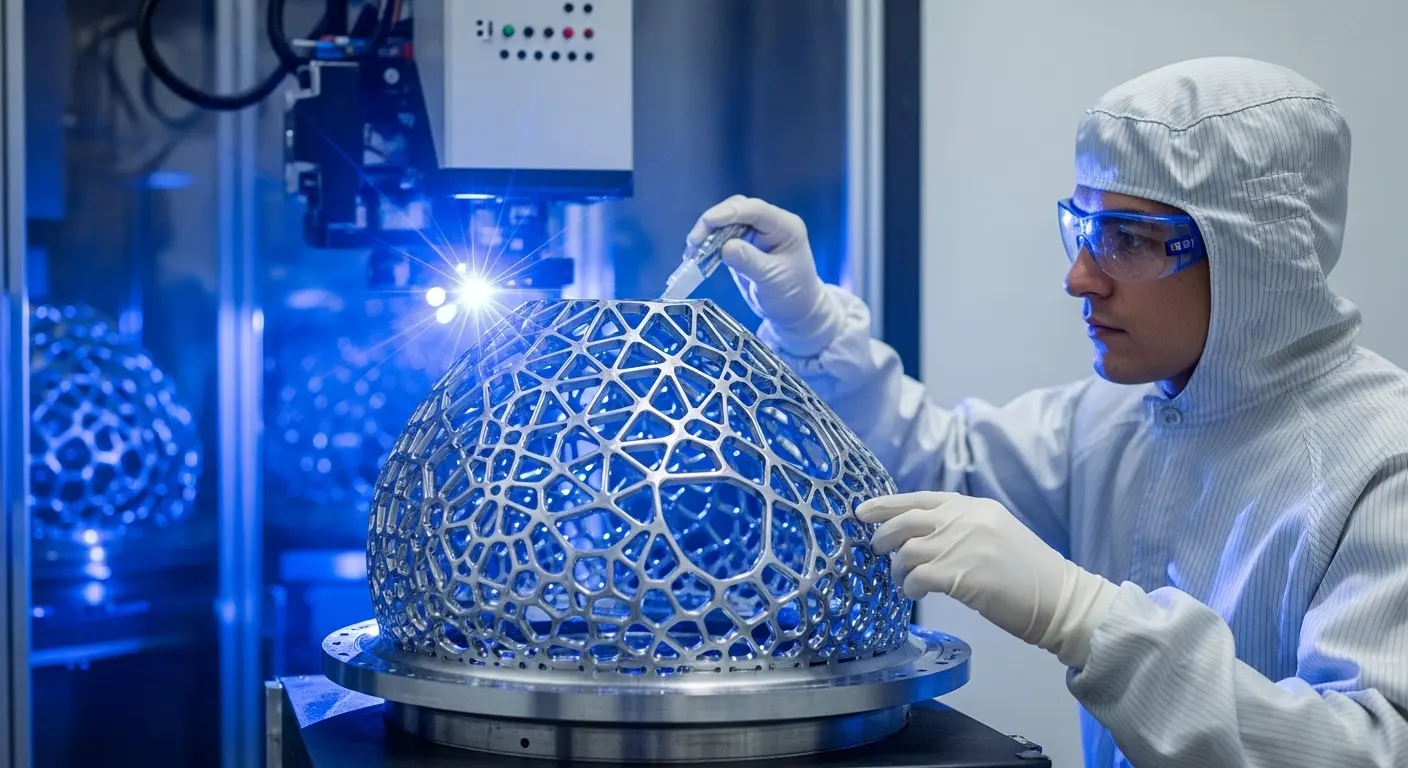
Industries including medical, aerospace, electronics, and automotive rely on high-precision 3D printing for critical components. In the medical field, it creates patient-specific surgical guides and hearing aid shells. Aerospace engineers use it for lightweight fuel nozzles and sensors where a fraction of a millimeter can impact performance and safety.
- Medical & Dental: Custom implants and crowns that must fit a patient's anatomy perfectly.
- Electronics: Small connectors and housings that require tight snap-fits.
- Aerospace: Complex manifolds and ducting that reduce aircraft weight [Data: Weight reduction of up to 40% compared to traditional parts].
- Watchmaking: Creating prototype movements and intricate dial components.
In these sectors, a failure in precision isn't just a manufacturing error; it can be a catastrophic safety risk. This is why working with Top 20 Rapid Prototyping Manufacturers is vital for sourcing parts that meet ISO standards.
What Factors Affect the Dimensional Accuracy of 3D Prints?
The primary factors affecting 3D print accuracy include material shrinkage, thermal contraction, layer height, and the "spot size" of the laser or light source. Additionally, the orientation of the part on the build plate significantly influences how gravity and support structures affect final dimensions. Proper calibration and environmental control are essential for mitigation.
- Shrinkage: As polymers change from liquid to solid, they naturally contract. High-end software compensates for this by "over-scaling" the model slightly.
- Thermal Stress: In metal printing, rapid heating and cooling can cause warping. This is why heated build chambers are standard in high-precision setups.
- Wall Thickness: Parts with uneven wall thicknesses cool at different rates, leading to "pulling" and dimensional distortion.
How Can You Optimize Designs for High-Precision Results?
To optimize for precision, use "Design for Additive Manufacturing" (DfAM) principles such as adding fillets to sharp corners, avoiding large flat surfaces that may warp, and orienting critical dimensions on the XY plane. Ensuring proper support structure placement prevents sagging during the build process, which is the most common cause of tolerance failure.
I have seen many brilliant designs fail because the engineer didn't consider the "Z-axis" resolution. Because 3D printers build in layers, vertical curves will always have a slight "stair-step" effect. If a high-precision fit is needed on a curve, it is often better to print the part slightly oversized and then perform a secondary CNC machining pass to reach the exact tolerance.
Why is Post-Processing Critical for High-Precision Parts?
Post-processing is essential because it removes support structures, cures the material to its final strength, and refines the surface finish. For high-precision applications, processes like vapor smoothing, bead blasting, or secondary machining are used to achieve the final required tolerance. Without proper post-processing, even the best print may fail to meet specifications.
For example, in resin printing, "green" parts (parts fresh off the printer) are often slightly soft. They require a UV curing oven to reach their full mechanical potential. During this final cure, another small percentage of shrinkage occurs. A high-precision workflow accounts for this final "shrink" in the initial design phase.
What is the Future of High-Precision Additive Manufacturing?
The future lies in "Nanoscale 3D printing" and AI-driven process monitoring. We are moving toward a world where machines use "computer vision" to detect errors at the layer level and adjust the laser intensity mid-print. This will push tolerances from the micron level into the nanometer range, opening new doors for semiconductor and optical manufacturing.
[Data: The micro-3D printing market is projected to grow by 25% annually through 2030, driven by the miniaturization of medical devices.]
How Does Sunon Mould Support High-Precision Manufacturing?
Sunon Mould provides an end-to-end solution by combining high-precision 3D printing with expert injection molding and CNC services. This allows clients to transition seamlessly from a high-accuracy prototype to a mass-produced product. Their expertise in mold design ensures that even the most complex 3D-printed geometries can eventually be scaled for production.
By leveraging a diverse toolset, they help engineers avoid the pitfalls of "prototype lock-in." They can evaluate a design and determine if it is better suited for SLA printing or if a move to low-volume molding would yield a more durable, precise result.
Final Thoughts on High-Precision 3D Printing
High-precision 3D printing is no longer a futuristic concept; it is a fundamental requirement for modern engineering. By understanding the nuances of SLA, DLP, and metal additive processes, manufacturers can produce parts that were once thought impossible.
The key to success lies in the balance between design optimization and choosing the right manufacturing partner. Whether you are creating a one-off medical device or a complex aerospace manifold, respecting the limits of tolerances and the necessity of post-processing will ensure your project moves from the screen to the real world with flawless accuracy.
