


High Pressure Die Casting Services Supporting Lightweight, Stronger Component Trends
High Pressure Die Casting Services allow manufacturers to fabricate metal parts that are lighter, stronger, and meet the modern engineering standards. There has been growing demand across automotive, electronics, and industrial equipment for components that achieve an ideal weight-to-structural integrity ratio. SunOn provides a solution to this through its ingenious design of Alu & Zinc Alloy Die-casting Mold, which integrates material design and manufacturing science.
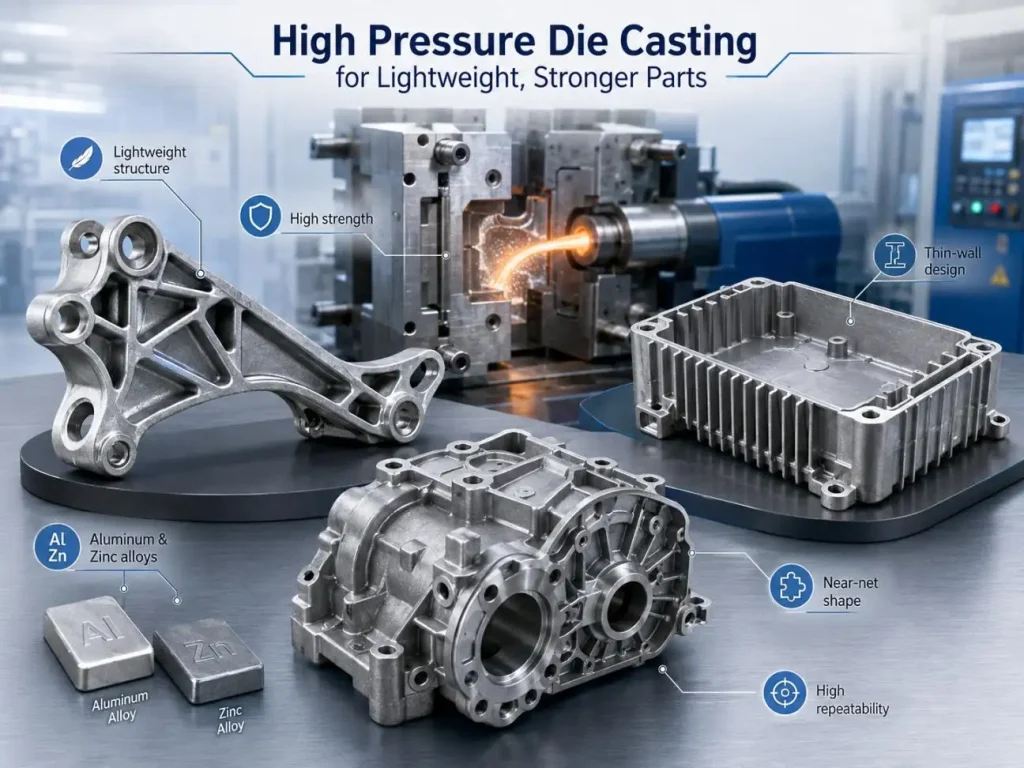
Lightweight, Stronger Components, and Design
Recently, product design teams have begun to exhibit a stronger focus on design that leads to lightweight components. Designing parts to be lightweight leads to greater energy efficiency and ease of handling, and a more responsive system. To meet a design goal of a longer service life for a system, it must also be stronger. The combination of thinner walls and greater strength limits design. The only solution to this design challenge is die casting, which is able to manufacture to design the necessary geometry and detail.
Aluminum and zinc alloys have positive attributes that make them an easy choice. Aluminum provides an excellent strength-to-weight ratio with corrosion resistance, while zinc provides greater ease of detailing and dimensional stability. High pressure die casting allows these alloys to be shaped with little to no additional processing.
How High Pressure Die Casting Services Impact Modern Design Goals
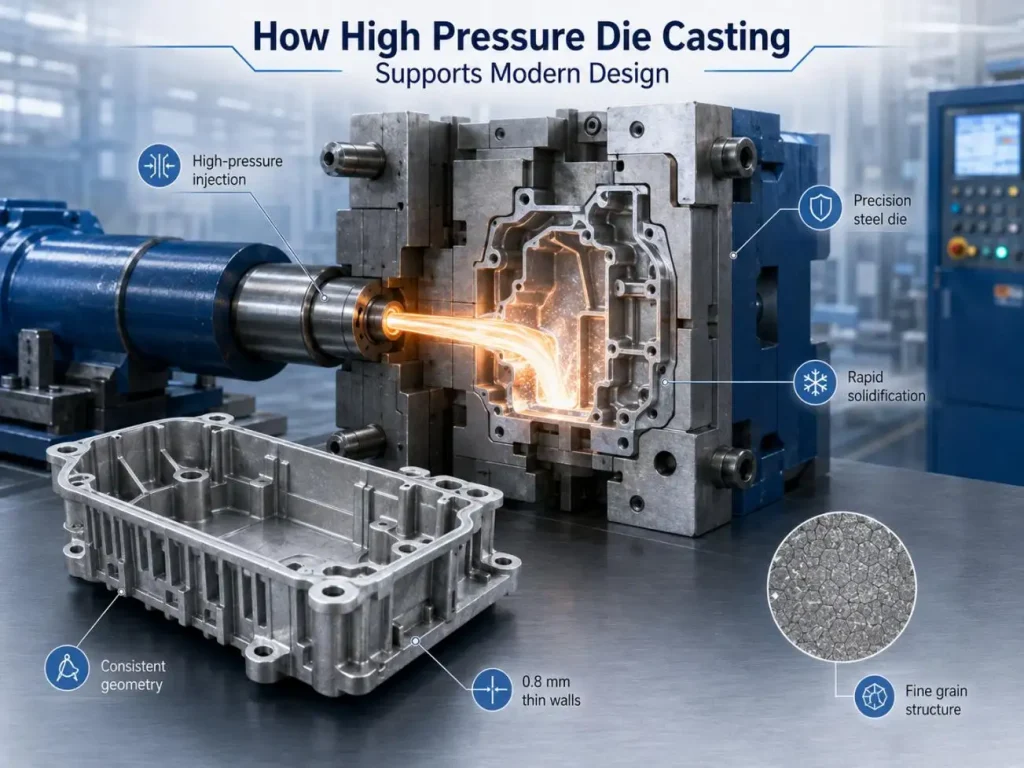
High pressure die casting services rapidly inject molten metal into precision-engineered steel die under high pressure and high velocity. This provides design engineers with high pressure die casting services that create components in line with the trends for components that are lighter and stronger. These include:
•Walls with thicknesses as low as 0.8mm for aluminum die castings
•Improved mechanical properties of die castings due to rapid solidification of a fine grain structure under pressure
•Creation of near-net shapes that require less machining, thus enhancing material integrity
•After a die set is approved, constant reproducibility of geometry and density is achieved, resulting in assembly assurance
Considering these features, high pressure die casting is suitable for die castings such as automotive brackets, electronic housings, and industrial gearboxes.
SunOn's Alu & Zinc Alloy Die-Casting Mold
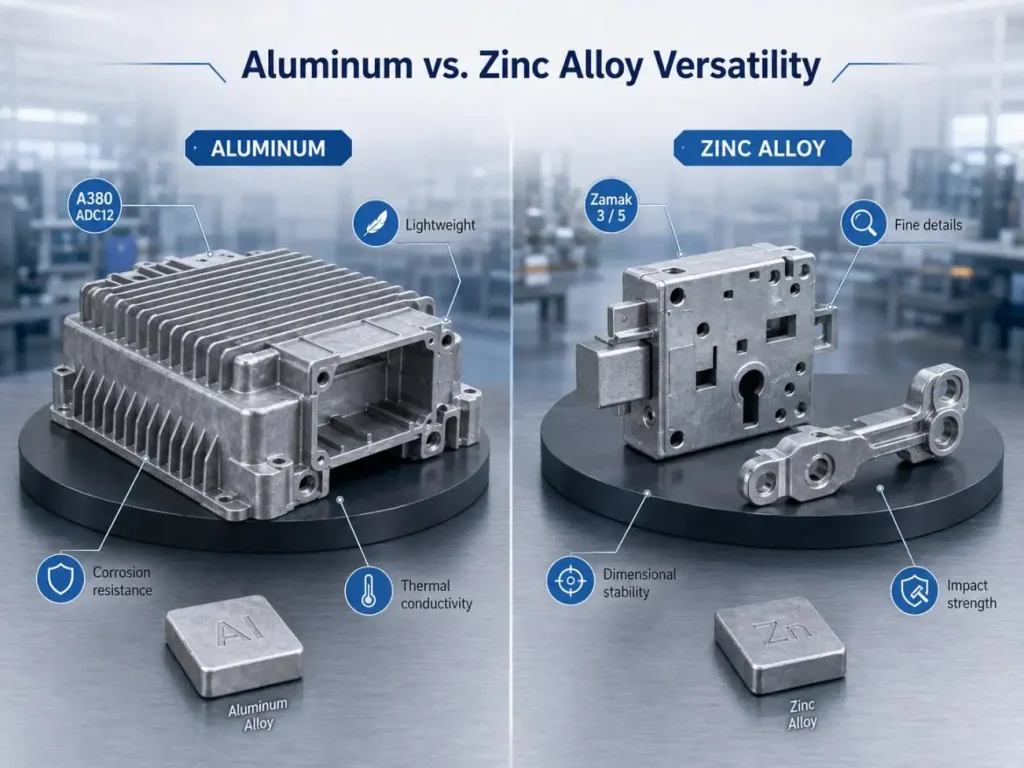
SunOn's Alu & Zinc Alloy Die-Casting Mold aims to facilitate the high-volume production of lighter, stronger components. To design the die, SunOn first analyzes the geometry of the customer's component. This is followed by a DFM (Design for Manufacturing) analysis and a Mold flow analysis. This preliminary analysis is used to determine the best locations for gates and vents as well as the layout for the cooling channels.
SunOn injection molds design features include:
•Use of wear resistant steels: Hot work tool steels of the grades H13 and 8407 resist thermal fatigue and maintain dimensional stability over extended production runs.
•Intelligent design of cooling systems: The cooling channels and/or beryllium copper are optimized to pull heat during solidification and minimize the cycle time.
•Customized parting line and ejection design: Each mold is built to the specific geometry to ensure easy part ejection and minimize flash trimming.
This set of design capabilities allows customers to consistently produce high quality parts with an adequate investment for high volume production.
Material Versatility: Aluminum and Zinc Alloys
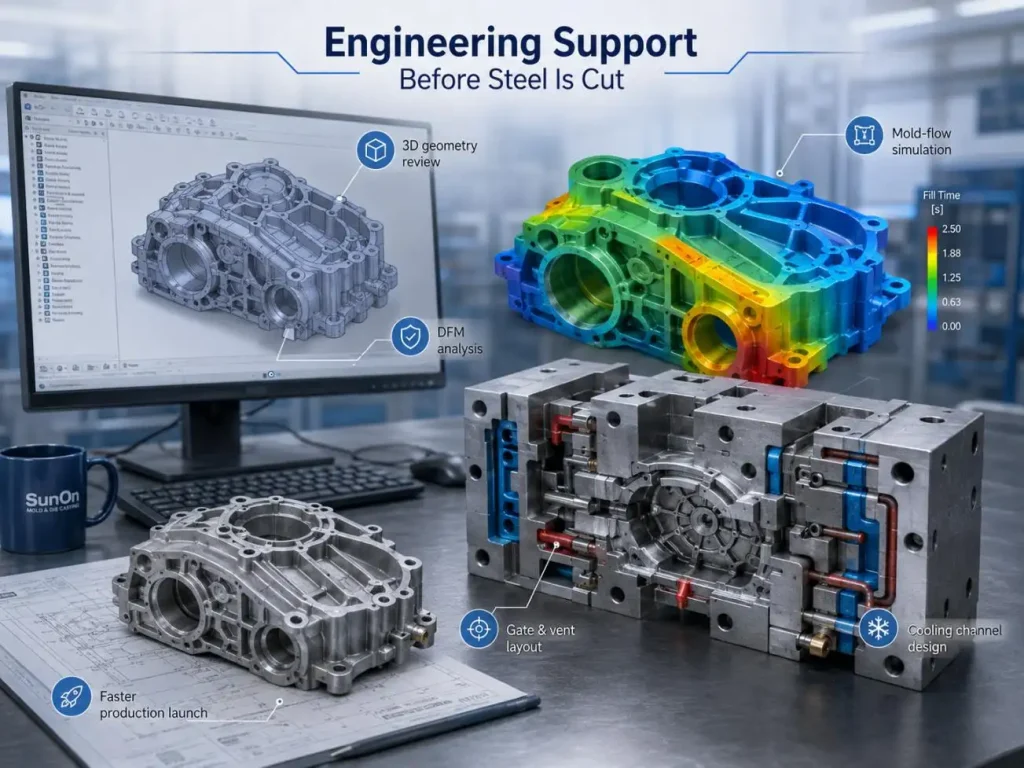
Casting versatility through high pressure die casting is partially influenced by the supplier's ability to work with multiple alloy families. SunOn employs both aluminum and zinc alloy systems to optimize product strength and weight.
•Aluminum alloys (A380, ADC12): Both formulations build strong, lightweight, thermally and electrically conductive structures which are excellent for heat sinks and enclosures. They are especially useful where corrosion resistance is needed.
•Zinc alloys (Zamak 3, Zamak 5): Here again, excellent for precision parts such as locks and many consumer products. They have good ductility and impact strength along with the ability to be cast with thin walls and fine details.
Expansion and contraction are taken into account when designing die casting molds for Alu and Zn. This means your customers can be using a lot of different materials (or a mixed lot) without the need to modify the tooling.
SunOn's Advanced Mold Engineering
The most important factor is the reliability of the mold and the production process. To address this, SunOn employs various methods in order to maximize the service life of a mold and to prevent downtime in production, such as:
•8407 steel used for mold cores and bases. With its resistance to thermal fatigue, it has an extended service life.
•Beryllium copper notch inserts: Used to offset localized thermal imbalance where temperature concentration causes soldering, Beryllium copper helps mitigate thermal imbalance.
•Surface finishes and textures: The application of a polish or a texture to a surface can enhance the release of a part. It also improves the visual quality of surfaces that are exposed.
•Maintenance instructions: SunOn provides instructions on cleaning, lubricating, and monitoring the mold for wear to help the customer keep production consistent.
The above all help support the goal of producing high pressure die castings for extended periods of time between mold refurbishments.
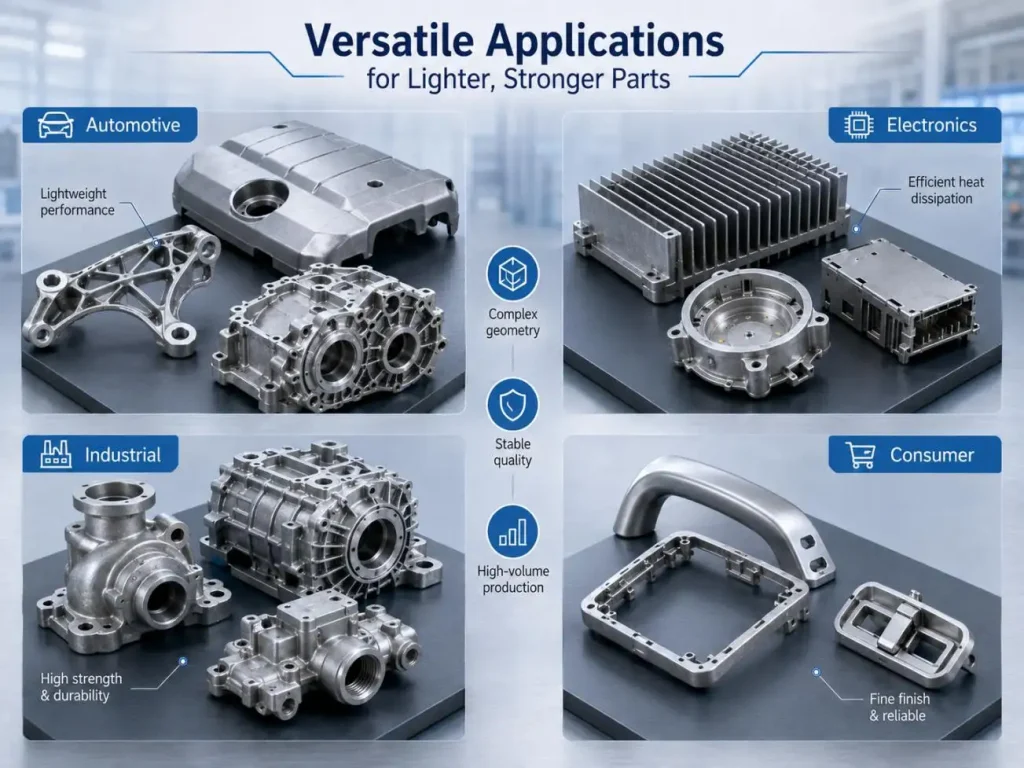
Versatile Applications
SunOn's molds add value by producing lighter and stronger components in a variety of markets. Common examples include:
•Automotive: Engine covers, transmission housings, brackets, mounting plates.
•Electronics: housings for heatsinks, housings for LEDs, housings for connectors, housings for shields.
•Industrial: pumps, gear boxes, valves and machine guards.
•Consumer: frames, handles, trim and hardware for appliances.
SunOn's dies and high pressure die casting services make your ideas come to life.
Engaging Design Support and Technical Proficiency
One thing that makes SunOn different is their dedication to early integration. The engineering team analyzes customers' 3D models and provides feedback on draft angles, uniformity of wall thickness, and anticipated sink marks before any steel is processed. Mold flow simulation is used to predict filling, air gaps, and thermal profiling. This significantly minimizes the number of physical trials and aids a faster transition to production.
This commitment extends to other technical services:
•Prototyping support - full molds do not need to be built to support validation
•In-process sampling and inspection - First Article Inspection reports include and demonstrate critical dimensions.
•Finish options - Application based options range from as cast finishes to powder coating or plating.
Why SunOn's Approach Addresses Present and Future Needs
High pressure die casting services will become even more prominent as industries push to develop even stronger and lighter components. SunOn is in the perfect position to support customers successfully given the relentless advancements that customers are seeking with wall section thickness, feature integration, and thermal management. SunOn's investment in mold design, die control, and advanced knowledge in die materials is ongoing.
SunOn's experience with Alu & Zinc Alloy Die Casting in various industries provides a solid base of knowledge. Improved customer outcomes result from documented design recommendations, cooling techniques, and materials that have been proven in production. For more specifics, consider die casting standard resources such as NADCA or SunOn's site for detailed capabilities.
Conclusion
High Pressure Die Casting Services combined with advanced Alu & Zinc Alloy Die-casting Mold solutions provide an effective and economical option for the safe and easy construction of light and strong components. SunOn's design-oriented philosophy, material versatility, and strong focus on mold life enable customers to meet contemporary demands on their products without adding unnecessary complication. From automotive to electronics to industrial, the combination of Alu & Zn alloys and high pressure die casting offers a reliable and repeatable pathway from design to production.
SunOn offers DFM assessment, preliminary samples, and costing based on targeted production volumes for companies wanting to understand the fit of these combinations for their components.
FAQs
Q1: What do High-Pressure Die Casting Services entail?
A: High-Pressure Die Casting creates precision cast components by employing steel dies. With High-Pressure casting, a steel die's cavities are filled with molten metal (either aluminum or zinc alloys).
Q2: Can you define lightweight alloys?
A: Some of the more lightweight and stronger alloys are Al alloys (A380, ADC12) and Zn alloys (Zamak 3, Zamak 5) which are capable of producing great designs.
Q3: Can SunOn support custom molds?
A: Of course. SunOn customizes Al & Zn Alloy Die-casting Molds according to customer's design of the component and also customizes the rate of thermoplastic.
Q4: How does mold material affect part quality?
A: Mold steel specially the ones used to cavity & core directly affect the part surface, dimensional accuracy and defect rate during mass production.
Q5: Does SunOn provide DFM analysis?
A: Sure, SunOn does DFM and evaluates flow of the material to define gates, cooling, and venting in the design prior to the completion of the mold.
