


High-Pressure Die Casting Explained: Modern Industrial Applications
High-pressure die casting is a contemporary production technique highly used in automotive, aerospace, and electronic production. It allows one to produce high precision metal parts by pouring molten metals into molds at high pressure. The technique gives outstanding dimensional accuracy and surface finish and has less post processing and machining. In modern metal fabrication, high-pressure die casting is becoming key to manufacturers who have often utilized it in crafting durable, lightweight, and complex parts in the most efficient way possible.
Knowledge of high-pressure die casting is very critical to engineers, production managers, and designers. The process choice will guarantee high quality of products, low costs, and the quickness of production. This paper provides an in-depth overview of high-pressure die casting, its material, equipment, benefits, and constraints, and their real-world use.
What Does High-Pressure Die Casting Mean?
High-pressure die casting is a metal forming technique where molten metal is pressurized or forced into a hollow in a steel mold using hydraulic or mechanical presses. The technique involves very high pressure injection into complex mold shapes quickly. Pressures of between 1,000 and 20,000 psi are common with metals like aluminum, zinc, magnesium, and copper alloys solidifying within a short period with little porosity.
The process typically involves three major steps: preparing the mold, injecting high-pressure molten metal, and solidifying the part, followed by ejection. This method allows mass production of intricate parts with stringent tolerances, often without further finishing, producing parts with excellent surface finish.
Major Ingredients of High-Pressure Die Casting
Several factors are important to the performance of high-pressure die casting operations:
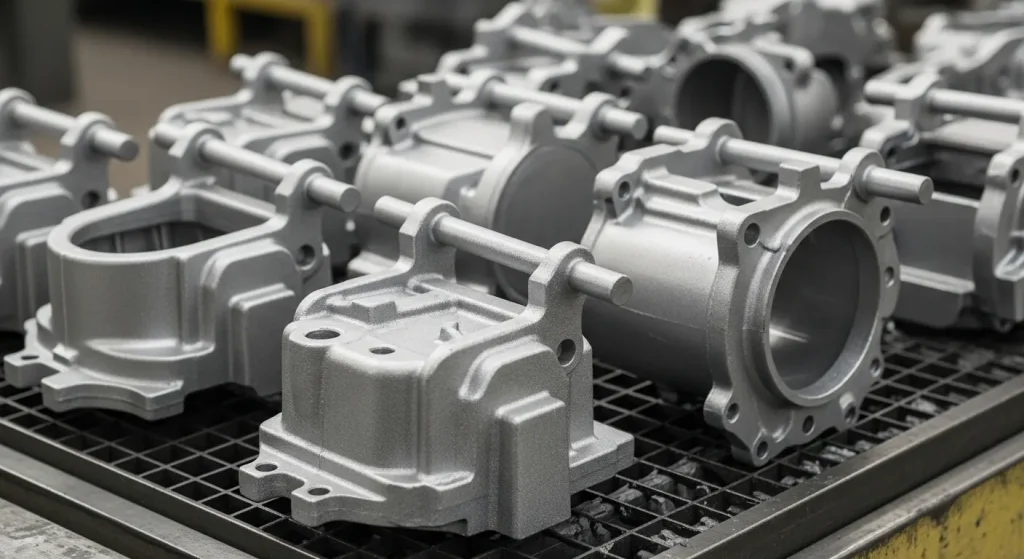
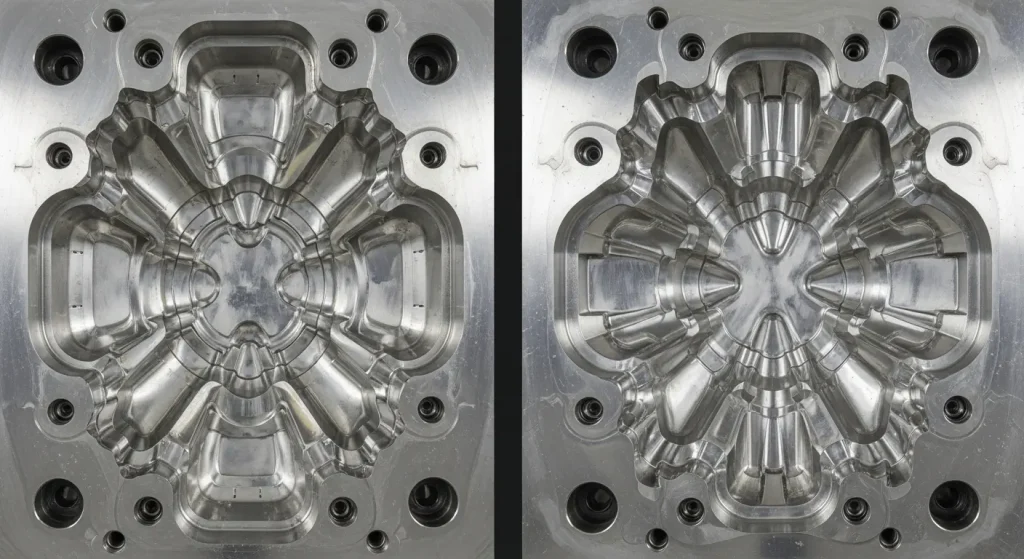
Die or Mold: Usually composed of hardened steel, the mold must resist multiple repeated injections of high pressure and maintain cavity accuracy. Mold design greatly influences end part quality and cycle time.
Injection System: Comprising a plunger or piston, this system pushes molten metal into the die cavity. Regulated injection velocity and pressure reduce turbulence and prevent defects.
Molten Metal: Aluminum alloys are used for auto parts, zinc for electronics, and magnesium for aerospace components. Material choice affects cooling rate, shrinkage, and surface finish.
Cooling System: Built-in channels enable rapid and uniform solidification. Proper cooling reduces internal stresses, enhances mechanical properties, and shortens production cycles.
The Die Casting Process Under High Pressure
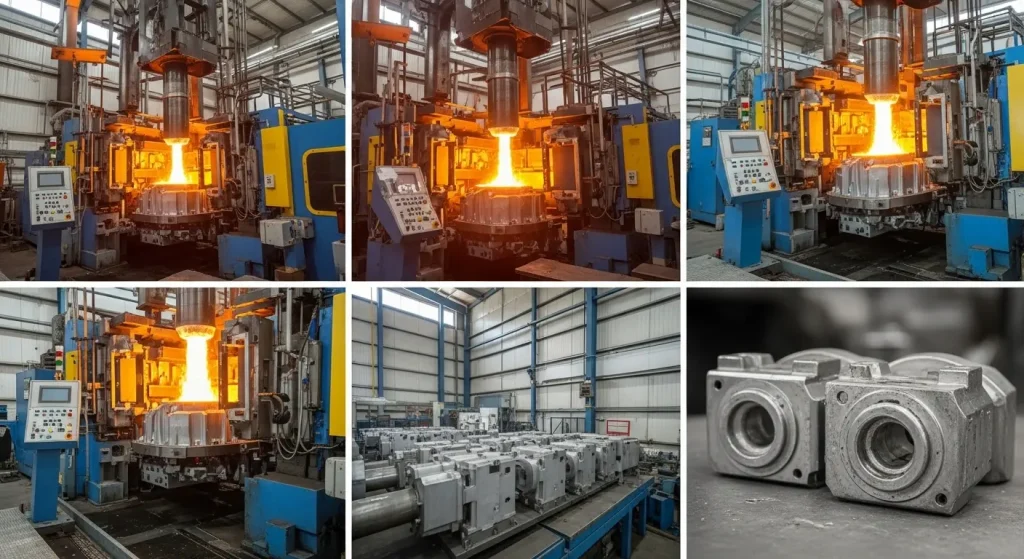
The first stage is heating the die to a controlled temperature to prevent premature solidification. The high-pressure plunger system injects molten metal into the cavity. Once filled, the metal solidifies within seconds, and the mold opens to expel the finished part.
This loop occurs quickly, enabling large quantities of identical parts. Modern die casting machines automate mold handling, casting ejection, and quality control. Computer-controlled systems maintain accurate pressure and speed parameters, minimizing defects such as porosity, cold shuts, or surface issues.
Materials Used in High-Pressure Die Casting
Aluminum Alloys: Lightweight, corrosion-resistant, and suitable for high-precision automotive engine parts, housings, and structural frames.
Zinc Alloys: Ideal for small, detailed components such as electronics, locks, and hardware.
Magnesium Alloys: High strength-to-weight ratio; used in aerospace, automobile interiors, and handheld electronics.
Copper Alloys: Less common, used for electrical conductivity and wear-resistant parts, such as connectors and industrial fittings.
Material selection ensures optimal mechanical properties, dimensional stability, and long service life.
Advantages of High-Pressure Die Casting
High-Pressure Injection: Produces thousands of parts with tight tolerances and consistent geometry.
Smooth Surface Finish: Molten metal fills molds completely, creating aesthetically superior parts with minimal finishing.
High Production Rate: Rapid cycles enable mass production and reduce per-unit costs.
Complex Geometries: Produces thin walls, internal cavities, and intricate shapes without additional assembly.
Material Efficiency: Minimal waste compared to subtractive manufacturing; surplus metal is often recyclable.
Durability: Parts are dense and hardened with low porosity, improving mechanical performance.
Constraints and Considerations
Initial Tooling Cost: Hardened molds are expensive and require precise engineering.
Size Limitations: Typically suitable for small to medium parts; large components may need alternative methods.
Porosity Risk: Poor injection parameters can trap gas, weakening parts.
Material Limitations: Some steels are challenging to cast with high-pressure techniques.
These challenges can be mitigated with careful process planning, mold design, and parameter control.
Applications of High-Pressure Die Casting
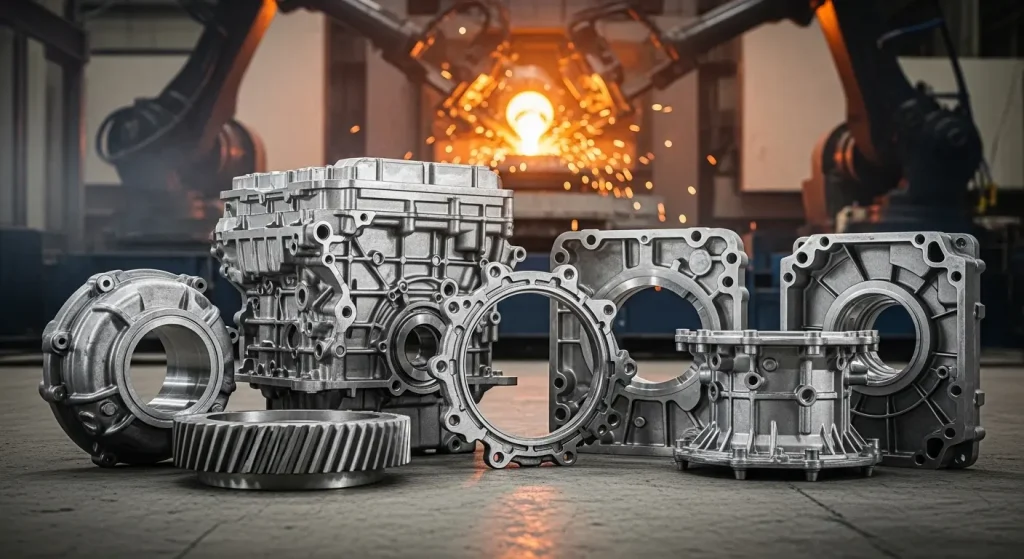
Automotive Industry: Engine blocks, transmission housings, and structural components.
Aerospace Industry: Lightweight aluminum and magnesium parts with dimensional accuracy.
Electronics: Laptop, smartphone, and connector housings requiring fine detail and tight tolerances.
Industrial Machinery: Gearboxes, pump housings, and fittings for strength and efficiency.
Home Hardware: Zinc die casting for door locks, handles, and decorative components.
Quality Control in High-Pressure Die Casting
Inspection: Visual and dimensional checks for surface finish and geometry.
X-Ray and Ultrasonic Testing: Detect internal porosity or inclusions affecting integrity.
Pressure Testing: Ensures mechanical stability in high-stress applications.
Process Monitoring: CNC-controlled machines track pressure, injection speed, and mold temperature for consistency.
Process Optimization
Material Selection: Choose alloys suitable for specific applications and machining needs.
Mold Design: Includes proper gating, venting, and cooling channels for uniform filling.
Process Parameters: Fine-tune injection speed, pressure, and temperature to minimize defects.
Automation: Robotic systems for ejection, handling, and secondary operations reduce human error.
Frequently Asked Questions (FAQ)
Q1: What is high-pressure die casting?
It is a process where molten metal is injected into high-pressure molds to create precise, complex components.
Q2: Which metals are commonly used?
Aluminum, zinc, magnesium, and copper are typical, depending on weight, strength, and detail required.
Q3: Which industries rely on this process?
Automotive, aerospace, electronics, industrial machinery, and consumer hardware industries.
Q4: What are the main benefits?
High precision, smooth surfaces, rapid production rates, and the ability to create complex geometries.
Q5: Are there limitations?
Yes, including high mold costs, size restrictions, porosity, and some material compatibility issues.
Q6: How are defects minimized?
Optimizing mold design, injection parameters, cooling, and material selection reduces porosity, cold shuts, and surface flaws.
Q7: How is quality ensured?
Through visual inspection, X-ray or ultrasonic testing, process monitoring, and pressure testing.
Conclusion
High-pressure die casting is a versatile and efficient manufacturing method for producing high-quality metal components in large volumes. Its ability to deliver accurate, durable, and complex parts makes it indispensable in modern industrial production. Understanding the materials, processes, benefits, and limitations allows engineers and manufacturers to optimize production, increase efficiency, and achieve superior product performance across automotive, aerospace, electronics, and industrial sectors.
