


Injection Moulding for Auto Parts in the USA
The process of injection moulding for auto parts in the USA is a cornerstone of the nation's manufacturing sector. This advanced process is responsible for producing a vast majority of the plastic components found in modern vehicles. The United States has a highly developed and technologically advanced industry dedicated to this task. The core technique of injection moulding is a science that US suppliers have perfected for the automotive industry's demanding standards. This is a key part of the overall value chain for global automotive injection moulding solutions. This guide provides a comprehensive overview of the US landscape for producing injection moulded automotive components, from design and materials to production and quality control.
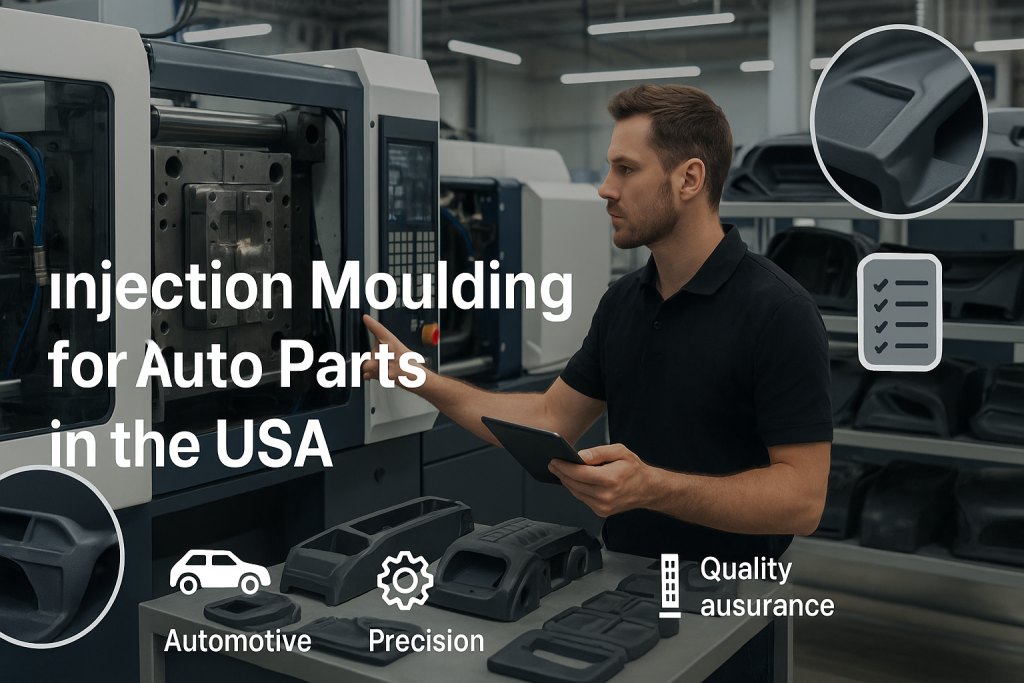
The US Landscape for Automotive Parts Production
The United States has one of the largest and most sophisticated automotive manufacturing industries in the world. The production of plastic parts is a critical segment of this industry. The landscape is characterized by its scale, technological advancement, and regional specializations. Understanding this landscape is key to sourcing high-quality automotive components from within the country.
The Scale and Scope of the Industry
The sheer scale of the US automotive parts industry is immense. Thousands of moulding companies, from small specialists to large multinational corporations, operate across the country. They produce billions of components each year. This scale creates a highly competitive and capable market. It provides automakers and Tier 1 suppliers with a wide range of choices for sourcing their parts.
The Midwest: The Traditional Production Hub
The Midwest, centered around Michigan and Ohio, remains the traditional heartland of the US auto industry. This region has the highest concentration of automotive moulders. These companies have deep, generational experience in serving the industry. They are experts in high-volume production and have long-standing relationships with the domestic automakers. For many traditional vehicle programs, this region is the primary source for moulded parts.
The Southeast: A Modern Manufacturing Powerhouse
In recent decades, the Southeast has emerged as a new powerhouse for automotive manufacturing. A large number of international automakers have built state-of-the-art assembly plants in the region. This has driven the growth of a modern and highly efficient supply base. Moulders in the Southeast are known for their modern facilities, extensive use of automation, and expertise in lean manufacturing principles.
The West Coast's Role in EV and Tech Components
The West Coast, particularly California, is the epicenter of the electric vehicle (EV) and automotive technology boom. This has created a demand for a different kind of parts supplier. Moulders in this region are specialized in the unique components required for EVs. This includes battery system components, lightweight structures, and housings for advanced electronics and sensors.
The Foundation: Materials and Part Design
The production of a high-quality auto part begins long before the moulding machine is turned on. It starts with the selection of the right material and the optimization of the part design. US suppliers have deep expertise in these foundational steps. This upfront engineering work is critical for the success of any automotive component.
Common Polymers Used in US Auto Manufacturing
A wide variety of polymers are used to produce auto parts. US moulders are experienced with all of them. Polypropylene (PP) is widely used for its balance of cost and performance. ABS and PC/ABS blends are common for interior components that require a good appearance and toughness. High-performance nylons (PA) and other engineering resins are used for under-the-hood applications that see high temperatures.
The Importance of Design for Manufacturability (DFM)
Design for Manufacturability (DFM) is a critical collaborative process. The parts supplier's engineers will work with the customer's design team to analyze the part. They provide expert feedback to ensure the design is optimized for the injection moulding process. This helps to prevent defects, reduce costs, and improve the overall quality of the part. This is a key value-added service.
Using Simulation and Analysis to Predict Performance
Modern part development makes extensive use of simulation software. Finite Element Analysis (FEA) is used to predict how a part will perform under stress. Mould flow analysis is used to simulate the moulding process itself. US suppliers use these advanced tools to validate designs and solve potential problems in the digital world, before any real steel is cut.
The Role of the Mould in Part Quality
The final quality of a part is directly linked to the quality of the tool used to produce it. Sourcing a high-quality automotive injection mould in the USA is a critical prerequisite for successful parts production. The mould is the heart of the process. Its precision and durability will determine the consistency of the parts for years to come.
Advanced Moulding Processes for Automotive Parts
US automotive moulders employ a range of advanced moulding processes. These specialized techniques are necessary to produce the complex and highly integrated components found in today's vehicles. Mastery of these processes is a key differentiator for top-tier suppliers.
High-Volume, Multi-Cavity Moulding
The US market is geared for high-volume vehicle production. To achieve the required output, suppliers use multi-cavity moulds. These moulds can produce two, four, eight, or even more parts in a single cycle. This increases efficiency and reduces the per-part cost. This is a common practice for smaller components like clips and fasteners.
Two-Shot and Multi-Material Moulding
Two-shot moulding allows for the creation of a single part from two different materials or colors. This is used to create parts with soft-touch grips, integrated seals, or cosmetic color breaks. US suppliers have extensive experience with this complex process. It requires sophisticated rotating moulds and specialized moulding machines.
Insert and Overmoulding for Integrated Parts
Insert moulding involves placing a non-plastic item, like a metal bracket or an electronic sensor, into the mould. The plastic is then injected around the insert. This creates a single, integrated component. It is a highly efficient way to combine multiple parts and eliminate downstream assembly operations. This process is used extensively in the production of electronic modules.
Gas-Assist and Thin-Wall Moulding for Lightweighting
Lightweighting is a constant goal in the automotive industry. Gas-assist moulding is a process that creates hollow sections in thick parts, reducing their weight. Thin-wall moulding is a technique for producing parts with very thin walls, which also saves weight and material. US suppliers are skilled in both of these lightweighting strategies.
Production of Key Automotive Component Systems
US suppliers produce the full range of plastic components for every system in a vehicle. They have the specialized knowledge required for each of these different applications. From the cosmetic parts a customer sees and touches to the critical components under the hood, US moulders make them all.
Interior Systems: Dashboards, Consoles, and Trim
The vehicle interior is a major area of focus. US suppliers are experts in moulding large, complex interior components like instrument panels and door panels. They have mastered the texturing and color-matching techniques needed to create a high-quality interior environment. They produce all the plastic trim, bezels, and housings that make up a modern cockpit.
Exterior Systems: Fascias, Grilles, and Cladding
Exterior components must be both beautiful and durable. US suppliers mould large exterior parts like bumpers (fascias) and grilles. These parts must have a flawless "Class-A" surface finish for painting. They are also experts in moulding parts from weather-resistant materials for applications like body side cladding and wheel arch liners.
Lighting Components: Lenses and Housings
Automotive lighting is a high-tech, high-precision field. US suppliers are leaders in moulding optical components for headlamps and tail lamps. This requires extreme precision in both the mould making and the moulding process. These components are often moulded in cleanroom environments to prevent any defects.
Powertrain and Under-the-Hood Parts
The parts under the hood must be able to withstand a harsh environment. US moulders have deep expertise in the high-temperature engineering polymers used for these applications. They produce a wide range of components for engines, transmissions, and the rapidly growing electric vehicle powertrain market.
The US Moulder in a Global Context
The automotive industry is global. A US-based parts producer is a key player in this international network. They serve global customers and work with a global supply base. This requires a sophisticated understanding of international standards, logistics, and collaboration.
Serving a Global Customer Base from US Facilities
US parts producers do not just supply assembly plants located in the US. They are often part of a global sourcing strategy for major automakers. Parts produced in a US facility may be exported and assembled into vehicles all over the world. This requires the ability to meet the quality and delivery expectations of a global customer base.
Interacting with a Global Tooling Supply Chain
While the US has a strong domestic toolmaking industry, moulders also work with international tool shops. For a global vehicle program, an OEM might specify that tooling is sourced from a variety of regions. A US moulder might run a tool built by an expert automotive mould supplier in the UK. For a different program, the tooling might come from a specialist for automotive moulds in Perth. US moulders are skilled at working with tooling from all over the world.
The Dynamics of Domestic vs. International Sourcing
The decision of where to source parts is a complex one. While international sourcing can sometimes offer lower costs, domestic sourcing provides many benefits. These include shorter lead times, easier communication, and greater supply chain security. Many automakers are now placing a greater emphasis on the value of a strong domestic supply base.
Post-Moulding Operations and Assembly
The production of an auto part does not end when it comes out of the moulding machine. Most components require some form of post-moulding operation or assembly. Top US suppliers offer a full range of these value-added services. This allows them to deliver a more complete product or sub-assembly to their customers.
Robotic Part Handling and Degating
In a modern US moulding plant, robots do most of the work. A robot will remove the newly moulded parts from the machine. It will then often perform a degating operation. This is the process of separating the parts from the runner system that delivered the plastic. This automation is key to speed and consistency.
Assembly and Sonic Welding
Many auto parts are actually assemblies of multiple components. US suppliers have extensive capabilities in automated and manual assembly. A common technique for joining plastic parts is sonic welding. This uses high-frequency vibrations to create a strong, permanent bond between two plastic components.
Decorating, Painting, and Plating
Many interior and exterior parts require a decorative finish. This can include painting, chrome plating, or applying a printed film. Top US suppliers have in-house capabilities for these decorating processes. This ensures a high-quality finish and simplifies the supply chain for the customer.
Final Inspection and Packaging
Before any parts are shipped, they undergo a final inspection. This may be done by human inspectors, automated vision systems, or a combination of both. The parts are then carefully packaged in specialized containers. This is done to protect them from damage during transit to the customer's assembly plant.
Quality Assurance and Control in US Auto Parts Moulding
Quality is the most important word in the automotive industry. The safety of the public depends on it. The process of injection moulding for auto parts in the USA is governed by a strict and mature quality assurance framework. This framework is a non-negotiable part of doing business in the sector.
The IATF 16949 Quality Standard as the Foundation
IATF 16949 is the global quality management standard for the automotive industry. Any reputable US supplier of automotive parts will be certified to this standard. It is a rigorous system that covers all aspects of the business, from design and development to production and delivery. It is the foundation upon which all automotive quality is built.
In-Line Vision Systems and Automated Inspection
To ensure the highest level of quality, many US suppliers use automated inspection systems. These are high-speed cameras and vision systems that can inspect every single part that is produced. They can detect very small defects that a human inspector might miss. This 100% inspection is a key part of a zero-defect quality strategy.
The Role of CMM and Advanced Metrology
For critical dimensions, more advanced measurement is needed. US suppliers have well-equipped quality labs with Coordinate Measuring Machines (CMMs) and 3D scanners. These tools are used to perform highly accurate dimensional inspections. This data is used to verify that the process is in control and that the parts meet all specifications.
The PPAP Process for Part and Process Approval
The Production Part Approval Process (PPAP) is the formal process for approving a new part for mass production. It is a comprehensive package of documents and sample parts. It proves that the supplier's process is capable of consistently producing parts that meet the customer's requirements. Every new automotive part goes through this rigorous approval process.
Selecting the Right US Manufacturing Partner
Choosing the right partner for your project is a critical decision. There are many factors to consider. The goal is to find a supplier that has the right technical skills, quality systems, and program management capabilities.
Identifying Suppliers with the Right Specialization
The US market is large and diverse. It is important to find a supplier who specializes in the type of components you need. A supplier who is an expert in large, Class-A exterior parts may not be the best choice for small, high-precision electronic components. Look for a supplier whose core competencies align with your project's needs.
The Importance of Regional Expertise
Different regions of the US have different strengths. For projects that require close collaboration with a high-tech design team, a supplier from a hub of innovation may be the best choice. This is why many EV companies partner with the best automotive mould makers in California. Their proximity and cultural alignment are a major advantage.
Evaluating a Moulder's Program Management Skills
Strong program management is essential for a successful automotive launch. The supplier must have a team of experienced program managers. These individuals are responsible for managing the project timeline, budget, and communication. A strong program management team is a key indicator of a capable and professional organization.
Key Criteria for Selecting a US Auto Parts Moulder
A structured checklist can help you to evaluate and select the best partner for your project. This ensures a thorough and objective decision-making process.
- Are they certified to the IATF 16949 automotive quality standard?
- Do they have a strong portfolio of work on similar components for your specific OEM?
- What are their in-house engineering and program management capabilities?
- Have you conducted a comprehensive on-site audit of their manufacturing facilities?
- Do they demonstrate a culture of partnership, transparency, and continuous improvement?
Conclusion
The industry for injection moulding for auto parts in the USA is a mature, capable, and technologically advanced sector. With a deep base of experience, a commitment to global quality standards, and strong regional specializations, US suppliers offer a compelling value proposition. They provide a full range of services, from early-stage design collaboration to complex assembly and finishing. For companies seeking a reliable and innovative partner for automotive component production, the United States offers a world-class supply base.
