


Master Guide: Achieving Precision with Intricate Silicone Rubber Molding for Complex Geometries
In the world of advanced manufacturing, intricate silicone rubber molding for complex geometries has emerged as the gold-standard solution for industries requiring high-performance, flexible, and durable components. Whether you are developing life-saving medical devices or high-speed aerospace components, the ability to mold Liquid Silicone Rubber (LSR) into hyper-detailed shapes is a competitive necessity. This guide explores the engineering mastery required to turn complex CAD designs into reality.
What is Intricate Silicone Rubber Molding for Complex Geometries?
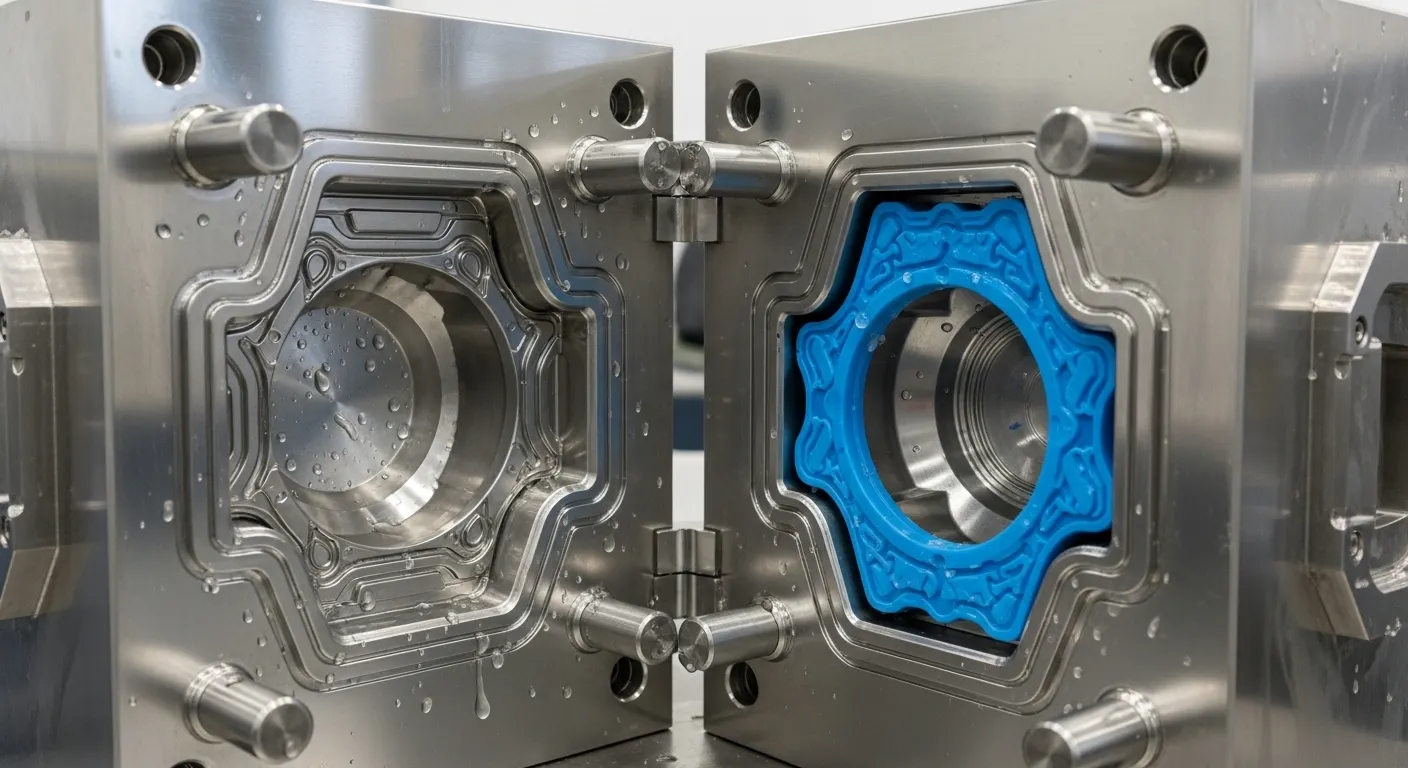
Intricate silicone rubber molding for complex geometries refers to the specialized process of injecting liquid silicone into high-precision molds to create parts with undercuts, thin walls, micro-features, or internal cavities. Unlike standard molding, this requires advanced tooling and a deep understanding of material rheology to ensure consistency across every millimeter.
When we talk about "intricate" molding, we aren't just talking about small parts. We are talking about engineering feats where tolerances are measured in microns. At Sunon Mould, we often see designs that traditional injection molding simply cannot handle. The flexibility of silicone allows for the creation of shapes that would be "locked" in a mold if made from rigid plastic. By leveraging specialized techniques like collapsible cores or overmolding, manufacturers can produce precision silicone parts for tight tolerance applications that meet the most rigorous industrial standards.
Why Is Silicone the Best Material for Complex Geometry?
Silicone is ideal for complex geometries because of its low viscosity during injection and its high "green strength" during de-molding. Its ability to flow into micro-channels and stretch over mold undercuts without permanent deformation allows designers to create internal features and interlocking parts that are impossible with thermoplastic materials.
Key Advantages of Silicone in Complex Designs
- Low Viscosity: LSR flows like honey, filling thin walls (down to 0.1mm) effortlessly.
- Thermal Stability: It maintains its shape during the rapid heating cycles of the curing process.
- Elongation Properties: Silicone can stretch up to 800%, allowing it to be pulled off complex mold cores without tearing.
- Biocompatibility: Essential for medical silicone rubber components that require intricate internal fluid paths.
| Property | Benefit for Complex Molding |
| Shore A Hardness | Range from 5 to 80, allowing for soft seals or rigid housings. |
| Compression Set | Ensures the part returns to its complex shape after pressure. |
| Chemical Resistance | Protects intricate internal sensors in harsh environments. |
How Does Tooling Design Affect Intricate Molding Success?
Tooling design is the foundation of success in intricate molding; it dictates how the material flows and how the part is ejected. High-precision CNC machining and Electrical Discharge Machining (EDM) are used to create mold cavities with mirror-like finishes and complex parting lines that prevent "flash" on delicate features.
In the field of production management, the success of a run often happens in the venting and gating. If you have an intricate part with a thin membrane, the air trapped in the mold can cause "burns" or incomplete fills.
Critical Tooling Considerations
- Cold Runner Systems: These keep the silicone cool until it enters the heated cavity, reducing waste and ensuring the material doesn't cure prematurely in complex gates.
- Vacuum Venting: Essential for removing air from deep, narrow pockets in the mold.
- Automatic De-molding: Using air blasts or robotic grippers to remove fragile, intricate parts without damage.
What Role Does Liquid Silicone Rubber (LSR) Play in Precision?
Liquid Silicone Rubber (LSR) is the primary material for intricate molding due to its pumpable, two-part liquid state. It allows for high-speed automated processing and superior replication of mold surface textures, ensuring that even the most microscopic geometric details are captured accurately during every injection cycle.
For designers working on electronics silicone parts for insulation and protection, LSR is a game-changer. It allows for the integration of delicate electronic inserts through overmolding. Because LSR cures through a platinum-catalyzed reaction, there are no messy byproducts, resulting in a cleaner, more precise finished part.
Which Industries Benefit Most from Complex Silicone Molding?
Industries such as aerospace, medical technology, and automotive benefit most because they require parts that function in extreme environments. Intricate molding allows these sectors to consolidate multiple parts into a single, complex silicone component, reducing assembly time, weight, and the potential for mechanical failure.
Industry Applications
- Aerospace: Creating aerospace silicone seals and gaskets with internal honeycomb structures for weight reduction and vibration dampening.
- Medical: Developing multi-lumen tubing and surgical valves with microscopic slits that act as one-way check valves.
- Automotive: High-temperature gaskets with intricate sealing beads that prevent oil leaks in modern turbo-charged engines.
How Do You Maintain Quality Control in Intricate Molding?
Quality control is maintained through a combination of in-process monitoring and automated inspection. Advanced sensors in the mold monitor pressure and temperature in real-time, while high-resolution vision systems inspect the finished complex geometries for microscopic defects, flash, or dimensional deviations that are invisible to the naked eye.
To ensure 100% reliability, manufacturers typically utilize:
- CPK Studies: Measuring process capability to ensure every part stays within a ±0.05mm tolerance.
- Shore Hardness Testing: Confirming the cure density of thin-walled sections.
- Optical Comparators: Measuring the complex geometry against the original CAD file.
What Are the Design Guidelines for Complex Silicone Parts?
To optimize complex designs, engineers should maintain uniform wall thicknesses where possible, use generous radii on corners to facilitate flow, and avoid sharp "knife edges" in the mold. Strategic placement of parting lines and gates is essential to ensure the intricate features do not trap air or create structural weak points.
Pro-Tip: While silicone is flexible, a 1-2 degree draft angle helps significantly with high-speed automated ejection. For undercuts, you can often get away with "impossible" geometries in silicone, but always consult with your molder to ensure the material can stretch over the mold steel.
Frequently Asked Questions About Intricate Silicone Molding
Can you overmold silicone onto metal or plastic?
Yes. This is called multi-shot or overmolding. It is frequently used to create soft-touch grips on rigid surgical tools or to seal electronic connectors.
What is the typical lead time for complex tooling?
High-precision molds for intricate parts usually take 4 to 7 weeks to design, machine, and validate, depending on the number of cavities and the complexity of the internal actions.
Is silicone molding cost-effective for small volumes?
While the initial tooling cost is an investment, the low cycle times and high repeatability make it highly cost-effective for high-value components in the medical and aerospace sectors.
Conclusion: Partnering for Perfection
Mastering intricate silicone rubber molding for complex geometries requires more than just a machine; it requires a partnership between design and manufacturing. By understanding the unique rheology of silicone and the precision of modern tooling, you can push the boundaries of what is possible in product design.
Whether it’s a high-performance seal or a biocompatible medical component, the technical expertise found at Sunon Mould ensures your design transitions from CAD to a high-quality finished product seamlessly.
