


Medical Device Injection Mould | ISO-Certified Precision
Precision, Quality, and Compliance in Modern Healthcare Manufacturing
The element of medical device injection mould technology has become essential in the fast-growing industry of healthcare. Medical instruments, diagnostic equipment, surgery equipment, and even the packaging of drugs used by millions of medical experts daily are the products of the high-precision medical injection moulding services. Quality, accuracy, and compliance of these moulded constituents can literally be the difference between life and death, and this makes it one of the most controlled and technically demanding industries of manufacturing. SunOn Mould is an injection mould that is certified under ISO and is made in medical plastic moulds to address the strict industry standards. Between prototype and production, our solutions are biocompatible, consistent, and durable, which is what healthcare innovators expect.
The Relevance of Medical Device Injection Moulding
Medical equipment should be of high quality and safety, largely because in many cases, they are in direct contact with the human body. It renders medical-grade injection moulding a severe procedure in the manufacturing of devices like catheters, syringes, implantable parts, diagnostic packages, dental devices, and pharmaceutical containers.
- Compared to the routine injection moulding, medical device moulding services should involve a cleanroom, FDA-approved material, ISO13485 certified, and thorough process validation. Every step, including tooling and production, must be able to be traced, sterilizable, and at the same time compliant with the regulations.
- This is the reason why the prominent healthcare organisations have collaborated with trusted medical plastic moulds suppliers who can help them not only with technical skills but also with cost-effective and high-precision production.
Basic Benefits
Precision Engineering of Healthcare Safety
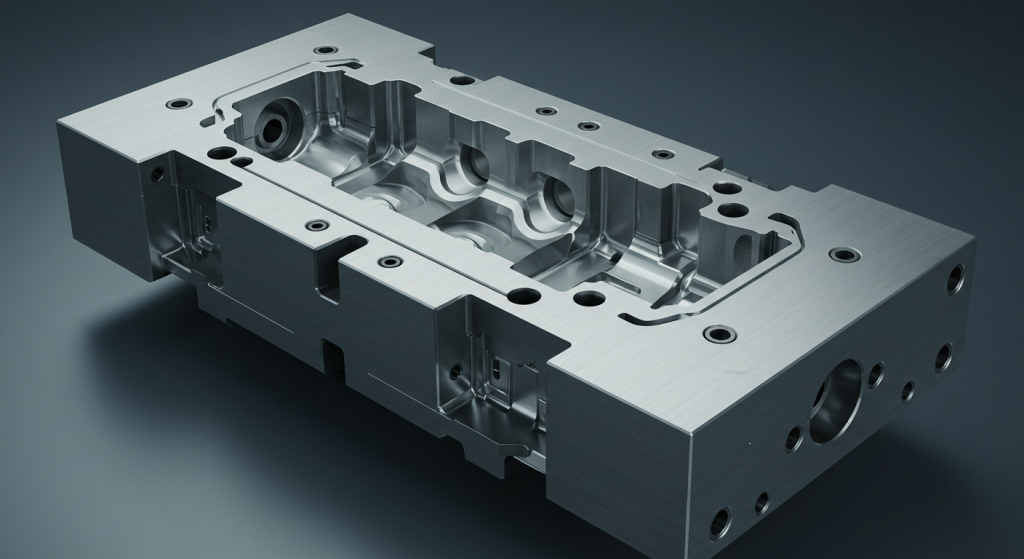
Medical equipment is sensitive to tight tolerances. The slightest millimetre of difference can affect performance. Precision medical device moulds have advanced CNC machining, high-polish finishes, and controlled tooling techniques to ensure the same level of accuracy at a large scale on the production run.
Biocompatible Materials for Patient Safety
Medical use of plastics is not possible on all plastics. Biocompatible thermoplastics used in medical-grade injection moulding include PEEK, polycarbonate, polypropylene, and medical-grade silicone. These materials are certified in both FDA and ISO standards; hence, they are safe when in long-term contact with the human body.
Sterile Cleanroom Manufacturing
Sterility is non-negotiable. Critical devices are also injected in cleanroom injection moulding environments, including surgical tools, catheters, and implantable components. Class 7 and Class 8 cleanrooms are environmentally pure, and they are in compliance with international healthcare standards.
Scalable Production Using Flexible Solutions
Injection moulding is scalable, starting with a prototype, through production medical moulding. When products are approved to be launched in the market, manufacturers can use low-volume test runs to test the products and quickly change to high-volume production of plastic components.
Regulatory and Quality Assurance
Key to the process are ISO13485, FDA compliance, CE marking, and GMP standards. Medical injection moulding manufacturers need to establish effective systems of quality management, where there is continuous observation, first article inspections (FAI), and statistical process control (SPC).
Important Medical Injection Moulding Applications
Medical injection moulding is involved in almost all areas of healthcare innovation. The major uses of a custom medical device injection mould can be listed below:
Diagnostic Equipment: Blood analyser moulds, rapid test cartridges, diagnostic cartridges.
Pharmaceutical Packaging: Pharmaceutical packaging is achieved by using high-quality plastic moulds, which include inhalers, blister packs, and pill containers.
Surgical Devices: Accurate moulds for the surgical instruments, such as clamps, forceps, and disposable surgical instruments.
Dental Products: Injection moulding of dental equipment, including orthodontic equipment, mouthguards, and surgical trays.
Implantable Devices: Biocompatible moulding on the parts that have to be blended in with the human body.
Laboratory Equipment: The laboratory instruments have durable plastic moulds that guarantee precision and consistency.
Technological Facts of the Medical Equipment Injection Moulds
In a bid to know why medical injection moulding is so dependable, it is worth looking at its technical structure:
Tooling & Mould Design
- Special medical device moulds are made with high-quality steel or aluminium tooling.
- Multi-cavity moulds are more efficient in high-variety production.
- Hot runner systems minimise waste and enhance cycle times.
Materials Used
- Thermoplastics: Polypropylene, Polycarbonate, ABS, PEEK.
- Elastomers: TPE and medical-grade silicone.
- Speciality Thermoplastics: Biocompatible and clear thermoplastics.
Documentation/Process Validation
- All the moulding operations are recorded according to ISO9001 and ISO13485 requirements.
- Validation has IQ (Installation Qualification), OQ (Operational Qualification), and PQ (Performance Qualification).
Quality Control Techniques
- Statistical Process Control (SPC) of monitoring.
- Prototypical First Article Inspection (FAI).
- Quality management through a risk-based approach to reducing defects.
Improved Techniques of Production
- Multi-material parts can be used in insert moulding and overmoulding.
- Micro moulding makes it possible to manufacture complex miniature parts.
- 3D printing tooling enhances quick prototyping.
Medical Device Moulding: Quality & Compliance
The medical business is a highly regulated sector in the world. Thus, the use of medical injection moulding services, which are certified by ISO, is necessary. At Sunon Mould, we have a compliance system that comprises:
- Medical device manufacturing: ISO13485 certification.
- Plastic materials to be moulded so that they are patient safe and FDA approved.
- Injection moulding of GMP standards.
- Medical mould manufacturing of European certification.
- Lot control and traceability of each batch are ensured.
- Continuous improvement schemes and process validation.
Why SunOn Mould in the Injection Moulding of Medical Devices?
Selecting the appropriate partner to inject the medical device moulds is very important. This is why SunOn Mould is relied upon by international medical innovators:
Cross-Industry Experience: Surgery equipment to drug packaging.
State-of-the-Art Technology: Precision moulds are done by cutting-edge CNC machining, EDM, and polishing.
Flexiblastic Services: Low-volume prototyping to high-volume mass production.
Regulatory Expertise: ISO-compliant procedures in line with the world standards.
Developed Solutions: Custom moulding services to startups, SMEs, and large medical device companies.
Conclusion
The medical device injection mould is unsurpassed in the role that it plays in the current healthcare. This technology will empower healthcare providers to save lives and enhance patient outcomes because it allows them to make medical equipment on a large scale, in the most accurate and regulatory-compliant manner. SunOn Mould uses a combination of superior technology, regulatory knowledge, and adjustable manufacturing solutions in providing the world-renowned medical injection moulding solutions. Startups with their initial prototypes in their hands, the worldwide companies with their next-generation devices in the market, we supply the foundation of innovation in the manufacturing of medical plastics.
