


Medical Device Part Two-Shot Molding | Dual-Material Solutions
What is Medical Device Part Two-Shot Molding?
Two-shot medical device part injection molding is a high-technology injection molding technology whereby parts of two different materials are produced in a single injection molding cycle. This technique enables the combination of hard and soft materials, which gives components that are structurally strong and comfortable to the ergonomics. Key processes include:
- Two-Shot Medical Component Molding: Generates a hard base material, then a soft-touch top.
- Dual-Material Medical Part Molding: Supports ergonomic handles, grip, or interface.
- Medical Device Overmolding: Improves feel, durability, and appearance.
- Two-Shot Medical Precision: Excellent dimensional control when it is needed.
Two-shot molding has many benefits over traditional manufacturing, where the assembly, coating, or adhesive bonding is done in different steps. Two-shot molding combines materials in one operation, shortening the production cycle and enhancing consistency.
Medical Part Two-Shot Molding: Accuracy, Strength, and Novelty
- In the fast-evolving medical sector of today, medical appliances should be of utmost safety, durability, and ergonomics. Conventional manufacturing techniques, effective as they are, can, in many cases, be inadequate to manufacture components that are both complex and comfortable and attractive. As a solution to these problems, manufacturers are adopting medical device part two-shot molding, which combines two-material injection molding, overmolding, and precision engineering into one production cycle.
- Our two-shot injection molding medical device specialty is of high precision, biocompatible, and affordable solutions. This paper explores the process, materials, applications, and advantages of two-shot molding in medical parts, and why it is rapidly becoming the standard of medical device production today.
Medical Two-Shot Molding
Medical device two-shot molding performance requires the accuracy of the molding process, materials, and mold design.
First Shot: Structural Base
The initial shot is usually of rigid polymer, which may be ABS, polycarbonate (PC), or high-strength biocompatible plastics, which is the structure of the core of the device. This foundation offers dimensional support, strength, and the ability to be used in sterilization.
Second Shot: Soft or Functional Overlay
In the second injection, the thermoplastic elastomer (TPE), silicone (medical grade), or other soft materials are added. This layer enhances:
Ergonomics: Handheld Device Grips are Comfortable
- Vibration-dampening: Also decreases fatigue of the hands during extended usage.
- Non-slip performance: Enhances safety and manipulation in hospitals.
Co-Injection and Overmolding
The most advanced medical molding can also use co-injection, in which two materials are injected together or sequentially and timed very carefully. The overmolding is especially useful in designing soft-touch handles, ergonomic grips, and complicated device covers
Precision Mold Design
Medical devices are usually intricate in geometry, and therefore, the molds used need to be precise to guarantee:
- Fluent combination of various materials
- Free of gaps and voids on biocompatible surfaces.
- Homogeneous color and texture make it attractive.
Using a combination of these methods, manufacturers can make medical components that are durable, ergonomic as well and attractive to look at.
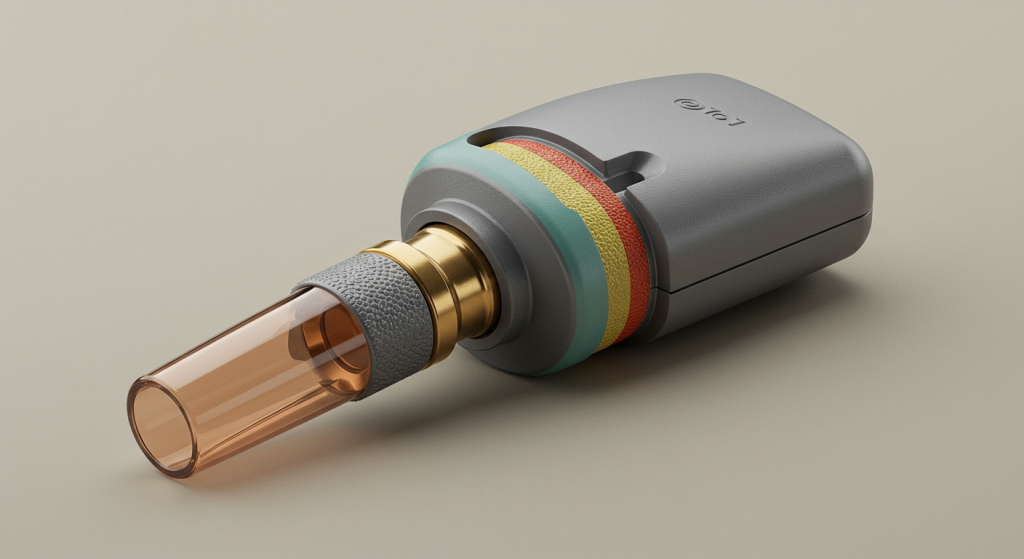
Two-Shot Medical Components, Design and Functionality
The design of two-shot medical molding should be able to balance human factors, ergonomics, and functionality:
- Molding Medical Device Parts Ergonomically: Shapes that minimize hand fatigue, enhancing handling.
- Medical Tools That are Designed by Humans: This makes sure that the tool is easy to utilize by a clinician and a patient.
- Soft-Touch Medical Device Handles: Enhance the comfort of grip and eliminate slip.
- Vibration-Damping Molded Medical Parts: Improves the action in handheld diagnostic devices.
- Wear and Scratch-Resistant: Retains aesthetics and hygiene during repeated sterilizations.
- Dual-Material Integration: Removes edges or material boundaries.
Two-shot molding enables a device to fulfill both clinical and usability standards with the combination of functional and aesthetic overmolding.
Advantages of Medical Device Two-Shot Molding
There are many benefits of using the two-shot molding of medical parts:
Enhanced Durability
- Components are not subject to wear and chemical exposure, and can be sterilized repeatedly.
- High-stress regions are reinforced by the use of dual-material integration.
Improved Ergonomics
- Anti-fatigue hand coating.
- Anti-slip floors enhance the safety of handling.
Cost-Effective Production
- Cycles through several materials during a single cycle and diminishes assembly operations.
- Reduces after processing, labor, and material waste.
High-Precision Manufacturing
- Provides a quality assurance of vital parts of the medical.
- Favors a complex geometry and fine functionalities.
Aesthetic and Functional Integration
- Permits two-color designs and multi-material designs.
- Enhances patient/clinician experience in well-designed devices.
Lightweight and Sterilizable Designs
- Removes the weight of devices in general without the loss of strength.
- Autoclave and other sterilization methods are compatible.
Medical Device Two-Shot Molding
The latest technological developments are driving two-shot molding to the limit:
- Complex geometries Co-injection molding enables complex shapes with functional overlay.
- ERG Soft-touch finishes that are incorporated in the molding process enhance usability and ergonomics.
- Polymer mixes are lightweight and allow the device to be lightened without compromising on the structural integrity.
- Sustainable manufacturing is promoted by green, recyclable materials.
- Mold-making and automation are developed to maximize the cycle time and quality control.
Choosing the Right Partner
When it comes to successful medical device part two-shot molding, it is first important to select an experienced partner. SunOn Mould offers:
- Knowledge of dual-shot/ multi-material injection molding methodologies.
- Prototyping of ergonomic, functional, and aesthetic medical components in custom molds.
- Overmolding soft-touch grips, handles, and interfaces.
- Complex geometries and high-precision manufacturing of complex geometries and critical in the medical industry.
- Funding of consumer healthcare, as well as medical device manufacturing on a large scale.
Conclusion
Medical device part two-shot molding is revolutionizing healthcare manufacturing through the customization of durable, ergonomic, and attractive parts in one efficient manufacturing procedure. Two-shot molding can be used to create surgical devices, instruments, and diagnostic equipment, as well as consumer healthcare products, with rigid structural material paired with soft-to-the-touch or functional overlay, all with unparalleled durability, comfort, and accuracy. SunOn provides access to high-technology materials expertise, and extreme accuracy in mold design, and two-shot molding is a cost-effective and future-oriented strategy in the medical device market.
