


Precision Medical Plastic Injection Molding Services: A Guide for MedTech Engineers
Master medical-grade plastic injection molding with SunOn. Explore ISO-standard manufacturing, biocompatible resins, and DFM reports for global MedTech compliance.
Selecting a manufacturing partner for medical device components requires balancing extreme dimensional precision with uncompromising regulatory compliance. At SunOn Industrial Group Limited, our engineering team leverages over 25 years of experience to transform complex medical designs into high-performance, market-ready products.
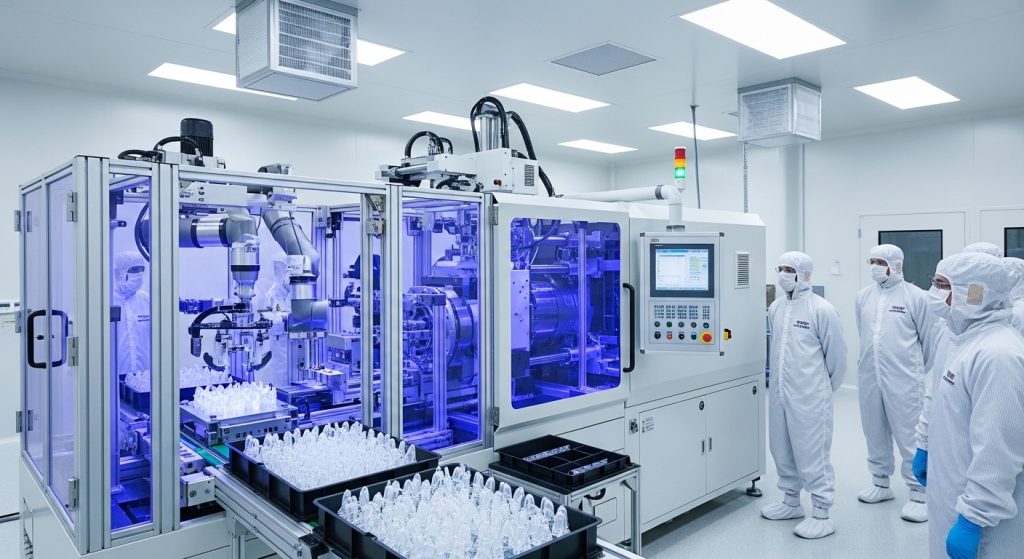
What is Medical Plastic Injection Molding?
Medical plastic injection molding is a highly regulated manufacturing process used to produce medical device components from biocompatible thermoplastic materials. This process occurs in controlled environments to ensure parts are free from contaminants, meeting the rigorous safety standards required for surgical instruments, diagnostic equipment, and drug delivery systems.
The Critical Role of Biocompatible Resins
In the medical field, material selection isn't just about strength—it's about patient safety. Engineers must select resins that pass USP Class VI or ISO 10993 testing.
- PEEK (Polyetheretherketone): Known for its high strength and ability to withstand repeated sterilization in autoclaves.
- Polycarbonate (PC): Offers excellent clarity and impact resistance, ideal for fluid delivery components.
- Polypropylene (PP): Frequently used for laboratory disposables due to its chemical resistance.
Why Search Intent for Medical Molding is Shifting in 2026
Modern procurement managers and product designers are no longer just looking for "a factory." They are searching for technical risk mitigation. When you source medical molds from China for markets in the USA, Germany, or Australia, the primary concern is whether the provider understands the documentation trail required for FDA or CE certification.
Who is This Guide For?
- Project Engineers: Who need to ensure the mold design supports tight tolerances ($\pm 0.01\text{mm}$).
- Regulatory Officers: Who require full traceability and material certifications (COA).
- Procurement Managers: Who need to balance the "China price" with the quality of a global Tier-1 supplier.
The SunOn DFM Process: Identifying Risks Early
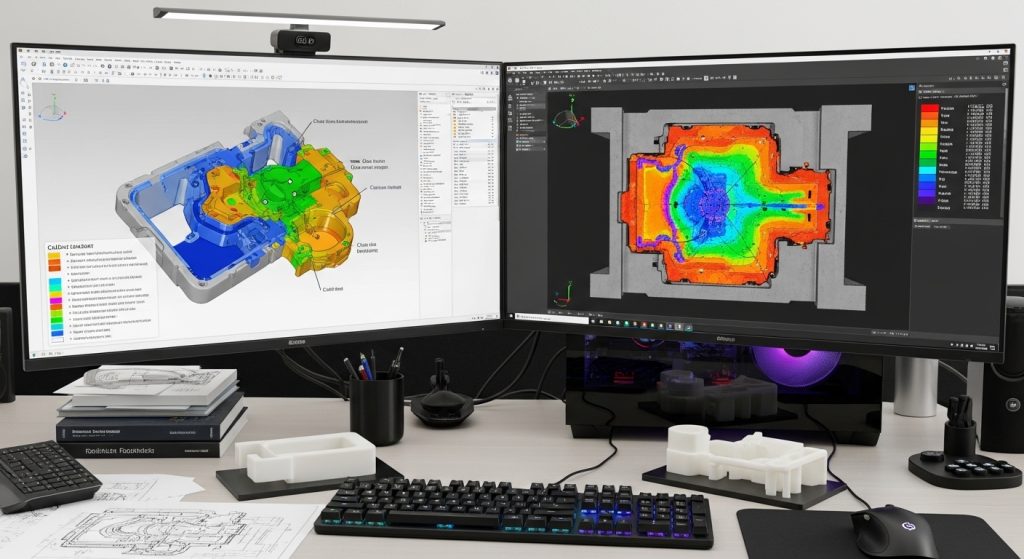
At SunOn, our mold engineers believe that the most expensive mistakes are the ones that make it into the steel. Before a single block of H13 or S136 steel is cut, we provide a comprehensive Design for Manufacturing (DFM) report.
What Our DFM Reports Cover:
- Wall Thickness Analysis: Identifying areas prone to sink marks or internal voids that could compromise structural integrity.
- Gate Location Optimization: Ensuring the injection point doesn't leave aesthetic blemishes on critical functional surfaces.
- Draft Angle Verification: We've found that high-polish medical housings often require a minimum of $1.5^\circ$ to $2^\circ$ draft to prevent drag marks during ejection.
- Mold Flow Simulation: Using software to predict how the resin fills the cavity, ensuring air traps and weld lines are moved to non-critical areas.
Specialized Manufacturing Capabilities for MedTech
The medical industry often requires more than simple single-shot molding. SunOn’s 1,000+ skilled employees operate advanced machinery capable of complex multi-material solutions.
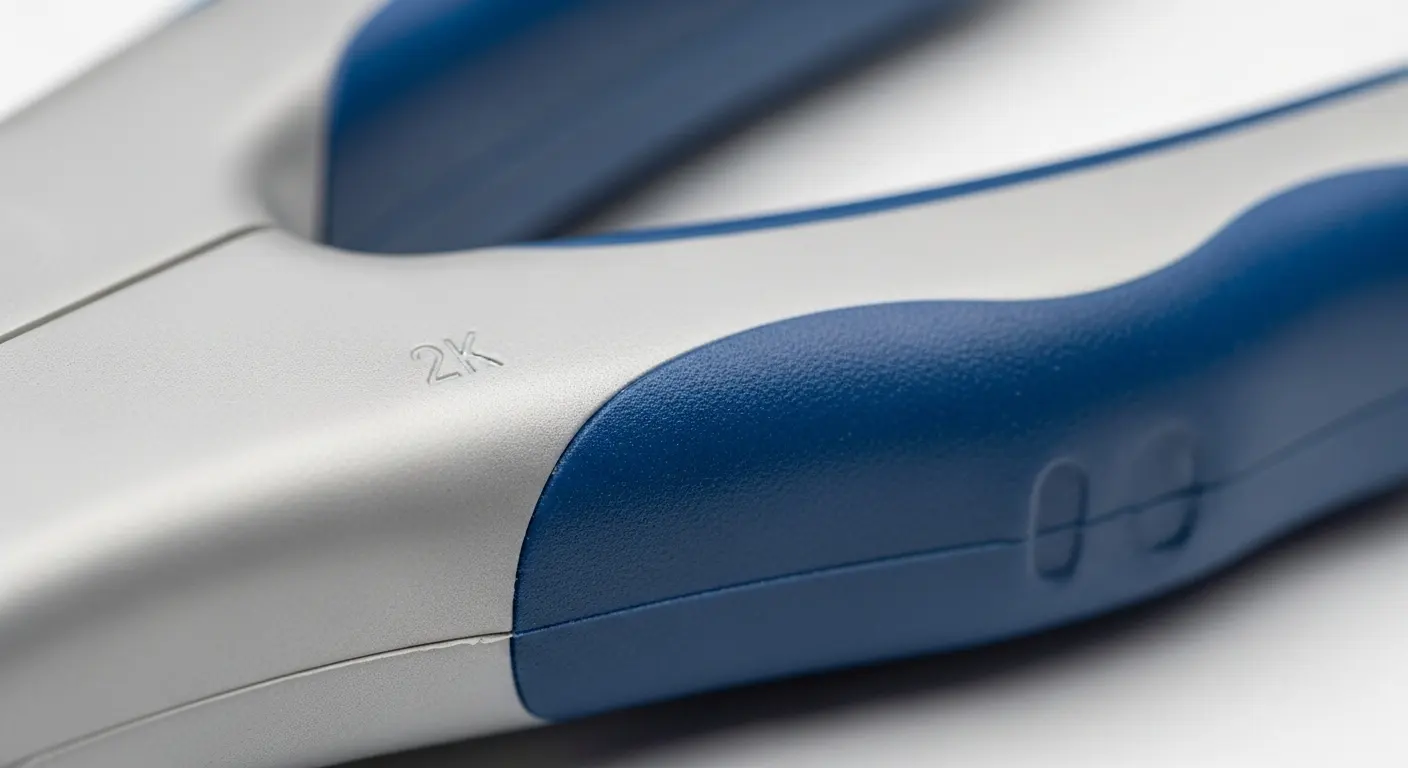
2K Injection Molding (Two-Shot)
2K injection molding is a process where two different plastic resins are molded into one part in a single cycle. This is essential for surgical tools that require a rigid internal structure (e.g., glass-filled Nylon) and a soft, ergonomic outer grip (e.g., TPE or Silicone) for the surgeon’s comfort and control.
High-Precision Die-Casting
While many medical parts are plastic, diagnostic machines like MRI or X-ray equipment often require durable, lightweight metal frames. Our die-casting division handles aluminum and zinc alloys, providing the structural backbone for heavy-duty medical electronics.
Liquid Silicone Rubber (LSR) Molding
For seals, gaskets, and tubing that must remain flexible across a wide temperature range, LSR is the industry gold standard. It is naturally biocompatible and resistant to bacteria growth.
Quality Assurance and Validation Protocols
Trust in medical manufacturing is built on data, not promises. SunOn follows a strict quality gate system to ensure every shipment meets your specifications.
The IQ/OQ/PQ Framework
To meet international standards, we support our clients through the validation phases:
- Installation Qualification (IQ): Verifying that the mold and machine are installed correctly.
- Operational Qualification (OQ): Testing the "process window" to ensure parts are perfect at both the high and low ends of temperature and pressure settings.
- Performance Qualification (PQ): Long-term stability testing to prove the process is repeatable over thousands of cycles.
Our Quality Trust Signals
- T1 Samples in 25–45 Days: We understand that time-to-market is critical for medical patents. We deliver initial samples for your review within 6 weeks for most projects.
- ISO 9001:2015 Certified: Our quality management systems are audited to ensure consistent output.
- Advanced Metrology: We utilize CMM (Coordinate Measuring Machines) and optical projectors to verify tolerances that the human eye cannot see.
Common Mistakes in Medical Device Design
Our engineering team often sees these three recurring issues that can delay production:
- Underestimating Shrinkage: High-performance resins like PEEK have different shrink rates than standard ABS. We calibrate our mold dimensions to the specific resin grade you choose.
- Neglecting Radii: Sharp internal corners act as "stress concentrators." Adding a small radius significantly increases the lifespan of the medical device under mechanical load.
- Ignoring the Parting Line: For devices that touch human skin, the parting line must be "flash-free" to prevent irritation or injury.
Frequently Asked Questions
What are the requirements for medical-grade plastic injection molding?
Medical-grade molding requires production in controlled, dust-free environments and the use of biocompatible resins (USP Class VI). Manufacturers must provide full traceability, material certifications, and validation through IQ, OQ, and PQ protocols to ensure patient safety.
Which plastics are commonly used for medical device housings?
The most common materials are Polycarbonate for its clarity and impact resistance, PEEK for high-temperature sterilization, and ABS for cost-effective diagnostic equipment shells. Selection depends on the device’s exposure to chemicals, heat, and physical impact.
What is a DFM report in medical manufacturing?
A Design for Manufacturing (DFM) report is a technical analysis that identifies potential molding issues like thin walls or poor gate placement before the mold is built. For medical devices, this ensures the part can be produced consistently with zero defects, reducing long-term costs.
Can SunOn handle low-volume medical device prototyping?
Yes, we provide bridge tooling and low-volume production runs. This allows medical startups to conduct clinical trials and functional testing with "production-quality" parts before committing to high-cavitation mass production molds.
How does SunOn ensure quality control for medical components?
We maintain quality through 100% visual inspection, CMM dimensional reporting, and rigorous material testing. Every project follows a strict internal quality gate system, from the initial T1 sample to final assembly and global shipping.
Partner with a Global Leader in Medical Molding
When you choose SunOn Industrial Group Limited, you aren't just hiring a vendor; you are gaining an engineering partner dedicated to the success of your medical innovation. From the first DFM report to the final assembly of your device, we provide the precision and transparency required for the global MedTech market.
Ready to start your project?
Request a Custom Quote from SunOn Today
Receive a response and technical feedback within 24 hours.
