


Metal CNC Machining Surface Finishes: Types, Benefits & Selection Guide
A surface finish is more than simply changing the aesthetics of a metal component with CNC Machining, it can also affect the component's corrosion resistance, wear life, control of friction and dimensional stability, and then produce a consistent appearance.
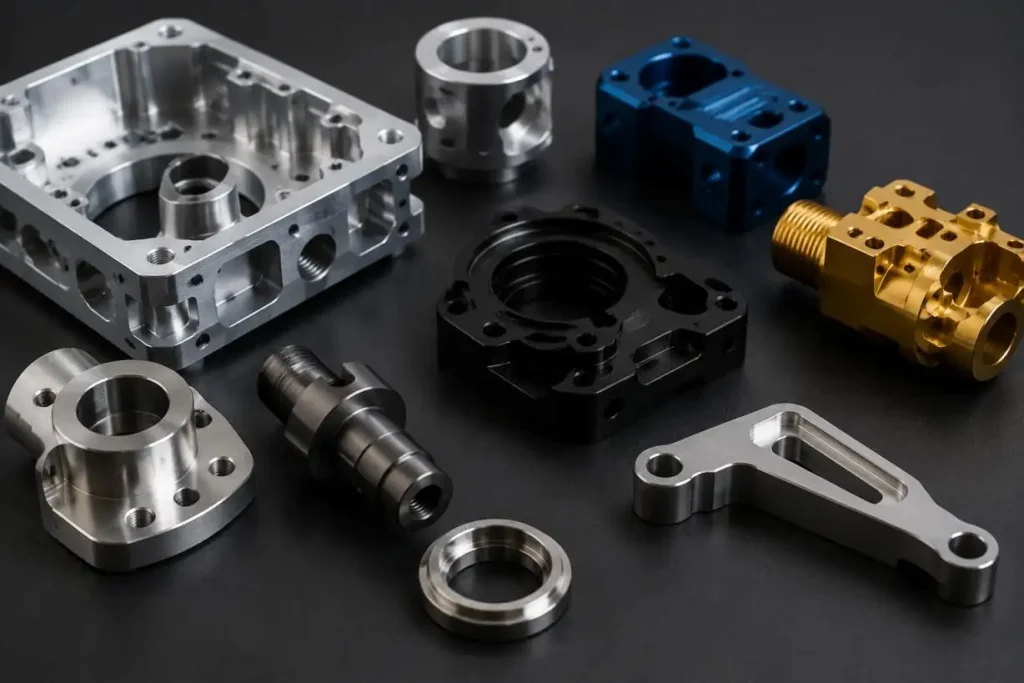
When evaluating the precision metal components, the component’s finishing processes must be taken into consideration alongside its machining processes. Even metal components achieving high‑precision CNC machining may remain unfit for certain applications as a result of inadequate surface finishing. SunOn offers comprehensive Metal CNC Machining and finishing services. We assist customers in selecting the optimized processes for the material, tolerances, and the end-use application conditions.
Why Metal CNC Machined Parts Need Finishing
In CNC Machining of metals, cutting tools remove material by layer removal to achieve the desired geometry. During metal CNC machining, tool marks and micro grooves, as well as residual stress are created on the surface of the metal part, and must be considered during the finishing process.
Metal CNC machined parts without applying post surface treatment may cause below issues:
•Experience corrosion due to exposure to moisture or chemicals
•Experience increased friction and earlier mechanical wear
•Aesthetic inconsistency across different production batches
•Poor coating adhesion or ineffective sealing performance
The primary function of a finishing process is to alter the surface of a metal part to mitigate the effects created by the machining process in order to meet the functional requirements of an engineering drawing.
Typical surface finishing modifications include the following characteristics:
•Surface Roughness (Ra): Impacts on friction, sealing, appearance, coatability
•Coating Thickness: Impacts on dimensions
•Surface Hardness: Impacts on wear
•Resistance to Corrosion: Impacts on lifetime
CNC machined metal parts typically have a surface roughness of Ra 3.2μm. However, in more precise applications, a surface roughness of Ra 1.6 μm or Ra 0.8 μm may be required.
How Surface Finish Affects Metal CNC Machining
Surface finish is often confused with machining performance. In reality, it is more about the function of the part.
Surface Roughness: Tradeoff of Friction, Sealing, and Cost
For example:
•Hydraulic components need to have a controlled amount of smoothness in order to limit leakage.
•Sliding components require just the right amount of roughness to maintain lubrication.
•Cosmetic housings need just the right amount of texture and not extreme smoothness.
During Metal CNC Machining, SunOn evaluates the required surface condition before production instead of applying finishing processes afterward as an isolated step.
SunOn's CNC machining process supports precision finishing requirements with controlled machining parameters, including fine milling and turning operations that can achieve surface finishes around Ra 0.4-0.6μm depending on material, geometry and tooling conditions.
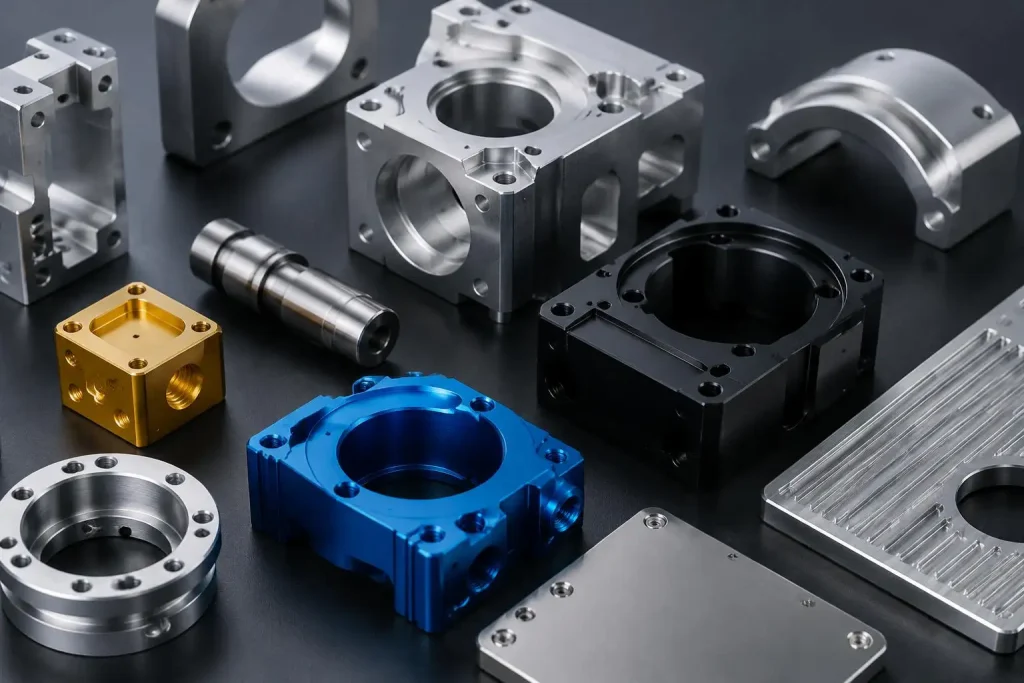
Comparing Surface Finish Options for Metal CNC Machining
Different finishing technologies solve different engineering problems. The correct choice depends on material compatibility, environment and performance requirements.
| Surface Finish | Suitable Materials | Main Benefits | Typical Applications |
| Anodizing | Aluminum | Corrosion resistance, color stability, lightweight protection | Housings, brackets, electronics |
| Hard Anodizing | Aluminum | Higher hardness and wear resistance | Mechanical parts, tooling components |
| Electroless Nickel Plating | Steel, Aluminum, Copper alloys | Wear resistance and corrosion protection | Precision industrial parts |
| Bead Blasting | Aluminum, Stainless Steel | Uniform matte appearance | Product shells, visible components |
| Polishing | Stainless Steel, Aluminum | Smooth surface and premium appearance | Medical, decorative components |
| Passivation | Stainless Steel | Improved corrosion resistance | Industrial and medical parts |
Anodizing vs Powder Coating: Choosing the Right Protection Method
For aluminum Metal CNC Machining parts, anodizing and powder coating are frequently compared. However, they work through different protection mechanisms.
| Comparison | Anodizing | Powder Coating |
| Protection method | Oxide conversion layer | Polymer coating layer |
| Thickness influence | Lower dimensional impact | Larger dimensional influence |
| Surface feel | Maintains metallic characteristics | More coating-like appearance |
| Wear resistance | Excellent for aluminum | Depends on coating formulation |
Anodizing is the go-to process when light weight characteristics of aluminum need to be preserved along with corrosion resistance. Powder coating will offer more resistance to the elements and a broader range of color options at the expense of more thickness.
Bead Blasting vs Polishing: Matching Appearance With Function
Surface appearance requirements must always be specified together with functional performance requirements. A high quality cosmetic finish cannot compensate for inadequate corrosion resistance or poor wear performance.
Bead Blasting
Bead blasting has a consistent matte appearance and finish through the use of abrasive media.
Benefits including:
•Eliminating machining marks
•Inconsistency in appearance is decreased
•Provides a well prepared surface for coating
Uses/Applications:
•Aluminum panels
•Consumer electronics components
•Equipment control panels
Polishing
Polishing eliminates surface irregularities and provides a smooth surface.
Used for:
•High cleanliness components
•Stainless steel medical parts
•Precision decorative components
However, polishing is too aggressive a surface finish and can remove sharp edges and dimensions, so polishing of surfaces must be carefully controlled during Metal CNC Machining.
Selecting Surface Finishes Based On Material And Working Environment
The working environment and the material influences the surface finish.
Aluminum CNC Machining
Typical solutions include:
•Type II anodizing to offer general corrosion protection
•Hard anodizing for enhanced wear protection
•Bead blasting for an even appearance
Stainless Steel CNC Machining
Typical solutions:
•Passivation to provide increased protection against corrosion
•Electropolishing to provide smooth surfaces
Steel and Alloy Components
Typical solutions:
•Nickel plating to provide a durable finish
•Protective coatings to provide increased protection
•Heat treatment and finishing
At SunOn, all aspects including but not limit to material selection, CNC machining and finishing are evaluated during the production planning stage to minimize potential risks from surface finishing that could lead to batch to batch appearance variation or coating thickness issues which adversely affect dimensions of assembled components.
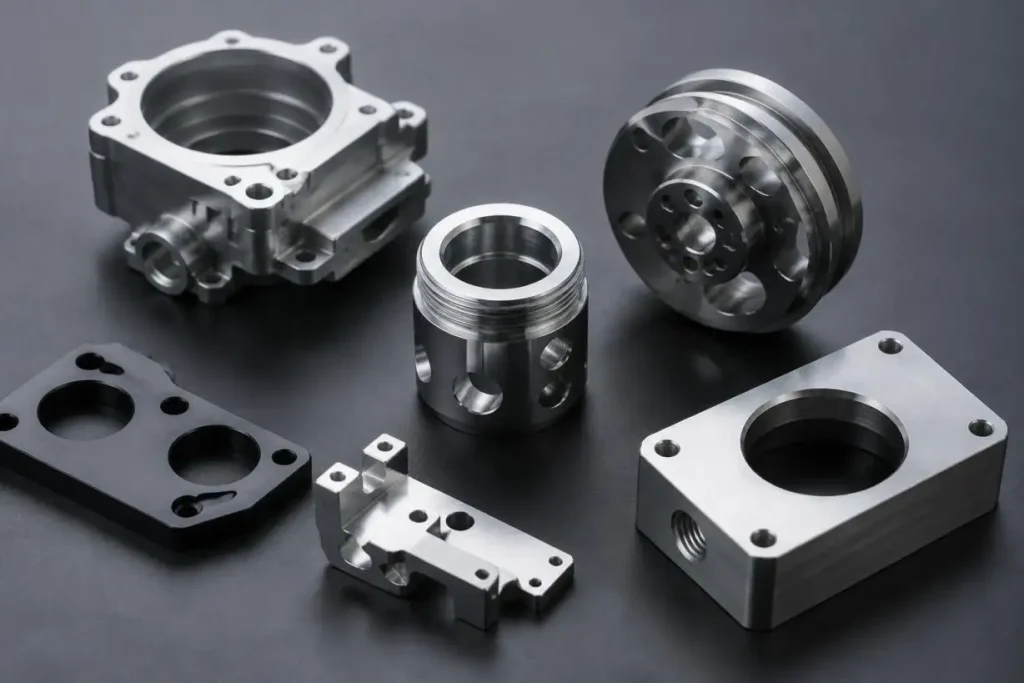
Preventing Surface Finish Problems During Metal CNC Machining Production
Surface finish problems normally occur when the production process and the subsequent finishing process are treated as completely separate.
Some important considerations include:
Machining and finishing tolerances (i.e. coating thickness) for precision fits, threads and holes must be taken into account.
Surface Preparation
•Adhesion of surface coatings: May be negatively affected by contamination of the surface or poor cleaning procedures.
•Process consistency: Batches that differ in their finishing must produce the same color and texture.
•Inspection after finishing: After the treatment is complete, the final dimensions must be checked.
An example is anodizing. This process, in order to achieve its required specifications, can add a layer of approximately 10-25 micrometers to the surface. This can be an issue in assembly clearances that are tight.
Quality Control for Finished Metal CNC Machined Components
A good supplier of CNC machined metal should verify the machining accuracy and the quality of the finishing.
Common inspections include:
| Inspection Method | Purpose |
| CMM Measurement | Verify final dimensions and tolerances |
| Surface Roughness Tester | Determines Ra value |
| Coating Thickness Gauge | Confirm finishing consistency |
| Salt Spray Testing | Assess resistance to corrosion |
| Visual Inspection | Evaluate quality |
SunOn integrates CNC machining with quality control. This service helps our customers with prototype and production machining.
Choosing a Metal CNC Machining Partner With Finishing Capability
Selecting a supplier is not only about machining accuracy. A good partner understands finishing and its relation to the complete lifecycle of the product.
Important evaluation factors include:
•Experience with aluminum, stainless steel and alloy machining
•Ability to support multiple finishing processes
•Understanding of tolerance compensation
•Quality inspection capability
•Prototype-to-production support
With integrated Metal CNC Machining, surface finishing coordination and inspection capabilities, SunOn helps customers develop precision metal components that meet both functional and aesthetic requirements. From early design evaluation to final production, SunOn works with customers to select practical finishing solutions that balance performance, cost and manufacturing reliability.
FAQs
Q1. What surface finishes does SunOn offer for Metal CNC Machining components?
SunOn has a variety of surface finishing options for Metal CNC Machining elements that include anodizing, hard anodizing, bead blasting, polishing, plating, and other finishing processes as determined by the material and the application.
Q2. Can SunOn perform Metal CNC Machining and surface finishing?
Yes. SunOn combines CNC machining and surface finishing to offer customers a complete solution for manufacturing, starting from choosing the material and CNC Machining to the final surface treatment and inspection.
Q3. What surface finish is best for aluminum CNC machined parts?
For aluminum Metal CNC Machining, SunOn generally advises either anodizing, hard anodizing, or bead blast, based on the balance of corrosion resistance, wear resistance, and appearance.
Q4. Does surface finishing impact the tolerances on Metal CNC Machining?
Yes. For machined surfaces, finishing processes such as anodizing and plating may result in a surface layer that may impact the final dimension. SunOn takes into account the required finishing thickness while planning the machining process to preserve critical fits and assembly.
Q5. What surface roughness can SunOn achieve for Metal CNC Machining components?
SunOn's CNC machining capabilities are capable of fine surface finishes. Finishing for some materials and geometries can be produced with a roughness of approximately Ra 0.4-0.6μm.
