


Part Post-Processing and Finishing: Methods and Best Practices
Part post-processing and finishing is the critical final stage in manufacturing where raw components are refined to achieve their final specifications. This stage includes mechanical, chemical, and thermal treatments that improve surface quality, durability, and aesthetics. Without proper finishing, parts may lack the necessary precision or environmental resistance required for industrial and consumer applications.
Successful part post-processing and finishing ensures that a manufactured component transitions from a basic shape to a high-performance product. It addresses defects like burrs, tool marks, and surface roughness. Furthermore, it adds protective layers that prevent corrosion or wear, making it a non-negotiable step in sectors like aerospace, automotive, and medical device production.
Why is Post-Processing and Finishing Critical for Manufacturing?
Part post-processing and finishing is essential because primary fabrication methods—like plastic injection molding or machining—rarely produce a perfect "ready-to-use" surface. Finishing steps correct dimensional errors, remove hazardous sharp edges, and provide the aesthetic appeal consumers expect. It also prepares surfaces for secondary operations like bonding or painting.
In my experience managing diverse production lines, the finishing stage is often where the most value is added. A part can be technically perfect in its geometry, but if the surface finish is off by even a few microns, it might fail a friction test or look unprofessional. For high-stakes projects involving 2k injection molding methods, the interaction between two different materials makes the finishing and cleaning stage even more vital to ensure structural integrity.
Key reasons to prioritize finishing include:
- Improved Durability: Treatments like anodizing or hard coating extend the life of the part.
- Corrosion Resistance: Crucial for metal parts exposed to moisture or chemicals.
- Aesthetic Quality: High-gloss or matte finishes define the "feel" of premium consumer electronics.
- Safety: Removing burrs and sharp edges prevents injury during assembly and end-use.
What are the Main Categories of Part Finishing?
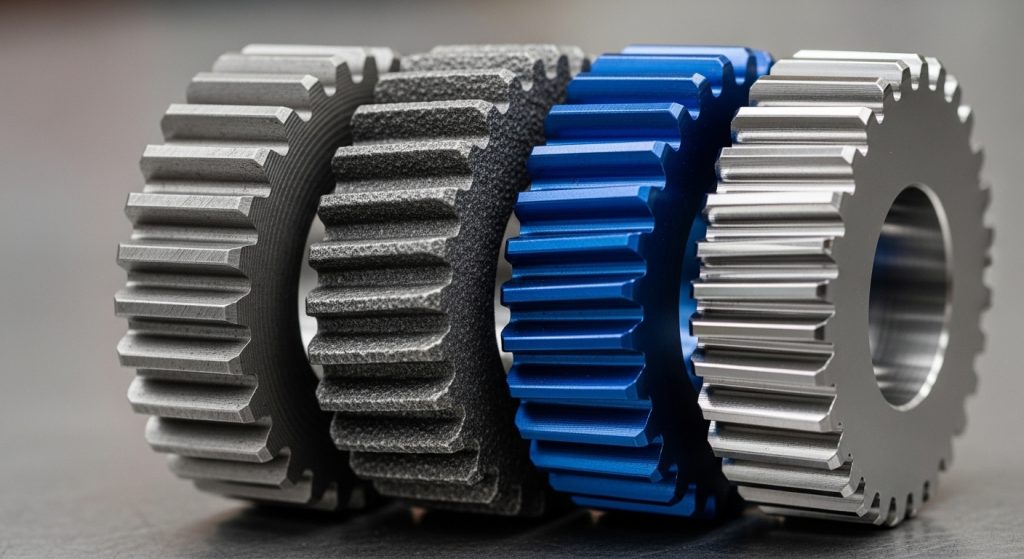
The main categories of part finishing include mechanical finishing, chemical finishing, and thermal finishing. Mechanical methods use physical friction, chemical methods use reactive solutions, and thermal methods use controlled heat. The choice of category depends on the base material and whether the goal is to change the part's appearance or its internal strength.
The following table compares the primary categories used in modern manufacturing:
| Category | Primary Method | Best Material Use | Key Benefit |
| Mechanical | Sanding, Blasting, Grinding | Metals and Plastics | Precise surface smoothing |
| Chemical | Passivation, Etching, Plating | Aluminum, Steel, Titanium | Enhanced corrosion resistance |
| Thermal | Annealing, Stress Relieving | Polymers, Alloys | Relieves internal tension |
| Coating | Powder Coating, Painting | Most solid substrates | Decorative and UV protection |
How Does Mechanical Finishing Improve Surface Texture?
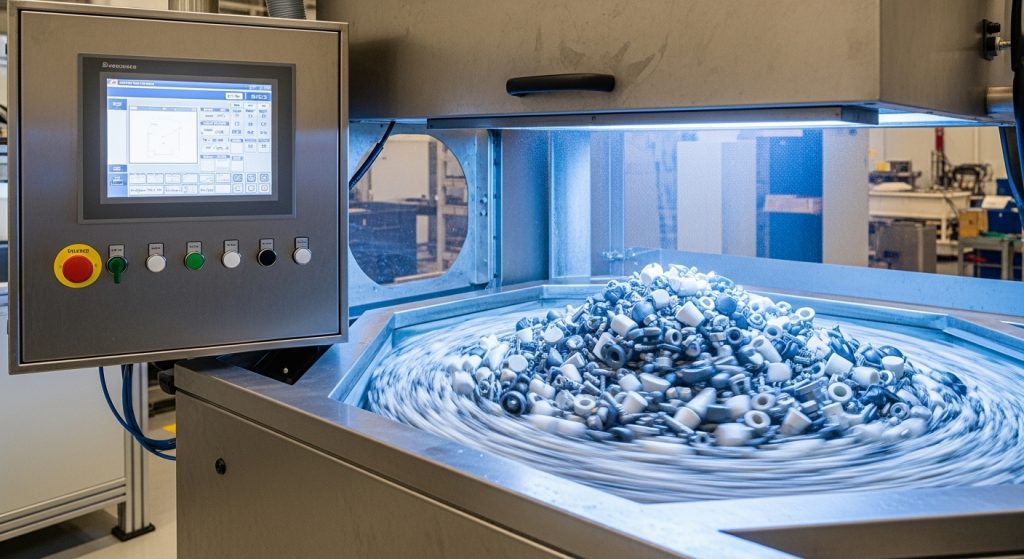
Mechanical finishing improves surface texture by physically removing material to create a smoother or more uniform appearance. Techniques such as bead blasting and vibratory tumbling are industry standards. This category is the most versatile, as it can be scaled from hand-sanding a single prototype to automated mass-finishing for thousands of units.
Bead Blasting for Uniformity
Bead blasting involves firing small glass or ceramic beads at a surface at high speeds. This process is excellent for removing tool marks from sheet metal fabrication parts. It leaves a consistent matte finish that is highly effective at hiding minor surface imperfections.
Vibratory Tumbling
For smaller parts produced in high volumes, vibratory tumbling is the most cost-effective choice. Parts are placed in a vibrating bowl with abrasive media. Over several hours, the constant friction deburrs and polishes every edge of the part simultaneously. This is a staple for cleaning up small metal components and molded plastics.
What is the Role of Chemical Finishing in Protection?
Chemical finishing uses electrochemical reactions or chemical baths to change the surface properties of a part. Unlike mechanical methods, chemical finishes can reach deep into internal cavities and complex geometries. This makes it a preferred method for intricate medical components or aerospace parts that require 100% surface coverage for protection.
Tip: When choosing chemical finishing, always consider the "bath dimensions" of your supplier to ensure your larger parts can be fully submerged for a uniform coat.
Anodizing and Passivation
Anodizing is widely used for aluminum to create a hard, non-conductive layer that accepts dyes. Passivation, on the other hand, is used for stainless steel. It involves an acid bath that removes "free iron" from the surface, significantly boosting the metal's natural rust resistance.
Electroplating
Electroplating deposits a thin layer of another metal (like gold, nickel, or chrome) onto the part. This is used not just for beauty, but to provide electrical conductivity or to increase the wear resistance of a softer base metal.
How to Optimize Finishing for Plastic vs. Metal?
Optimizing finishing for plastics involves lower temperatures and gentler abrasives to avoid melting the substrate. For metals, finishing often requires more aggressive media and high-heat thermal cycles. While post-processing for metal might involve hardening, plastic finishing usually focuses on removing "flash" or "gate marks" from the molding process.
For example, silicone compression molding requires specific cryogenic deflashing—where parts are frozen and tumbled—because the material is too flexible for standard sanding. In contrast, a CNC-machined steel part can handle intense grinding to reach a mirror polish.
What are the Best Practices for Achieving High-Quality Finishes?
The best practices for high-quality finishes include early design integration, consistent material selection, and rigorous quality control. You should never treat finishing as an afterthought. Instead, "design for finishing" by including draft angles and accessible surfaces that allow tools or chemicals to reach all necessary areas easily.
- Account for Tolerances: Remember that coatings like powder coating add thickness, while polishing removes it.
- Material Purity: Contaminants in the base material can cause "pitting" during chemical finishing.
- Control the Environment: Dust-free rooms are mandatory for painting and high-end optical polishing.
- Standardize Media: Ensure your abrasive media is replaced regularly to maintain a consistent finish across batches.
Tip: If a part requires a high-gloss finish, start with a high-quality mold surface. It is much cheaper to polish a mold once than to polish ten thousand individual plastic parts.
What Common Challenges Occur During Finishing?
Common challenges in part finishing include surface contamination, non-uniform coating thickness, and heat-induced warping. If a part isn't cleaned properly before finishing, the coating may peel or bubble. Additionally, over-polishing can lead to "dimensional drift," where the part no longer meets the required engineering tolerances.
I've seen many projects delayed because the manufacturer didn't account for the "edge effect" in plating, where the coating builds up more heavily on sharp corners than on flat surfaces. To solve this, engineers must often round off sharp corners in the CAD phase to ensure the final finished part remains within spec.
How is Technology Advancing Part Finishing?
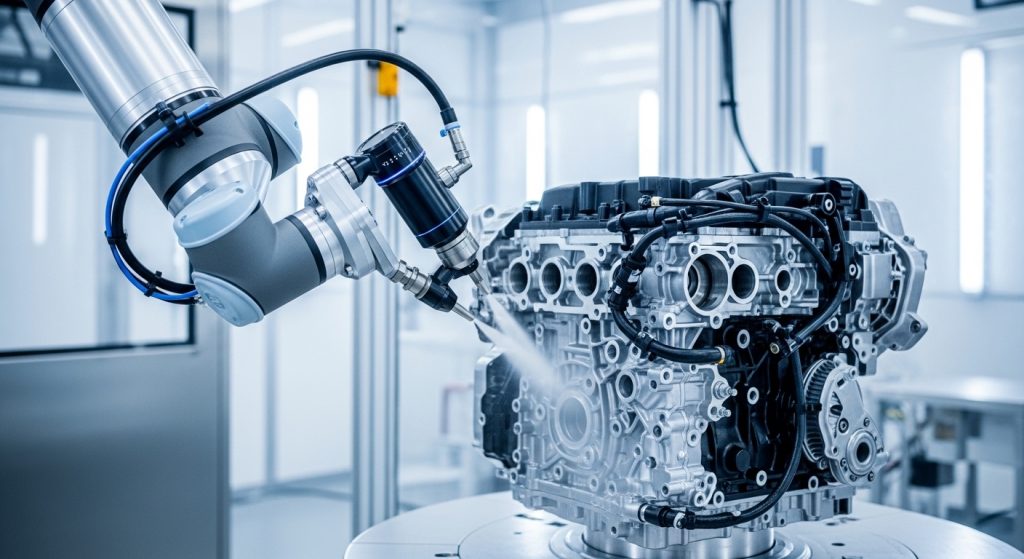
Technology is advancing part finishing through robotic automation and laser-based surface treatments. Robots can now apply coatings with a precision that humans cannot match, reducing waste and ensuring every part is identical. Furthermore, "laser cleaning" is replacing traditional chemical stripping, providing a more eco-friendly and precise way to prepare surfaces.
As we look toward the future, the integration of AI allows machines to inspect surface finishes in real-time. If a sander starts to wear down, the system detects the slight change in surface roughness and adjusts the pressure or speed automatically. This level of control ensures that the final part post-processing and finishing meets the rigorous standards of modern industry.
Summary Comparison of Finishing Methods
| Method | Best Use Case | Finish Type | Cost Level |
| Sanding | Prototypes, wood, soft metals | Smooth/Matte | Low (Manual) |
| Powder Coating | Frames, housings, outdoor gear | Textured/Durable | Medium |
| Vapor Smoothing | 3D Printed plastics | Glossy/Injection-molded look | Medium |
| Electropolishing | Surgical tools, food prep | Mirror-bright/Hygienic | High |
| Pad Printing | Logos and labels on curved parts | Decorative/Informational | Low |
Choosing the right method requires a balance between the part's functional requirements and the available budget. By following these best practices, manufacturers can ensure their parts not only look great but perform flawlessly in the field.
Final Thoughts on Mastering Part Post-Processing and Finishing
Mastering part post-processing and finishing is what separates a prototype from a professional, market-ready product. While the primary manufacturing phase defines the shape, the finishing phase defines the performance, longevity, and user experience. As manufacturing technologies like 3D printing and high-speed CNC machining continue to evolve, the demand for sophisticated finishing techniques will only grow.
In my years helping clients navigate complex production cycles, I have found that the most successful projects are those where the finishing strategy is decided on day one. By choosing the right mechanical, chemical, or thermal treatments early, you avoid costly reworks and ensure your components can withstand the rigors of their intended environment. Whether you are aiming for the high-gloss aesthetics of consumer electronics or the rugged durability of industrial hardware, the right finishing touch makes all the difference.
