


Precise Injection Molding Tolerances for High-Quality Plastic Parts
The tolerances of injection molding are necessary in the creation of plastic parts that satisfy the design requirements. It is necessary that engineers and manufacturers understand how tolerances influence part performance, assembly, and fit. Tolerances establish how much variation in dimensions can be used, and it is acceptable as the parts can work properly, but are not expensive to manufacture.
With the help of effective management of tolerances, it is possible to avoid the problem of assembling, minimize scrap, and increase manufacturing efficiency. Manufacturers have to strike a fine line between the tolerances that may be met and material behavior, part geometry and manufacturing processes.
What Are Injection Molding Tolerances?
Injection molding tolerances refer to the range of variation that is permitted on the part of plastic. These variations explain the factors like shrinkage, material behavior, mold precision and processing conditions. Tolerances are needed to ensure the integrity of functions and correct assembly of components.
Tolerance requirements are normally represented as an addition or subtraction of nominal dimension. These values identify tolerable variation in length, width, height, diameter or thickness of a wall. Knowledge of these parameters allows assurance that molded parts are always able to match the demands of the design.
Factors Affecting Injection Molding Tolerances
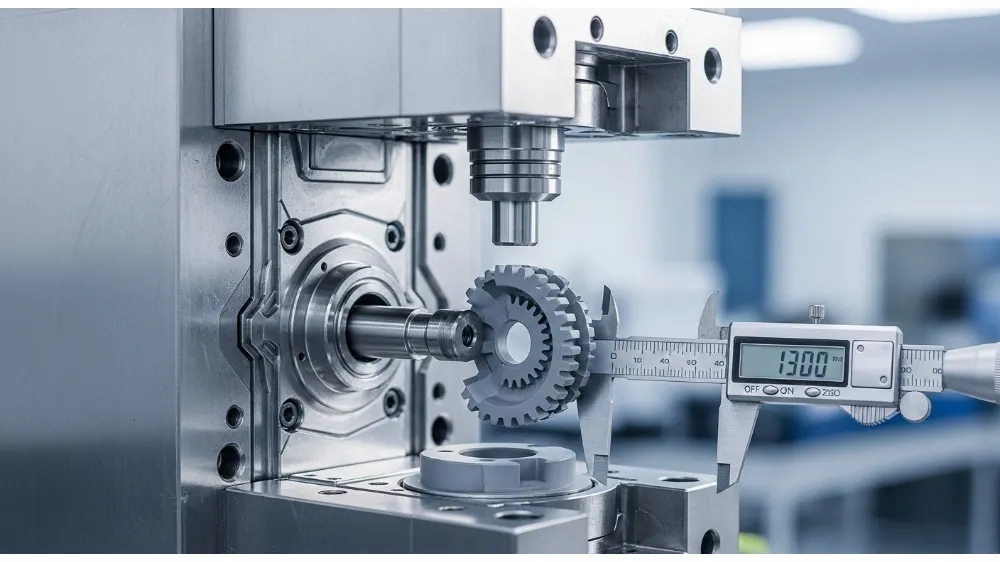
There are a number of determinants that affect the tolerances that can be obtained during injection molding processes:
Material Properties: The cooling of various plastics has different rates, and this has an effect on the final sizes.
Part Geometry: The uniform shrinkage is influenced by complex geometries, thin walls, and deep cavities.
Mold Design: More accurate parts with smaller tolerances are made with high precision molds.
Processing Conditions: Dimensional outcomes can be changed by the injection speed, temperature and pressure.
Cooling Rates: Rates of unequal cooling may result in warping or distortions, which influence tolerances.
These factors can be known and controlled to bring about tighter tolerances without the undue expense or rework by the manufacturer.
Standard Tolerance Guidelines
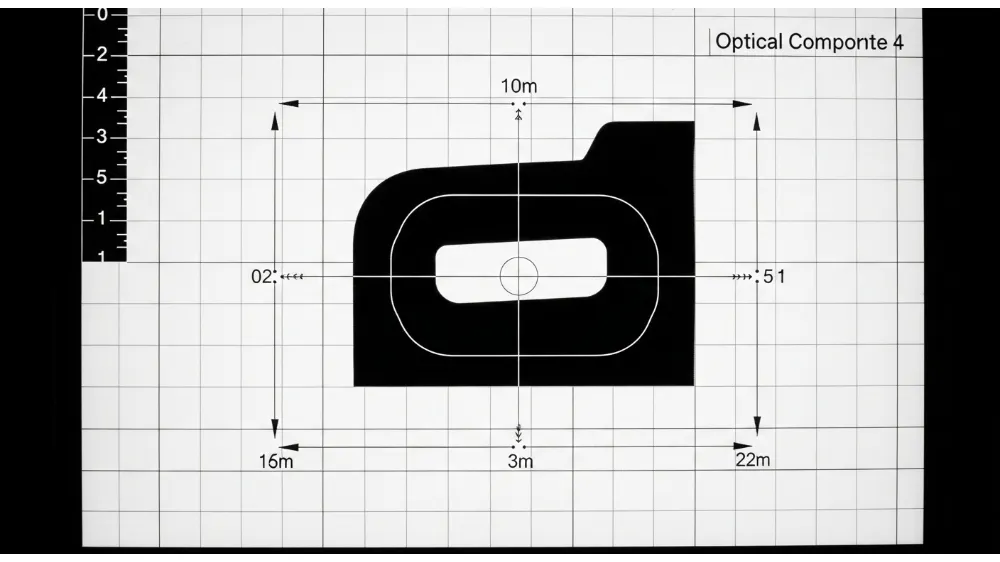
These standards in the industry are general guidelines in injection molding tolerances. Plastic parts tolerances are generally cited in ISO 20457 and ASTM D3761. An example of these guidelines is based on the type of material, the size of the part and the thickness of the walls to advise on limits that are possible.
To illustrate, a 50 mm dimension of a small ABS part can tolerate a variation of ±0.2 mm, but a larger part or a more flexible material can need a variation of ±0.5 mm. Knowledge of these principles enables designers to establish realistic part specifications to make.
Tight vs. Loose Tolerances
Strict tolerances enhance fit and operation at the expense of greater tooling complexity and cost of production. These loose tolerances are simpler to obtain and less expensive but could impact the functionality of parts or manufacturing accuracy.
The trade-offs between performance and cost are the one that designers must consider. In critical parts like snap-fits or mechanical parts that have to interface with each other, a tighter tolerance is required. In the case of aesthetic or non-functional surfaces, close tolerances can be tolerated.
Injection Molding Dimensional Control
The combination of mold design, material choice, and processing management is needed in order to control part dimensions. Mold cooling system must be optimized to decrease warpage, and also unfair shrinkage. Dimensional consistency is also achieved by uniform wall thickness and correct draft angles.
Consistency in the size of the cavity even in long production runs is maintained by regular maintenance of the molds. Temperature, pressure, and injection speed should be highly controlled in order to ensure repeatable tolerances. More accurate and less variation of parts can be achieved with advanced systems of process control.
Common Tolerance Challenges
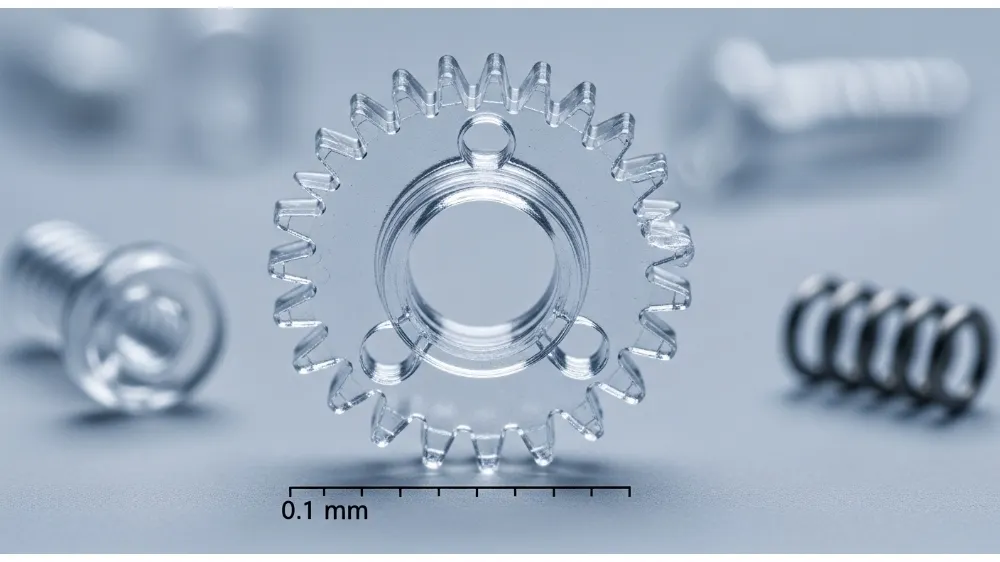
In injection molding, there are a number of issues that are usually encountered when trying to obtain accurate levels of injection molding:
Shrinkage Variability: Final dimensions can vary due to variations in the material batches or moisture content.
Warping: Unbalanced cooling or transition between thick and thin causes distortion of parts.
Tool Wear: Mold cavities can wear out, taking on larger dimensional deviations.
Material Flow: The flow used during injection can be uneven resulting in non-consistent thickness of the walls.
By determining these problems at a tender stage of the design and prototyping phase, one can avoid making very expensive mistakes in the stage production.
Design Guidelines for Precise Tolerances
To be able to design parts that are to be injected with high precision, one has to pay attention to design:
Ensure consistency in a thickness of the walls to minimize fluctuations in shrinkage.
Use draft angles to allow easy ejection of parts without distortion.
Use materials that have foreseeable shrinkage characteristics.
Take into account slight over-sizing to allow known rates of shrinkage.
Manage hand in hand with the makers of molds to determine tolerances that are achievable.
The use of these strategies will result in the creation of reliable and dimensionally accurate components and regulate the cost of manufacturing.
Effects of Tolerances on Assembly
Tolerances should be carefully regulated to make sure that components fit into place. With multiple component assemblies, dimensional variation may cause misalignment, excessive wear or failure.
Snap-fits, hinges and mating surfaces must be accurately tolerated to guarantee a smooth operation and structural integrity. Over tolerances may lead to problems during assembly and under tolerances may lead to loss of stability or mechanical performance.
Advanced Techniques for Tolerance Verification
Verification and measurement in modern manufacturing: Tolerance compliance in modern manufacturing is done using techniques of measurement and verification:
Coordinate Measuring Machines (CMMs): Are able to give very precise measurements in three dimensions.
Laser Scanning: Records part geometry to be compared digitally with designing models.
Gauge Tools: Custom or standardized gauges are used to measure important dimensions in a short period.
Statistical Process Control (SPC): Observes the trend of variation between production runs in order to detect drift.
These methods will enable manufacturers to retain quality and make sure that the parts are within the tolerance threshold at any given time.
Benefits of Controlling Injection Molding Tolerances
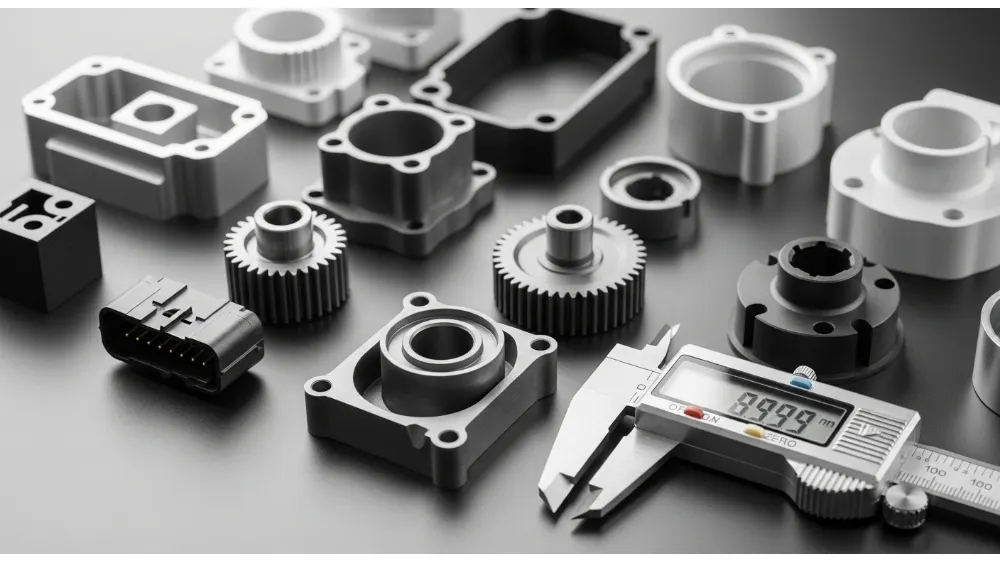
Tolerance control has several benefits:
Lower scrap and rework expenses.
Better assembly dependability.
Regular quality and performance of the product.
Increased customer satisfaction and decreased returns.
Efficiency and shortest cycle time production.
Close yet manageable tolerances can enable manufacturers to manage the quality, cost and throughput effectively.
Frequently Asked Questions (FAQ)
Q1: What are the injection molding tolerances?
Tolerances in injection molding stipulate the variation within dimensions of the part that can be allowed to make a part fit and work.
Q2: What is the importance of tolerances in injection molding?
They check that components are put together properly, are operational and are of the required standard and also minimize scrap.
Q3: How are tolerances measured?
Tools such as CMMs, laser scanners, gauges, and calipers are used to measure tolerances to determine dimensions.
Q4: Can different materials achieve the same tolerances?
No. Different plastics vary in shrinkage rate and flow characteristics, which influence achievable tolerances.
Q5: How do tight tolerances affect cost?
Stricter tolerances increase tooling costs, inspection costs, and manufacturing time.
Q6: What is the typical tolerance range for small plastic parts?
Normally, ±0.1mm to ±0.3mm, based on material and molding process.
Q7: How can designers compensate for shrinkage?
Critical dimensions can be slightly oversized, walls can be uniform, and predictable shrinkage materials can be chosen.
Conclusion
It is important that the exact injection molding tolerances be understood in order to make the plastic parts of high quality. When taking the material properties, mold design, part geometry, and process control into account, manufacturers will be able to obtain the correct dimensions, the trustworthy assembly, and the stable performance of the products. Timely resolution of the tolerance issues guarantees that plastic components are produced to design, save costs, and stay efficient within a series of production.
