


Low Pressure Die Casting: Advanced Guide for Precision Manufacturing
Low pressure die casting is a technique of casting metals that is highly applied in contemporary production. It uses controlled low-pressure forces to fill molds unlike the traditional gravity casting, achieving a high dimensional accuracy, low porosity, and good surface finishes. It is used in automotive, aerospace and industrial components where extremely accurate and repeatable parts are required. Knowledge of the low pressure die casting would allow manufacturers and engineers to maximize production and minimize defects and maximize performance parts.
What Is Die Casting in Low Pressure?
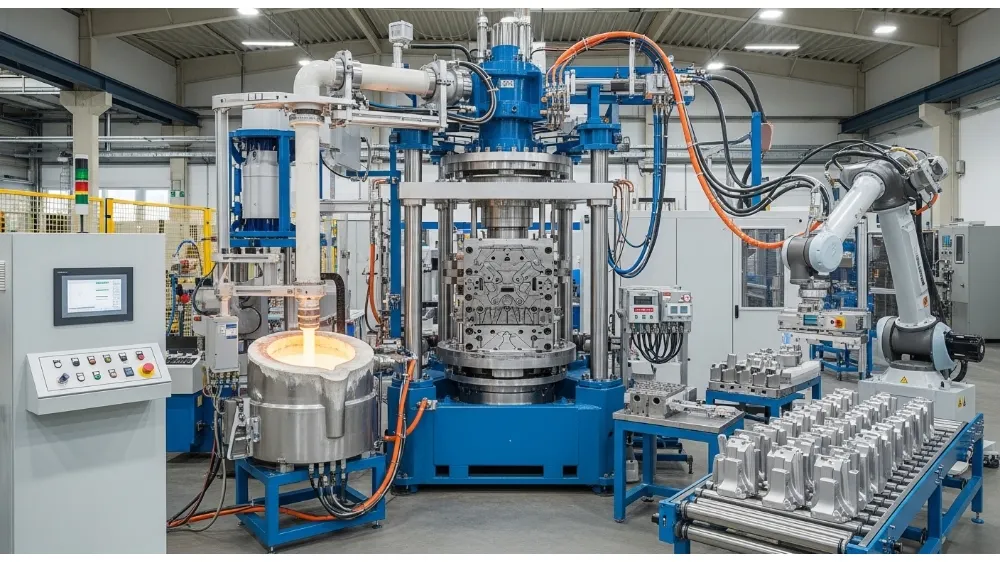
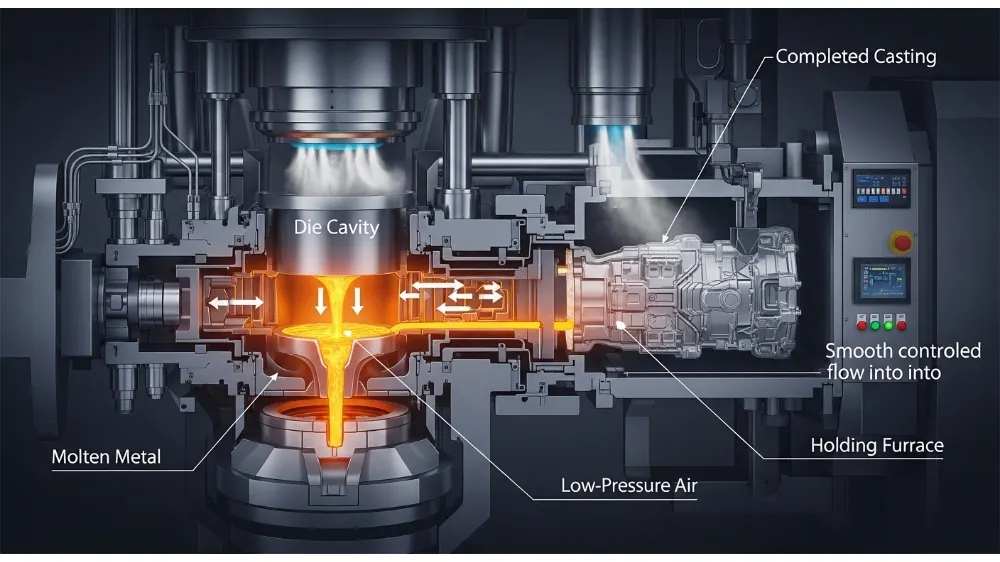
Low pressure die casting is another process whereby the molten metal is forced into a reusable mold under low pressure, usually 0.5 to 2 bars. The metal is brought out of a closed furnace by way of a riser tube into the mold cavity. This method reduces turbulence, lessens the entrapment of gases and uniform flow of the metals in the component. It is not similar to high pressure die casting because slower injection speeds and lower pressures are used to develop solid and dense castings that have good mechanical qualities.
All the Important Benefits of Low Pressure Die Casting
The process has a number of advantages to manufacturers who want to enhance quality and efficiency:
- Regular dimensional precision of complicated geometries.
- Less porosity and enhanced structural integrity.
- High quality surface finish and less machining.
- Minimal scrap and efficient usage of material.
- More control over the flow of metals, reduction of defects.
These are some of the advantages that make low pressure die casting the ideal process used in high-performance components that require reliability like engine components, brackets and housings.
Materials Commonly Used
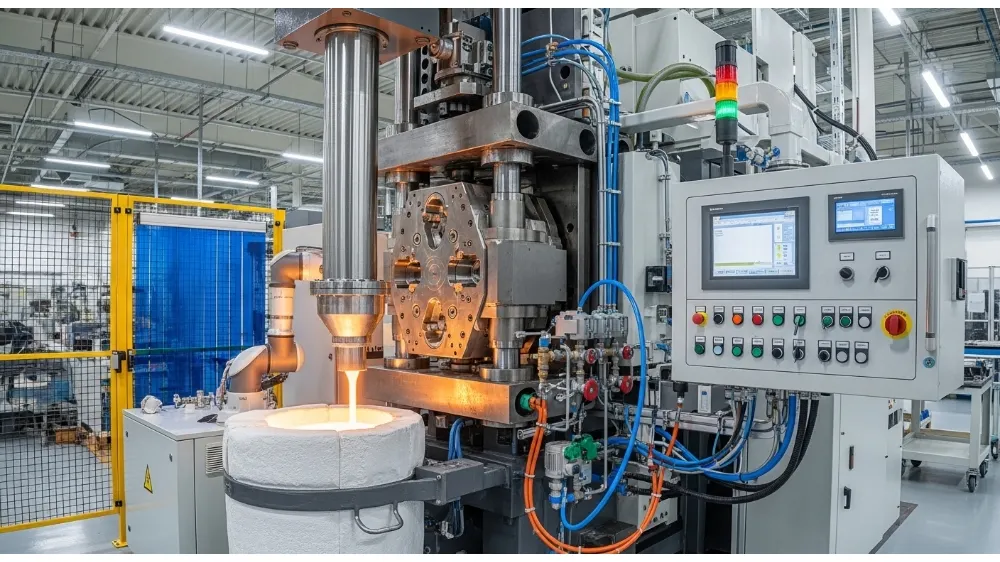
Low pressure die casting is most commonly done with aluminum and its alloys as they have high fluidity, corrosion resistance, and ratio of strength to weight. When there are special mechanical or thermal requirements there is also use of magnesium alloys and some copper alloys. The choice of material is very important as it directly influences the design of the mould, time of operation and end performance of the part.
The Casting Process Step by Step
The low pressure die casting process usually entails a number of synchronized steps:
Preparation of Furnace: The molten metal is heated in a closed furnace to the required temperature.
Riser Tube Insertion: Riser tube is a connection between the furnace and the mold whereby the amount of metal flowing is controlled.
Mold Filling: Under low pressure the metal is forced into the mold cavity resulting in a reduction in turbulence and defects.
Solidification: Molten metal is pressed into a solid state and made to solid gradually so that uniform and dense castings are obtained.
Ejection and Finishing: The casting is ejected out of the mold and trimmed and ready to have any further machining or surface finishing.
This type of controlled process guarantees a ratio between the speed of production and the quality of the product, so it is optimal in the precision applications.
Comparison With Gravity and High-Pressure Casting
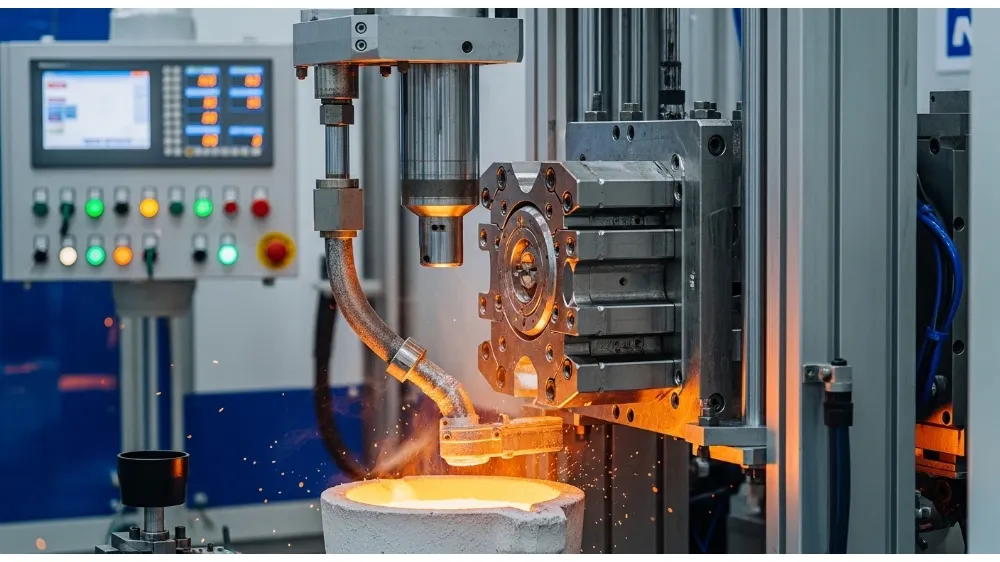
Low pressure casting is different to gravity casting in that the metal is not pushed by the weight of the material into the molds but instead by pressure which due to control ensures that the mold remains free of turbulence and porosity is minimized. It has lower speeds and pressures compared with high-pressure die casting and produces high dimensional accuracy and low stress in the casting. One of the uses of low pressure die casting is where the manufacturers need high accuracy in tolerances and the cost and complexity of high pressure systems are undesirable.
Applications of Low Pressure Die Casting
Die casting, which is conducted at low pressure, finds application in many industries where accuracy, durability and consistency are of high importance. Common uses are:
- Automotive industry: Structural parts, suspension parts and engine blocks.
- Aerospace components: Lightweight high strength housings and brackets.
- Industrial machinery: Pump housings, gear cases and hydraulics.
- Consumer goods: Electronic casing, tableware and interior decorations.
It is also effective especially in the case of medium-to-large castings, which need high quality surfaces with minimum post-processing.
Design Specifications of Low Pressure Die Casting
To make the low pressure die casting as beneficial as possible, engineers need to take into account several factors:
- Mold design: Gating and riser positioning are done appropriately to guarantee even filling.
- Wall thickness: Do not have too thin areas that can lead to faults.
- Draft angles: This makes it easy to pull out the mold without destroying the casting.
- Cooling plan: Regulate solidification in an effort to reduce shrinkage and internal stresses.
- Alloy choice: Correlate material properties with functional needs.
When the details are observed properly, the components will be of the right dimensions and will be of the right mechanical qualities besides wasting minimal amounts of waste and scrap.
Process Optimization Strategies
The optimization of low pressure die casting enhances efficiency and quality of parts:
- Temperature regulation: Uniform metal temperature shortens defects and cycle times.
- Control of pressure: So that there is even density when pressure is adjusted based on geometry.
- Automated control systems: Modern machines are operated through a real-time monitor of pressure and flow.
- Tooling repair: Leaks can be avoided by regular inspection and enhance repeatability.
Through these measures manufacturers have been able to manufacture in large quantities of uniform castings free of defects.
Quality Control and Inspection
The objectives of quality control in low pressure die casting are on the dimensional accuracy, surface finish, and mechanical properties:
- Non-destructive tests: X-ray and ultrasonic test reveal porosity or internal defects.
- Dimensional measure: Coordinate measuring machines (CMM) check tolerances.
- Surface inspection: Visual and tactile inspection are used to detect a smooth finish, and free surfaces.
- Testing mechanical: Hardness tests and tensile tests verify structural integrity.
Strict quality measures are necessary in industries such as the automotive and aerospace where failure of parts may be very costly.
Common Challenges and Solutions
Although it is a very effective method, low pressure die casting may face problems:
- Porosity: Trapped gas is minimized by manipulation of filling and degassing molten metal.
- Cold shuts: The correct preheating of molds and rate control of flow prevent unfilled molds.
- Surface defects: Finish, polished molds and accurate pressure control enhance the quality of the finish.
- Cycle consistency: The automated process monitoring provides a repeatable casting.
The issues can be tackled earlier in the design/setting up phase; this will make the process as reliable as possible.
Frequently Asked Questions (FAQ)
Q1: What is the major benefit of low pressure die casting?
A: It offers great accuracy, low porosity and excellent surface finishes over gravity or high-pressure casting.
Q2: What materials are most suitable for low pressure die casting?
A: Aluminum alloys are most common, while magnesium and copper alloys are used for specialized applications.
Q3: How does low pressure die casting differ from high-pressure casting?
A: It uses slower metal flow and lower pressure, leading to better dimensional accuracy and reduced internal stress.
Q4: Can low pressure die casting be used for large components?
A: Yes, it is suitable for medium-to-large parts requiring precision and consistent quality.
Q5: Why is mold design important in low pressure die casting?
A: Proper mold design ensures uniform filling, fewer defects, and easier ejection of castings.
Q6: Which industries rely on low pressure die casting the most?
A: Automotive, aerospace, industrial machinery, and consumer electronics.
Q7: Does low pressure die casting require post-processing?
A: Minimal machining or finishing may be needed based on tolerance and surface quality requirements.
Conclusion
Precision low pressure die casting is an efficient, controllable and high quality process and therefore is a favored process in complex and high performance metal components. With knowledge about the process, material choice, design factors, and optimization measures, manufacturers can now manufacture uniform, trustworthy and accurate ones that satisfy the strict industrial requirements. By practicing best standards we are guaranteed of longer life of the tool, good surface quality and minimizing the production cost, making low pressure die casting one of the pillars of modern metal manufacturing.
