


Precision Machining: Techniques, Applications, and Industrial Benefits
Precision machining is an essential manufacturing, which enables the creation of very precise and complex metal or plastic parts. It entails use of state of the art machineries to strip material with narrow tolerances, and a high level of dimensional accuracy and quality surface finish. Learning about precision machining is crucial to ensure that engineers, designers, and production managers would maximize the efficiency and minimize the mistakes in order to provide reliable parts.
The process finds widespread application in the automotive, aerospace, electronic, medical and industrial equipment sectors. When done correctly, precision machining enhances the consistency of parts, reduces cost of production, and enables a complex design that is otherwise unattainable under the traditional manufacturing process.
What Is Precision Machining?
Precision machining is a manufacturing process whereby materials are cut, drilled, milled or turned to a specified dimension and tolerance, this is done under controlled processes. These are carried out using high-speed machines, computer numerical control (CNC) systems and special tools in order to achieve repeatability.
Precision machining is primarily aimed at attaining dimensional accuracy, smooth surfaces, tight tolerances and lessening post processing requirements. Through proper tool selection and high-technology machining, the manufacturers are able to make complex parts to be used in vital applications.
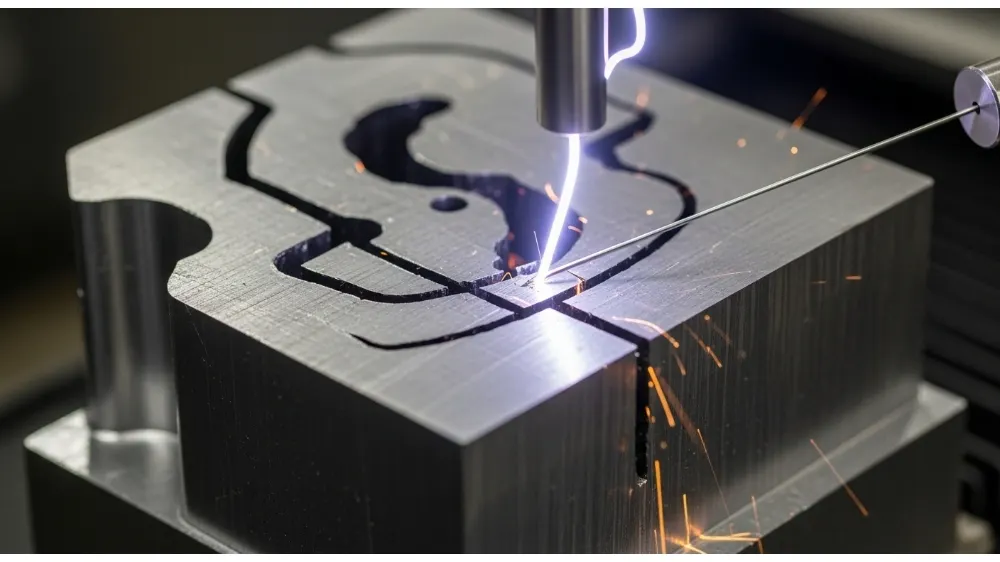
Precision Machining Types
Precision machining can be performed in a number of ways:
- CNC Milling: Removal of complex shapes and contours with rotating cutting tools.
- CNC Turning: Turns the workpiece by the stationary cutting tools to produce cylindrical or conical components.
- Grinding: This involves the application of abrasive wheels to a material to create very smooth surfaces and tight tolerances.
- EDM (Electrical Discharge Machining): Utilizes electrical discharges to remove material in difficult-to-access regions.
- Laser Machining: Uses a laser beam to cut or engrave materials with high accuracy.
Selection depends on material type, geometry, tolerance, and production volume.
Materials for Precision Machining
Precision machining can be applied to both metals and plastics:
- Metals: Aluminum, steel, stainless steel, titanium, brass, and copper alloys.
- Plastics: Nylon, PEEK, acrylic, and polycarbonate for lightweight, functional components.
Material properties such as hardness, thermal conductivity, and machinability affect cutting speed, tool wear, and achievable tolerances. Proper selection ensures uniform quality and process efficiency.
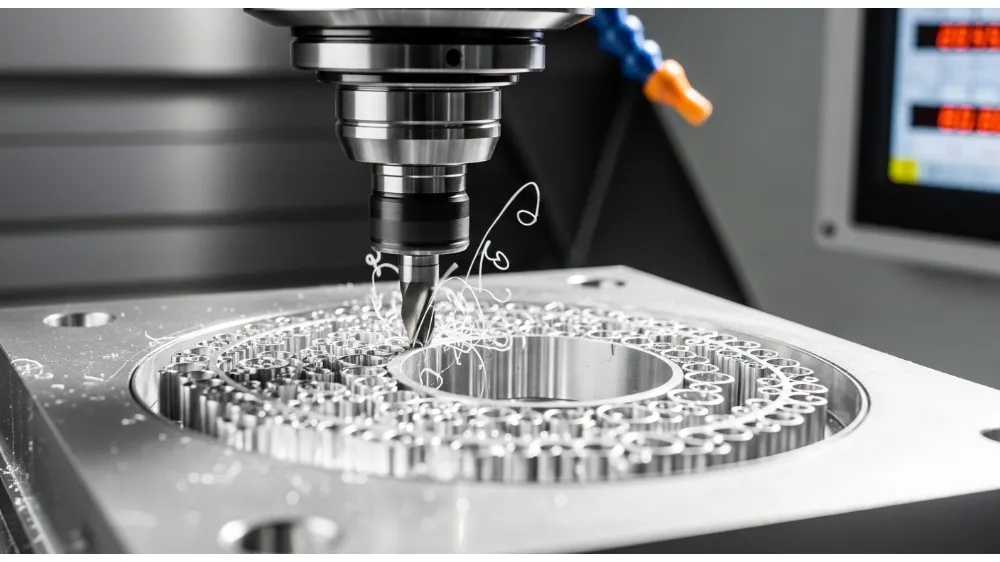
Equipment Used in Precision Machining
The equipment includes:
- CNC Machines: Multi-axis machines with precise, repeatable motion.
- Lathes: Used for turning cylindrical parts with high dimensional accuracy.
- Milling Machines: Ideal for flat, contoured, or complex geometries.
- Grinding Machines: Produce ultra-smooth surfaces and precise tolerances.
- EDM and Laser Systems: Used for intricate, small, or hard-to-reach features.
Automation and real-time monitoring improve throughput and reduce errors.
Advantages of Precision Machining
Precision machining provides multiple benefits:
- Produces highly accurate components with tight tolerances
- Reduces material waste through efficient cutting
- Enables complex geometries unattainable by conventional methods
- Improves surface finish and reduces post-processing
- Supports high-volume and low-volume production with consistent results
These advantages make it ideal for industries requiring reliability and high performance.
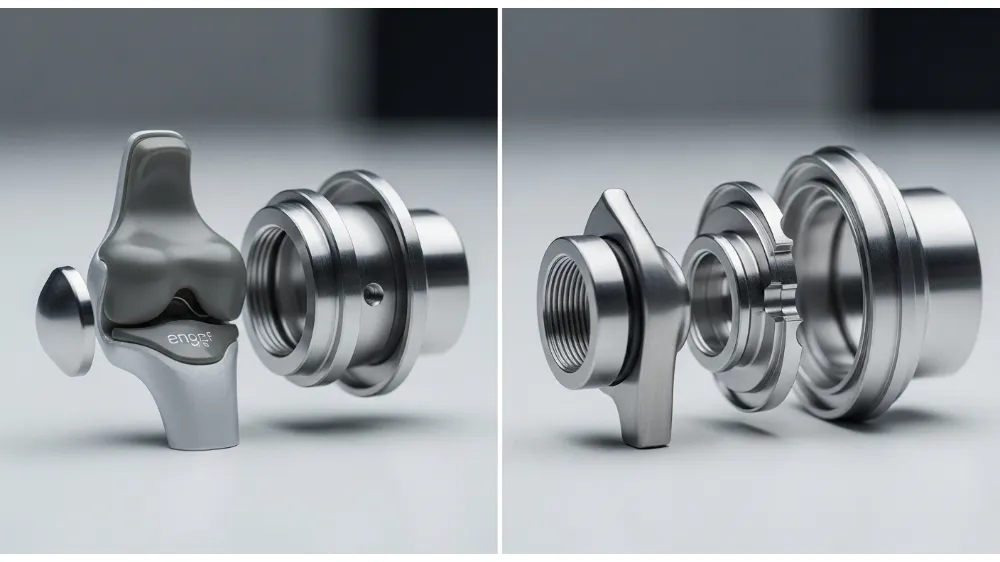
Design Considerations
When designing parts for precision machining, consider:
- Feature accessibility and geometry
- Allowable tolerances and dimensional limits
- Surface finish specifications
- Material choice and machinability
- Compatibility with later assembly or finishing operations
Proper design reduces machining time, minimizes tool wear, and ensures consistent quality.
Quality Control and Inspection
Quality control includes:
- Dimensional verification using calipers, micrometers, or CMM
- Surface roughness measurement
- Visual inspection for defects
- Functional testing for critical components
Strict inspection ensures high performance, repeatability, and minimal rework.
Common Challenges
Challenges in precision machining include:
- Tool wear affecting dimensional accuracy
- Heat generation causing part distortion
- Hard materials affecting cutting performance
- High setup costs for complex CNC operations
Mitigation involves proper tool selection, lubrication, cooling, and machine calibration.
Industrial Applications
Precision machining is applied in multiple industries:
- Automotive: Transmission components, engine parts, and brackets
- Aerospace: Aircraft structural parts, turbines, and landing gear components
- Medical Devices: Surgical instruments, implants, and diagnostic equipment
- Electronics: Housings, connectors, and precision device components
- Industrial Machinery: Gears, valves, and fine machine components
Its capability to produce high-accuracy, reliable parts makes precision machining fundamental to modern manufacturing.
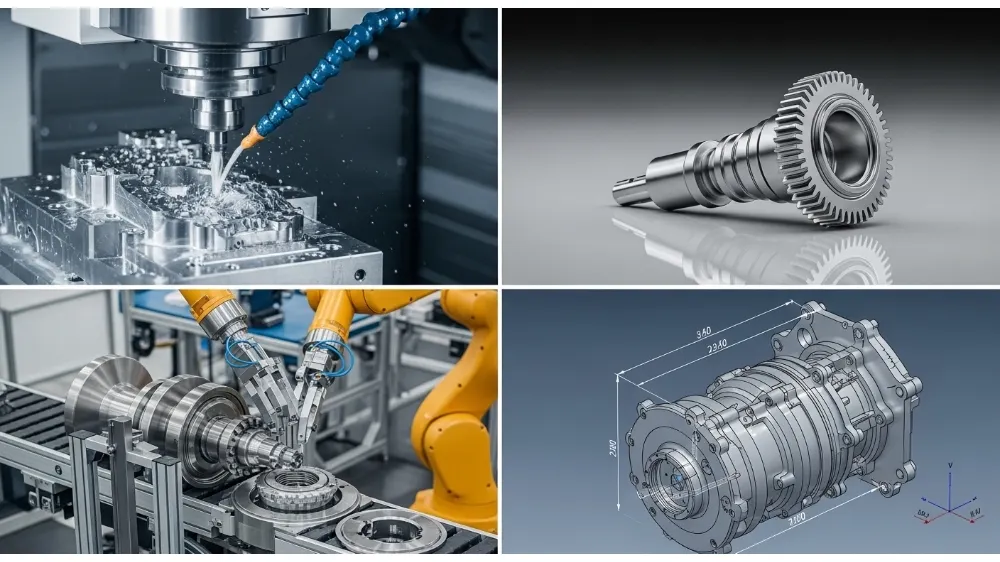
Environmental and Energy Considerations
Precision machining requires energy for high-speed cutting and CNC operations. Energy-efficient motors, optimized cutting paths, and coolant recycling reduce environmental impact. Sustainable practices minimize energy consumption while maintaining product quality.
Maintenance of Precision Machinery
Proper maintenance ensures accurate and consistent machining:
- Inspect and replace worn tools and machine parts
- Calibrate machines to maintain tolerances
- Lubricate moving components
- Clean workstations and machinery to avoid contamination
Maintenance extends machine life, reduces downtime, and maintains production quality.
Frequently Asked Questions (FAQ)
Q1: What is precision machining?
It is a manufacturing process producing highly accurate and complex components used in automotive, aerospace, medical, and industrial sectors.
Q2: What materials can be precision machined?
Aluminum, steel, stainless steel, titanium, brass, copper, and plastics like PEEK and polycarbonate.
Q3: How is precision machining different from standard machining?
It achieves higher accuracy, better surface finish, and more complex geometries than conventional methods.
Q4: What equipment is used in precision machining?
CNC machines, lathes, milling machines, grinding systems, EDM, and laser machining equipment.
Q5: Can precision machining be used for low-volume production?
Yes, it is suitable for both high-volume and low-volume production while maintaining high quality.
Q6: What industries rely on precision machining?
Automotive, aerospace, medical devices, electronics, and industrial machinery industries.
Q7: How is quality ensured in precision machining?
Dimensional inspection, surface roughness testing, visual inspection, and functional component testing ensure quality.
Conclusion
Precision machining is a critical manufacturing process producing accurate, complex, and high-quality components. Proper equipment, material selection, and quality control enable high dimensional accuracy, surface finish, and efficiency. Mastery of precision machining supports consistent production, reduced material waste, and reliable performance across modern industrial applications.
