


Advanced Sheet Metal Hemming Techniques in Modern Manufacturing
Hemming of sheet metals is a very important operation in the current day manufacturing industry and it is commonly utilized in industries to enhance the strength, appearance, and safety of metallic components. This process bends the sides of sheet metal, to provide a smooth and strengthened edge that does not have sharp edges and gives it more structural strength. Automobile, aerospace, and consumer electronics industries are some of the industries that heavily depend on hemming to produce accurate and long lasting parts. With the knowledge of the principles and methods of sheet metal edge joining, the manufacturers are able to maximize quality and efficiency in production.
What Is Sheet Metal Hemming?
Hemming This forming process involves bending one edge of a sheet metal part around and over onto itself or onto another part. This operation removes sharp edges, hardens the component and may make the final product look good. Applications of hemming are usually done on panels, covers, doors and other items that need a clean edge and increased rigidity. Hemming techniques are of many types, each being appropriate to certain production needs and part geometries.
Types of Sheet Metal Hemming
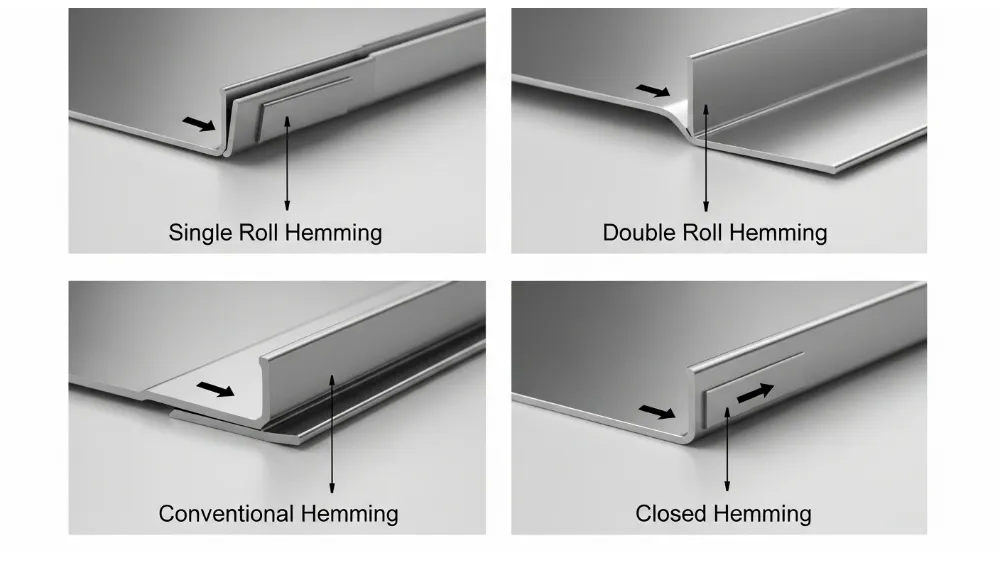
There are various hemming methods, which are used based on the finish required, the thickness of the material and the volume of the production:
Open Hemming: This technique involves bending the sheet metal edge, leaving some little gap. The open hems are simpler to make and need less tooling hence suitable in medium-precision applications.
Closed Hemming: The metal edge is folded and totally covered in this process forming a flush and strengthened edge. The closed hems offer increased strength and a better look, which is usually employed in the outer motor panels.
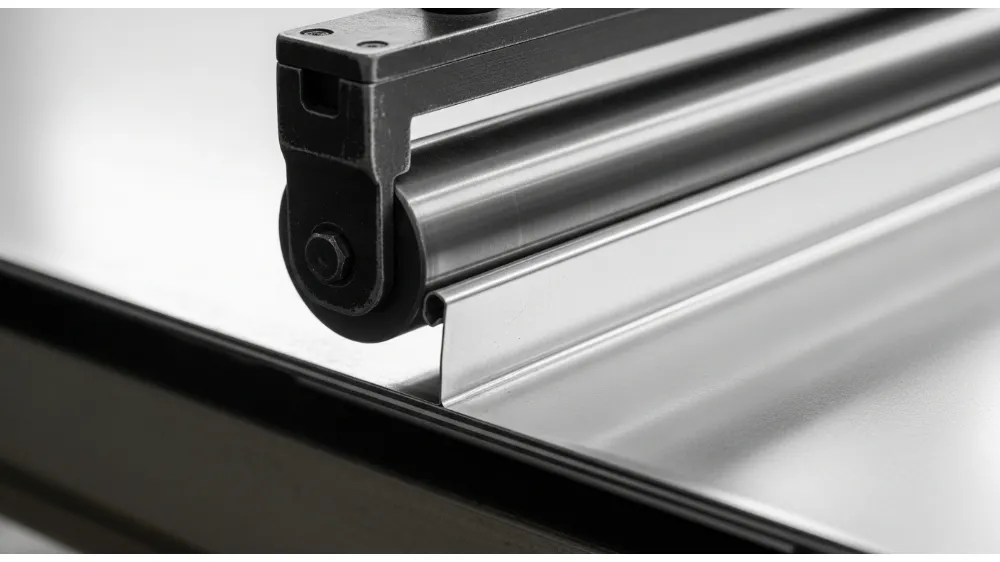
Roll Hemming: It is a procedure whereby the edge of the sheet metal is rolled and bent with the usage of rotary tools. Roll hemming is very accurate and suitable in curved panels or complicated forms.
Press Hemming: Hydraulic or mechanical presses are used in press hemming to press the sheet metal edge in one or more steps. It is an effective process when manufacturing flat or slightly curved products in large quantities.
Materials to be used in Hemming
Hemming can be used with most sheet metals such as:
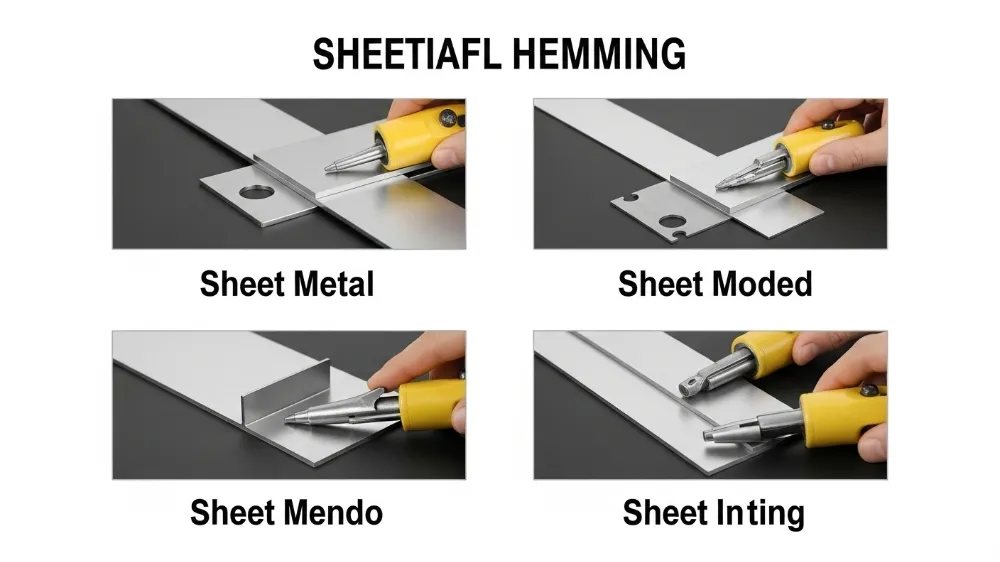
Steel: It is very strong and long-lasting and is commonly applied in the automotive and building industries.
Aluminum: Light and non-corrosive, can be used in aerospace and consumer electronics panels.
Stainless Steel: A material that is resistant to corrosion as well as strong and can be used in appliances, medical equipment and outside.
Copper and Brass: Copper and Brass are used as decorative or electrical elements in cases where they need to look appealing or conduct.
The thickness, ductility and yield strength are material characteristics that greatly impact on the quality of hemming and the choice of tools.
Hemming Tools and Equipment
Hemming of sheet metal requires a lot of proper tooling and machinery. The most used hemming tools are:
Hemming Presses: Hydraulic or mechanical presses that are able to achieve high precision in consistently folding edges.
Roll Hemming Machines: These machines have rotary tools that are used to shape complex edges slowly.
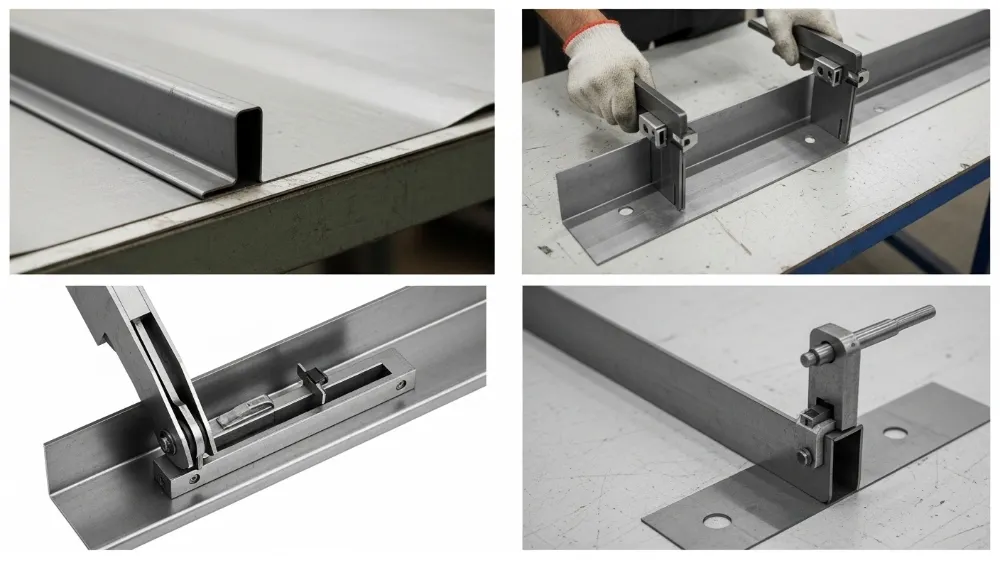
Folding Dies and Fixtures: These are made to hold the part and direct the sheet metal in the hemming process.
Robotic Hemming Systems: Hemming of large production volumes should be automated, which ensures uniformity and saves labor.
Maintenance and calibration of the tools involved in making accurate and defect-free hems is important.
Advantages of Sheet Metal Hemming
The benefits of manufacturing offered by Hemming are a number of:
Edge Strengthening: This is the folding of the metal edge to enhance rigidity and lessen the deformation.
Safety: Hemmed edges eradicate sharp edges thus preventing harm during handling and assembly.
Better Finish: Results in smooth and uniform edges that enhance the aesthetic of finished parts.
Enhanced Assembly: Hemming will be able to promote assemblies with other parts which promotes the integrity of the product.
Cost Efficiency: Eliminates the secondary finishing processes, which saves time and labour.
Applications of Hemming
The sheet metal hemming is used in several industries and they include:
Automotive: Hedding is commonly used in the reinforcing of edges and appearance in doors, hoods and roof panels.
Aerospace: Lightweight panels and components Aerospace hemmed edges are used to ensure structural integrity.
Appliances: Metal housings and covers are provided with hemming to make their look and safety better.
Electronics: Device enclosures and chassis are hemmed to have clean edges, as well as being rigid.
Hemming processes guarantee the parts to be of functional, safety, and appearance standards and aid the efficient assembly.
Challenges and Solutions
The issues that may be encountered in the sheet metal hemming are:
Cracking or Wrinkling: It happens when the metals are too thick or they lack ductility. Solution: Re-tool, minimize bend radius, or material of increased ductility.
Springback: The metal can tend to regain its original shape to some extent following the folding. Remedy: Over-bend a little or do a couple of passes of hemming.
Poor Hem Quality: Frequently because of tools which are not well kept or not adjusted. Remedy: Periodical tool calibration and correct positioning of the fixtures.
Surface Damage: It is possible when the high-pressure folding is done or when using metals that are coated. Solution: Provide protective film or pads in hemming.
Handling of these concerns guarantees uniformity of high-quality hems that would meet the production needs.
Hemming Process Optimization
The optimization of hemming process entails:
- Choosing the appropriate tooling of type and thickness of material.
- Regulation of the press speed and pressure to prevent flaws.
- Lubricating or covering areas to minimize friction.
- Using high volume, repeated production using automated or robots.
- Adjustment of sequence of bends in complex panels or curved panels.
Optimization of processes boosts throughput, enhances quality and makes tools last longer.
Influence on the Manufacturing Efficacy
The benefits of proper hemming are that it improves the efficiency of manufacturing by:
- Lessening the human aspect of finishing and secondary operation.
- Enabling accurate parts positioning in assemblies.
- Reducing the recycle of work due to defects in edges or shape distortion of parts.
- Endorsing the quality of the products throughout production runs.
Hermetic systems that can be automated also enhance efficiency, particularly when used in a manufacturing line of automotive or appliance.
Frequently Asked Questions (FAQ)
Q1: What do we primarily use sheet metal hemming to do?
A: Hemming strengthens edges, makes it look good and makes it safe by removing sharp edges of metal.
Q2: Does hemmentable material exist?
A: Typical materials are steel, aluminum, stainless steel, copper and brass.
Q3: What is the distinction between open and closed hems?
A: Open hems fold partially, and closed hems fold completely to give a smooth, enhanced edge.
Q4: Can hemming be automated?
A: Yes, robotic hemming equipment offers continuous, high speed hemming at large volume production.
Q5: What is the significance of maintaining tools during hemming?
A: Defects such as cracks, wrinkles, or bad hem quality can be avoided by proper maintenance.
Q6: What are the typical industries that employ hemming?
A: Automotive, aerospace, appliances, electronics, and general industrial manufacturing depend on hemming as their edge finishing.
Q7: What is the difference between roll hemming and press hemming?
A: Roll hemming is performed by folding the metal edge slowly with rotary tools whereas press hemming is performed with hydraulic or mechanical presses.
Conclusion
Sheet metal hemming is a method, which is quite widespread and required in modern manufacturing. Learning the rules of sheet metal edge joining, using the appropriate means, and saving time in the work with the tooling and operation, the manufacturers will be able to create safer, strong, and more attractive parts. With good implementation of hemming techniques, efficiency and waste are minimized and the production is of high quality that is witnessed in a myriad of industries.
