


Small-Batch Injection Molding Alternatives for Efficient Production
In the case of companies that have a low volume of plastic parts, the injection molding can not be necessarily cost-efficient. Standard injection molding can be unfeasible in cases of a prototype or low-volume project due to tooling costs, lead times and minimum order requirements. Knowing about small-batch molding alternatives helps manufacturers and designers to choose the method to decrease costs and reduce timeframes, preserving the quality of production.
The contemporary production offers numerous options of producing flexible methods of making small batches without the cost of large-scale tooling. The following options are useful in assisting businesses to test designs, parts, and deliver products on time at minimal overhead costs.
Why Not Injection Molding
Large scale production is better suited to injection molding and may present challenges when dealing with small production quantities. Its cost in molds is high, lead times are long and it is not very practical when it comes to low volume production (due to the inability to adjust to design changes). Utilizing different methods enables teams to produce workable components in a brief period, redesign, and limit the risk. The small-batch techniques are also especially useful in the prototyping stage where design changes are typical and the agility is of highest importance.
3D Printing as a Viable Option
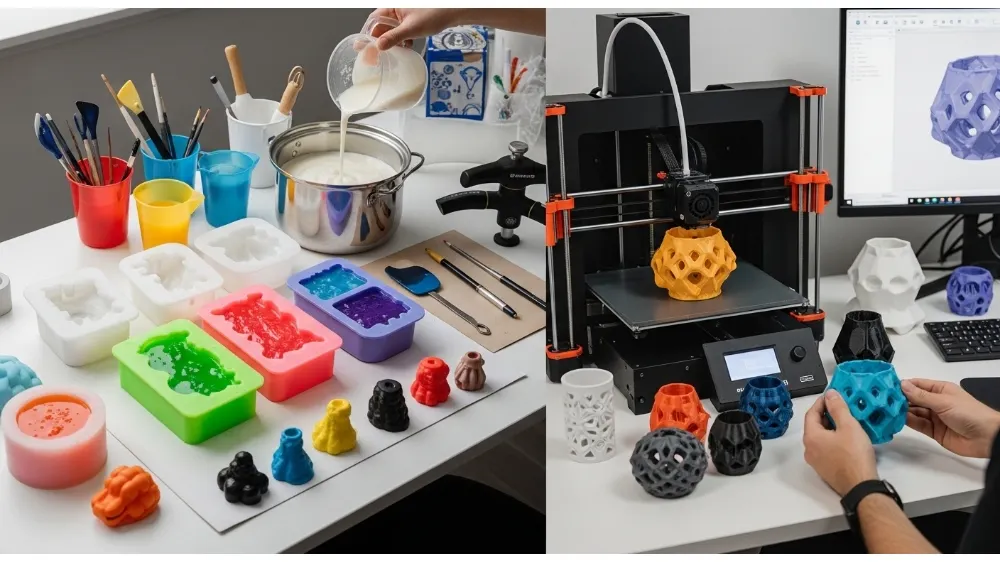
Also referred to as 3D printing, additive manufacturing is the creation of components through the use of digital models in layers. It produces low-volume parts very fast and with high precision using low-cost molds, and can be used with many different types of materials such as thermoplastics, photopolymers, and flexible resins, and is therefore applicable to functional prototypes and small series production.
It is inexpensive, fast to repeat, and to test; 3D printing permits more intricate geometries that may not be achievable in other manufacturing approaches such as injection molding.
CNC Machining for Small Runs
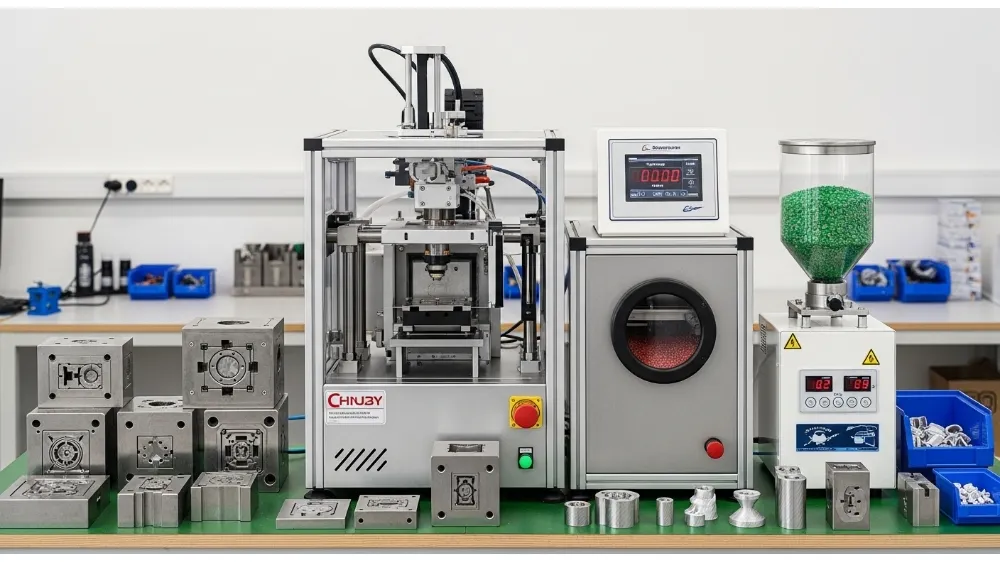
Another good substitute is Computer Numerical Control (CNC) machining. Cutting tools are used to eliminate material in solid blocks to create specific parts in CNC processes. This subtractive technique is concurrently very dimensional precise and repeatable with minor production quantities.
CNC machining is an effective tool in prototyping and in low volume manufacturing especially when components need close tolerances. Specialized tools can be used to machine metals and plastics to create durable and useful elements that may be used in testing or end-use applications.
Vacuum Casting Limited Quantities
Vacuum casting also known as silicone molding is a process where a master model is developed followed by the production of several copies by making a flexible form of the model. The process is best suited in the manufacture of small quantities of complicated components within a short period.
Vacuum casting can support a wide range of resins which are just like production plastics and hence it can be utilized as an alternative when you want to have a limited number of production runs. This is one of the techniques that designers will employ to prove form, fit, and functionality before investing in high-volume tooling.
Rapid Production Urethane Casting
In Urethane casting, silicone molds are made to copy master models using polyurethane materials. The process presents rapid manufacturing of functional components that possess mechanical characteristics identical to injection-molded plastics.
It is especially useful where quantities are small in batches, turnaround is short and inexpensive. Urethane castings are applied in industries where prototypes or end-use parts or specialized low-volume parts are needed.
Structural Parts Sheet Metal Forming
In some applications, plastic injection molding may be substituted with sheet metal forming particularly in structural components. Such methods as stamping, bending and laser cutting generate accurate metal parts without bespoke molds.
The sheet metal substitutes are suitable when the production volume is small and the product needs durability, strength and thermal resistance. They are flexible to generate variability without having to invest a lot in tooling.
Mixed Methods Hybrid Techniques
A combination of several fabrication techniques usually brings about the best outcomes when it comes to small batches. As an example, urethane casting master models can be printed in 3D, or components that can be added to additive-manufactured assemblies can be CNC machined.
The flexibility offered by the hybrid approaches is that materials, geometries and finishes can be customized by the designers. They are particularly handy in the event of functional testing and iterative development being involved in the small-run production process.
Many Benefits of Small-Batch Alternatives
The key advantages of these options are:
- Less initial expenses: Does not need costly molds to be used with conventional injection molding.
- Quickening the throughput: Shorten prototype development and delivery timelines.
- Design flexibility: Flexibility to easily change the design between iterations at low costs.
- Material option: Select between plastics, metals, and composite materials depending on performance requirements.
- Scalability: Small batch production can quickly go to large scale without significant investment.
Common Mistakes to Avoid
- Poor choice of method without considering material needs can end in poor performance.
- Ignoring part tolerances and functional specifications may interfere with usability.
- Neglecting post-processing or finishing processes can extend timelines unexpectedly.
- Overlooking hybrid solutions may limit cost-effectiveness and flexibility.
Industry Applications
Small-batch molding alternatives are used in:
- Consumer electronics: Prototypes and limited edition devices.
- Medical equipment: Small-scale manufacturing to test or make specialized parts.
- Automotive components: Custom or replacement components without full-sized tooling.
- Industrial machinery: Machine prototypes and spare parts.
These options enable companies to experiment, refine, and deliver parts efficiently without large-scale production investment.
Frequently Asked Questions (FAQ)
Q1: What are small-batch molding alternatives?
A: 3D printing, CNC machining, vacuum casting, and urethane casting are techniques aimed at low-volume production.
Q2: When should I avoid traditional injection molding?
A: For low-volume production, prototypes, or products that require frequent design changes.
Q3: Can small-batch alternatives match injection-molded quality?
A: Yes, processes like urethane casting and vacuum casting can produce functional parts with similar mechanical characteristics.
Q4: Are these alternatives cost-effective?
A: Yes, they reduce tooling costs, speed up production, and are suitable for small runs.
Q5: Can 3D printing produce end-use parts?
A: High-performance 3D printing materials can be used to produce durable and functional end-use components.
Q6: How to choose the right small-batch approach?
A: Consider material, part complexity, tolerances, surface finish, and production volume when selecting a method.
Conclusion
Using appropriate small-batch molding alternatives allows manufacturers to produce high-quality parts at a fraction of the cost of full-sized injection molding. Methods such as 3D printing, CNC machining, vacuum casting, and urethane casting provide rapid, flexible, and cost-efficient solutions. Understanding each method’s strengths, limitations, and applications helps engineers and designers optimize small-run processes, validate designs quickly, and deliver functional components efficiently.
