


Thermoset vs Thermoplastic: Comprehensive Guide for Manufacturing and Design
Plastic materials are important in production today as they offer durable, lightweight and multipurpose products in innumerable ways. Thermoset and thermoplastic can be regarded as one of the most popular types of plastics with their unique chemical characteristics and performance aspects. The knowledge of the differences between these two categories is needed to ensure that engineers, designers and manufacturers choose the appropriate material to use in certain applications to enhance product performance and maximize their production efficiency.
This guide examines the structural, thermal and mechanical, difference between thermoset and thermoplastic materials, their common applications, and how they are manufactured and some of the main considerations to apply when deciding on the type of plastic to use in a project.
What Are Thermoset Plastics?
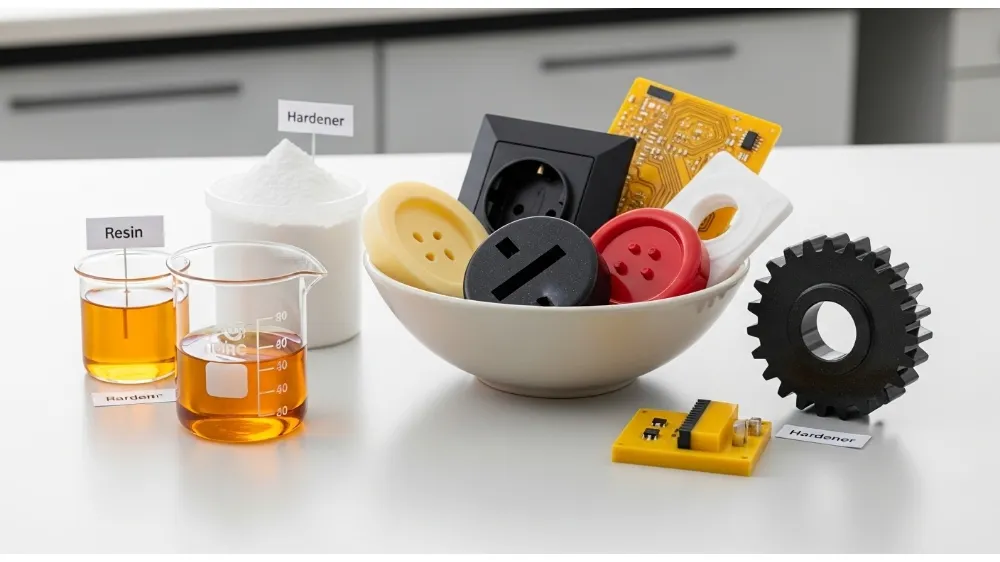
Thermoset plastics Thermoset plastics or thermosetting polymers are plastics that are manufactured through a chemical process throughout the curing process, creating a rigid and permanent structure. These plastics are not removable after being put in place. This characteristic provides thermosets with outstanding thermal stability and mechanical integrity, and thus thermosets can be used in high temperature or high stress environments. Epoxy, phenolic and melamine resin are examples of thermoset plastics.
Thermoset Plastics Properties
Thermoset plastics can be described as hard, dimensely stable, and heat and chemical resistant. They tend to possess high glass transition temperature and that is, they retain their structure at high temperatures. Thermosets also reunite superior electrical insulation, and hence, they are optimal in elements in electronics and automobile applications.
What Are Thermoplastics?
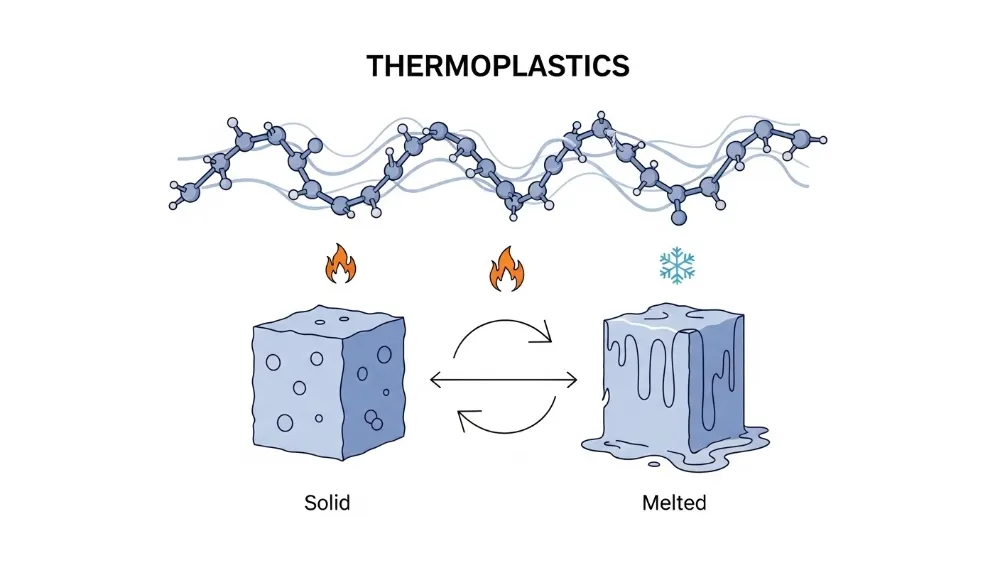
The thermoplastics are polymers and when heated they become soft and can be molded again and again without changing chemically. This characteristic makes them extremely useful and reusable. Polymers such as polyethylene (PE), polypropylene (PP), polystyrene (PS) and polycarbonate (PC) are typical thermoplastics. They are commonly applied in consumer products, motor vehicle components, packs, and in medical equipment.
Thermoplastics Properties
Thermoplastics are flexible, impact resistant and light in weight. They are soft materials that can easily be moulded to complex shapes by injection molding, extrusion and blow molding. Thermoplastics have good chemical resistant properties, are electrical insulators and can be recycled and remodeled due to the property of being able to be reheated.
Major Differences between Thermoset and Thermoplastic
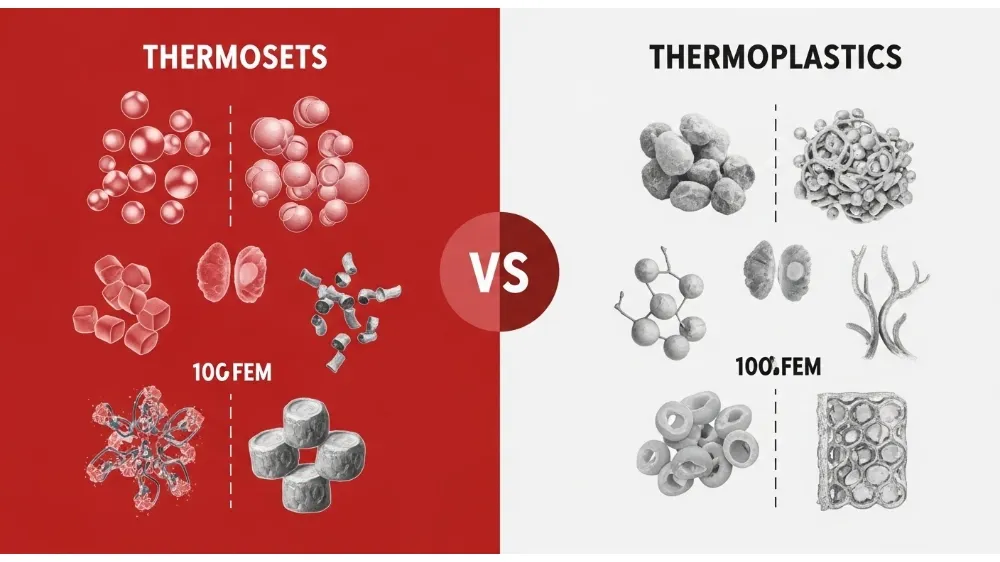
Thermoset and thermoplastic plastics are differentiated based on the molecular structure and thermal behavior. In curing, thermosets develop cross-linked polymer and this creates a rigid and heat-resistant material. Thermoplastics, on the other hand, have a linear or branched polymer chain that is capable of softening during heating and hardening during cooling so that it can be repeatedly reshaped.
Other notable differences are:
Thermal Resistance: The thermosets are usually able to endure higher temperatures without deformation.
Recyclability: Thermoplastics can be remelted and reused and thermosets cannot.
Mechanical Properties: Thermosets tend to be stronger and stiffer, thermoplastics tend to be softer and more flexible and impact resistant.
Processing: Thermosets are to be subjected to curing and molding whereas thermoplastics are to be subjected to melting and forming.
Applications in Thermoset vs Thermoplastic
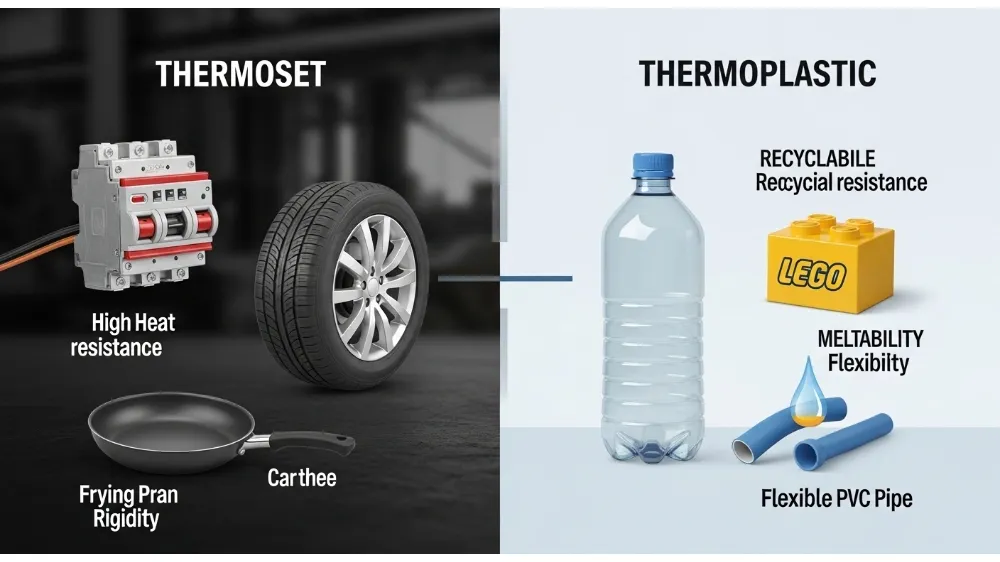
Thermosets have been extensively applied in the industry where high strength, durability and heat resistance are needed. The common applications are electronic circuit boards, auto parts, glues, finishes and structural components in aerospace.
Thermoplastics are suitable in products that need flexibility, light weight and easy manufacturing. Some of the examples are beverage containers, plastic housings, piping systems, automotive interiors, and consumer goods.
Manufacturing Processes
Thermosets can be molded either in liquids or in powder and allowed to cure through heat or other chemicals. The most common ones are compression, transfer, and reaction injection molding. The outcomes of these processes are powerful and robust components with accurate dimensions.
The thermoplastics are processed through such methods as injection molding, extrusion, blow moulding and thermoforming. They may be melted and re-formed many times, and they may be produced in large quantities and tailored to customers.
Merits and Demerits
Thermosets Advantages:
- High mechanical strength
- Good thermal and chemical strength
- Stress stability on a dimensional basis
Thermosets Disadvantages:
- Irreducible, unreformable
- Prolonged processing time given curing
- Not as well suited to a large-scale recyclable manufacturing
Thermoplastics Advantages:
- Recyclable and reusable
- Plastic and shockproof
- Appropriate when large volumes need to be produced
Thermoplastics Disadvantages:
- Lower heat resistance
- Deforms in high temperatures
- May need to be reinforced for structural use
Considerations in Material Selection
The choice of thermoset or thermoplastic is determined by:
Operating Temperature: Thermosets work well within high temperatures.
Mechanical Stress: Thermosets are more applicable in terms of structural or high-load applications.
Volume of Production: Thermoplastics provide high level of production with greater speed, and can be scaled to mass production.
End-of-Life: Thermoplastics are easily recycled, thermosets normally not.
Surface Finish Requirements: Thermoplastics can be finished using smoother finishes; thermosets can be finished with textured or functional finishes.
Sustainability and Environmental Impact
The capability of thermoplastics to be melted and reshaped gives it an environmental benefit of minimizing waste of materials. Although thermosets are long-lasting and durable, they are difficult to recycle because of cross-linking. The environmental consideration of materials that are used in modern manufacturing is a growing trend.
Mistakes in Material Selection
- Choosing thermosets for products that require recycling or reshaping
- Using thermoplastics in reinforcement-free high-temperature conditions
- Ignoring mechanical load and impact requirements
- Overlooking processing time and tooling costs
Frequently Asked Questions (FAQ)
Q1: How does thermoset and thermoplastic differ?
During the curing process, thermosets build a fixed hard structure whereas thermoplastics can be melted down and molded again several times.
Q2: Can thermosets be recycled?
No, thermosets can neither be melted nor re-used, but they are usually more durable, which adds life to the products.
Q3: Who is stronger: thermoset or thermoplastic?
Thermosets are typically stronger and less permeable to heat but thermoplastics are more flexible.
Q4: What is the best use of thermoplastics?
Consumer goods, packaging, auto interiors, pipes, and in any area which needs flexibility and lightness.
Q5: How are thermosets processed?
Thermosets are shaped and hardened either by heat or pressure or by chemical treatment in order to attain their final hardened shape.
Q6: Are thermoplastics heat resistant?
Certain thermoplastics may be, particularly engineering grades, though by and large they are not as heat-resistant as thermosets.
Q7: Why use thermosets in electronics?
Thermosets provide dimensional stability, electrical insulation, and heat resistance, ideal for circuit boards and components.
Conclusion
The choice between thermoset vs thermoplastic is key to successful engineering, design, and manufacturing. Thermosets offer strength, thermal stability, and chemical resistance, making them ideal for challenging structural and high-temperature applications. Thermoplastics provide flexibility, recyclability, and suitability for high-volume production. Knowledge of material properties, applications, and processing methods ensures optimal product performance and cost-effective manufacturing.
