


Understanding Threaded Holes: Complete Guide for Manufacturing & Engineering
Threaded holes are critical components of a mechanical design and production. They enable the components to be firmly fixed in place, which offers structural stability and allows accurate placement. The knowledge of the various forms of threaded holes, their uses and production techniques are important to the engineers, machinists and designers. The correct design of threaded holes enhances the quality of assembly, life of the tool and operational safety in the industrial products.
This manual covers all the simple threaded holes to sophisticated procedures, design, installation process, and maintenance. It has also the FAQ section to answer the most frequently asked questions in machining and fabrication.
What Are Threaded Holes?
A threaded hole is an existing opening in a part, which has an internal screw thread upon which a bolt, screw, or stud can be clamped. They find a great deal of use in machinery, automobile, aerospace, and construction. Tapping can be done by hand or machine with automated machines like CNC machines. Their reliability depends on their strength, size, and precision, which define the reliability of assemblies as a whole.
Mechanical connections incorporate threaded holes in both of the following meanings: (1) to achieve reproducible fastening and disassembly capabilities, and (2) to ensure that components do not get damaged. They are also used to distribute and align loads to assemblies that are complicated.
Threaded holes are often found on the parts of the areta.
Types of Threaded Holes
The threaded holes differ in terms of design, usage and construction. The most widely-used ones are:
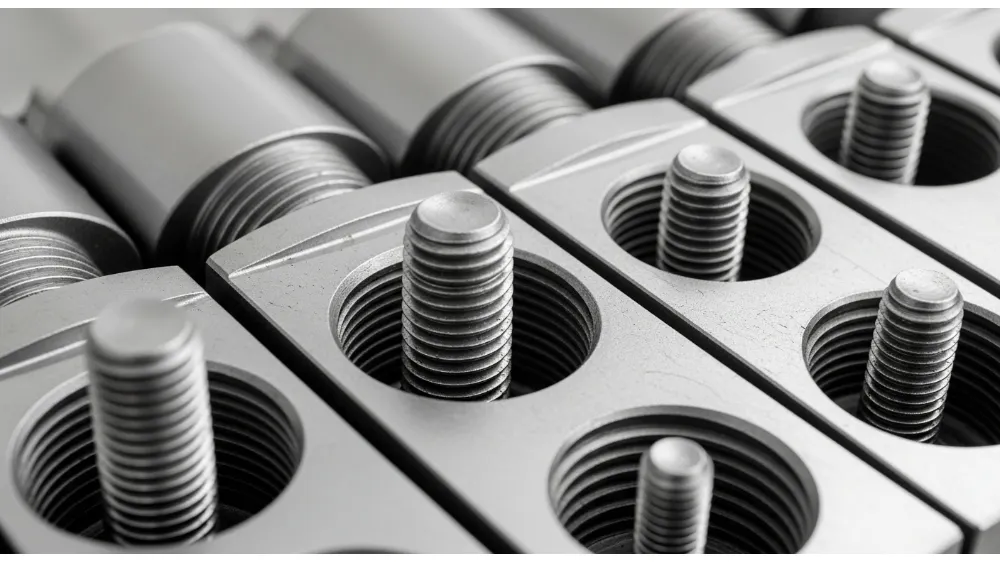
Tapped Holes
Standard threaded holes that are made by cutting the threads at the material. They are commonly applied in metal and plastic parts and offer a permanent screw engagement solution.
Threaded Inserts
Holes are equipped with metal or plastic inserts to strengthen the thread particularly in soft materials like aluminum or composite plastics. Inserts enhance wear strength and strengthen assembly.
Blind Holes
Holes that are not fully penetrating through the material, may be used where full penetration is impermissible or structural integrity has to be ensured.
Through Holes
Holes that expose all the component, fit bolts, studs, alignment pins. These holes will enable insertion of the full length fasteners so that the maximum holding capacity is achieved.
Helicoil and Screw Thread Inserts
Inserts that are specialized so as to repair damaged threads or even enhance a stronger thread in high stress parts. They are usually applied in aerospace and auto parts.
Thread Standards and Specifications
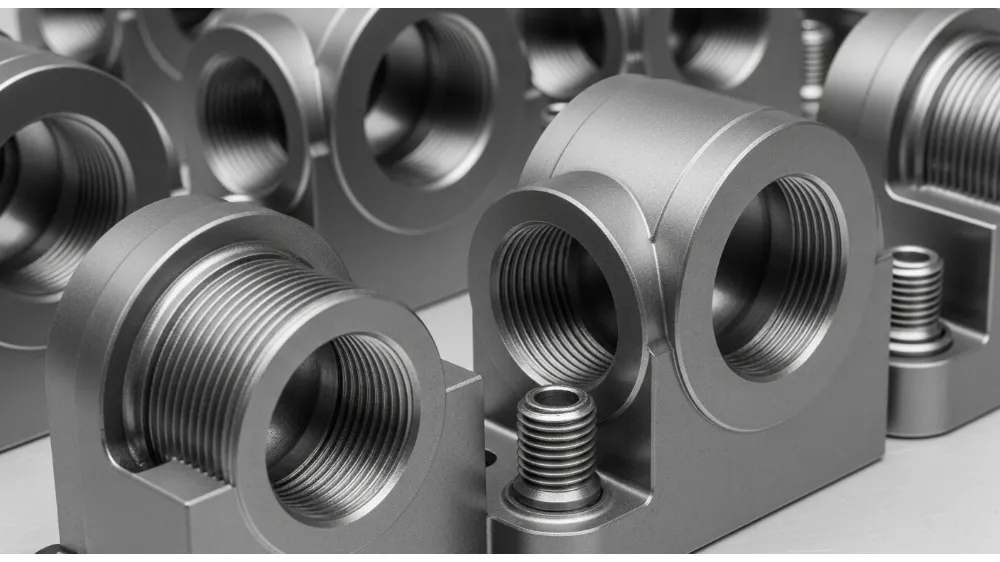
The holes should be threaded according to standard requirements in order to be compatible with the fasteners. These are common standards such as ISO metric threads, UNC/UNF and the British Standard Whitworth (BSW). The correct choice of thread pitch, diameter, and class will provide a good match with bolts and will not loosen under the load.
Also, threaded holes are machined with precision in view of the tolerance, fit, and depth, which directly influence the mechanical performance. Lack of fit or wrong sizes may lead to stripped threads, fastener failure, or assembly problems.
Threaded Hole Materials
Threaded holes can be formed in different types of materials, and each of them needs to be considered differently:
Aluminum: Lightweight and corrosion-resistant but softer materials can require reinforced inserts.
Steel: Hard and strong, mostly used in structural and high load applications.
Stainless Steel: Offers high strength and corrosion resistance, suitable for marine and chemical conditions.
Plastics: Often reinforced by inserts to support repeated fastening cycles.
Composite Materials: Require special inserts or threading to prevent cracking or delamination.
The choice of material determines the method of making threads, compatibility of fasteners, and the life of the assembly.
Threaded Hole Manufacturing Techniques
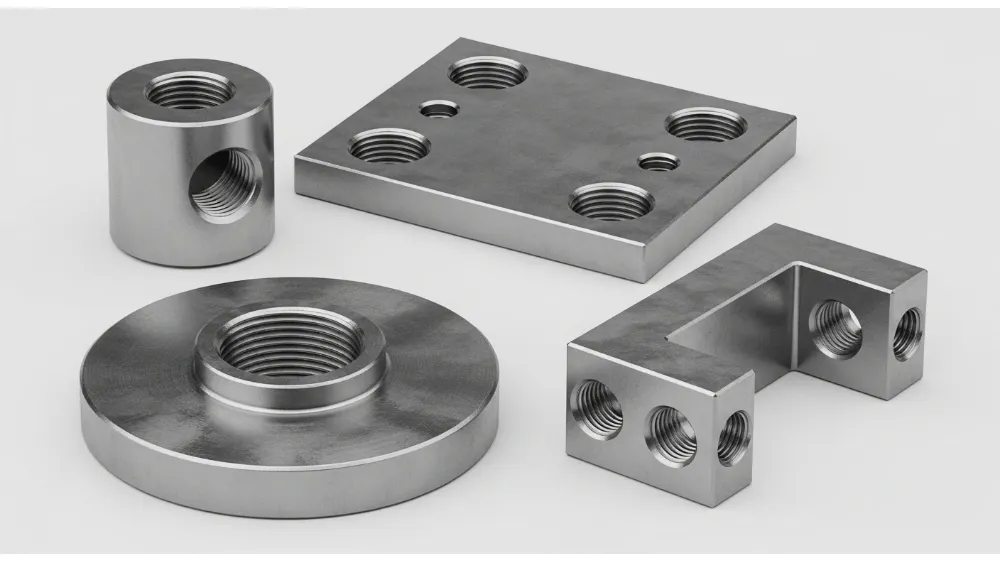
The creation of threaded holes can be done in many ways based on the needs in material, volume and precision:
Tapping
This is the most used technique, in which a tap cuts threads into an already-drilled hole. Tapping may be performed by hand, powered tools or CNC machines to provide extreme accuracy.
Thread Milling
Involves CNC cutting with a rotary cutter. Thread milling is best in large diameter, hard material, or when there are multiple threads with tight tolerances.
Forming (Rolled Threads)
A thread is formed by displacing material rather than cutting, making the thread stronger and more resistant to fatigue. This technique is generally applied in high-strength steel parts.
Installation of Inserts
Inserts are fitted in pre-drilled holes. This technique is commonly applied to soft metals or plastics to avoid stripping as assemblies are reused.
Threaded Hole Design Considerations
Length of Thread Engagement
The length of thread engagement between the fastener and hole determines load distribution and joint strength. Longer engagement increases joint reliability.
Hole Diameter and Depth
Proper pilot hole sizing ensures clean threads and prevents tapping defects.
Fastener Selection
Bolt or screw size, head type, and material must match the threaded hole for optimal performance.
Load Type and Environment
Consider tensile, shear, cyclic loads, temperature, and corrosion when designing threaded holes.
Clearance and Countersinking
Required for flush mounting of fasteners or washers. Proper clearances prevent interference and enhance assembly efficiency.
Control and Quality Inspection
Threaded holes should be carefully checked to ensure accuracy and reliability. Common inspections include:
- Thread Gauge Checking: Verifying thread size and tolerance with plug or ring gauges.
- Visual Inspection: Checking for burrs, chips, or surface defects.
- Depth Measurement: Confirming proper thread engagement.
- Torque Testing: Testing fastener performance under load.
Adequate inspection ensures threaded holes meet design requirements and avoid premature failure.
Applications of Threaded Holes
Automotive Industry
Engine components, chassis, and suspension systems rely on precise threaded holes for safety and performance.
Aerospace
Aircraft assemblies require threaded holes that can withstand high loads.
Machinery and Equipment
Industrial machinery and tools utilize threaded holes for assembly and maintenance.
Electronics Enclosures
Threaded holes secure panels and circuit boards in consumer and industrial electronics.
Construction
Structural assemblies, modular systems, and steel frameworks frequently incorporate threaded holes for assembly and disassembly.
Common Errors in Threaded Hole Production
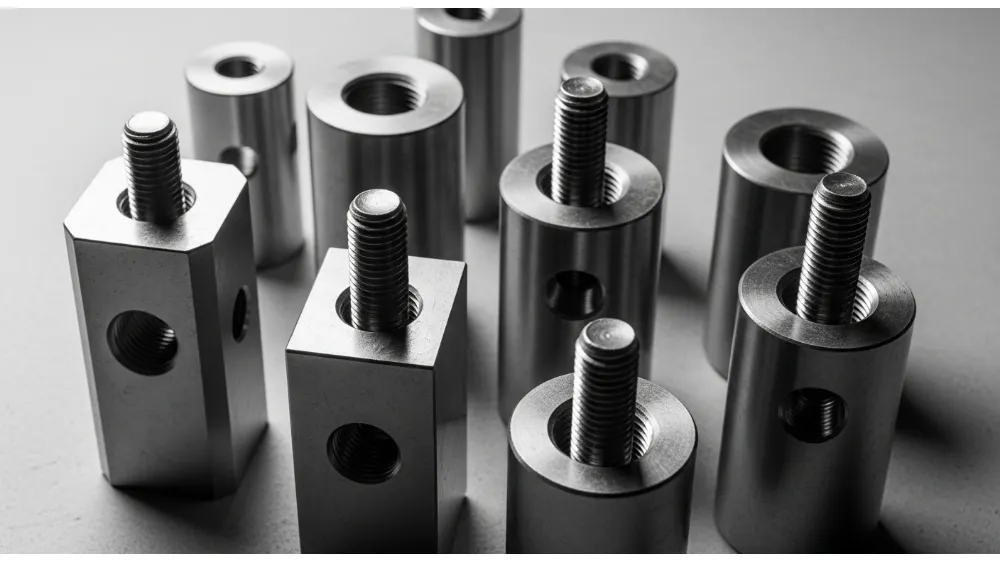
- Wrong pilot hole diameter reduces thread quality
- Misaligned holes causing binding or stripped threads
- Incorrect insert selection leading to premature wear
- Insufficient thread engagement decreasing joint strength
- Lack of corrosion protection or surface finish in harsh environments
Guidelines for Optimizing Threaded Holes
- Follow manufacturer recommendations on tap speeds, feeds, and lubrication
- Consider heat treatment or material hardness before threading
- Apply proper torque during assembly to avoid overloading threads
- Periodically inspect and repair threaded parts for long-term reliability
FAQ
Q1: What is a threaded hole?
A: A hole in a part to hold bolts, screws, or studs securely.
Q2: What are the main types of threaded holes?
A: Tapped holes, threaded inserts, blind holes, through holes, and helicoil inserts.
Q3: How do I choose the right threaded hole?
A: Consider material, load requirements, fastener size, and assembly frequency.
Q4: Can threaded holes be made in soft metals?
A: Yes, typically reinforced with inserts to prevent stripping.
Q5: What is the difference between a blind and through hole?
A: Blind holes do not pass through the material; through holes extend completely.
Q6: How are threaded holes inspected?
A: Using depth measurements, torque tests, gauges, and visual inspection for defects.
Q7: Which industries rely heavily on threaded holes?
A: Construction, machinery, electronics, aerospace, and automotive sectors.
Conclusion
Mechanical assemblies depend on threaded holes for secure fastening, accurate positioning, and reliable load distribution. Familiarity with the types, materials, manufacturing methods, and best practices ensures durable, high-quality components. Proper selection and inspection of threaded holes enhance product performance, maintenance, and overall manufacturing efficiency.
