


Titanium vs Aluminum: In‑Depth Comparison for Manufacturing
In engineering and industrial design, selecting the right metal can make or break a project. Two lightweight structural metals frequently considered by engineers and manufacturers are titanium and aluminum. Both offer distinct performance advantages, but they serve very different purposes depending on the demands of strength, corrosion resistance, weight, and cost.
This article presents a comprehensive titanium aluminum comparison, exploring material characteristics, mechanical properties, processing considerations, and real‑world use cases. Whether you’re designing aerospace components, medical devices, automotive parts, or consumer products, understanding these metals helps you make informed decisions that boost performance and reduce costs.
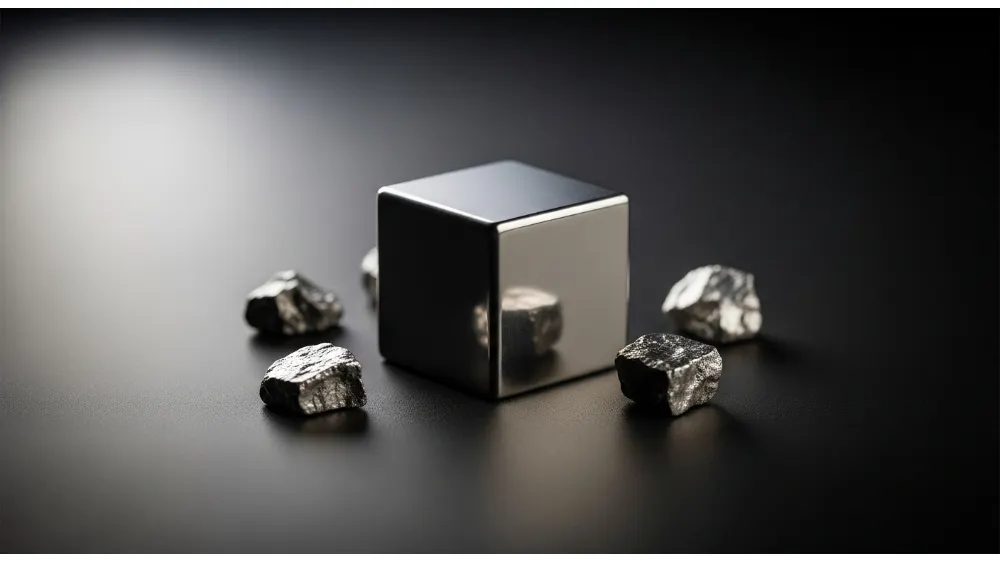
Overview of Titanium
Titanium is a transition metal prized for its exceptional strength‑to‑weight ratio and corrosion resistance. It is widely used in applications where performance is critical and material failure is not acceptable. Titanium naturally forms a stable oxide layer on its surface, which protects against corrosion in many aggressive environments—including seawater and chemical exposures.
Titanium is available in several grades that balance strength, ductility, and manufacturability. Commercially pure grades are more formable but have lower strength, while alloyed variants (such as Ti‑6Al‑4V) offer significantly higher tensile strength while remaining lightweight.
Overview of Aluminum
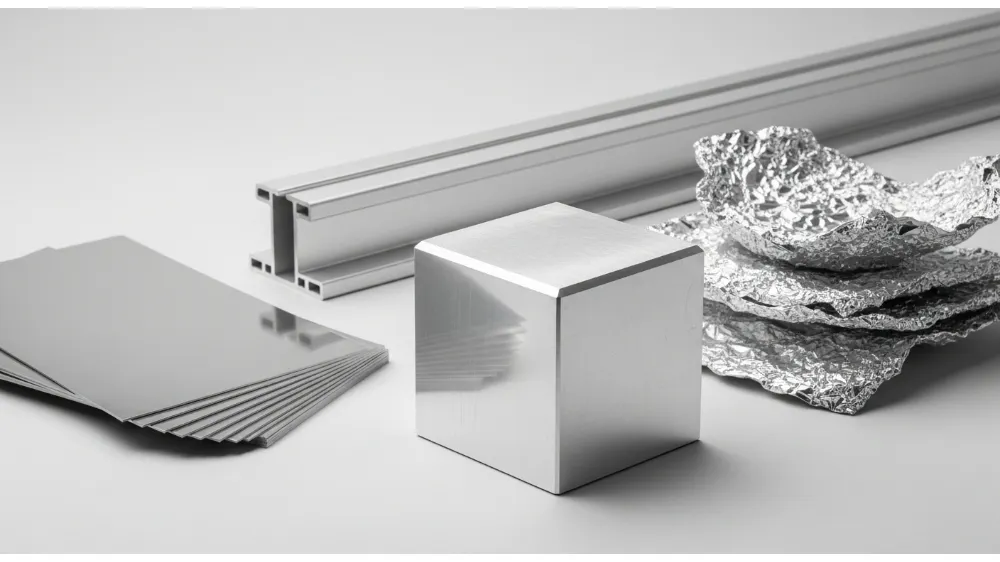
Aluminum is one of the most commonly used metals in manufacturing due to its lightweight nature, good conductivity, and ease of processing. Unlike titanium, aluminum is naturally abundant, inexpensive, and suitable for mass production. Aluminum forms a protective oxide layer that offers decent corrosion resistance in many environments.
Aluminum alloys vary dramatically in properties, with common series like 6xxx offering excellent formability and 7xxx providing higher strength. Aluminum’s wide range of alloy options makes it extremely versatile across industries such as automotive, construction, packaging, and electronics.
Titanium Aluminum Comparison: Chemical Composition
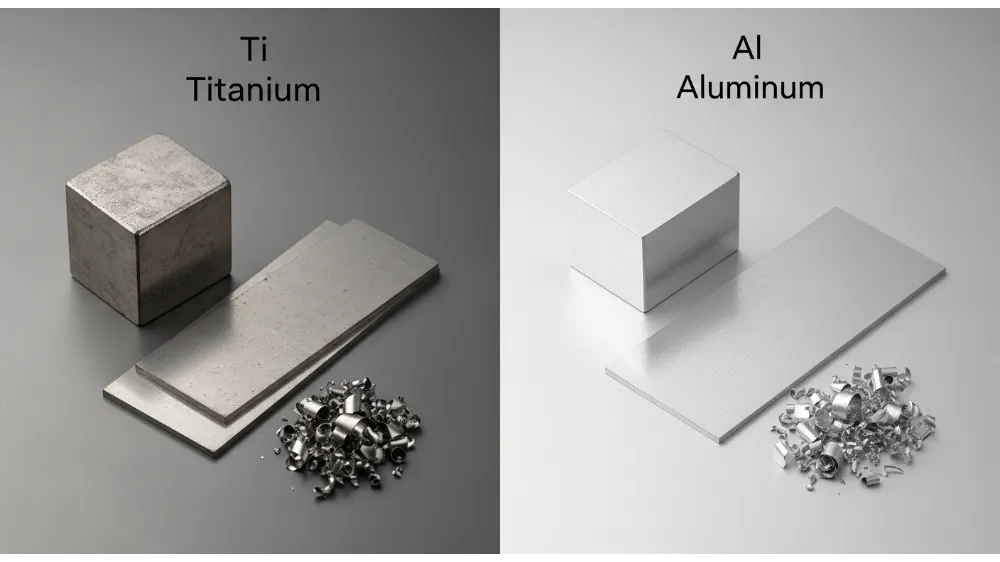
The distinct differences between titanium and aluminum start at the elemental level:
- Titanium: Often alloyed with elements like aluminum and vanadium to improve strength and heat resistance.
- Aluminum: Alloyed with magnesium, silicon, copper, or zinc to tailor properties for specific applications.
Because of these compositional differences, titanium and aluminum respond differently to heat treatment, machining, and joining processes.
Mechanical Properties
Strength and Ductility
Titanium generally exhibits higher tensile strength and excellent fatigue resistance compared to aluminum. This means titanium can withstand higher loads and repeated stress cycles without failure. For example, titanium alloys commonly used in aerospace have tensile strengths that surpass many aluminum alloys by a significant margin.
Aluminum, while not as strong as titanium in its standard forms, still delivers impressive strength relative to its weight. High‑strength aluminum alloys can approach the lower end of titanium’s performance range but at a much lower cost.
Weight and Density
One of the biggest advantages of both materials is their low density compared to steel. Titanium’s density (~4.51 g/cm³) is approximately 60% higher than aluminum (~2.70 g/cm³), but titanium’s superior strength often compensates for its higher weight by allowing designers to reduce material volume.
For applications where minimizing weight is paramount—such as in aerospace or portable equipment—aluminum’s lower density can be beneficial if the strength requirements are not extreme.
Corrosion Resistance
Both titanium and aluminum form native oxide layers that protect against corrosion. However, titanium’s corrosion resistance is markedly superior in aggressive environments, including chloride‑rich conditions like seawater. This makes titanium attractive for marine hardware, desalination plants, and chemical processing equipment.
Aluminum offers good corrosion resistance in atmospheric and mildly corrosive environments. Its performance increases further when anodized, a treatment that thickens the surface oxide layer.
Thermal and Electrical Properties
Thermal Conductivity
Aluminum has significantly higher thermal conductivity than titanium, making it ideal for heat‑dissipating components such as heat exchangers, radiators, and cooling fins.
Titanium’s lower thermal conductivity limits its use in thermal management applications but is less of a concern in structural contexts where heat transfer is not critical.
Electrical Conductivity
Aluminum also outperforms titanium in electrical conductivity, which is why it’s frequently used in power lines and electrical housings. Titanium, with relatively poor electrical conductivity, is rarely chosen for electrical applications unless corrosion resistance or strength outweigh conductivity needs.
Manufacturability: Machining and Forming
Machining
Titanium is notoriously challenging to machine due to its chemical reactivity and low thermal conductivity. These factors cause rapid tool wear and increased heat at the cutting interface. Machining titanium often requires specialized tooling, slower cutting speeds, and robust coolant systems.
Aluminum, in contrast, is highly machinable with minimal tool wear. It responds well to high speeds and feeds, making it a cost‑effective option for CNC machining and high‑volume production.
Forming and Joining
Aluminum’s ductility makes it relatively easy to form using bending, rolling, and stamping techniques. Welding aluminum is also well‑established, though proper control of heat input is required to avoid distortion.
Titanium can be forged and formed, but its high strength and reactivity (especially at elevated temperatures) require controlled atmospheres and precise process control. Welding titanium demands inert gas shielding to prevent contamination, which adds to production complexity and cost.
Cost Considerations
One of the most noticeable differences in a titanium aluminum comparison is cost. Titanium is significantly more expensive to produce and process than aluminum, largely due to raw material availability and the energy intensity of extraction and refining. Additionally, specialized machining and fabrication techniques further increase the cost of titanium parts.
Aluminum’s relative abundance and ease of processing make it far more economical for a wide range of applications, especially where premium performance is not required.
Applications: Where Each Material Excels
Titanium Applications
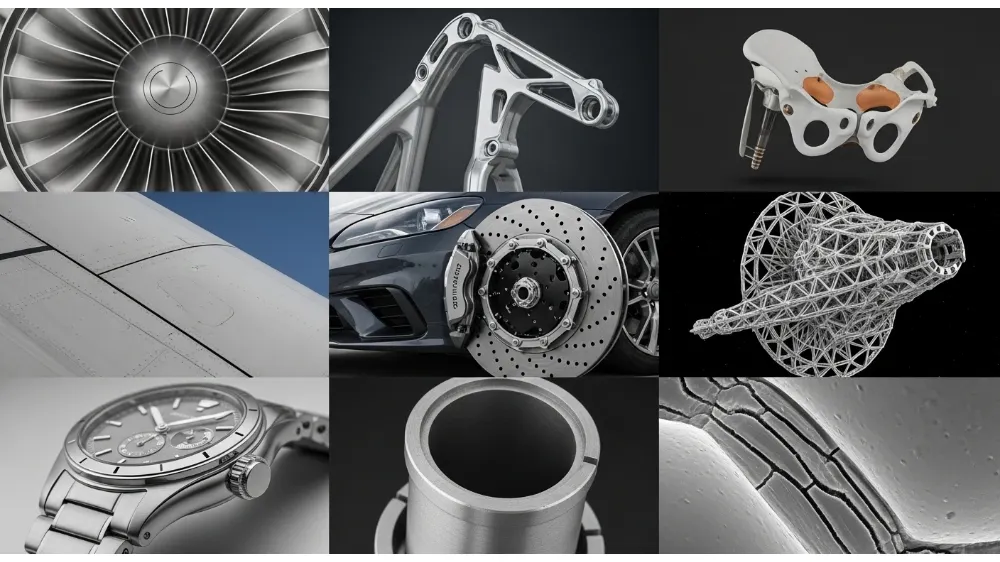
- Aerospace structural components: High strength and fatigue resistance
- Medical implants and devices: Biocompatibility and corrosion resistance
- Marine hardware: Resistance to seawater corrosion
- High‑performance automotive parts: Strength‑to‑weight optimization
Aluminum Applications
- Automotive body panels and frames: Lightweight and cost‑efficient
- Consumer electronics cases: Good strength and aesthetic finish
- Heat exchangers and HVAC components: Excellent thermal conductivity
- Construction and architectural elements: Durable, corrosion‑resistant surfaces
Environmental and Sustainability Considerations
From a sustainability perspective, aluminum is more readily recycled than titanium, and the recycling process consumes less energy. Titanium recycling is possible but more specialized and less widespread, which impacts lifecycle costs and environmental footprints.
Choosing materials with recyclability in mind can improve the sustainability profile of projects, especially in volume‑driven industries.
Design Considerations for Engineers
When selecting between titanium and aluminum, consider:
- Load conditions: Static vs dynamic loads
- Environmental factors: Corrosion, temperature, salt exposure
- Production volume and cost constraints
- Surface finish and aesthetic requirements
In many cases, hybrid solutions are used—employing aluminum where weight savings and cost are critical, and titanium where structural performance and corrosion resistance are paramount.
Future Trends in Metal Materials
With advancements in additive manufacturing and alloy development, both titanium and aluminum continue to see expanded roles. 3D printing technologies are enabling complex geometries and lightweight lattice structures that optimize strength and reduce weight beyond what traditional fabrication could achieve.
Research into new alloy systems also promises improved performance, lower costs, and enhanced recyclability for both metals.
Frequently Asked Questions (FAQ)
Q1: Which is stronger, titanium or aluminum?
Titanium generally has higher tensile strength and fatigue resistance compared to aluminum, making it suitable for high‑performance structural applications.
Q2: Is titanium lighter than aluminum?
No. Aluminum is lighter due to its lower density. However, titanium’s superior strength can allow for reduced material thickness in some designs.
Q3: Are both metals corrosion resistant?
Yes, but titanium offers superior corrosion resistance in aggressive environments like seawater or chemical exposure.
Q4: Which metal is easier to machine?
Aluminum is significantly easier and more cost‑efficient to machine than titanium.
Q5: Which is more expensive?
Titanium is more costly due to raw material scarcity, processing difficulty, and specialized machining requirements.
Q6: Can both metals be recycled?
Yes, but aluminum recycling is more common and energy‑efficient compared to titanium recycling.
Q7: When should I choose aluminum over titanium?
Choose aluminum when cost, low weight, and good machinability are priorities, especially for consumer products and high‑volume manufacturing.
Conclusion
A well‑informed titanium aluminum comparison reveals that while both metals offer distinct advantages, their optimal use depends on specific project requirements. Aluminum excels in applications where weight, conductivity, and cost are primary considerations. Titanium stands out where strength, corrosion resistance, and performance under demanding conditions are critical.
By understanding the strengths and limitations of each metal, manufacturers and engineers can design stronger, lighter, and more efficient products across industries ranging from aerospace to consumer goods.
