


Benefits of Turnkey Post-Processing Solutions for Manufacturers
Turnkey post-processing solutions offer a comprehensive, end-to-end service where a single provider manages every step of finishing after initial production. This model streamlines the workflow by integrating cleaning, machining, surface treatments, and assembly into one unified process. By consolidating these services, manufacturers eliminate the logistical headaches of managing multiple vendors and ensure consistent quality across every part.
In a global market, turnkey post-processing solutions have become a strategic advantage for companies aiming to reduce lead times and production costs. Instead of shipping parts between different specialized facilities, all secondary operations occur under one roof. This approach significantly reduces the risk of shipping damage and communication errors, allowing engineers to focus on design while the manufacturing partner handles the complex finalization of the product.
What is a Turnkey Post-Processing Solution?
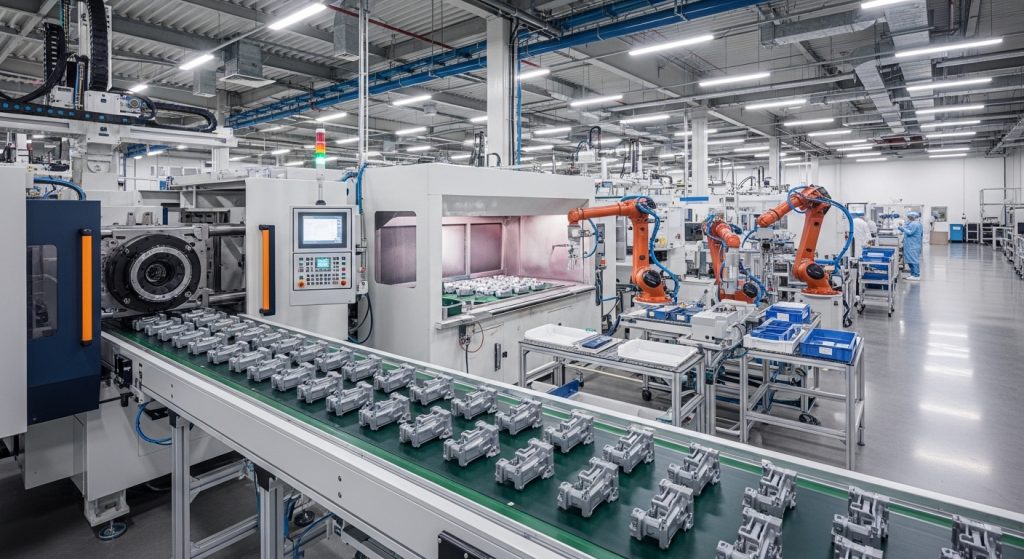
A turnkey post-processing solution is a "one-stop-shop" service where a manufacturing partner takes full responsibility for a part's secondary operations. This includes everything from removing support structures and deburring to advanced surface finishes like painting or anodizing. The provider delivers a part that is 100% ready for the end-user or final assembly line without requiring further intervention from the client.
I have spent years consulting for an injection mould manufacturer in California, and the most successful projects always utilize turnkey services. When a client tries to manage four different vendors for one part, the "blame game" starts the moment a defect appears. With a turnkey partner, there is total accountability. Whether you are dealing with complex overmolded TPE to ABS components or simple metal brackets, having one point of contact simplifies everything.
Key elements of a turnkey solution include:
- Integrated Engineering: Finishing requirements are considered during the initial mold design phase.
- Logistical Consolidation: Drastic reduction in shipping costs and transit times.
- Quality Consistency: Uniform standards applied across machining, coating, and assembly.
- Faster Time-to-Market: Overlapping schedules and eliminated transit gaps speed up delivery.
How do Turnkey Solutions Reduce Manufacturing Lead Times?
Turnkey post-processing solutions reduce lead times by eliminating the "wait states" that occur when parts sit on loading docks between different vendors. In a traditional model, a part might be molded in one city, machined in another, and painted in a third. A turnkey approach keeps the part in a continuous workflow, often shaving weeks off a standard production schedule.
By choosing a China overmolding factory that offers turnkey services, you bypass the friction of international shipping between secondary providers. Every day a part spends in a truck or a shipping container is a day it isn't generating revenue. Turnkey providers optimize their internal floor plans to move parts directly from the molding machine to the finishing station in minutes, not days.
| Phase | Traditional Multi-Vendor Time | Turnkey Solution Time | Time Saved |
| Primary Production | 10 Days | 10 Days | 0 Days |
| Transit to Finisher | 3 Days | 0 Days | 3 Days |
| Secondary Machining | 5 Days | 3 Days | 2 Days |
| Transit to Painter | 3 Days | 0 Days | 3 Days |
| Surface Finishing | 7 Days | 5 Days | 2 Days |
| Total Lead Time | 28 Days | 18 Days | 10 Days (35%) |
Why is Quality Control Better with a Single Provider?
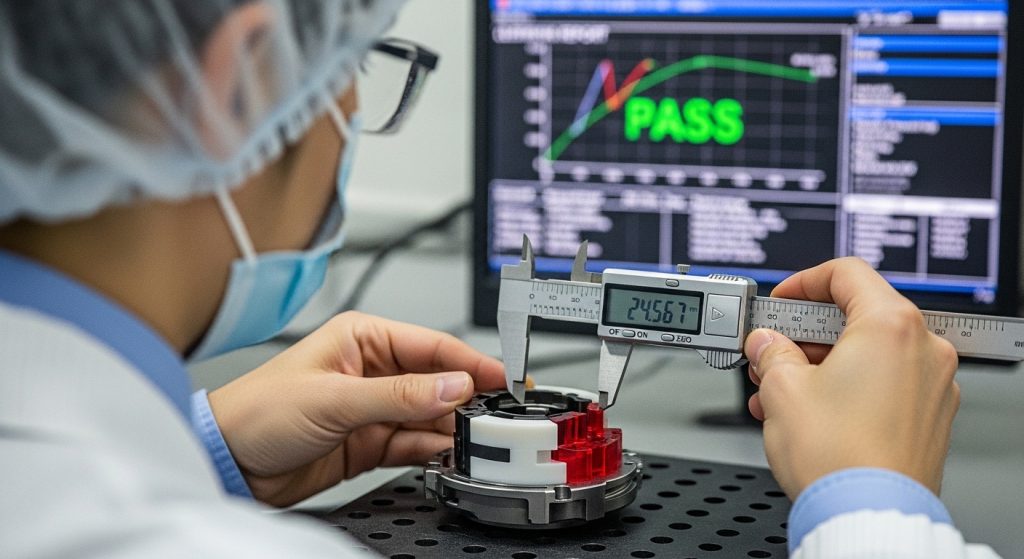
Quality control is superior with a single provider because the same quality management system (QMS) oversees the part from raw material to final packaging. When multiple shops handle a part, each has its own "acceptable" tolerance range, which can lead to "tolerance stack-up" issues. A turnkey partner ensures that the machining done in step two doesn't ruin the coating applied in step four.
Tip: Always ask for a single, unified inspection report that covers all secondary operations to ensure your turnkey partner is maintaining high standards throughout the chain.
For projects like a custom 2K mold design, the precision required is so high that even a small error in secondary cleaning can ruin the bond between materials. A turnkey provider understands the specific "DNA" of the part they just molded, allowing them to adjust their finishing tools with an intimacy that an outside shop simply cannot match.
What Cost Savings do Turnkey Solutions Offer?
Turnkey solutions offer cost savings by reducing administrative overhead, eliminating multiple shipping fees, and leveraging bulk material purchasing. You only process one purchase order (PO) and manage one invoice. Furthermore, a turnkey provider can often offer "bundled pricing," which is significantly lower than the sum of individual services from four different specialized shops.
Data from recent industrial audits suggests that manufacturers using turnkey providers save an average of 12-18% on total landed costs [Placeholder for Data]. These savings come from:
- Reduced Packaging Waste: Parts aren't boxed and unboxed five times.
- Lower Shipping Costs: Only one final shipment to your warehouse or customer.
- Less Scrap: Miscommunications between separate vendors often lead to scrapped batches.
- Admin Efficiency: Your procurement team spends 75% less time tracking shipments and managing vendors.
Can Turnkey Solutions Handle Specialized Regional Requirements?
Yes, turnkey solutions can handle specialized regional requirements by offering localized expertise through global networks. For instance, an injection mould manufacturer in Canada might partner with a global turnkey provider to ensure parts meet specific North American safety standards while benefiting from the scale of overseas production.
This "Glocal" approach—global scale with local accountability—is a hallmark of modern turnkey services. It allows companies to access high-end finishing technologies, like PVD coating or specialized pad printing, which might be too expensive to set up in-house or difficult to find in a fragmented local market.
What are the Main Services Included in Turnkey Post-Processing?
Turnkey services typically include mechanical finishing, chemical treatments, precision machining, and final assembly. The goal is to provide a comprehensive suite that covers every possible need a part might have after it leaves the mold or machine. This modularity allows you to pick and choose only the services your specific project requires while keeping them all under one management umbrella.
Commonly integrated services include:
- Mechanical: Sanding, polishing, bead blasting, and tumbling.
- Chemical: Anodizing, plating, and passivation.
- Machining: Drilling, tapping, and CNC milling of molded parts.
- Decorative: Silk-screening, pad printing, and painting.
- Fulfillment: Kitting, custom packaging, and direct-to-customer shipping.
How do Turnkey Solutions Improve Product Innovation?
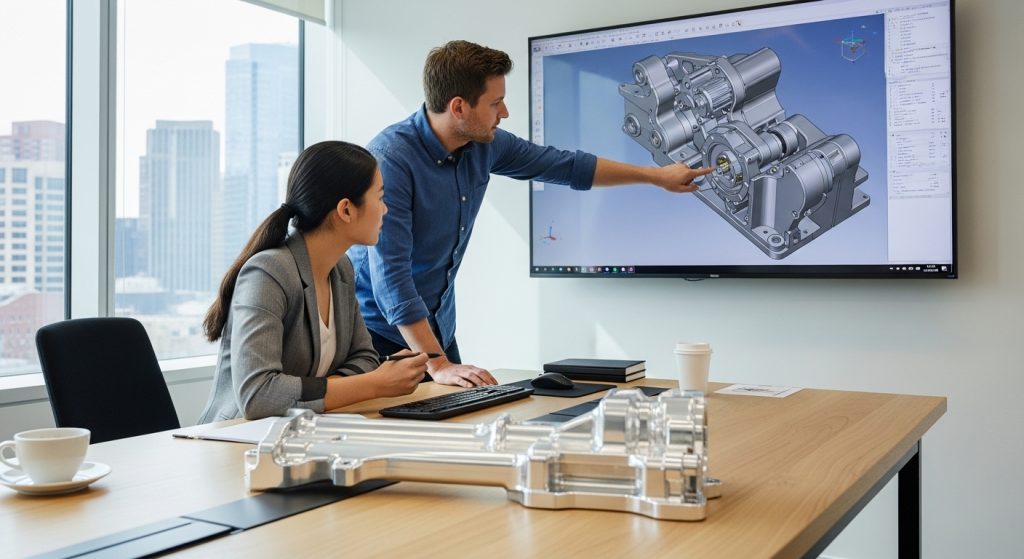
Turnkey solutions improve product innovation by freeing up your engineering team to focus on the "next big thing" rather than the logistics of the current one. When you trust a partner to handle the complexities of turnkey post-processing solutions, your internal resources are no longer bogged down by vendor disputes or shipping delays.
I recall a client who spent 30% of their engineering hours just managing the "hand-offs" between their mold shop and their plating shop. Once they switched to a turnkey model, those engineers were able to launch a new product line six months ahead of schedule. Innovation thrives when the path from concept to finished product is a straight line, not a jagged maze of independent vendors.
How to Select the Right Turnkey Partner?
Selecting the right partner requires auditing their internal capabilities, checking their certifications (like ISO 9001), and evaluating their communication style. A true turnkey partner shouldn't just be a "broker" who outsources the work again; they should own the equipment and employ the specialists who do the finishing.
Tip: Visit the facility if possible. Look for how the "flow" is managed between the production floor and the finishing department. A cluttered, disjointed floor is a red flag for a turnkey claim.
Ensure your partner has experience in your specific niche. If you are in the automotive sector, they must understand the rigor of TS16949 standards. If you are in medical, ISO 13485 is non-negotiable. The "benefits" of turnkey are only realized if the provider is as competent in finishing as they are in primary manufacturing.
Final Thoughts: The Strategic Choice for Growth
Switching to a turnkey model is more than just a logistical change; it is a strategic decision to scale your business. By utilizing turnkey post-processing solutions, you simplify your supply chain, protect your margins, and ensure that every part leaving the factory reflects the highest level of craftsmanship.
As manufacturing becomes more automated and fast-paced, the companies that thrive will be those that partner with providers capable of handling the entire lifecycle of a part. From the first injection of plastic to the final protective coating, a turnkey partner is your best asset for achieving consistent, high-quality results.
