


Welding vs Riveting: Choosing the Best Joining Method in Manufacturing
In manufacturing and assembly, joining parts securely is a fundamental requirement. Two of the most widely used techniques are welding and riveting. Both methods have stood the test of time, but they serve different purposes and offer distinct advantages depending on the materials, application conditions, and performance demands. Choosing between welding vs riveting isn’t always straightforward—it requires understanding how each process works, its strengths, limitations, and real‑world use cases. In this guide, we’ll explore these joining techniques from both technical and practical perspectives to help engineers and manufacturers make better decisions.
What Is Welding?
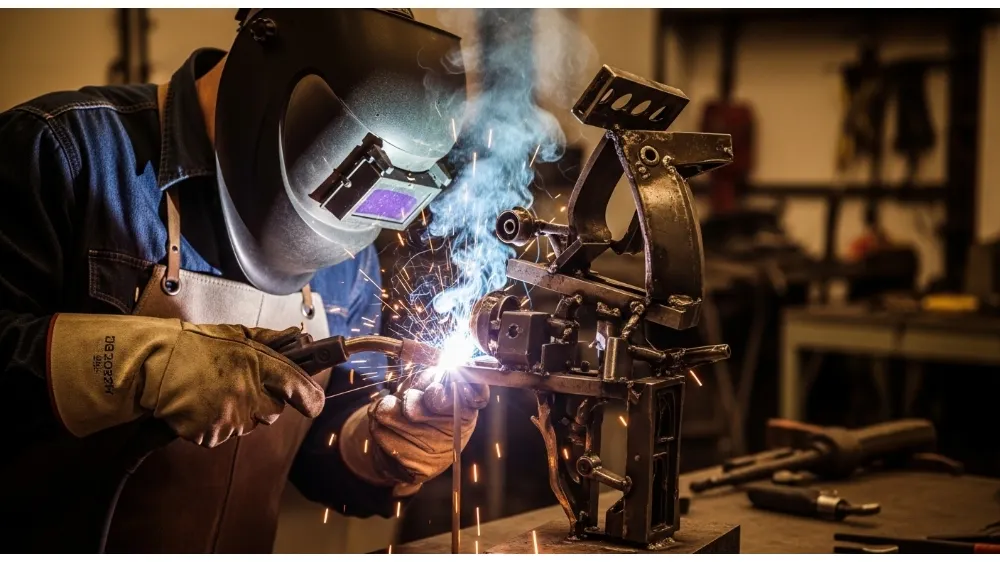
Welding is a fabrication process that creates a permanent bond between metal parts by applying heat (and sometimes pressure), causing the base materials to melt and fuse together. In many cases, a filler material is added to reinforce the weld. The result is a joint that behaves almost like a single piece of material.
There are numerous welding techniques, including arc welding, MIG (Metal Inert Gas), TIG (Tungsten Inert Gas), and resistance welding. Each variant offers unique control over heat input, weld strength, and suitability for certain metals.
The key aspect of welding is its ability to produce high‑strength joints with minimal alteration of overall part geometry. In many structural applications, welded joints are critical to maintaining integrity under load.
What Is Riveting?
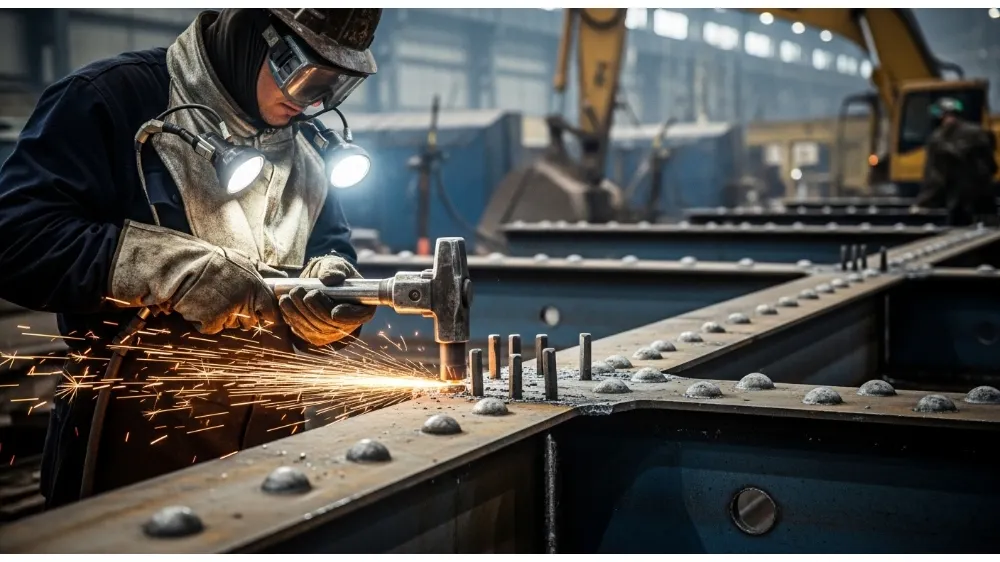
Riveting is a mechanical fastening process used to join two or more components permanently. A rivet is a metal pin with a head on one end and a tail on the other. In installation, the rivet is inserted into aligned holes and the tail is mechanically deformed (or “upset”) so that it expands and locks the materials together.
Riveting doesn’t fuse materials at the atomic level the way welding does. Instead, it relies on mechanical deformation and compression to hold parts in place. Riveting remains popular in applications where welding is impractical, such as when materials are heat‑sensitive, the joint requires one‑sided access, or in assemblies with frequent vibration.
Technical Comparison: Welding vs Riveting
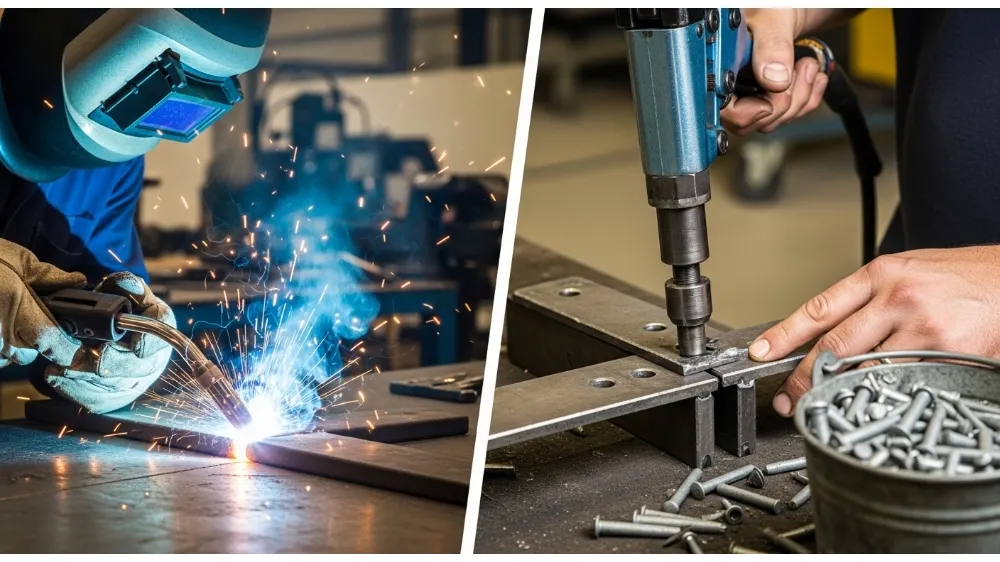
When weighing welding vs riveting, the differences lie in how joints are formed, their mechanical behavior, and the types of stresses they resist.
Welded joints generally have higher tensile strength because the materials are fused together. The weld bead can be engineered to distribute stresses, making welded parts suitable for dynamic loads and structural applications.
Riveted joints, on the other hand, perform well under shear loading but can be weaker in tension. Each rivet bears load individually, which can be beneficial in certain repetitive stress environments. Because riveting doesn’t require melting base materials, it’s often used with heat‑sensitive alloys that might degrade under high welding temperatures.
Strength and Durability
Weld strength depends on proper technique, joint design, and heat control. A well‑executed weld can match or exceed the strength of the base metals. However, welding introduces residual stresses and heat‑affected zones (HAZ) that can alter material properties and sometimes necessitate post‑weld heat treatment.
Rivets distribute loads differently. Because multiple rivets are often used across a joint, individual rivets share the load. This is advantageous in structures like aircraft skins or bridges that experience vibration or cyclic loading. Riveted joints also tolerate slight misalignments without crack propagation, but rivets themselves are generally not as strong as properly welded joints in pure tensile scenarios.
Materials and Joint Accessibility
Welding requires access to both sides of the joint or specialized equipment for limited access welding (such as orbital welding or laser welding). Thin metals, aluminum, stainless steels, and alloys respond differently to heat; controlling distortion and preventing burn‑through can be challenging without skilled welders and advanced equipment.
Riveting excels when one‑sided access is necessary. For example, blind rivets (also called pop rivets) allow fastening from only one side, making assembly in confined spaces easier. Rivets also perform well with dissimilar materials like metal to plastic or composite assemblies, where welding isn’t feasible.
Heat Effects and Thermal Distortion
One of the biggest differences between welding vs riveting is heat influence. Welding introduces intense localized heat, which can cause distortion, warping, or changes in microstructure. Some high‑strength alloys become brittle if cooled improperly after welding, demanding additional heat‑treatment cycles.
Riveting, being a cold‑working process, avoids such thermal issues. Since the base materials remain at ambient temperature, there’s no worry about structural changes due to heat, and parts that are sensitive to temperature can be joined without degradation.
Cost and Production Efficiency
The cost of joining parts varies significantly between methods. Welding requires skilled labor, controlled environments, specialized equipment, and often post‑weld inspection and treatment. These factors contribute to higher upfront costs, although automated welding systems can mitigate labor expenses in high‑volume production.
Riveting involves less specialized skill, faster cycle times in many cases, and lower overall equipment costs. Automated riveting machines and pneumatic tools increase productivity, especially in large assemblies like automotive panels or aerospace structures. Riveted joints are often faster to install than fully welded assemblies, which can translate to lower labor costs and higher throughput.
Maintenance and Repair
In service life, welded joints are permanent and may require grinding, cutting, or re‑welding for repair. Inspecting welds typically involves nondestructive testing (NDT) methods such as ultrasonic testing or X‑rays to detect internal flaws.
Riveted structures can be more maintenance‑friendly, as individual rivets can be replaced if damaged without disturbing the surrounding material. This is particularly advantageous in industries like aviation, where part replacement is routine and fast turnaround is critical.
Real‑World Applications: Welding vs Riveting
Welding and riveting each have domains where they excel:
Welding is dominant in heavy structural applications, pipelines, automotive chassis, shipbuilding, pressure vessels, and high‑end manufacturing sectors like nuclear and aerospace fabrication where materials must behave as a single unit under stress.
Riveting is historically synonymous with aerospace skin panels, bridges, railcars, and metal enclosures. Classic aircraft manufacturing relied on thousands of rivets to hold aluminum skins to frames, combining strength with vibration resistance. In modern manufacturing, riveting is still used where controlled stresses and easy maintenance are priorities.
Environmental Considerations
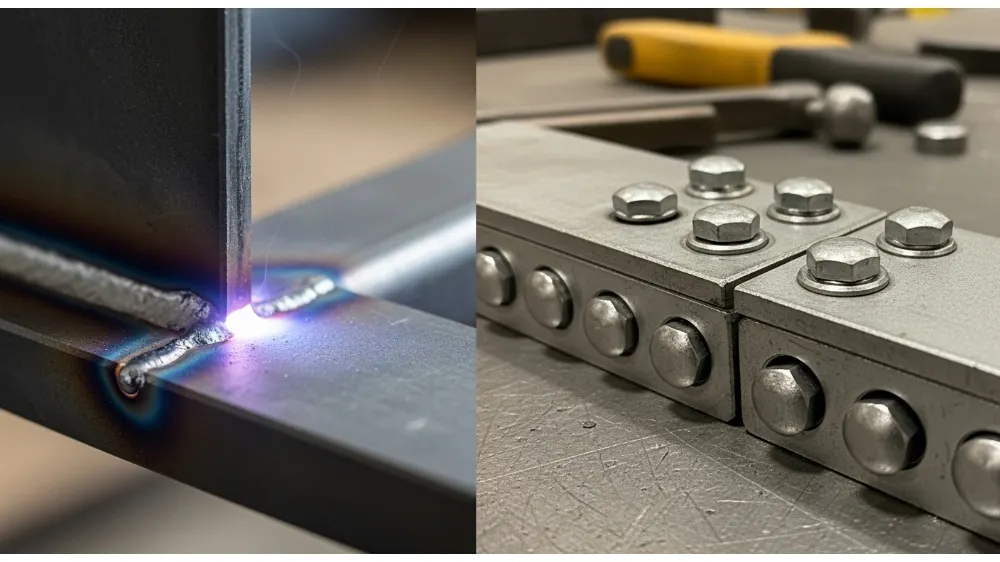
Environmental conditions also influence the choice between welding vs riveting. Welded joints exposed to corrosive environments may require coatings or post‑weld corrosion protection. Rivets may introduce crevices where moisture can collect, which could accelerate corrosion if not properly sealed.
Material compatibility plays a role too. Dissimilar metals joined by welding may develop brittle intermetallic layers, whereas rivets can avoid such issues if the rivet material is compatible with both substrates.
Selecting Between Welding and Riveting
Choosing the right process involves a systematic evaluation of factors:
Load requirements: Does the joint primarily experience shear, tension or torsion? Welds typically handle tension better, while rivets are effective under shear and repeated vibration.
Material sensitivity: Are the base materials heat‑sensitive or prone to distortion? Riveting reduces heat‑related issues.
Access limitations: Can the joint be accessed on both sides? Choose riveting for one‑sided access.
Production scale: Are you producing in large volumes where automation helps? Both welding and riveting can be automated, but riveting often offers faster cycles for assembly lines.
Maintenance needs: Do you expect routine service or part replacement? Riveted structures allow selective fastener replacement.
Common Misconceptions
It’s easy to fall into myths when comparing welding vs riveting:
Many assume welding is always stronger. In reality, a poorly executed weld is weaker than a properly installed rivet. Strength depends on design, material, and process control.
Another misconception is that riveting is outdated. While welding has become more prevalent, riveting remains indispensable where vibration, accessibility, and maintenance are critical.
Safety Considerations
Safety is essential for both welding and riveting. Welding operations produce intense light, heat, and fumes requiring protective gear and ventilation. Riveting involves mechanical force and flying metal fragments, so operators need eye protection, gloves, and secure holding fixtures.
Case Studies: When Each Method Shines
In automotive manufacturing, welding is predominant in joining chassis components due to high structural loads. Body panels may be both welded and riveted where flexibility and ease of repair are needed.
In aerospace manufacturing, rivets still play a major role in joining fuselage panels and wing skins. High‑fatigue resistance and ease of spot replacement make riveting attractive in this demanding application.
Future Trends in Joining Technologies
Emerging technologies such as laser welding, friction stir welding (FSW), and adhesive bonding are changing how manufacturers think about joining. While these methods offer exciting performance advantages, welding and riveting remain foundational in many industries due to proven reliability and cost‑effectiveness.
Frequently Asked Questions (FAQ)
Q1: What are the main differences between welding and riveting?
A: Welding fuses materials using heat to create a monolithic joint. Riveting mechanically fastens components using metal pins. Welding is typically stronger in tension, while riveting performs well under shear and vibration.
Q2: Can welding and riveting be used together?
A: Yes. In complex assemblies, both methods may be used to balance strength, accessibility, and maintenance requirements.
Q3: Which is cheaper: welding or riveting?
A: Riveting generally has lower equipment and labor costs, especially for high‑volume production. Welding may require more specialized labor and post‑processing.
Q4: Is riveting still used in modern manufacturing?
A: Absolutely. Riveting remains essential in aerospace, marine, and heavy equipment where vibration resistance and serviceability are vital.
Q5: Can rivets fail under stress?
A: Yes. If improperly specified or installed, rivets can loosen or shear. Proper selection and installation are critical.
Q6: Do welded joints require inspection?
A: Yes. Welded joints often need nondestructive testing to ensure integrity, especially in safety‑critical applications.
Conclusion
Both welding vs riveting offer reliable ways to join parts in manufacturing, but they serve different needs. Welding shines where high strength and monolithic performance are essential, while riveting excels in vibration‑intensive environments, one‑sided access conditions, and applications requiring easier maintenance. By understanding these fundamental differences—and considering materials, loads, costs, and service requirements—manufacturers can choose the most effective joining strategy for their product designs and production workflows.
