


Zinc Die Casting Mold Longer Tooling Life | Cost Efficiency
Why Longer Tooling Life Matters in Die Casting?
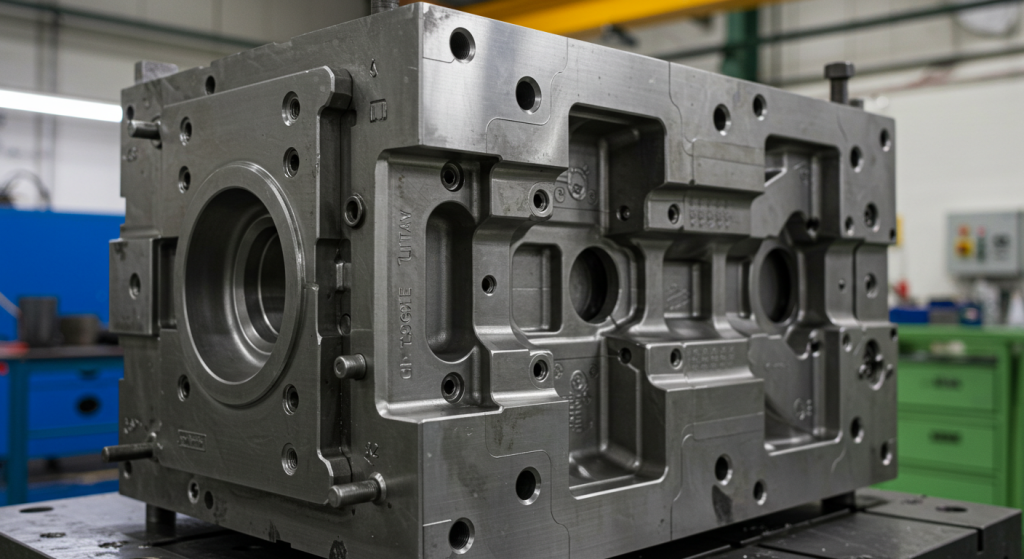
When it comes to die casting, the mold, which is often called the ‘heart of production,’ is instrumental in determining both the nature of the parts produced and the cost of production. A zinc die casting mold longer tooling life and greater durability will improve productivity while decreasing overall downtime, maintenance costs, and scrap rates. It will also reduce the cost and tooling inefficiency of casting parts. Zinc die casting molds are particularly known for their resistance to wear and durability. When compared to aluminum, zinc molds display greater durability, consistent dimensional stability, and longer tool life under high-cycle production environments. The key benefits of longer tooling life are:
• Incorporation of Eco-Frugal Innovation: Eco-efficient zinc Die Casting Tooling Transforms the way zinc alloys are produced with a low cost per part
• Trustworthiness: Low frequency of need for mold replacement and repairs to be done.
• Eco-Friendly: Zinc alloys are easily recyclable, which reduces their carbon footprint.
• Faster Production: More molds are produced in a single casting cycle.
Technical Advantages of Zinc Die Casting Mold: Longer Tooling Life
Zinc is superior to other die casting alloys with respect to mold longevity because of its distinct mechanical and metallurgical properties.
1. Hardness and Wear Resistance of Zinc Alloys
Due to their remarkable qualities, zinc alloys have astonishing ease of use. Their prolonged agility alloyed zinc also decreases the hardness and ease of alloying. Not only density, but also easier maintenance of the surface finish prolongs wear resistance. This confirms intact molds long runs repair intact, runs performing consecutively come to wear, and remain intact.
2. Thermal Conductivity in Zinc Die Casting Molds
Optimization of the cooling system is more important than ever; thus, zinc's excellent solder, excellent cycle, and thermal conductivity diminishes time. Molds also manage to avoid excessive thermal fatigue and, as a result, retain their longevity.
3. Dimensional Stability and Shrinkage Rate
Precisely, which molds, overcast components, and index interfaces over precise interfaces on load. Bond and reduce strain on the tools, which supports the load on the transform, assists the over on which molds can be gaited, and is over.
4. Mold Fatigue Resistance
High zinc and volume tolerance, shields delicate, and molds can also be out of circulation, unbroken deformation cycle bagh, which must remain in its production. With Mille.
5. Corrosion Resistance
Over time, the degradation of the surface is less, and the wear resistance of zinc in the tooling increases.
Manufacturing and Process Factors Supporting Longer Tooling Life
Tool Steel Selection in Zinc Die Casting Molds
As long as the selected tool fixture does not wear out, the durability of the tool steel selected is fundamental in extending the life of the molds. The steel tool's extreme sharpness supports thermal fatigue-resistant wear.
Mold Maintenance and Refurbishment
Ensuring that the die casting mold is within the maintenance schedule is critical in extending the life of the molds and tools. Preventive maintenance of the molds decreases the chances of expensive breakdowns.
Mold Life Cycle Management
More and more manufacturers use modeling software to predict the wear of the mold so that they can make the required changes and reduce unplanned downtime.
Advanced Die Casting Technologies
Adding CNC machining for the zinc mold tooling, EDM precision shaping, and using CAD/CAM design systems to increase the consistency of the performance and the life of the molds.
The Longer Zinc Tooling Lasts, the More Performance and Productivity Gains Achieved
The productivity benefits that manufacturers can enjoy are from the increased lifespan of the zinc molds:
• Reduced replacement frequency of molds
• Per die casting cycle, very low production cost can be achieved at large scales
• Overall, better quality and increased precision in the tooling.
• Uniformity of the zinc cast parts leads to lower scrap.
• Improved heat transfer in the die casting process results in lower cycle times and increased energy efficiency.
• Unlimited production cycles with no downtime.
Benefits of Zinc Die Casting Molds
Automotive Components
Automotive parts that are manufactured using zinc die casting guarantee strong, accurately manufactured parts at lower prices. Armored Ozzy's exceptional tooling longevity makes it appropriate for the production of both moderately priced and luxury automotive parts in mechanical and ornamental applications where component longevity is critical.
Electronics and Consumer Products
Zinc molds are capable of retaining their form and contour with a high degree of precision and surface finish due to their high precision and surface finish over millions of cycles. These, along with their use in consumer products, contribute to greater durability in electronic housing.
Medical Devices
The precision Zinc Tooling employed in surgical instruments guarantees dimensional accuracy and enhanced operational reliability, both of which are critical value propositions in the medical industry.
Aerospace and Structural Applications
Zinc casting applications of a military level benefit from long-lasting tooling. This provides them with consistent quality, which is extremely important in that industry.
Cost Efficiency and Sustainability with Zinc Tooling
The lower tooling cost per die cast part does support long-term economic advantage, but the more important benefit is the environmentally friendly characteristic since the zinc tooling is stainless. The decreased amount of raw materials used for the production of molds, along with the lesser waste that is generated from the dies, promotes long-term, economically sustainable manufacturing.
Best Practices to Reduce Zinc Die Casting Tooling Wear
1. Prevent thermal fatigue with optimized cooling system design.
2. Use simulation software that predicts and enhances design wear patterns.
3. The tool steels are economically more efficient.
4. Perform Preventive Maintenance - Guaranteed refurbishment within the time frame required.
5. Embrace Lean Manufacturing Principles - Integration reduces the work needed to ensure consistent performance of the molds.
6. Allocate Cycle Time Based on Durability - Relieves the tools from excessive stress.
The full potential of the longevity of zinc molds can be realised from the practices above.
Why is SunOne the Best for Zinc Die Casting Tooling?
Having an experienced mould manufacturer on board makes the most difference when it comes to extending tooling life in zinc die casting moulds.
At SunOn Mould, we focus on:
• High volume manufacturing of zinc die casting molds.
• Tooling with high precision through advanced CNC machining and CAD/CAM systems.
• Predictive and lifecycle maintenance on molds.
• Tailored for automotive, medical, electronics, and consumer goods.
SunOn focuses on cost-effective, eco-friendly, and high-performance tooling, minimizing downtime with maximized efficiency of production lines.
Conclusion
Achieving zinc die casting mold longer tooling life is not a matter of prolonging the use of a mold. It is a quest to change zinc die casting, a mold manufacturing process. The distinctive nature of zinc allows the tooling life to be extended with high-cycle production, lowered with the associated improved thermal conductivity, with a corresponding drop in tool wear. For die casting tooling partners, SunOn is available to offer custom-designed zinc die casting molds of high strength and durability.
