


A Complete Guide to Deburring and Surface Smoothing
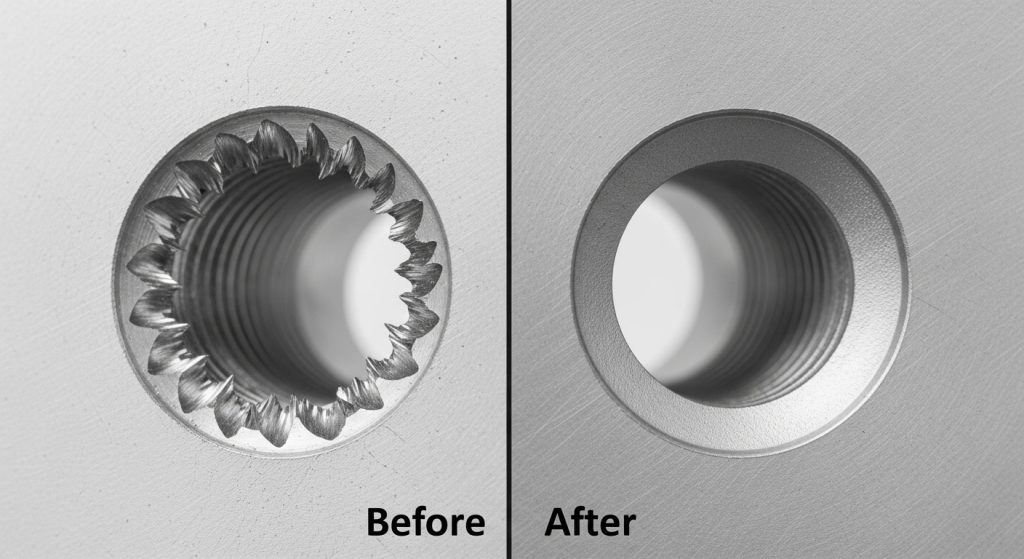
Deburring and surface smoothing are critical post-processing steps that remove unwanted material shards (burrs) and refine the texture of manufactured parts. These processes ensure mechanical safety, improve aesthetic appeal, and guarantee that components meet strict dimensional tolerances. For B2B manufacturing, professional deburring and surface smoothing services prevent assembly interference and premature part failure. High-quality finishing is essential for parts produced via CNC machining, die casting, or metal stamping to achieve a market-ready standard.
Why Deburring and Surface Smoothing Matter in Manufacturing
In the world of high-stakes B2B procurement, a microscopic burr is more than a cosmetic flaw; it is a liability. Burrs are raised edges or small pieces of material remaining on a workpiece after operations like drilling, milling, or metal stamping parts production. If left unaddressed, these shards can break off during operation, leading to electrical shorts, clogged valves, or catastrophic engine failure.
Surface smoothing goes hand-in-hand with deburring by reducing the Ra (Roughness Average) of a part. Smooth surfaces reduce friction in moving assemblies and provide a superior substrate for subsequent post-processing steps like painting or plating. When sourcing from a partner like SunOn, engineers prioritize these services to ensure that the transition from prototype to mass production remains seamless and defect-free.
Common Types of Burrs and Their Impact on DFM
Design for Manufacturing (DFM) must account for burr formation to minimize secondary labor costs. Manufacturers generally categorize burrs into four types: Poisson burrs, rollover burrs, breakout burrs, and tear burrs. Each type requires a specific removal strategy to maintain the integrity of the part’s geometry.
The Poisson Burr
This occurs when the cutting tool deforms the material sideways rather than shearing it cleanly. It is common in ductile metals and soft plastics. If the DFM review does not account for this expansion, the part may exceed its tolerance zone before it even reaches the assembly line.
Rollover and Breakout Burrs
Rollover burrs happen at the end of a cut where the material folds over the edge. Breakout burrs occur when material separates from the workpiece ahead of the tool. In sheet metal fabrication, these burrs can be particularly sharp, posing a safety risk to assembly workers and requiring aggressive smoothing.
Essential Deburring Techniques for B2B Parts
Professional deburring and surface smoothing services employ various mechanical and chemical methods. The choice depends on the production volume, material hardness, and the complexity of the internal geometries.
Manual and Mechanical Deburring
Technicians use hand tools, brushes, or rotary files to remove burrs under magnification. While labor-intensive, this remains the most reliable method for complex aluminum or zinc die-casting where automated media might damage delicate features.
Vibratory and Barrel Finishing
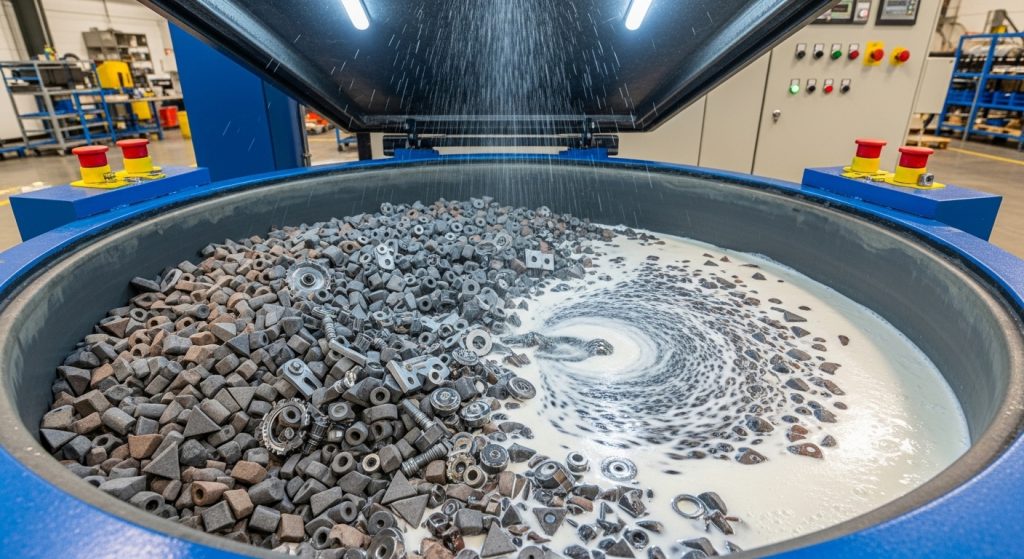
This batch process involves placing parts into a vibrating tub filled with abrasive media and liquid compounds. The friction between the media and the parts gently wears away burrs and smooths the entire surface. It is highly efficient for high-volume plastic injection molding components that require a uniform matte finish.
Thermal Energy Method (TEM)
TEM utilizes a combustion reaction to vaporize burrs instantly. The part is placed in a pressure chamber filled with a gas mixture. When ignited, the flash heat targets the high-surface-area burrs without affecting the main body of the part. This is the gold standard for clearing internal cross-holes in hydraulic manifolds.
Advanced Surface Smoothing Technologies
Smoothing is the bridge between a raw machined part and a premium consumer or industrial product. Beyond simple aesthetics, smoothing improves the fatigue life of a component by removing surface stress concentrators.
Chemical and Electropolishing
Electropolishing is often described as "reverse plating." It removes a microscopic layer of material from the surface, eliminating peaks and leaving a mirror-like finish. It is essential for medical devices and food-processing equipment where bacterial traps must be eliminated.
Abrasive Flow Machining (AFM)
AFM pushes a chemically reactive, abrasive-laden putty through internal passages. As the "slug" of media moves through the part, it smooths internal walls that are impossible to reach with traditional tools. Engineers often specify AFM for aerospace components where airflow efficiency is paramount.
Material Compatibility and Technical Constraints
Not every smoothing method works for every material. Technical buyers must evaluate how the chosen finishing process interacts with the base substrate.
Metals: Die-Cast and Machined Alloys
Zinc and aluminum alloys are relatively soft and respond well to vibratory tumbling. However, stainless steel requires more aggressive abrasive media. For aluminum or zinc die-casting, the deburring process must also remove "flash"—the excess material that leaks between mold halves.
Plastics: Injection Molded and 3D Printed
Thermoplastics require a gentler touch. High-heat deburring methods can melt the part, leading to warping. SunOn typically uses cryogenic deburring for plastic components, where parts are frozen with liquid nitrogen to make the burrs brittle, then blasted with media to snap them off cleanly without damaging the surface.
Evaluating Tooling Costs vs. Unit-Cost Trade-offs
A common mistake in B2B sourcing is underestimating the cost of "secondary operations." While a part might be cheap to cast or mold, the deburring and surface smoothing services can double the unit price if the design is not optimized.
Manual deburring is expensive at scale. To lower the total cost of ownership (TCO), engineers should design parts with chamfered edges rather than 90-degree corners. This reduces the size of the burr and allows for cheaper, automated vibratory finishing. When requesting an RFQ, ask your supplier how minor design changes could transition your project from manual to automated finishing.
Quality Assurance and Testing Transparency
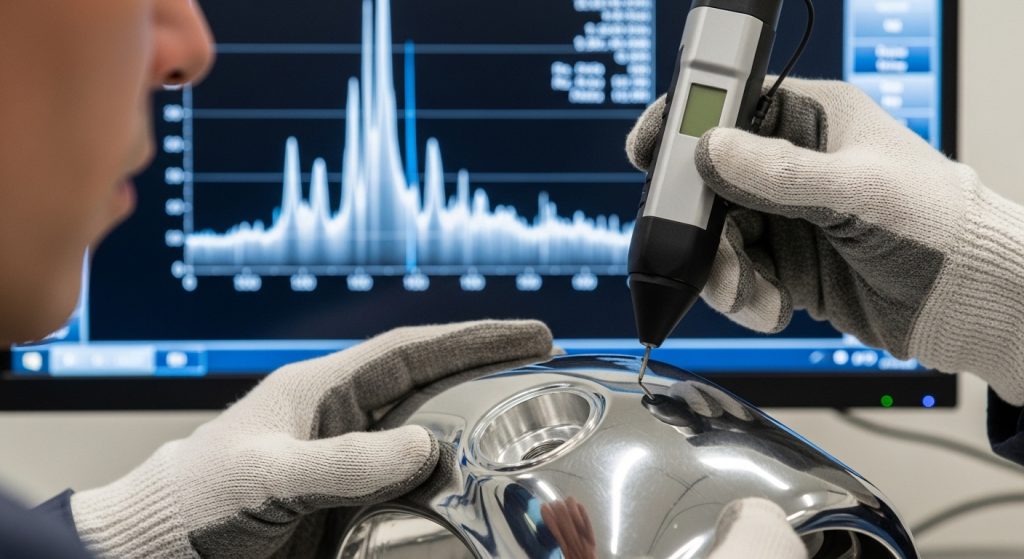
How do you prove a part is properly deburred? At SunOn, we use a combination of tactile inspection, high-resolution microscopy, and profilometer readings.
- Tactile Inspection: Using a standardized probe to ensure no "snags" exist on critical edges.
- Magnification: Inspecting internal bores at 10x to 50x magnification for hidden debris.
- Surface Roughness (Ra): Using a profilometer to verify the smoothing process met the specified micron rating.
Documenting these steps provides procurement managers with the peace of mind that the parts will perform reliably in the field. This documentation is a staple of our post-processing workflow.
Lead Time Reliability and Scale-Up Readiness
Post-processing is often the final hurdle before shipping. Efficient deburring and surface smoothing services must be integrated into the production timeline to avoid bottlenecks.
For prototypes, manual finishing is fast and requires no setup. However, for mass production, setting up a vibratory or thermal deburring line takes time. A reliable supplier communicates these lead times early. If you are moving from 100 units to 100,000 units, ensure your partner has the capacity to automate the finishing process without compromising quality.
Supplier Communication and Documentation
Successful B2B partnerships thrive on clarity. When requesting deburring services, provide a clear drawing that highlights "No Burr" zones. This ensures the production team focuses their efforts on critical functional areas, saving you money on non-essential surfaces.
Clear communication regarding the final application also helps. If the part will be handled by a consumer, "safety deburring" is the priority. If it is an internal engine component, "functional deburring" to prevent material shed is the goal. Providing these details in your initial RFQ leads to more accurate pricing and fewer revisions.
Frequently Asked Questions
What is the difference between deburring and deflashing?
Deburring removes excess material caused by cutting, drilling, or machining tools. Deflashing specifically refers to removing the thin layer of excess material that escapes through the parting line of a mold during plastic injection molding or die casting. Both aim to clean the part, but they target different manufacturing artifacts.
Can deburring affect the dimensional accuracy of my part?
Yes, aggressive deburring can change part dimensions. If a vibratory cycle runs too long, it can "round off" critical sharp edges or reduce the overall diameter of a part. Professional services calculate the "media-to-part" ratio and cycle time precisely to ensure the part stays within its specified tolerance zone.
Why is surface smoothing necessary for parts that will be painted?
Paint and powder coatings do not hide surface imperfections; they often amplify them. Surface smoothing ensures that scratches and tool marks are removed, providing a consistent texture. This leads to better paint adhesion and a more professional final appearance for consumer-facing products.
Is manual deburring ever better than automated methods?
Manual deburring is superior for low-volume projects or parts with very complex, fragile geometries that might be damaged in a tumbling barrel. It allows the technician to focus only on specific edges while leaving the rest of the part's surface untouched, which is critical for high-precision aerospace components.
How does cryogenic deburring work for plastic parts?
Cryogenic deburring involves placing plastic parts in a chamber with liquid nitrogen. The cold temperatures make the thin burrs extremely brittle while the thicker part body remains flexible. Small plastic pellets are then blasted at the parts, snapping off the brittle burrs without leaving any marks on the main surface.
What is the typical lead time for professional smoothing services?
Lead times vary based on the method. Vibratory tumbling for a batch of parts might add 1 to 2 days to the schedule. More complex methods like Electropolishing or Thermal Deburring may add 3 to 5 days, depending on batch size and the need for specialized racking or fixtures.
Conclusion: Refining Your Path to Production
Deburring and surface smoothing are the final touches that transform a raw workpiece into a high-performance component. By understanding the different techniques and their impact on DFM, procurement teams can reduce risks and improve the longevity of their products.
At SunOn Industrial Group Limited, we integrate these finishing steps into our core manufacturing workflow. From sheet metal fabrication to intricate die casting, we provide the technical expertise needed to deliver perfect parts every time.
Ready to elevate your part quality?
Contact SunOn today for a comprehensive DFM review or to request an RFQ for your next project. Our engineers are standing by to help you optimize your finishing strategy for maximum ROI.
