


Flexible Silicone Parts for Dynamic Applications: A Technical Design Guide
Flexible silicone parts are essential for engineering systems that require constant motion, vibration damping, or pressure cycling without mechanical failure. To maximize the performance of these components, engineers must balance material selection with geometric stress distribution.
In this guide, you will learn how to:
- Identify the specific fatigue limits of LSR vs. HCR silicone.
- Optimize part geometries to eliminate stress concentration points.
- Compare silicone’s dynamic recovery against EPDM and TPU alternatives.
- Audit your designs using a 2026-standard failure mode checklist.
Understanding Dynamic Stress in Silicone Components
A dynamic application refers to any environment where a component is subjected to repetitive mechanical loads, such as stretching, compression, or twisting. Unlike static gaskets, dynamic silicone parts must maintain their elastic memory and seal integrity over millions of cycles.
Common examples include:
- Peristaltic Pump Tubing: Continuous compression and recovery cycles to move fluids.
- Automotive Bellows: Protecting moving joints while expanding and contracting.
- Wearable Electronics: Flexing with human movement while protecting internal sensors.
For components operating in extreme conditions, ensuring you use chemical resistant silicone components for harsh environments is critical to prevent material degradation from secondary fluid exposure.
Material Selection: LSR vs. HCR for High-Flex Life
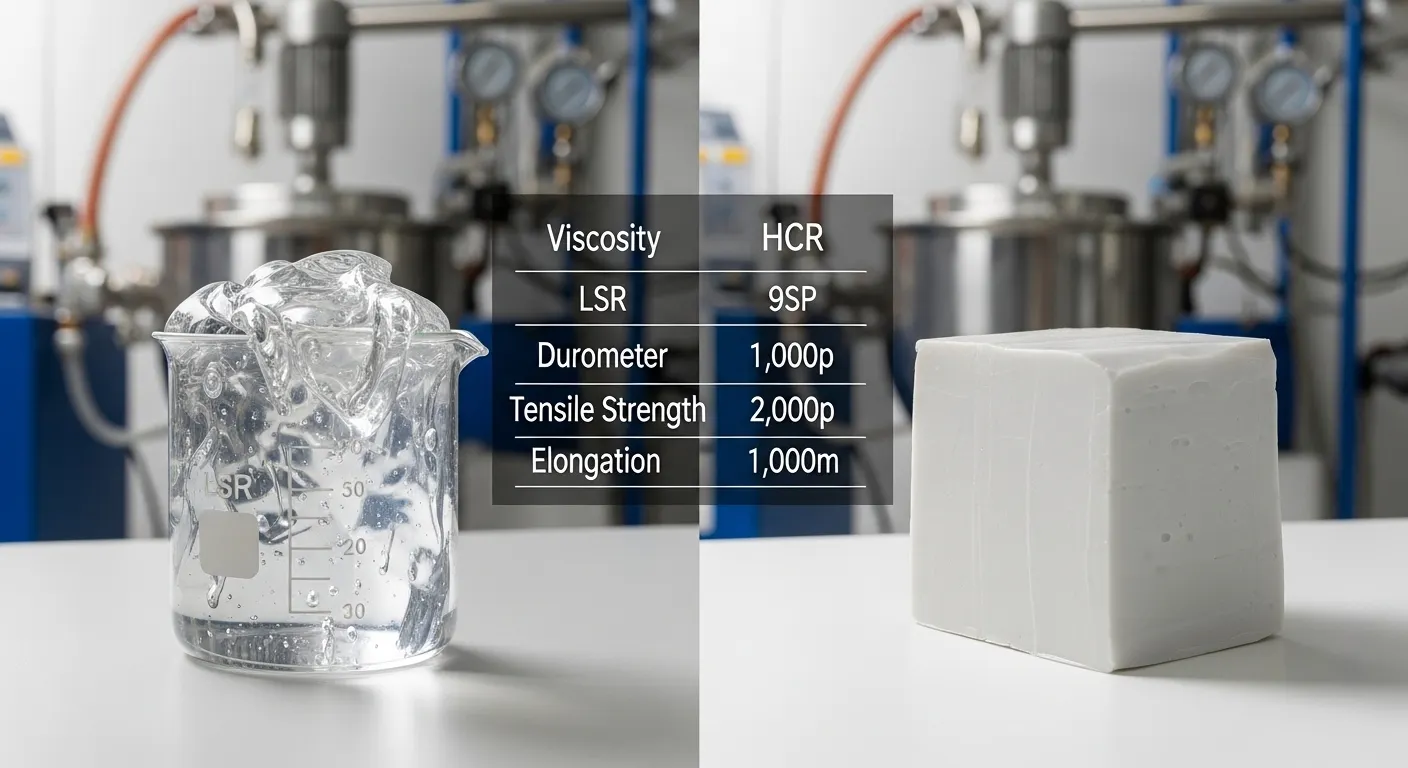
Choosing between Liquid Silicone Rubber (LSR) and High Consistency Rubber (HCR) is the most critical decision in the design phase.
| Property | Liquid Silicone Rubber (LSR) | High Consistency Rubber (HCR) |
| Curing System | Platinum-cured (Addition) | Peroxide or Platinum-cured |
| Elongation | High (up to 800%) | Moderate (300%–600%) |
| Tear Strength | Excellent (High Die B ratings) | High (Standard grades) |
| Cycle Life | Superior for high-speed flex | Better for high-pressure durability |
LSR is often preferred for high-speed automated assembly and intricate geometries due to its low viscosity. HCR, or "gum stock," provides a higher molecular weight that can be advantageous for parts requiring significant structural "body" or resistance to permanent deformation under heavy loads (lower compression set).
Design Rules for Maximizing Component Longevity
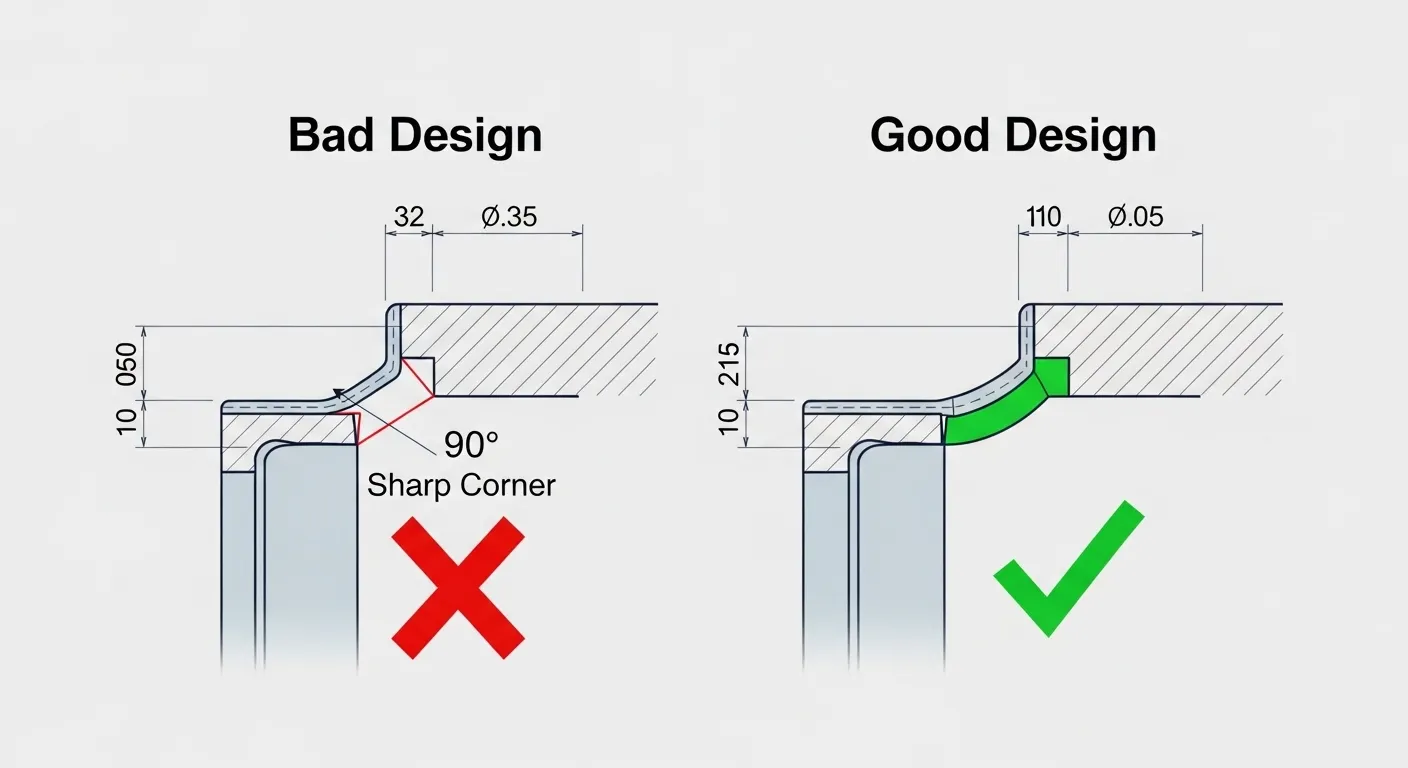
To prevent premature tearing—the primary failure mode in moving parts—designers must follow strict geometric rules.
1. Eliminate Stress Concentrators
Avoid sharp 90-degree internal corners. Every internal corner should have a minimum radius of 0.5mm to 1.0mm (needs verification based on part size) to distribute mechanical energy.
2. Wall Thickness Consistency
Abrupt changes in wall thickness create "hinge points" where stress accumulates. If a transition is necessary, use a gradual taper rather than a step.
3. Surface Finish and Friction
In sliding dynamic applications, a lower-friction surface (achieved through specialized coatings or mold textures) reduces the "stiction" that can cause surface micro-tears.
Comparative Analysis: Silicone vs. Alternative Elastomers
While EPDM and TPU are common, they often fail where silicone excels.
- Silicone vs. EPDM: EPDM offers better abrasion resistance but struggles with "heat set." At temperatures above 100°C, EPDM can shrink by up to 17% (needs verification), whereas silicone remains stable up to 230°C.
- Silicone vs. TPU: TPU (Thermoplastic Polyurethane) has incredible tear strength but poor thermal stability. If your dynamic application involves heat, TPU will lose its "spring-back" ability long before silicone.
FAQ: Designing for Dynamic Motion
Platinum-cured Liquid Silicone Rubber (LSR) is generally best due to its high elongation, consistent cross-linking, and superior fatigue resistance in high-cycle environments.
Increase the internal radii to at least 0.5mm, maintain uniform wall thickness, and specify a high "Tear B" grade material to stop micro-cracks from propagating.
While it varies by geometry, high-quality LSR components can often exceed 1 million cycles in peristaltic or bellows applications if designed within a 20%–30% strain limit.
Yes. While silicone remains flexible at -60°C, extreme cold increases the modulus (stiffness), which can lead to cracking if the part is forced to flex rapidly before warming.
Static seals typically use a 15%–25% squeeze for a secure seal. Dynamic seals should aim for 6%–12% squeeze to reduce friction and heat buildup during motion.
Yes, but the bonding agent must be rated for dynamic stress to prevent delamination at the silicone-metal interface during operation.
Conclusion
Designing flexible silicone parts for dynamic applications requires a shift from "sealing force" to "energy distribution." By selecting high-elongation LSR grades and eliminating geometric stress risers, you can significantly extend the service life of your components.
