

Fixture CNC Machining
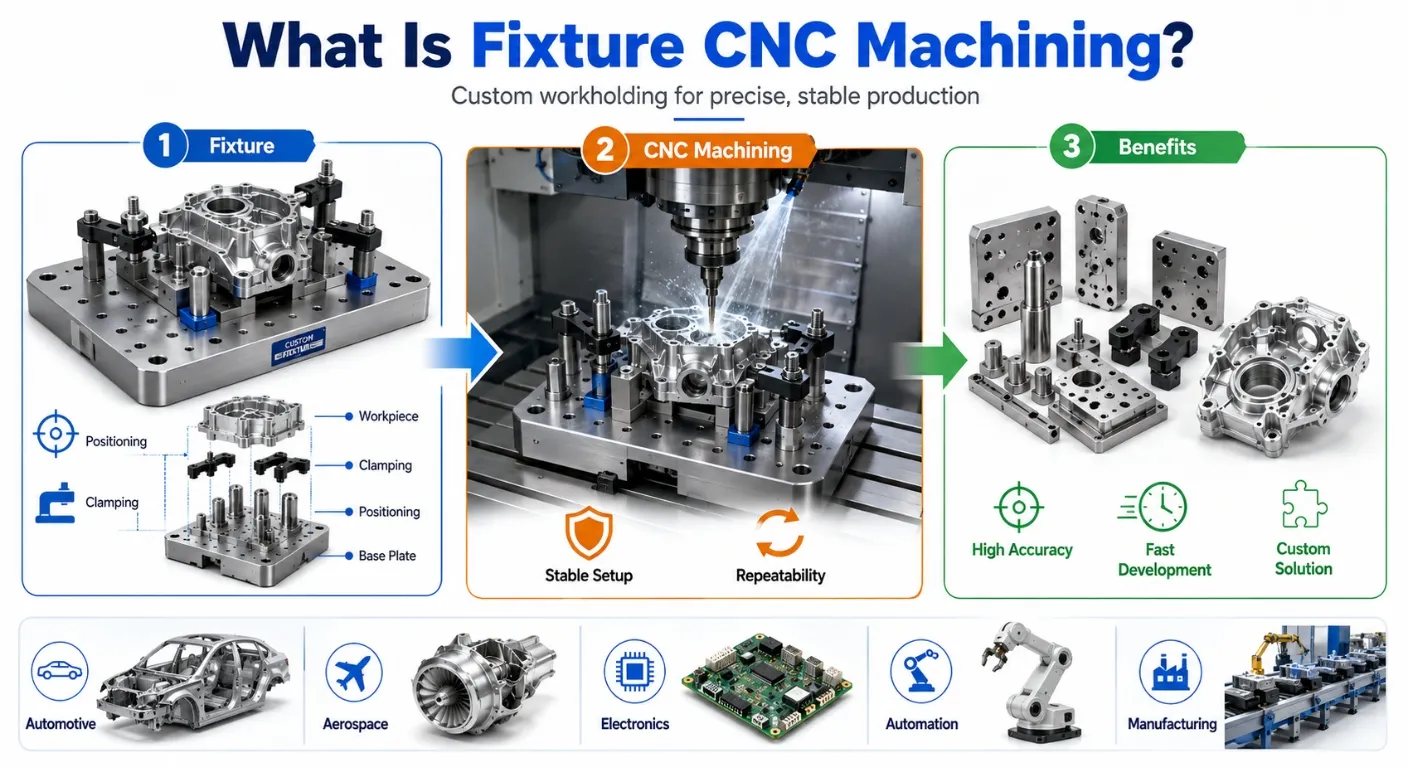
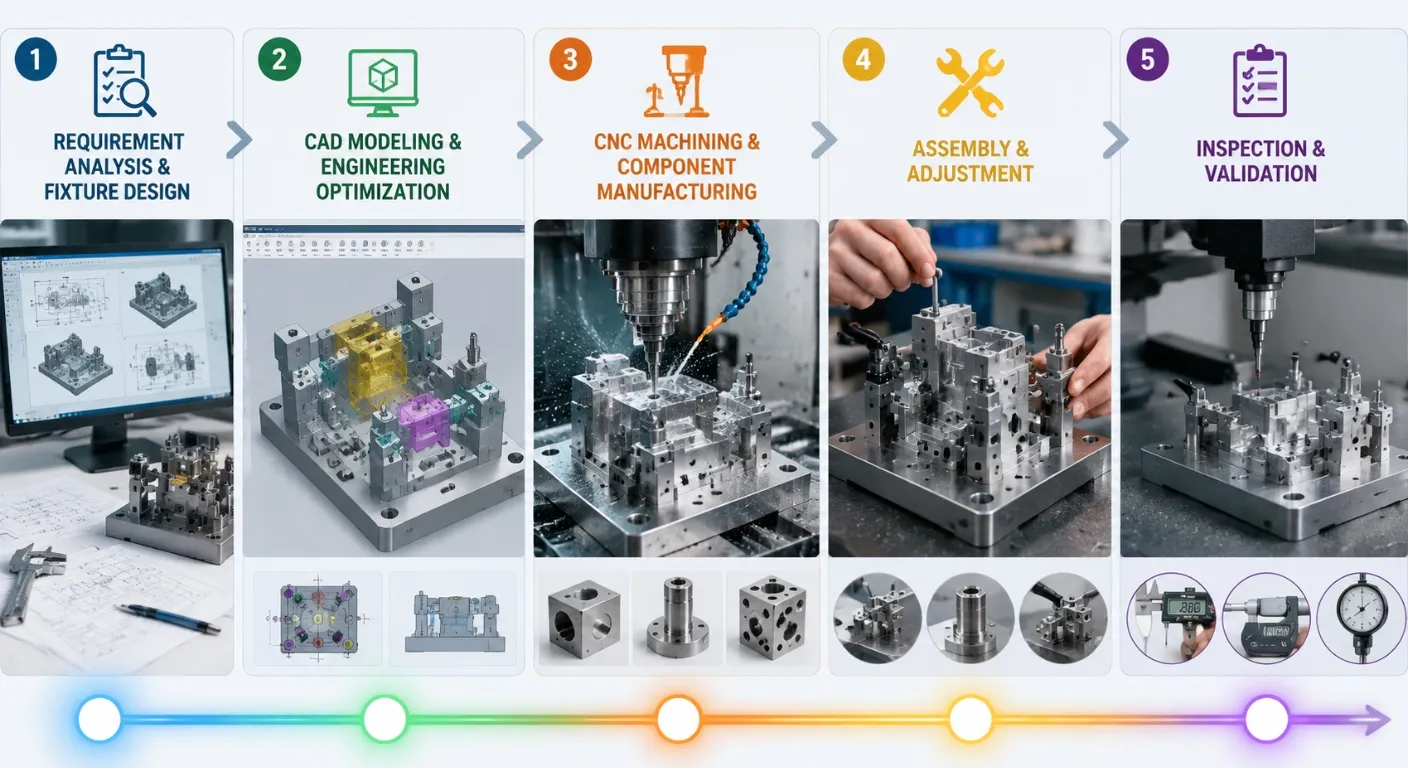
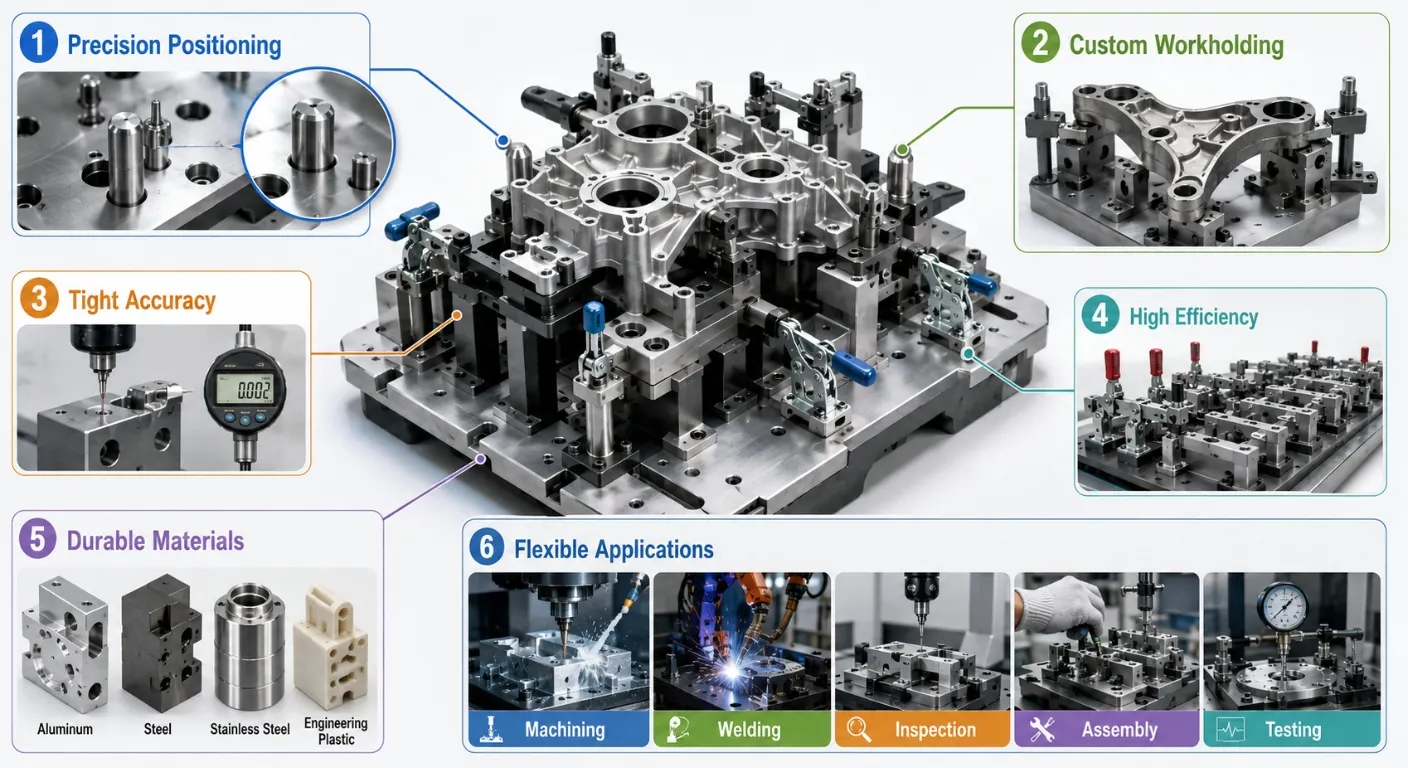
Fixture CNC machining provides customized positioning and workholding solutions with precision manufacturing, durable materials, and reliable performance. It supports machining, assembly, inspection, and automation applications requiring repeatability and efficiency.
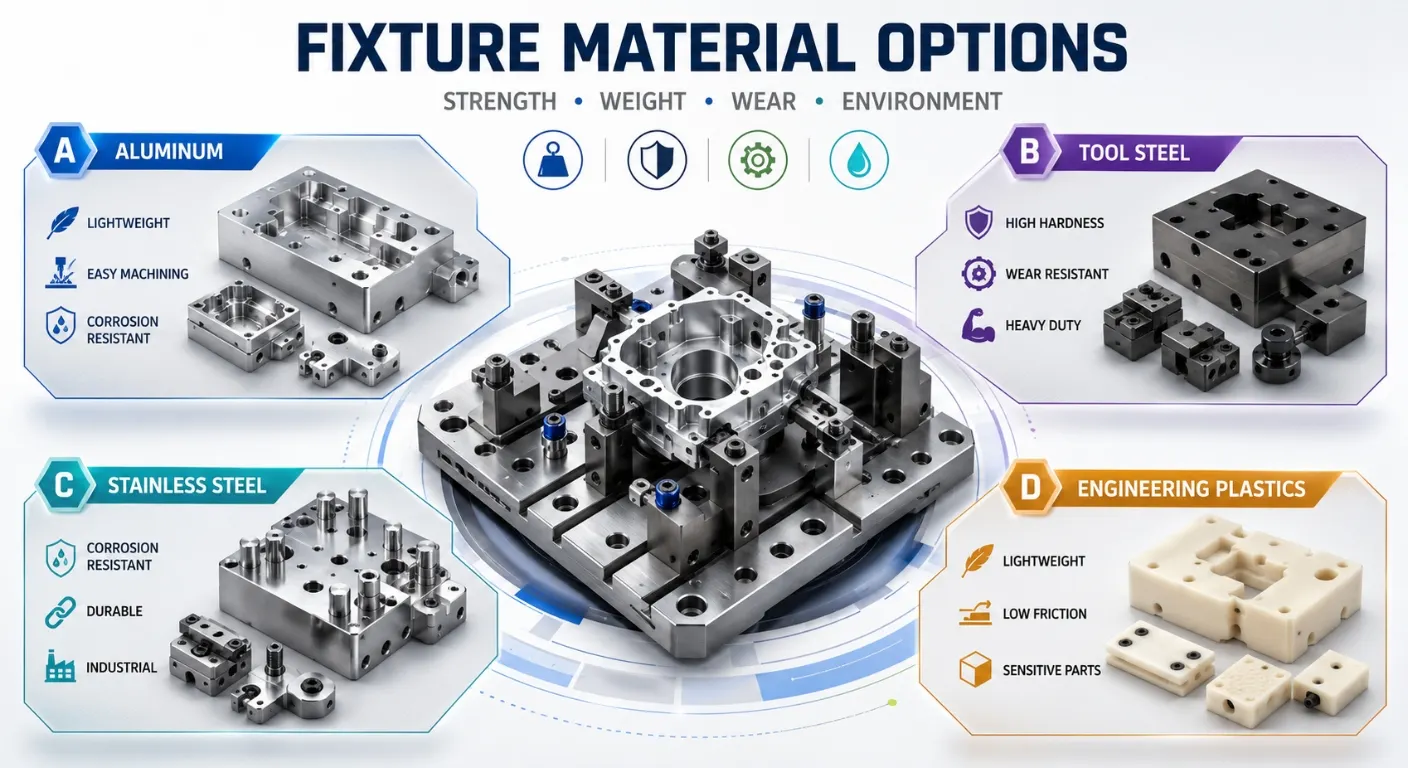
- Material Options:Aluminum, stainless steel, tool steel, carbon steel, and engineering plastics.
- Machining Processes:CNC milling, CNC turning, multi-axis machining, grinding, and finishing.
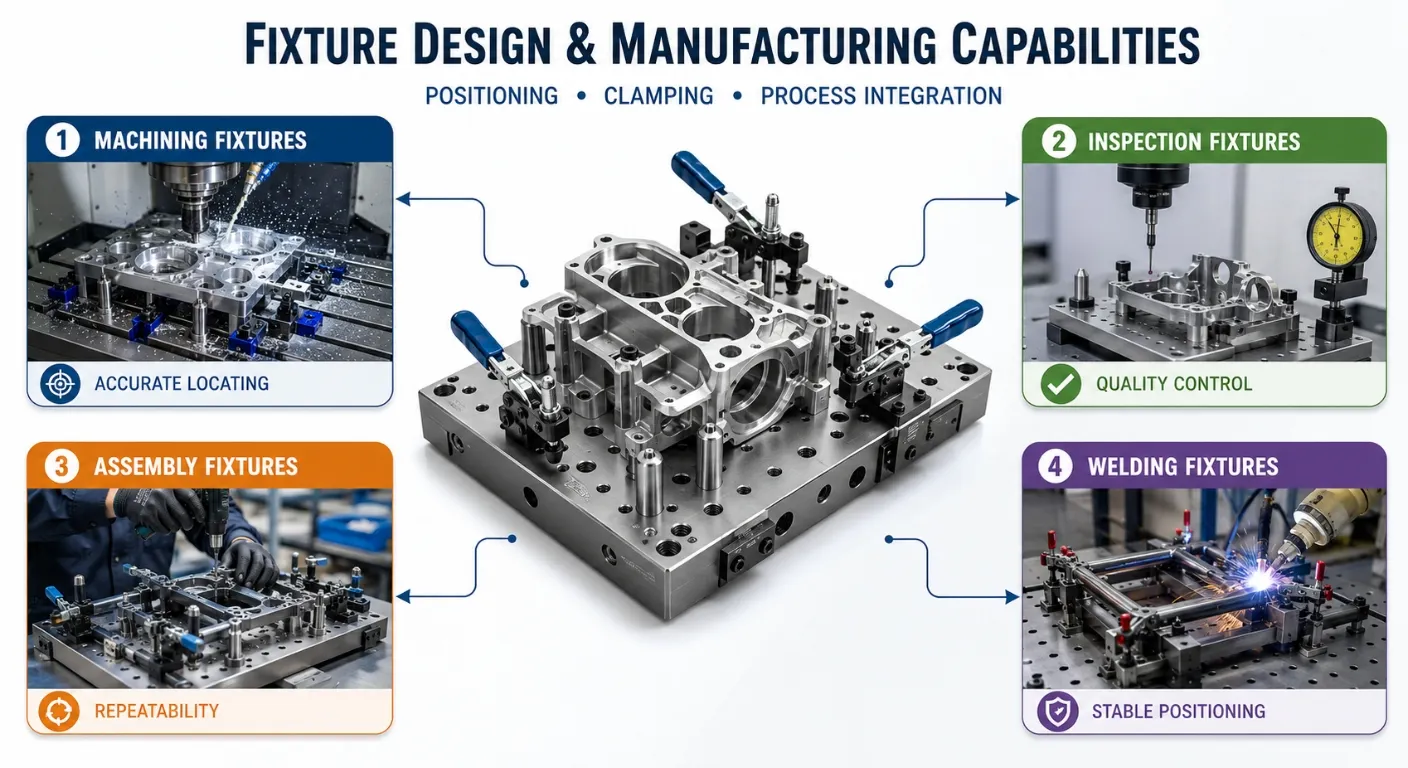
- Fixture Types:Machining fixtures, inspection fixtures, assembly fixtures, and welding fixtures.
- Design Capability:Custom locating systems, clamps, supports, and modular structures.
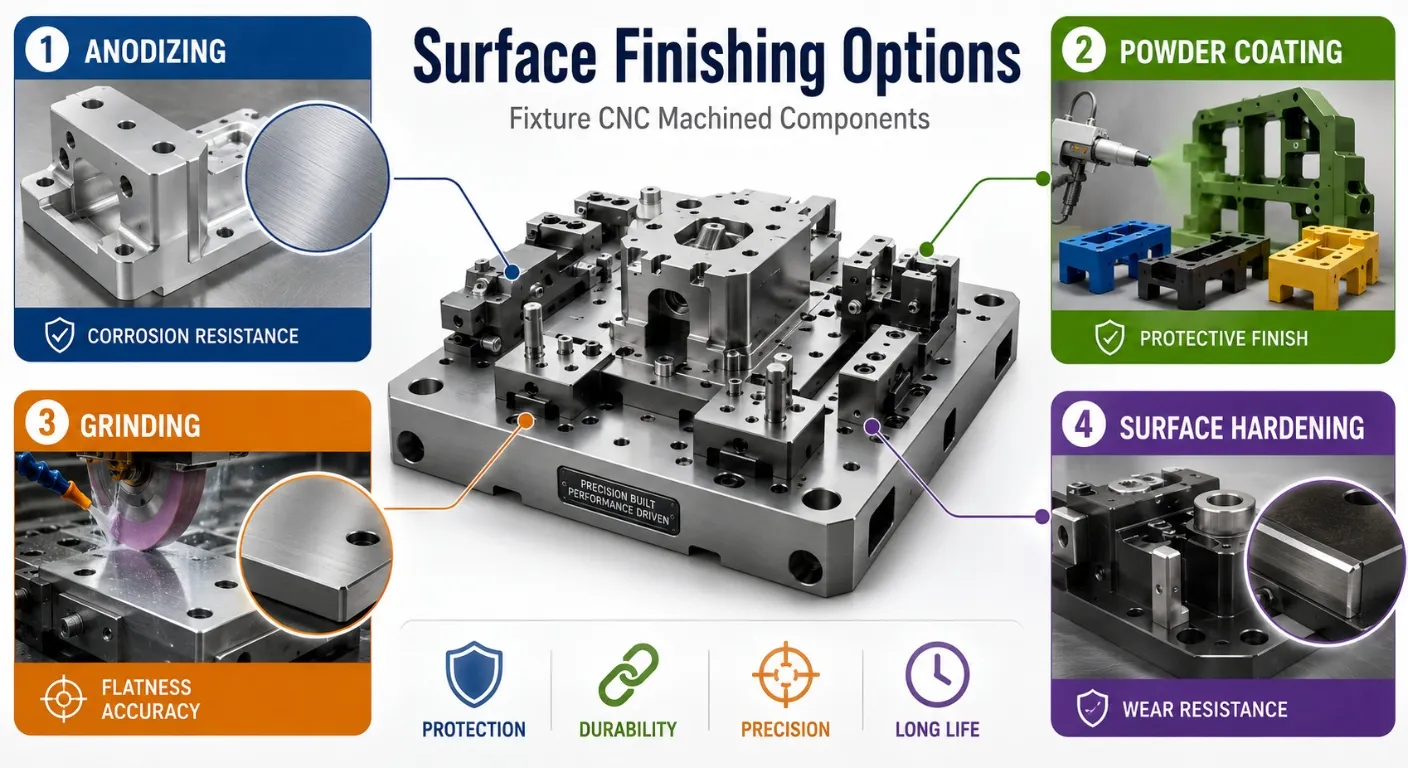
- Surface Finish:Anodizing, coating, grinding, polishing, and surface hardening.
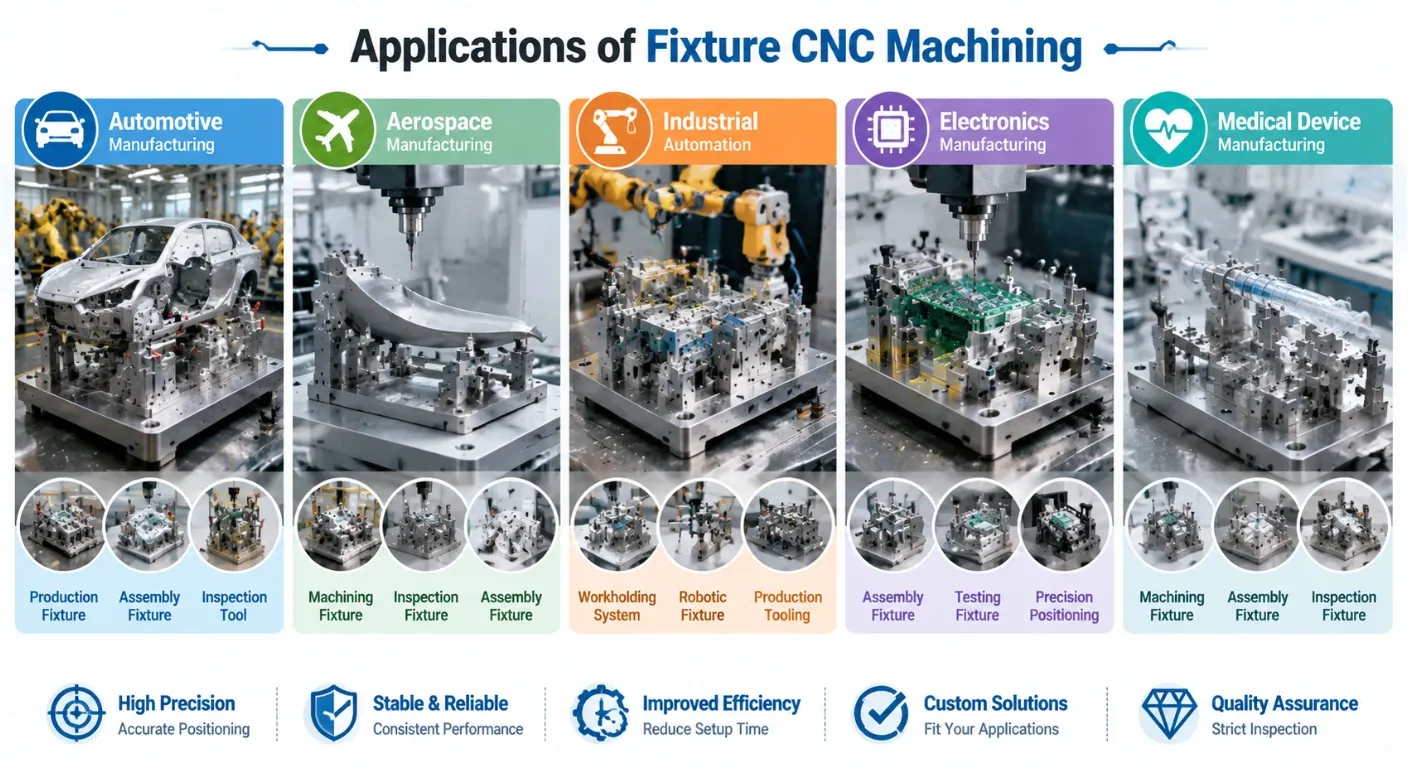
- Application Support:Automotive, aerospace, electronics, automation, and medical manufacturing.
Introduction to Fixture CNC Machining
FAQ
Fixture CNC machining is used to produce custom jigs, workholding tools, inspection fixtures, and assembly fixtures that improve manufacturing accuracy and efficiency.
Common types include machining fixtures, welding fixtures, assembly fixtures, inspection fixtures, and robotic workholding systems.
Common materials include aluminum, steel, stainless steel, and engineering plastics selected based on strength, weight, wear, and application requirements.
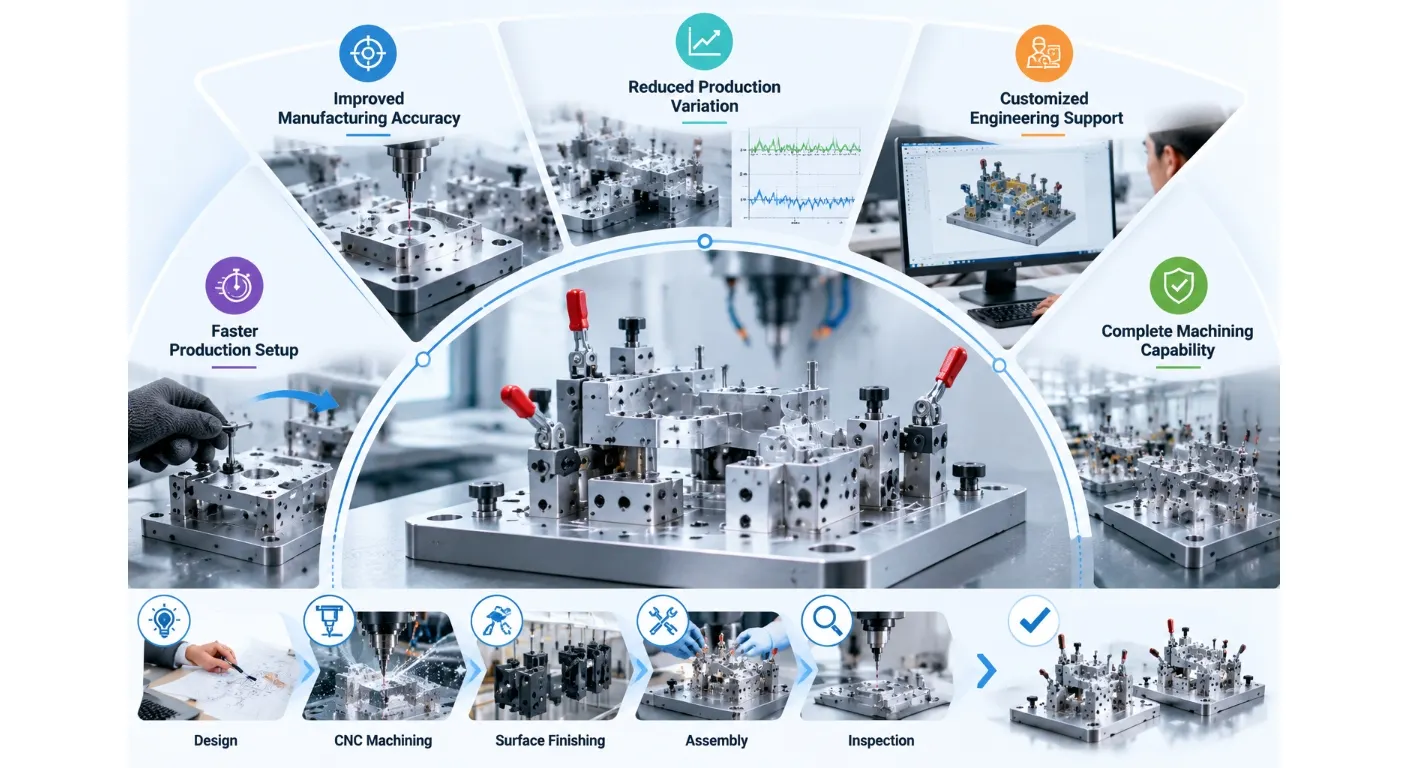
Fixtures reduce setup time, improve positioning accuracy, minimize manual adjustment, and provide repeatable manufacturing results.
Yes. Fixtures can be designed based on CAD files, drawings, samples, production processes, and equipment requirements.