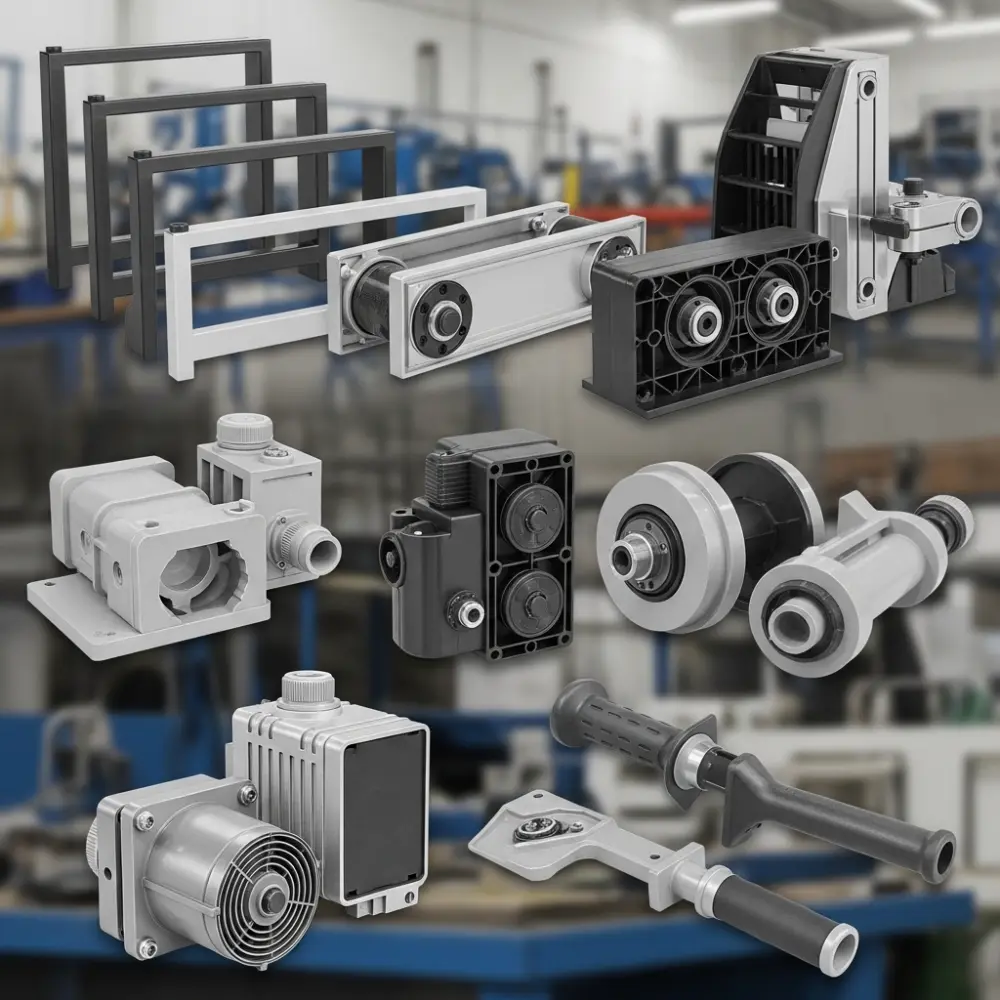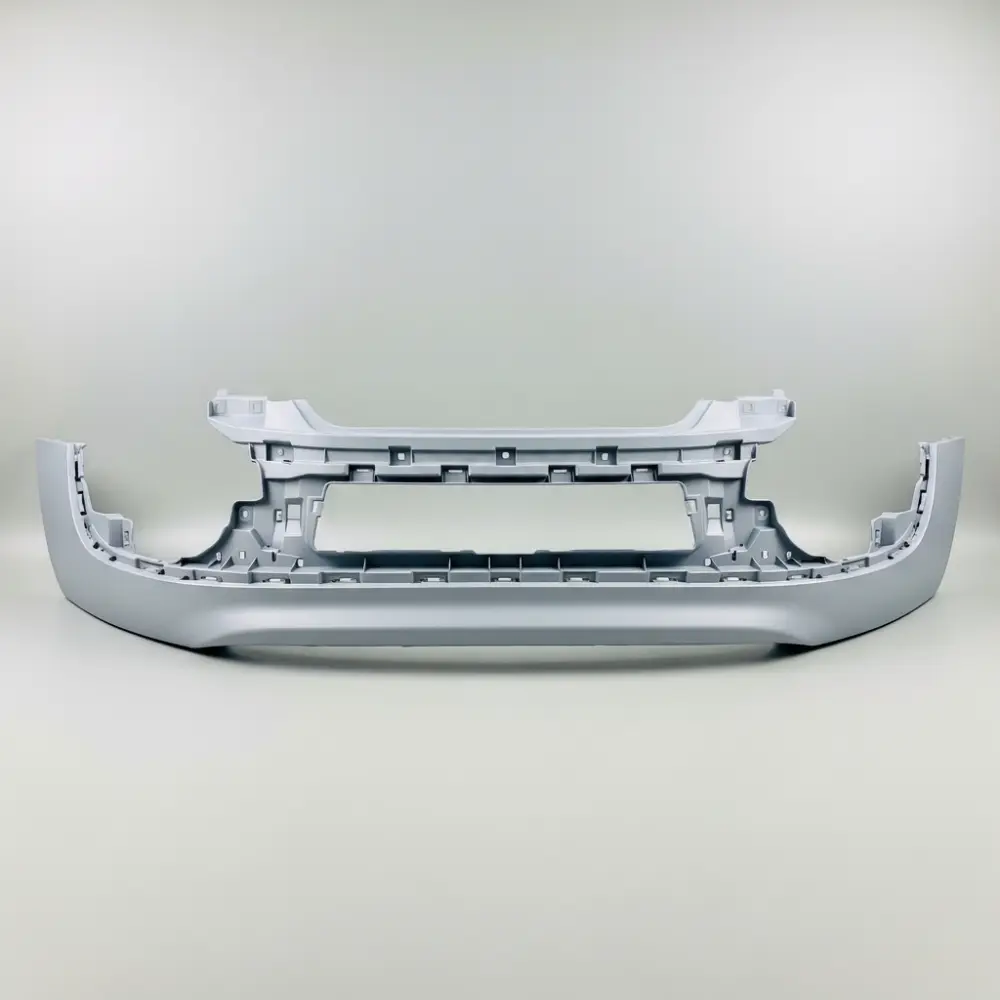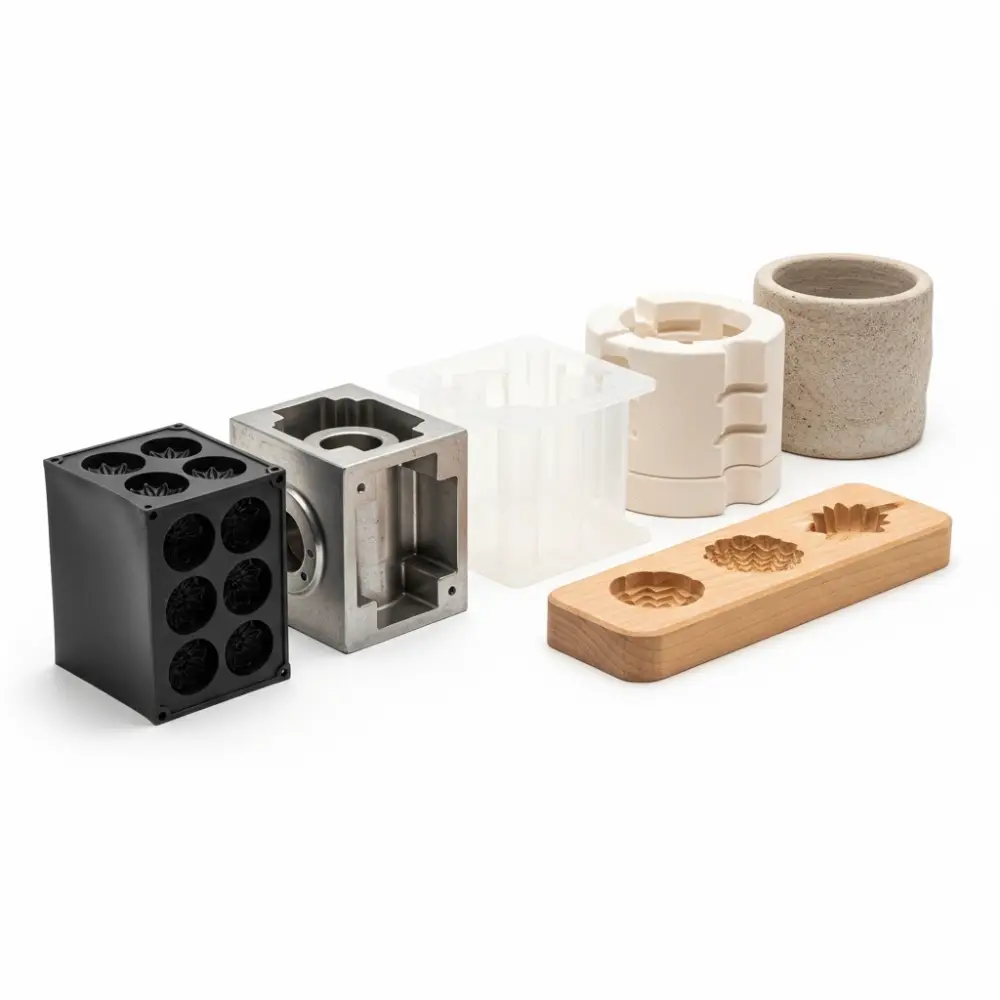


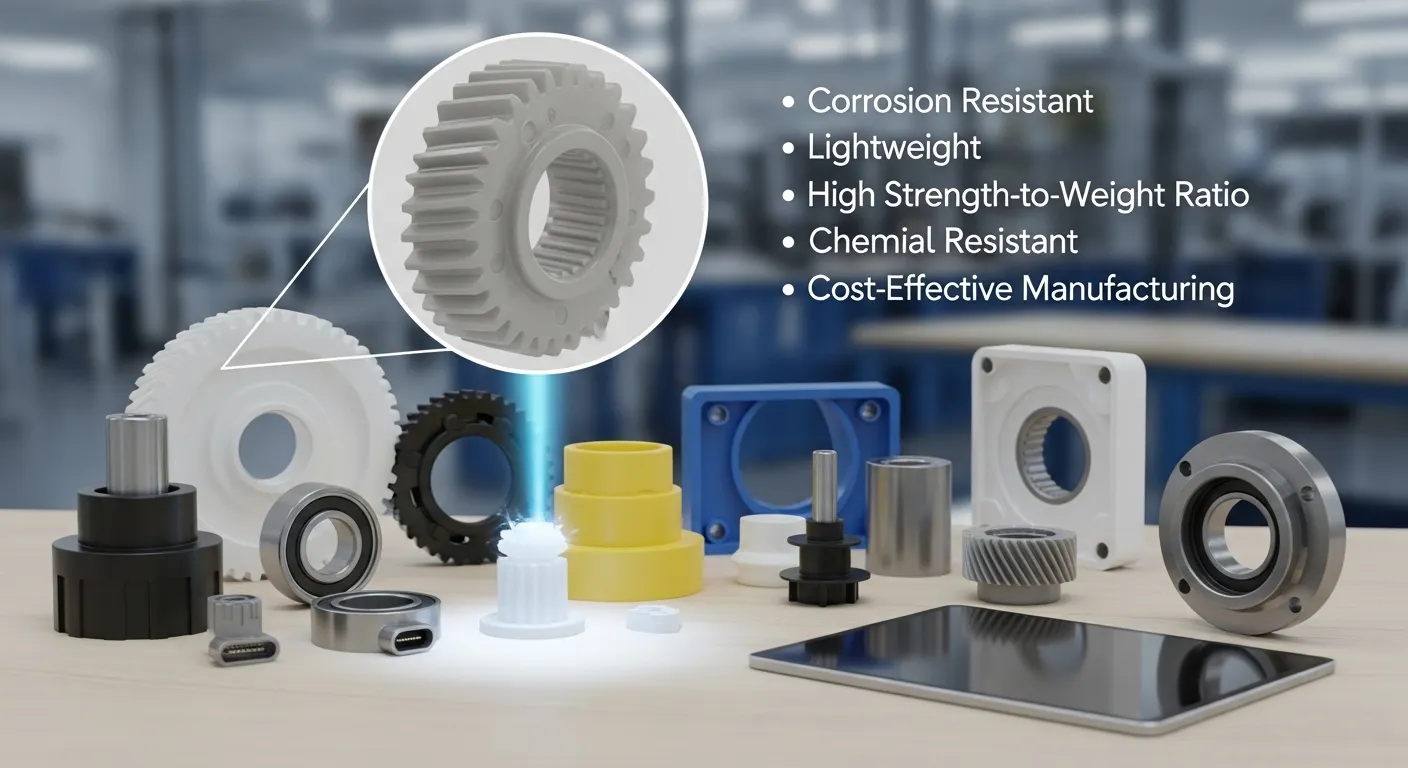
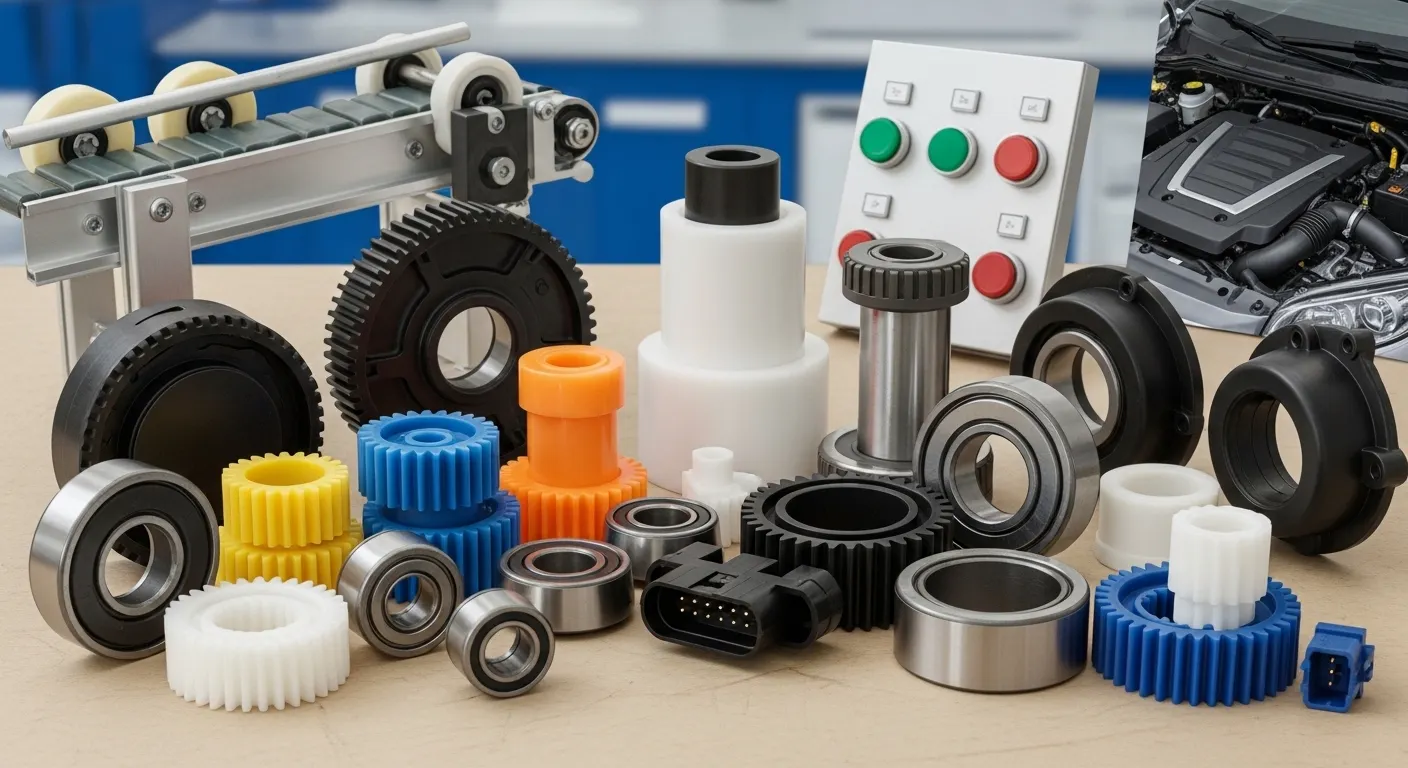
Industrial plastic components are molded or machined parts designed for use in manufacturing and machinery. They offer strength, chemical durability, and precise fit while remaining lightweight and cost-efficient.


Industrial Plastic Components
- Corrosion Protection: Prevents damage from moisture and industrial chemicals.
- Noise Reduction: Minimizes sound generated by moving machinery parts.
- Easy Handling: Lightweight design simplifies installation and maintenance.
- Flexible Design Options: Can be shaped into complex forms for specialized functions.
- Energy Efficiency: Reduces friction and operational load, lowering power consumption.
Introduction to Industrial Plastic Components
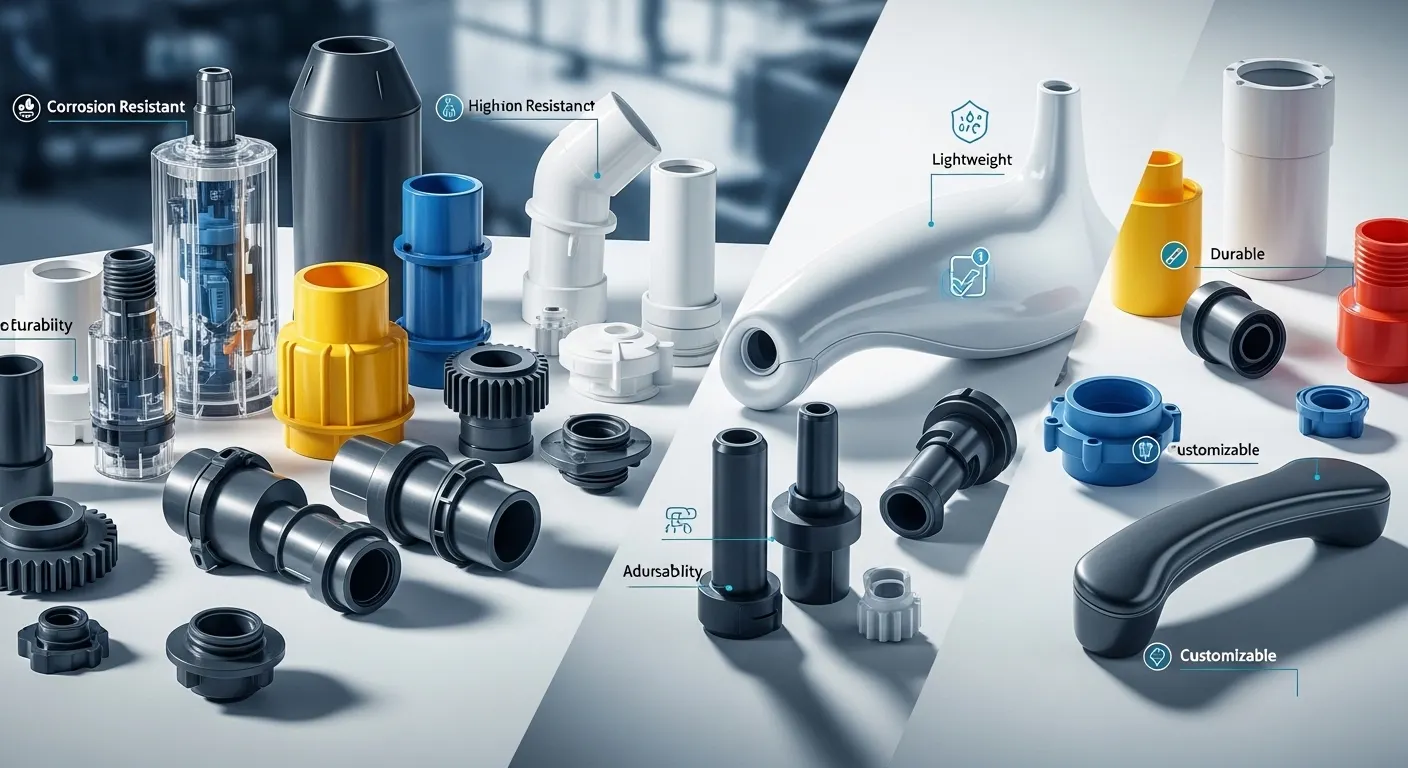
Industrial plastic components are precision-engineered parts made from high-performance plastics to meet the demands of machinery and manufacturing equipment. They provide robust structural support, chemical resistance, and dimensional stability while maintaining cost-effective production and long service life.
FAQ
1. Can plastic components withstand outdoor or harsh environments?
Answer:
Yes, UV-resistant, chemical-resistant, and weatherproof plastics are available for demanding conditions.
2. What materials are used for industrial plastic components?
Answer:
Common materials include ABS, polycarbonate, polypropylene, PEEK, and Nylon for high strength, chemical resistance, and wear performance.
3. Why use plastics instead of metals in industrial components?
Answer:
Plastics are lightweight, resistant to corrosion, cost-effective, and can be molded into complex shapes that may be difficult or expensive with metals.
4. Do plastic components affect machinery performance?
Answer:
No, they reduce friction, absorb vibrations, and protect equipment without compromising operational efficiency.
5. Can they handle high temperatures?
Answer:
Many industrial plastics are heat-resistant, maintaining strength and shape under elevated temperatures.