


How to Choose Gating and Runner Design for 2K Molds
Choosing the right gating and runner design for 2K molds requires a dual-system approach. The design for the first shot must prioritize creating a dimensionally stable substrate. The design for the second shot must then ensure a strong, permanent bond without damaging that substrate. This balancing act makes the flow delivery system one of the most critical elements in the entire tool design.
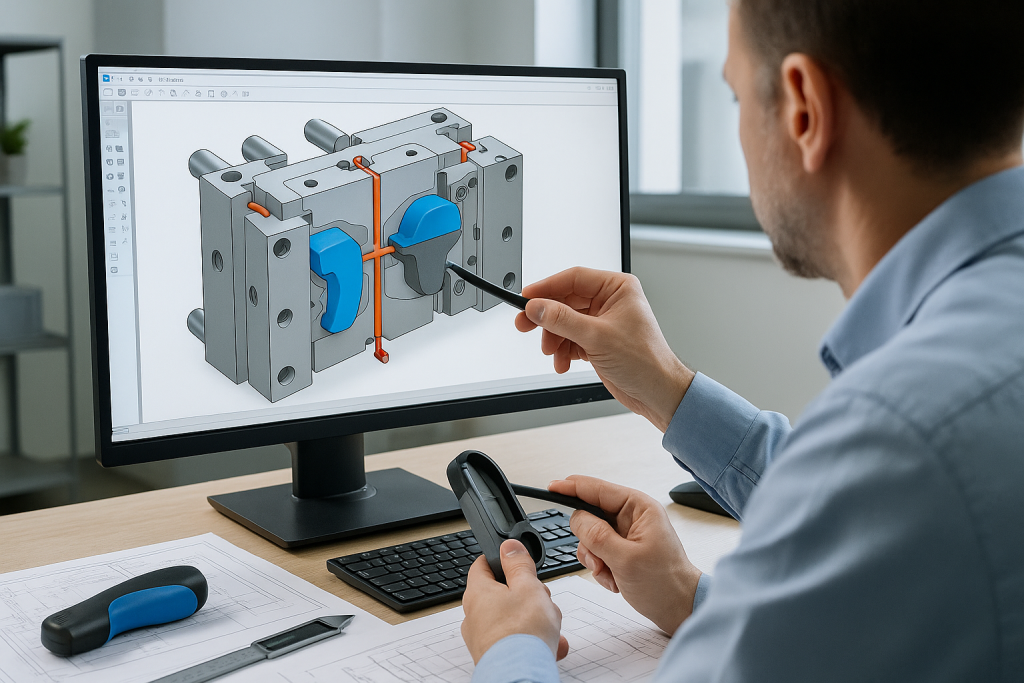
As experienced designers of complex multi-shot tooling, we know that the runner and gate system is not an afterthought. It is fundamental to the success of the part. A proper design prevents common defects, optimizes the molding cycle time, and ensures a robust and repeatable manufacturing process. An improper design, on the other hand, is the root cause of countless production issues.
This guide will cover the unique challenges of designing runners for 2K molds. We will explore the common gate types suitable for both the substrate and the overmold, and discuss the strategic decisions behind their optimal placement.
Why is the Flow Delivery System Critical in 2K Molds?
The flow delivery system is the network of channels that transports molten plastic from the injection molding machine's nozzle to the final part cavity. The runner is the main channel, and the gate is the specific opening through which the plastic enters the cavity. In 2K molding, you must design two entirely separate flow delivery systems within a single mold.
This presents a unique spatial and thermal challenge. The runner for the first material shot must be routed in a way that it does not physically interfere with the second shot's cavity or any moving components like rotating plates. Similarly, the second shot's runner system must be designed around the first.
Furthermore, these runners are channels of intense heat. The thermal management of the mold must account for the heat introduced by both runner systems. A poorly placed runner can create hot spots that affect cooling rates, potentially leading to part warpage or affecting the crucial bonding process. The success of the entire 2K Injection Molding operation hinges on getting this design right.
Designing the Runner System for the First Shot (Substrate)
The primary goal when designing the runner and gate for the first shot is to produce a perfect substrate. This part must be dimensionally accurate, cosmetically acceptable, and free from internal stress. It will serve as the foundation for the second shot, so any imperfections will be carried through to the final product.
Cold Runners vs. Hot Runners
The first major decision is whether to use a cold or hot runner system.
- Cold Runners: In a cold runner system, the runner is an unheated channel machined into the mold plate. The plastic in the runner cools and solidifies along with the part. It is then ejected as a solid piece attached to the part, which must be trimmed off. While this results in wasted material, the mold itself is simpler and less expensive to build.
- Hot Runners: A hot runner system is a heated manifold that keeps the plastic in a molten state all the way to the gate. This eliminates the runner waste, reduces cycle times, and provides better process control. However, the hot runner system adds significant complexity and cost to the mold.
Key Goals for the Substrate Runner
Whether hot or cold, the substrate runner must be designed to achieve several key objectives. For multi-cavity tools, a balanced filling pattern is essential. This means the runner is designed so that the distance and geometry from the main sprue to each cavity are identical. This ensures all cavities fill at the same time and pressure, which is critical for part consistency.
The runner must also be sized correctly to minimize pressure drop. A runner that is too small will require excessive injection pressure, which can induce stress in the part. Finally, the physical layout must not interfere with any moving components of the 2K mechanism.
Choosing the Right Gate for the Substrate
The gate is the final transition point from the runner to the part. Its design and location have a direct impact on the substrate's quality. The gate for the first shot should be chosen and placed to optimize the part's structural and cosmetic integrity.
Common Gate Types for Substrates
- Edge Gate: This is one of the simplest gate types, located on the parting line of the mold. It is easy to machine but leaves a visible mark on the edge of the part that must be manually or automatically trimmed.
- Tunnel (Submarine) Gate: This gate enters the part from below the parting line at an angle. When the part is ejected, the gate is automatically sheared off, or "de-gated." This is ideal for high-volume automated production as it eliminates a secondary trimming operation.
- Direct (Sprue) Gate: Typically used for single-cavity molds, especially for large, round parts. The main sprue feeds directly into the center of the part. This provides excellent filling but leaves a large gate mark in a prominent location.
Where Should You Place the Substrate Gate?
Strategic gate placement is crucial. The gate should always be located to feed into the thickest section of the part. This ensures that this large area is filled first and can be properly packed out with pressure to prevent sink marks.
Whenever possible, the gate should be placed on a non-cosmetic or hidden surface to conceal the gate vestige (the small mark left after de-gating). It is also wise to keep the gate away from the area where the second material will be overmolded. A gate vestige in the bond area can create an imperfect surface and compromise the seal.
Gating and Runner Design for the Second Shot (Overmold)
Designing the flow delivery system for the second shot is more complex. The primary goal shifts from just creating a good part to creating a good bond without damaging the substrate. The entire 2k injection molding process is defined by the success of this delicate step.
The Primary Challenge: Protecting the Substrate
The molten plastic for the second shot enters the mold under high speed and pressure. If the gate is aimed directly at the substrate, this high-velocity flow can act like a sandblaster. It can erode the surface of the substrate, cause it to melt, or even physically push a thin section out of place. This is known as "washout" and is a critical defect to avoid.
Recommended Gate Types for Overmolds
To protect the substrate and ensure a gentle fill, specific gate types are preferred for overmolding applications. For a broader context, it is helpful to understand the fundamentals of all injection moulding.
- Tab Gate: This is a very common and effective technique. A small, extra tab feature is added to the part design, and the gate feeds into this tab. The tab absorbs the initial high-pressure impact of the plastic flow, allowing the material to then flow calmly and evenly from the tab onto the main part surface. The tab is trimmed off after molding.
- Film or Diaphragm Gate: This type of gate is used when overmolding a band or edge onto a part. The material flows through a long, thin slit, or "film," which distributes the flow evenly along a wide front. This prevents jetting and ensures a gentle fill.
- Valve Gate (Hot Runner): For the highest level of control and the best cosmetic result, a hot runner valve gate is the premium choice. A pin inside the gate nozzle retracts to allow flow and then moves forward to shut it off precisely. This prevents drooling and leaves a tiny, clean witness mark, making it ideal for the cosmetic surfaces of parts like Soft Touch Grips 2K Molding.
Strategic Gate Placement for Overmolds
Never gate directly onto the substrate. The best practice is to gate onto a steel surface of the mold immediately adjacent to the substrate. This allows the plastic to begin its flow on the mold surface and then wash gently over the substrate. This approach also helps to push the substrate firmly into place, ensuring a tight seal and preventing the overmold material from flashing underneath it. This is a key difference in thinking when comparing 2k injection molding vs overmolding. The choice of 2k injection molding materials will also influence the best gating strategy.
Using Mold-Flow Simulation for Optimization
In the past, runner and gate design was based on experience and rules of thumb. Today, modern mold designers use powerful software tools to simulate and optimize the design before any steel is cut.
Mold-flow analysis is a simulation that predicts exactly how molten plastic will flow through the mold, fill the cavity, and cool. For 2K molding, it is an invaluable tool. It can predict the fill pattern, pressure distribution, and temperature profile for both the substrate and the overmold. It can highlight potential issues like air traps, weld lines, or areas of high shear stress that could damage the substrate. By using this simulation, designers can test multiple runner and gate configurations virtually to find the optimal solution, saving enormous amounts of time and money on costly mold rework.
Final Thought
The gating and runner system is the lifeline of any 2K mold. Unlike single-shot tooling, these dual systems must not only fill the cavities efficiently but also work in harmony to deliver a structurally sound substrate and a defect-free overmold. Cold or hot runners, gate type selection, and strategic placement are not interchangeable choices—they are deliberate design decisions that directly influence part quality, cycle time, and long-term reliability.
By carefully designing the substrate runner for balanced filling and optimal gate placement, and by tailoring the overmold gates to protect and bond with the substrate, manufacturers can prevent common defects like flash, washout, and warpage. Modern mold-flow simulation elevates this process by validating design decisions virtually before steel is cut, reducing risk and improving outcomes.
In the end, the right gating and runner strategy transforms complexity into consistency. It ensures that every shot—whether the first or the second—delivers precision, repeatability, and a strong foundation for cost-effective, high-volume 2K molding.
