


CNC Machined Automotive Parts
Automotive parts often need more than basic machining. Buyers must confirm the material, quantity, tolerance, surface finish, coating, thread details, assembly fit, and inspection expectations before production. SunOn supports CNC milling, CNC turning, 5-axis machining, surface finishing, post-processing, and broader OEM/ODM manufacturing support when the project requires more than one process.
If you are preparing an RFQ, send your drawing files, material requirements, target quantity, application details, finish needs, and inspection requirements. SunOn’s team can review manufacturability, discuss process options, and help you move from sample parts to repeatable production planning.
Custom CNC Machined Automotive Parts for Fit-Critical Applications
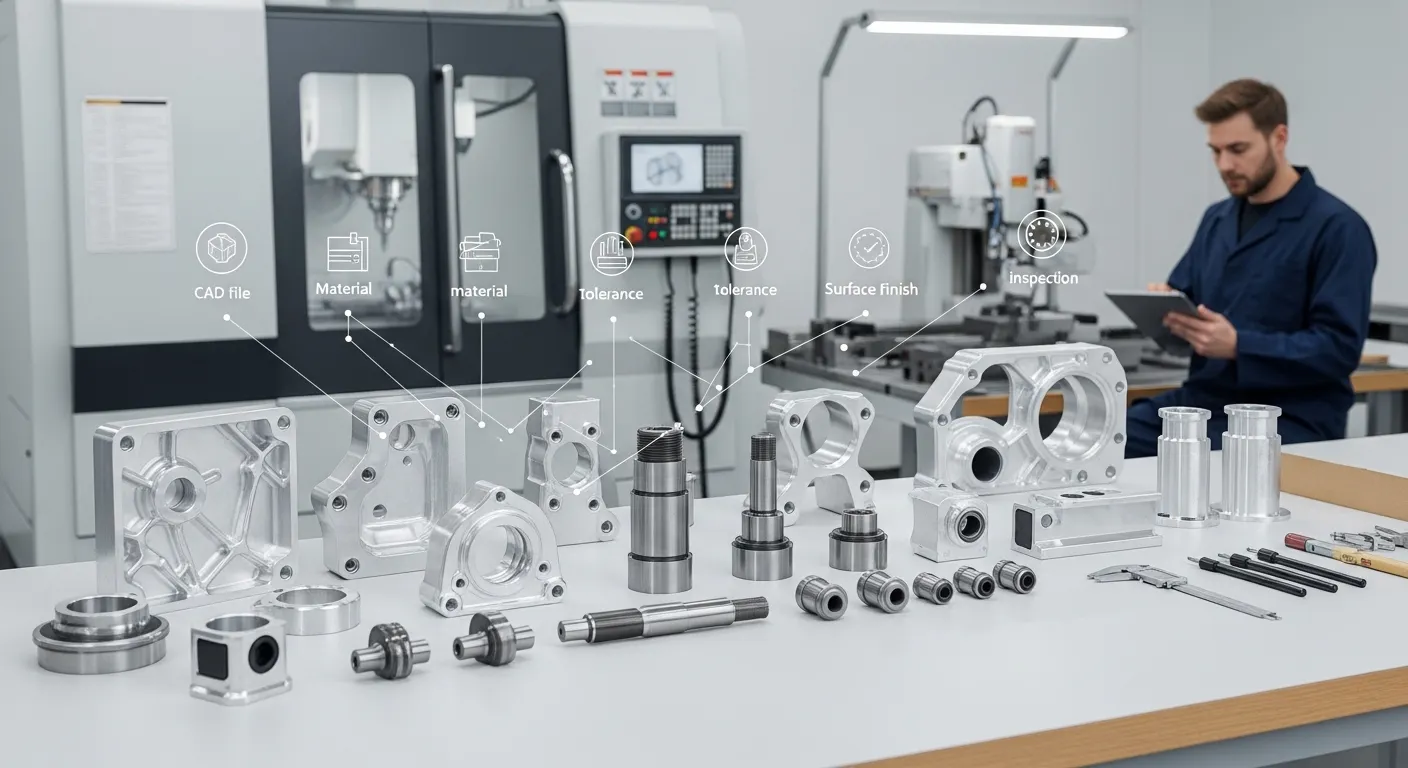
Automotive components must fit correctly with nearby parts, fasteners, sealing areas, shafts, housings, and assemblies. A small drawing change, wrong material choice, or unclear tolerance can affect assembly, function, cost, and repeatability.
SunOn’s CNC machining support is suitable for custom parts such as:
- Mounting brackets and adapter plates
- Aluminum housings and covers
- Shafts, pins, sleeves, bushings, and spacers
- Sensor housings and electronic enclosures
- Fluid system blocks, fittings, and connector parts
- EV battery tray brackets and motor-related support parts
- Prototype parts for design validation
- Low-volume CNC parts for pilot builds or custom production
- Machined features on cast, die-cast, or molded components when required
For buyers comparing suppliers, the key question is not only “Can this part be machined?” It is also “Can the supplier understand the drawing, discuss the risks, choose the right process, and control the important features?”
For broader CNC sourcing support, you can also review SunOn’s CNC machining in China service page.
Which CNC Process Fits Your Automotive Part?
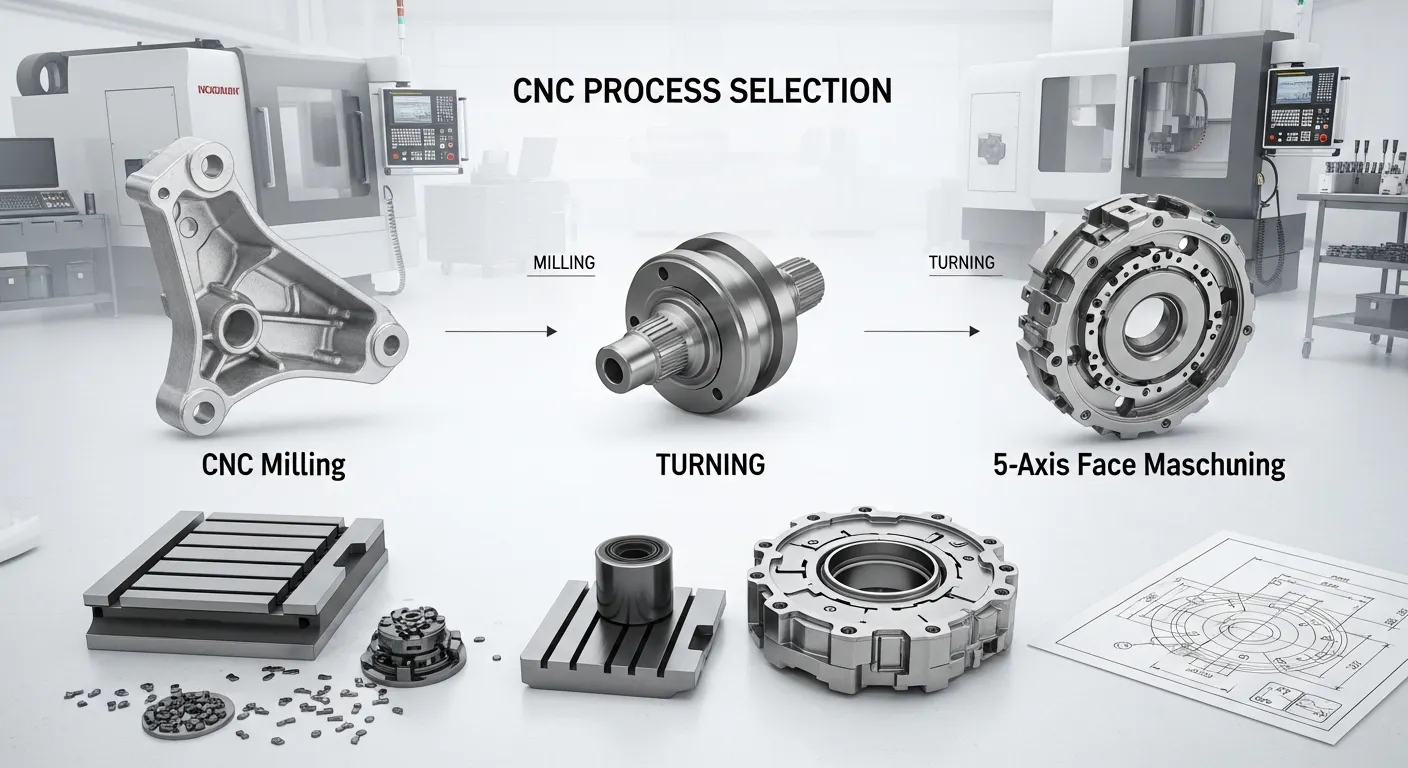
Different automotive parts need different machining strategies. SunOn can support CNC milling, CNC turning, and 5-axis machining depending on the part shape, feature access, tolerance requirements, and production stage.
CNC milling is commonly used for brackets, housings, covers, plates, pockets, slots, bolt patterns, and machined faces. It is useful when a part has flat surfaces, complex cavities, mounting holes, and multi-side features.
CNC turning is suitable for round or cylindrical parts such as shafts, bushings, spacers, sleeves, pins, collars, and threaded components. It helps control diameters, grooves, shoulders, and concentric features.
5-axis CNC machining can help when the part has angled features, complex surfaces, tight feature access, or multiple machined faces. It may reduce setup changes and improve feature alignment for complex automotive components.
Drilling, tapping, threading, inserts, and secondary operations should be reviewed early. Holes, threads, counterbores, undercuts, and insert locations often affect machining sequence, fixture planning, and inspection.
For custom part projects that need CNC process review, SunOn’s custom CNC machining service page is a relevant next step.
Automotive Part Types, Materials, and CNC Considerations
The right material depends on the part function, weight target, strength requirement, corrosion exposure, heat condition, wear risk, and finishing plan. Buyers should not choose material only by price. They should also consider machinability, tolerance stability, coating compatibility, and end-use environment.
| Automotive part type | Common CNC process | Material options to discuss | Key detail to confirm |
|---|---|---|---|
| Mounting brackets and adapter plates | CNC milling, drilling, tapping | Aluminum, steel, stainless steel | Hole position, flatness, coating thickness, thread size |
| Housings, covers, and enclosures | CNC milling, 5-axis machining when complex | Aluminum, stainless steel, engineering plastics | Sealing faces, wall thickness, pockets, surface finish |
| Shafts, sleeves, pins, and bushings | CNC turning, turning plus milling | Steel, stainless steel, brass, aluminum | Diameter tolerance, concentricity, grooves, surface finish |
| Sensor and electrical parts | CNC milling, turning, small-part machining | Aluminum, copper, brass, plastics | Insulation, mounting fit, connector features, coating |
| EV and new energy support parts | CNC milling, 5-axis machining, finishing | Aluminum, copper, stainless steel | Thermal path, weight, surface treatment, assembly fit |
| Fluid or valve-related blocks | CNC milling, drilling, tapping | Aluminum, stainless steel, brass | Port location, threads, sealing surfaces, cleaning needs |
Aluminum is often selected for lightweight brackets, housings, covers, and EV-related components. If your project needs lightweight machined parts, review SunOn’s aluminum CNC machining services for related support.
Stainless steel may be selected when the part needs corrosion resistance, durability, or stronger environmental performance. For corrosion-resistant machined components, SunOn’s stainless steel machining page is a relevant reference.
Tolerance, Repeatability, and Fit-Critical Features
Automotive CNC parts often need repeatability across samples, batches, and assembly checks. Tolerance should be based on the part function, not applied tightly to every surface without reason.
Buyers should clearly mark critical features on the drawing, such as:
- Bearing seats and shaft diameters
- Sealing faces and O-ring grooves
- Threaded holes and tapped features
- Mounting holes and bolt patterns
- Flatness or parallelism requirements
- Mating surfaces and locating features
- Slots, pockets, counterbores, and undercuts
- Areas affected by anodizing, plating, coating, or polishing
Unclear tolerance requirements can create quoting delays. Overly tight tolerance can also increase cost and inspection time. SunOn can review the drawing and discuss which dimensions are function-critical, which surfaces need special control, and which features can follow general drawing requirements.
Surface Finishing and Treatment Options
Surface finish affects appearance, corrosion resistance, wear behavior, friction, electrical contact, and assembly fit. For automotive parts, finishing should be selected with the final application in mind.
Common finishing and post-processing requirements may include:
- Anodizing for aluminum parts
- Bead blasting for uniform surface appearance
- Polishing for smoother visible surfaces
- Plating for corrosion or wear resistance
- Passivation for stainless steel parts
- Powder coating for exterior brackets or covers
- Heat treatment when material performance requires it
- Masking for threads, sealing faces, bearing seats, or contact areas
Finishing can affect final dimensions. For example, coating thickness may matter on threaded holes, shafts, sealing faces, and tight assembly features. Buyers should mention these areas before quotation so the machining and finishing plan can be reviewed together.
Prototype, Low-Volume, and Production Support
CNC machining is useful across several automotive project stages. For early development, it allows teams to test form, fit, and function before investing in tooling. For low-volume projects, it supports custom parts, pilot builds, aftermarket components, and pre-production validation.
For production support, repeatability and communication become more important. The supplier must understand drawing revision control, material consistency, finishing requirements, packaging needs, and inspection expectations.
SunOn can also support related manufacturing routes when CNC machining is only part of the project. Depending on quantity, geometry, and cost targets, buyers may also need rapid prototyping, die casting, injection molding, mold making, post-machining, surface finishing, assembly, or OEM/ODM production support.
This is especially useful when a buyer starts with CNC prototypes but later needs tooling, molded parts, cast parts, or assembled products.
Quality Checks Buyers Should Discuss Before RFQ
Quality control should match the risk level of the part. Not every component needs the same inspection plan, but critical features should be clearly defined.
Before requesting a quote, consider whether your project needs:
- Dimensional inspection against the 2D drawing
- First article sample review
- Material certificate or material confirmation
- Surface finish confirmation
- Coating, anodizing, plating, or color requirements
- Thread gauge or fit checks
- Assembly or functional checks based on buyer-provided requirements
- Inspection report for critical dimensions
- Special packaging to protect machined or finished surfaces
SunOn should not guess which dimensions matter most. If a part has safety, sealing, movement, or assembly-critical areas, mark them clearly in the drawing or project notes.
What to Send for an Accurate CNC Automotive Parts Quote
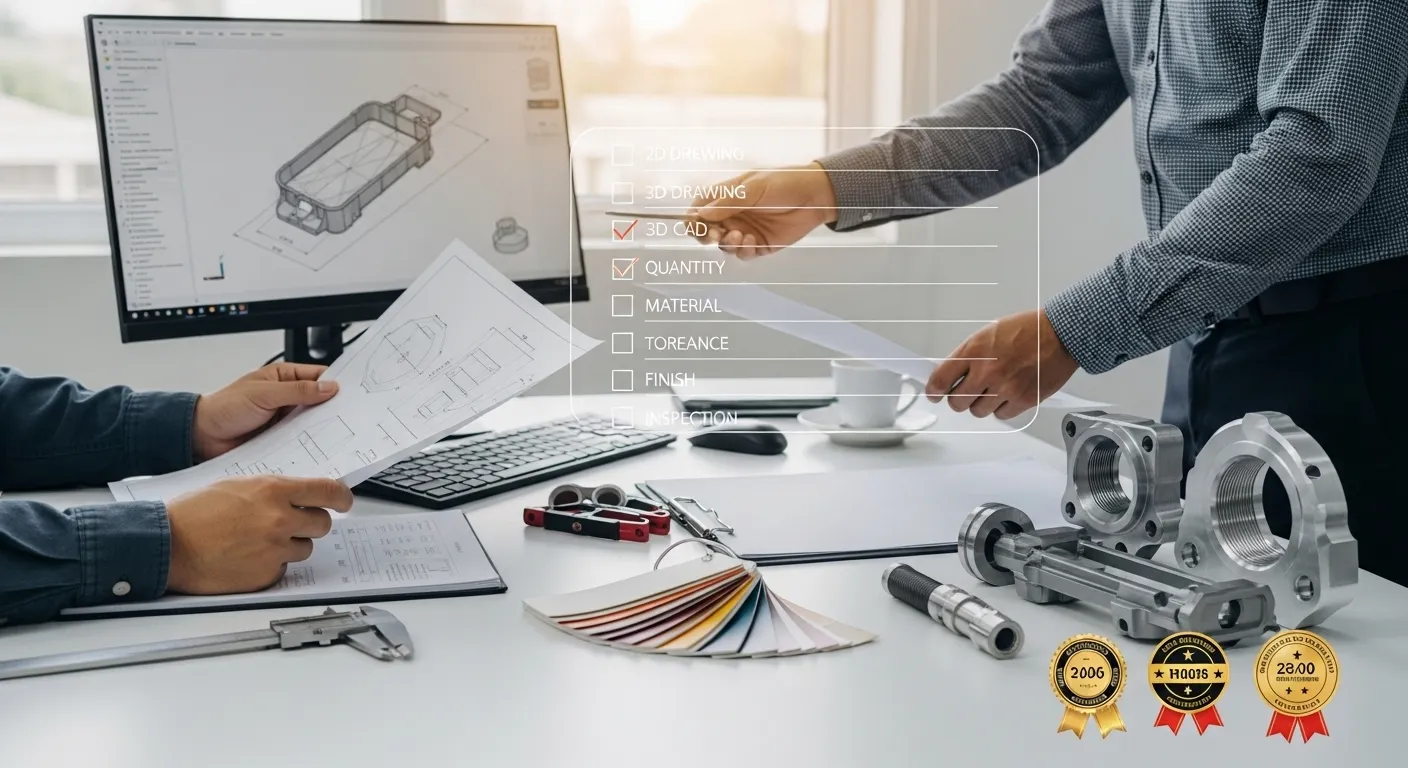
A complete RFQ helps SunOn review manufacturability and prepare a more accurate quotation. It also reduces back-and-forth during engineering review.
Send the following details when available:
- Product or part name
- Application or automotive system
- Prototype, small-batch, or production stage
- Target quantity
- 2D drawing with tolerances
- 3D CAD model
- Material and grade if known
- Surface finish, coating, color, plating, anodizing, or polishing needs
- Critical dimensions and fit areas
- Threads, inserts, holes, slots, or undercuts
- Assembly requirements if the part connects with other components
- Inspection report or quality documentation needs
- Functional testing requirements if relevant
- Delivery destination and target schedule
- Existing mold, casting, blank, or tooling status if relevant
- NDA, BOM, or project specification if required
If you are unsure about material or process choice, send the application details and expected function. SunOn can review whether CNC milling, turning, 5-axis machining, finishing, or another manufacturing route is more suitable.
Why Buyers Work with SunOn for Automotive CNC Projects
SunOn is positioned for buyers who need more than a simple machined part supplier. Many automotive and industrial projects involve design changes, prototype testing, material comparison, finishing coordination, and later production planning.
SunOn’s service scope helps buyers connect multiple manufacturing steps, including:
- CNC machining for custom metal and plastic parts
- CNC prototype machining and low-volume production
- 5-axis machining for complex geometries
- Surface finishing and post-processing
- Rapid prototyping for early-stage validation
- Die casting and injection molding support for production planning
- Mold making and tooling support
- Assembly and OEM/ODM manufacturing coordination
This makes SunOn suitable for engineers and procurement teams that want one manufacturing partner to review drawings, discuss manufacturability, produce samples, coordinate finishing, and support future production routes.
Frequently Asked Questions
Can SunOn machine custom automotive parts from CAD files?
Yes. Buyers can send 2D drawings, 3D CAD models, material requirements, quantity, tolerance needs, finish details, and inspection expectations. SunOn can review manufacturability and discuss suitable CNC machining options before quotation.
What automotive parts are suitable for CNC machining?
CNC machining is suitable for brackets, housings, covers, shafts, bushings, spacers, sleeves, sensor enclosures, adapter plates, and fit-critical prototype or low-volume components. Suitability depends on geometry, material, tolerance, and quantity.
Which materials are common for automotive CNC parts?
Common options include aluminum, stainless steel, alloy or carbon steel, brass, copper, and engineering plastics. The best choice depends on weight, strength, corrosion exposure, heat, wear, electrical needs, and finishing requirements.
Can CNC machining support both prototypes and production runs?
Yes. CNC machining can support functional prototypes, validation samples, low-volume builds, custom batches, and repeat production support. For higher-volume projects, buyers may also compare CNC machining with die casting, injection molding, or tooling-based production.
What tolerance should I specify?
Specify tolerance based on function. Mark critical features such as bearing seats, sealing faces, hole positions, threads, shaft diameters, and mating surfaces. Avoid applying tight tolerance everywhere unless the application truly requires it.
What should I send for a quote?
Send your 2D drawing, 3D CAD file, material, quantity, application, tolerance, surface finish, coating, inspection needs, delivery destination, and target schedule. Include assembly notes, BOM, NDA, or existing tooling details when relevant.
Request a Quote for CNC Machined Automotive Parts
Share your automotive part drawings with SunOn for CNC machining review, DFM discussion, and quotation. Send your part type, quantity, prototype or production stage, 2D drawings, 3D CAD files, material requirements, tolerance needs, surface finish details, coating or plating requirements, threads or assembly features, inspection report needs, delivery destination, and target schedule. SunOn can help review the manufacturing route, confirm CNC process options, and support your project from prototype parts to production planning.
